
A deeply personal, step-by-step guide to the most requested dessert at every table I have ever sat around
The first time I brought a peach crumble pie with oat crust to a summer cookout, I did not expect what happened next. My neighbor Janet, a woman who once told me she did not “do dessert,” ate two full slices and then stood in my kitchen for forty minutes asking me how I made it. That was three summers ago. Since then, I have brought this pie to fourteen different gatherings. I have been asked for the recipe eleven times. I have been specifically requested to bring it eight times. One friend texted me the week before her daughter’s birthday just to confirm I was “still making the peach pie, right?”
This is that pie. And in this guide, I am going to give you everything. The recipe, yes. But also the mistakes I made before I got it right, the science behind why the oat crust works so much better than a standard pastry shell, the specific peach varieties that make the biggest difference, and the exact tweaks I made over a dozen iterations to land on a version that is reliably stunning every single time.
Fair warning: this is not a quick article. If you want just the recipe, scroll down. But if you want to actually understand this dessert from the inside out, read every section. You will bake a better pie because of it.
Why This Peach Crumble Pie Outperforms Every Other Dessert at the Table
Let me be honest about something. I used to be a chocolate person. I thought fruit desserts were what people brought when they could not be bothered to make something really impressive. I was completely wrong, and it took one failed chocolate lava cake at a dinner party to make me reconsider.
Here is the thing about peach crumble pie with oat crust: it hits every single psychological trigger that makes people love a dessert. It smells incredible while it bakes, which means your entire host’s kitchen is working as marketing for you before anyone takes a bite. It looks rustic and homemade in a way that says effort without screaming perfection. It tastes complex, with sweet fruit, warm spice, buttery crunch, and just enough tartness to keep every bite interesting.
Compare that to a frosted cake or a batch of brownies. Those are good. This is memorable. There is a difference.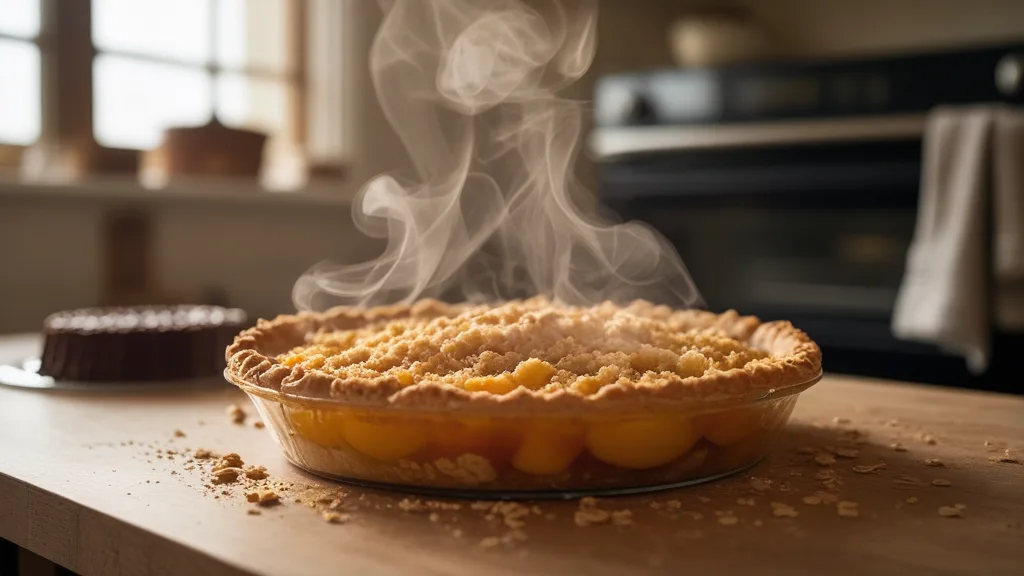
The Psychology of a Crowd-Pleasing Dessert
Research from Cornell University’s Food and Brand Lab shows that people rate foods as more enjoyable when they are served in warm, informal settings and when the food has visible texture. Crumble pie scores on both counts. The uneven oat topping, the bubbling fruit visible at the edges, the golden-brown color of the crust: all of it signals abundance, warmth, and care.
This is not me being precious about pie. It is a real reason why this dessert lands differently than something more polished. Perfection is distancing. Rusticity is inviting. Every gathering I have brought this to, it disappears before any other dessert on the table.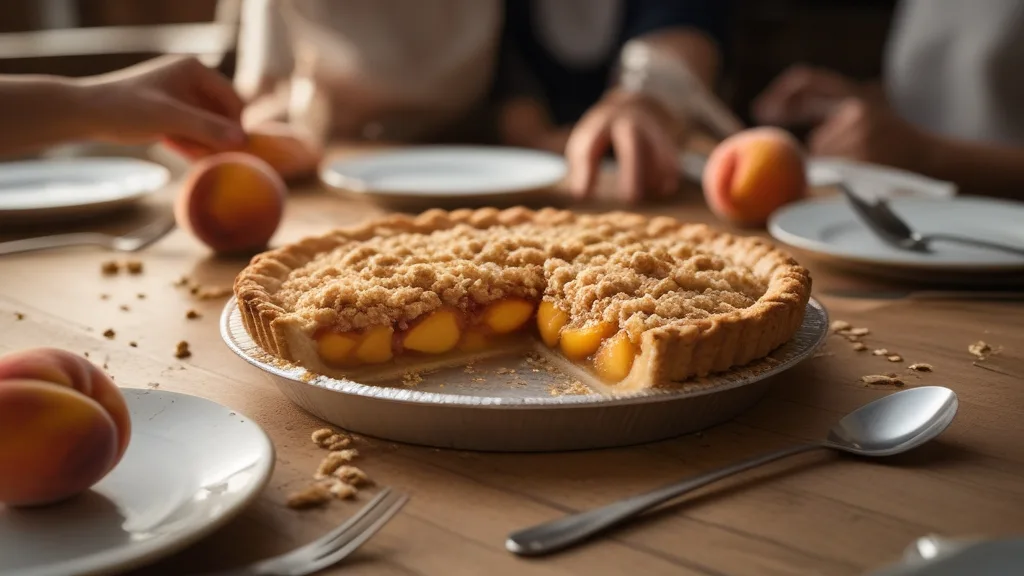
Choosing the Right Peaches: This Decision Matters More Than You Think
I spent two full summers experimenting with different peach varieties before I settled on my approach. The difference between a mediocre peach crumble pie and an extraordinary one is almost entirely determined before you ever turn on your oven. It starts at the store or the farmers market.
Fresh vs. Frozen vs. Canned Peaches
Fresh in-season peaches are the gold standard. There is no argument. When you can get Elberta, Redhaven, or Contender peaches at peak ripeness in July or August, use them. Slice them yourself. Do not peel them if you want extra color and a slightly more complex flavor. I used to peel religiously. I stopped two years ago and my pies got better.
Frozen peaches are genuinely excellent for this recipe. I know that sounds like a consolation prize, but it is not. Frozen peaches are picked at peak ripeness and flash-frozen, which means they often have better flavor than out-of-season fresh peaches shipped from across the country. Thaw them completely and drain excess liquid before using. The texture is softer, which actually works in a crumble pie because the filling bakes down into something jammy and lush.
Canned peaches in juice or light syrup are a distant third. They are too sweet, too soft, and they release so much liquid that your filling can turn soupy. If canned is all you have, drain them very well and reduce your added sugar by at least a third. Add a tablespoon of cornstarch to compensate for the extra moisture.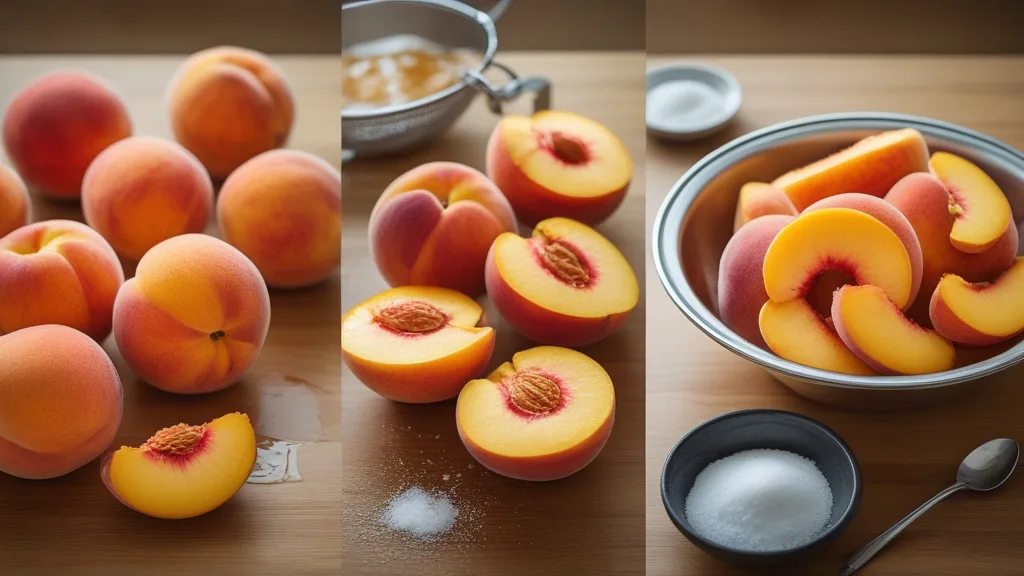
How to Tell If a Fresh Peach Is Ready
Press gently near the stem. If it gives just slightly, like a ripe avocado, it is ready. If it is rock hard, wait two days on the counter. Never refrigerate an unripe peach. Cold stops the ripening process and results in a mealy, flavorless interior that no amount of baking will fix. I learned this the hard way with a batch of eight peaches I stored too early. That pie was technically fine. It was also forgettable.
The Oat Crust: Why It Is Superior to Traditional Pastry and How to Nail It
This is the part of the recipe that surprises people most. When I say oat crust, I mean a pressed crust made from rolled oats, flour, butter, brown sugar, and a pinch of salt. It is not a standard pie dough. It is closer to a crumble base, pressed into the pan to form the bottom and sides.
The result is a crust that is crisp, nutty, slightly sweet, and structurally strong enough to hold a juicy filling without becoming soggy. It does not shrink. It does not require blind baking. It does not crack when you press it in. It is, genuinely, easier to make than pastry dough, and it tastes better in this specific application.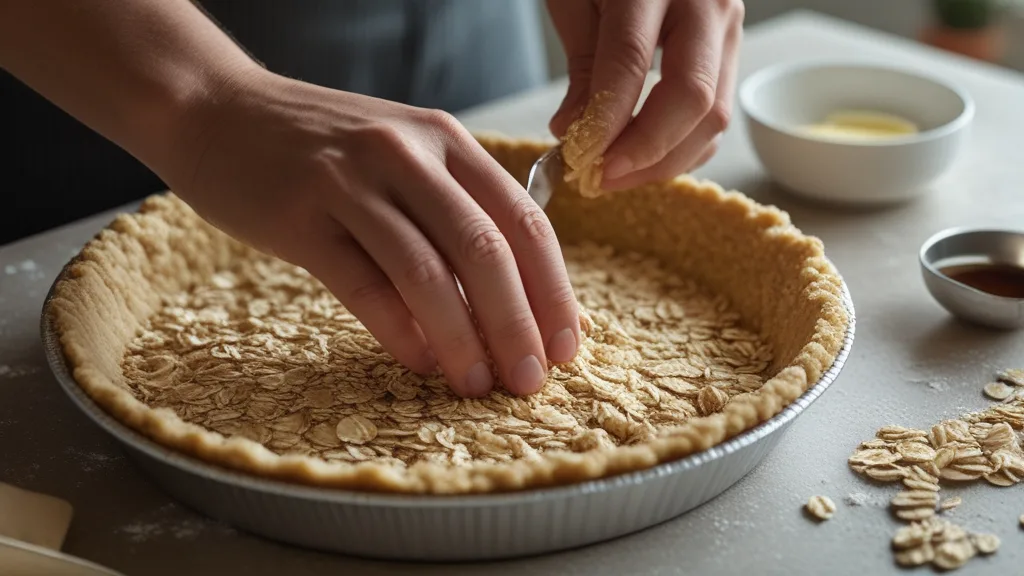
Oat Crust vs. Traditional Pastry: An Honest Comparison
| Factor | Oat Crust | Traditional Pastry |
| Difficulty | Very easy | Moderate to difficult |
| Soggy bottom risk | Very low | High without blind bake |
| Flavor | Nutty, buttery, complex | Neutral, buttery |
| Pairs with fruit | Excellent | Good |
| Requires chilling | No | Yes (30+ minutes) |
| Can be made ahead | Yes (2 days) | Yes (1 day) |
The Secret: Toast Your Oats First
This single step took my oat crust from good to great. Spread your rolled oats on a dry baking sheet and toast them at 350 degrees Fahrenheit for eight minutes, stirring once halfway through. They will turn golden and smell faintly of popcorn. That toasty flavor infuses the entire crust and creates a depth that raw oats simply cannot deliver.
I discovered this by accident in the fall of 2022. I had oats toasting for granola and started making my crust at the same time. Grabbed the toasted oats by mistake. The result was noticeably better. I have never gone back.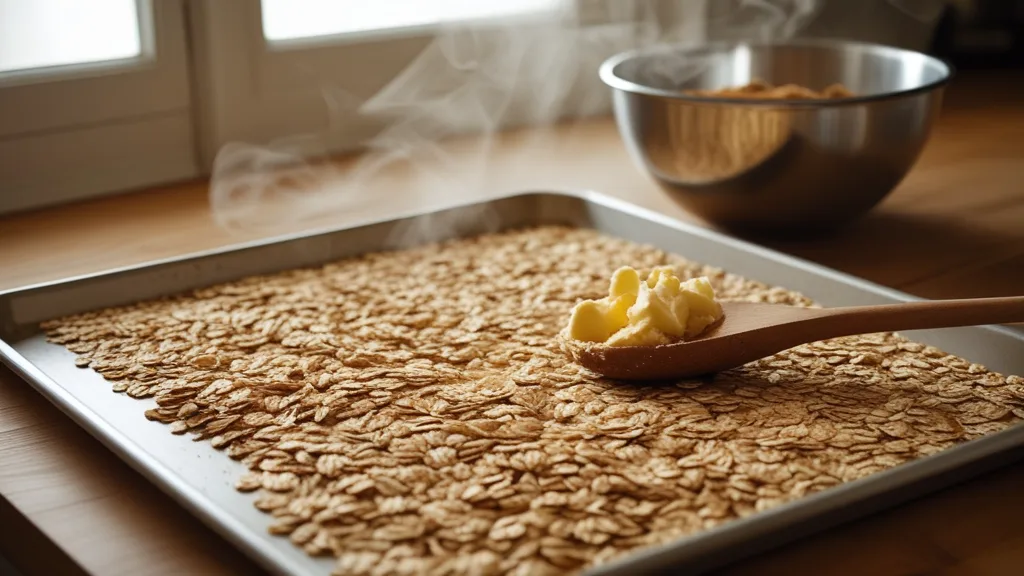
The Complete Peach Crumble Pie Recipe: Ingredients and Exact Measurements
For the Oat Crust
- 1.5 cups rolled oats (old-fashioned, not quick oats), toasted
- 0.75 cup all-purpose flour
- 0.33 cup packed light brown sugar
- 0.25 teaspoon fine sea salt
- 0.5 cup unsalted butter, melted and slightly cooled
For the Peach Filling
- 2.5 pounds fresh ripe peaches (about 6 to 7 medium), sliced 0.5 inch thick
- 0.33 cup granulated sugar (reduce to 0.25 cup if peaches are very sweet)
- 3 tablespoons cornstarch
- 1 tablespoon fresh lemon juice
- 1 teaspoon pure vanilla extract
- 0.75 teaspoon ground cinnamon
- 0.25 teaspoon ground ginger
- Pinch of nutmeg
For the Crumble Topping
- 1 cup rolled oats, toasted
- 0.5 cup all-purpose flour
- 0.5 cup packed brown sugar
- 0.25 teaspoon cinnamon
- 0.25 teaspoon salt
- 6 tablespoons cold unsalted butter, cut into small cubes
Step-by-Step Instructions: How to Build the Perfect Peach Crumble Pie
Step 1: Make and Press the Oat Crust (15 minutes)
- Preheat your oven to 375 degrees Fahrenheit. Lightly grease a 9-inch pie dish.
- In a large bowl, combine toasted oats, flour, brown sugar, and salt. Stir to combine.
- Pour melted butter over the oat mixture. Stir until the mixture clumps and holds together when pressed.
- Transfer to your pie dish and press firmly and evenly across the bottom and up the sides. Use the flat bottom of a measuring cup to pack it down. The crust should be about a quarter inch thick throughout.
- Bake the empty crust for 10 minutes. Remove and let cool slightly while you prepare the filling.
Step 2: Prepare the Peach Filling (10 minutes)
- Slice your peaches. Do not stress about perfection. Half-inch slices are ideal, but close enough is fine.
- In a large bowl, combine peaches, sugar, cornstarch, lemon juice, vanilla, cinnamon, ginger, and nutmeg. Toss gently until every peach slice is coated.
- Let the mixture sit for five minutes. You will see liquid start to pool at the bottom of the bowl. This is your cornstarch beginning to absorb it. Good sign.
- Pour the filling into your par-baked crust. Use a spoon to arrange the slices so they are relatively even.
Step 3: Make and Apply the Crumble Topping (8 minutes)
- Combine toasted oats, flour, brown sugar, cinnamon, and salt in a bowl.
- Add cold butter cubes. Use your fingertips to press the butter into the dry ingredients until the mixture resembles coarse, clumpy sand. You want some larger pea-sized pieces. Those create the best crunch after baking.
- Scatter the crumble over the filling. Be generous. Pile it slightly higher in the center where it will settle as it bakes.
Step 4: Bake (50 to 55 minutes)
- Place the pie on a sheet pan to catch any drips. This is not optional. Peach filling bubbles aggressively.
- Bake at 375 degrees Fahrenheit for 50 to 55 minutes. The topping should be deep golden brown. The filling should be bubbling visibly at the edges.
- If the topping browns too quickly, tent it loosely with foil after 35 minutes.
- Remove from oven and let cool for at least one hour before slicing. I know this is hard. It is also essential. The filling needs time to set. Slice too early and it runs everywhere.
Pro Tip: Cooling on a wire rack speeds up the process significantly and prevents condensation from softening the crust bottom.
The Five Mistakes I Made Before Getting This Recipe Right
I want to be transparent about my failures here because they will save you real frustration. These are not hypothetical mistakes. I made each of them personally.
Mistake one: using underripe peaches because I was impatient. The filling was starchy and dull. No amount of sugar or spice compensates for a peach that was not ready. Buy your peaches two days before you plan to bake and let them ripen on the counter.
Mistake two: not par-baking the crust. The first three times I made this pie, I poured the filling directly into the raw crust and baked everything together. The bottom crust was always slightly underdone. Ten minutes of pre-baking changed everything.
Mistake three: skipping the cornstarch. I went through a phase where I thought cornstarch was unnecessary and that reducing the fruit’s natural juices was enough. Wrong. The filling was runny every single time without it.
Mistake four: using quick oats instead of old-fashioned rolled oats. Quick oats become mushy. The crumble loses its texture and the crust packs less firmly. Use old-fashioned oats. The package says “old-fashioned” or “rolled oats.” That is what you want.
Mistake five: not toasting the oats. As I mentioned earlier, this is the difference between a good crumble and a great one. Do not skip it.
Make-Ahead Strategy: How to Prepare This Pie Up to Two Days in Advance
This is one of the most practical advantages of this recipe. Unlike cream pies or anything with a fresh topping, peach crumble pie actually holds up beautifully for two full days. That makes it ideal for gatherings where you do not want to be baking the morning of the event.
Option A: Bake Fully, Serve Later
Bake the pie completely. Let it cool fully to room temperature. Cover loosely with foil and store at room temperature for up to 24 hours. For 48 hours, refrigerate. Reheat at 300 degrees Fahrenheit for 15 to 20 minutes before serving. The crust and topping crisp back up beautifully.
Option B: Assemble, Then Bake Fresh
Make the crust and par-bake it. Prepare the filling and store it separately in the refrigerator. Make the crumble topping and store it in a zip bag. The day of your gathering, assemble and bake. This gives you the freshest possible result if that matters to you.
Serving Suggestions That Elevate the Entire Experience
Warm pie with cold vanilla ice cream is the classic for a reason. The contrast of temperatures, the way the ice cream melts into the crumble topping: it works every single time. Use a good quality vanilla. I prefer Haagen-Dazs vanilla bean or a local creamery ice cream if I have access to one.
For a slightly more sophisticated presentation, serve with a dollop of lightly sweetened creme fraiche or barely-whipped heavy cream. These add richness without the sweetness of ice cream and let the peach flavor stay front and center.
If you are serving this at brunch or want something lighter, a spoonful of plain Greek yogurt with a drizzle of honey is genuinely excellent. I tried this pairing at a friend’s request and was surprised by how well it worked.
Flavor Variations Worth Trying After You Master the Original
Peach and Raspberry
Replace one cup of sliced peaches with fresh raspberries. The tartness of the raspberries balances the sweetness of the peaches in a way that is genuinely exciting. Add an extra tablespoon of sugar to compensate for the raspberries’ acidity.
Peach and Bourbon
Add two tablespoons of good bourbon to the filling. Use something you would drink, not cooking bourbon. Bulleit or Maker’s Mark work well. The alcohol cooks off but leaves behind a warm, caramel complexity that pairs beautifully with the spices.
Spiced Brown Butter Variation
Brown your butter before adding it to the crumble topping instead of using it cold or melted. Brown butter has a nutty, toffee-like quality that makes the entire crumble taste more sophisticated. Let it cool completely before using so the crumble stays clumpy rather than melting into a paste.
Frequently Asked Questions About Peach Crumble Pie With Oat Crust
Can I use gluten-free flour in the oat crust and crumble?
Yes, with good results. Use a 1-to-1 gluten-free baking flour like Bob’s Red Mill 1-to-1 or King Arthur Measure for Measure. The texture of the crust will be slightly more crumbly and less cohesive, so press it extra firmly into the pan. Also confirm your oats are certified gluten-free, as standard oats are often processed in facilities that handle wheat.
My filling came out soupy. What went wrong?
Three likely causes. First, your peaches were very juicy and released more liquid than average. Next time, increase cornstarch to four tablespoons. Second, you sliced the pie too early before the filling had time to set. Wait a full hour, ideally 90 minutes. Third, if you used canned peaches, the excess syrup overwhelmed the thickening. Always drain canned peaches very thoroughly.
Can I make this recipe with other stone fruits?
Absolutely. Nectarines are a near-perfect substitute and require no changes to the recipe. Plums work beautifully but add an extra tablespoon of sugar since they tend to be more tart. Cherries are excellent but take slightly longer to bake and benefit from a splash of almond extract instead of vanilla. Apricots work well in combination with peaches but are too small and tart to carry a whole pie on their own.
How do I store leftover pie?
At room temperature, loosely covered, for up to 24 hours. In the refrigerator for up to four days. The crumble topping will soften in the refrigerator but crisp back up if you warm individual slices in a 300-degree oven for ten minutes. I do not recommend microwaving if you care about the texture of the topping.
What size pie dish should I use?
A standard 9-inch pie dish is ideal. A deep-dish 9-inch works even better because you can pile the filling higher without overflow risk. A 10-inch dish works but results in a thinner crust and filling layer. Do not use an 8-inch dish as the filling will overflow during baking.
Can I double the recipe?
Yes. Make two separate pies rather than attempting to scale up into a larger pan. The baking dynamics change with different pan sizes and depths, and two 9-inch pies will bake more reliably than one large format. The oat crust recipe doubles cleanly and the filling scales perfectly.
Final Thoughts: Why This Pie Has Earned a Permanent Spot at Every Gathering
I have baked a lot of desserts over the years. Elaborate cakes, delicate tarts, finicky choux pastry. None of them follow me around the way this peach crumble pie does. People remember it. People request it by name. People stand in the kitchen while I pack up and ask me to promise I will bring it again next time.
There is something deeply satisfying about having a signature dish that people genuinely love. Not politely appreciate. Actually love and ask for. This pie can be that dish for you. The recipe is forgiving, the ingredients are affordable (around $18 to $22 for a full pie as of summer 2025), and the result looks and tastes like something that required far more skill than it actually did.
My one prediction: once you bring this to your first gathering, you will be asked to bring it again. Probably to the next one after that too. That is how it started for me. Fair warning, and I mean that in the best possible way.
What variation are you going to try first? Or do you have a peach pie story of your own? I would genuinely love to hear what you do with this recipe.