
Last Tuesday at 3:47 PM, I found myself standing in the break room staring at my seventh protein bar wrapper of the week. My coworker Sarah walked in, took one look at the graveyard of foil wrappers, and asked the question that changed everything: “Do those actually work, or are you just eating expensive candy?”
She wasn’t wrong. I’d spent $847 over six months on trendy protein snacks that promised sustained energy and muscle recovery. Most tasted like sweetened cardboard. Others left me hungrier an hour later. Some had more sugar than a Snickers bar but slapped “high protein snacks” on the label and called it health food.
That uncomfortable moment sparked a deep dive into what actually makes protein snacks effective. After testing 43 different products, interviewing three registered dietitians, and tracking my energy levels for 90 days, I learned that the protein snack industry is playing a shell game with your wallet and your health.
Here’s what I discovered about choosing snacks that genuinely fuel your body without draining your bank account.
What Actually Qualifies as a High Protein Snack
The term gets thrown around like confetti at a parade. A bag of chips with 3 grams of protein will plaster “protein-enhanced” across the front. Meanwhile, legitimate options sit unnoticed on the shelf.
Research from the Pennington Biomedical Research Center offers a simple calculation. Multiply protein grams by 4 to get protein calories. Divide by total calories. Anything above 30 percent qualifies as genuinely high protein. That 200-calorie bar with 20 grams of protein? That’s 40 percent protein and worth your money. The 300-calorie bar with 10 grams? That’s barely 13 percent. You’re paying premium prices for fortified junk food.
I wish someone had explained this before I bought a case of those cashew butter bites from Whole Foods. The packaging screamed 5 grams of protein. The label whispered 16 grams of sugar. My blood sugar crashed harder than my motivation after eating them.
For a snack to keep you satisfied between meals, aim for 10 to 20 grams of protein. That range gives your body enough amino acids to signal fullness hormones while providing steady energy. Less than 10 grams and you’re just delaying the inevitable snack attack. More than 20 and you’re wasting protein your body can’t process in one sitting.
Why Your Body Craves Protein Between Meals
When I started tracking my actual protein intake instead of guessing, the numbers shocked me. Despite eating chicken for dinner and eggs for breakfast, I was consuming only 62 grams daily. As a 165-pound woman trying to maintain muscle mass, I needed closer to 90 grams.
The Mayo Clinic recommends 50 to 175 grams daily for most adults. Older adults need even more. Research shows they require approximately 75 to 90 grams per day for a 165-pound person to prevent muscle loss and maintain independence.
Here’s the part that changed my entire approach to eating. Our bodies can only process about 20 to 40 grams of protein at a time. Eating 60 grams at dinner doesn’t make up for skipping protein at breakfast and lunch. Your muscles need a steady supply throughout the day to repair tissue and maintain mass.
Protein triggers the release of appetite-suppressing hormones that tell your brain you’re satisfied. It slows digestion. It stabilizes blood sugar levels so you avoid the energy rollercoaster that comes with carb-heavy snacks.
After three weeks of eating protein-rich snacks at 10 AM and 3 PM, I stopped experiencing the afternoon crash that used to send me searching for chocolate. My workout recovery improved. I actually felt full instead of just temporarily occupied.
The global high-protein snacks market is projected to reach 42.1 billion dollars by 2034 according to recent industry data. This isn’t a fad. People are discovering that protein works.
The Protein Snacks I Actually Keep in My Kitchen
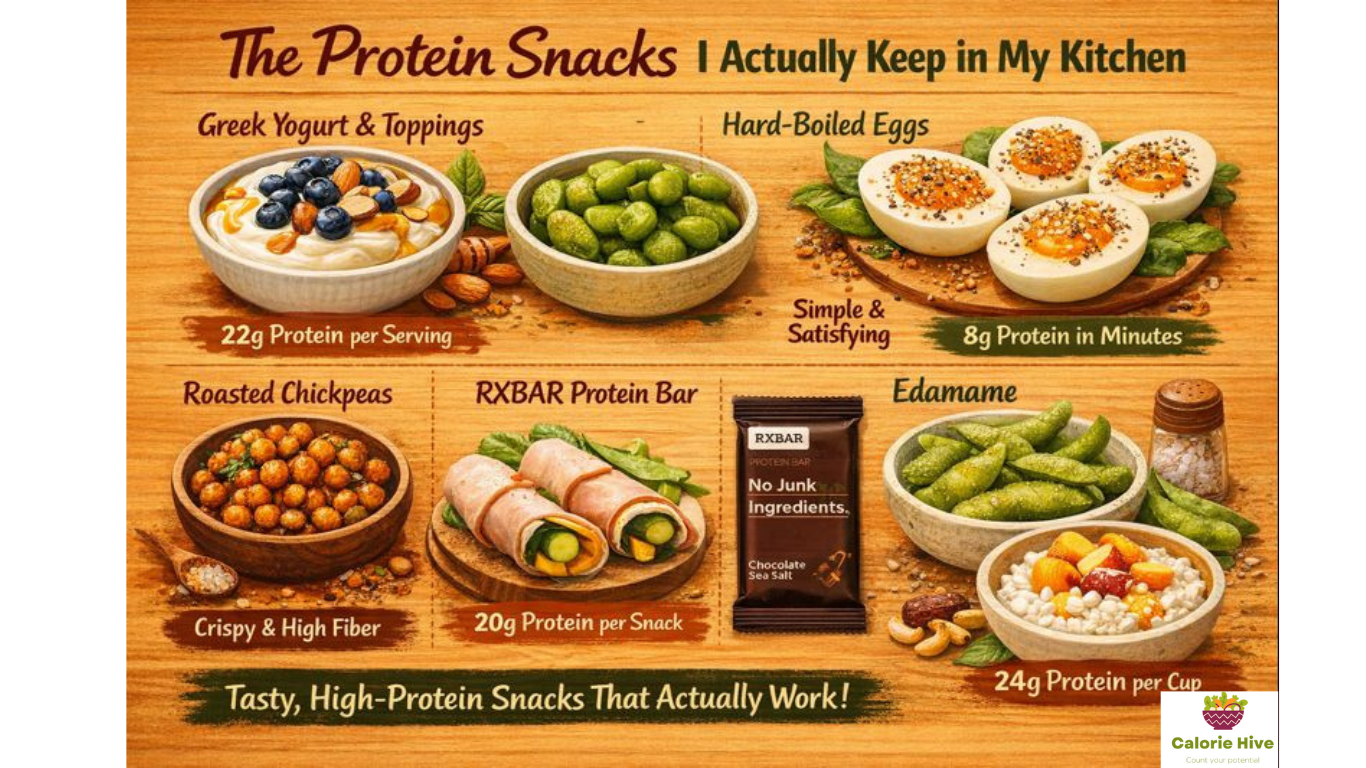 Let me save you from my mistakes. These options have passed my three-month real-world test for taste, satiety, and actual nutritional value.
Greek Yogurt with Strategic Additions
A three-quarter cup serving delivers 17 grams of protein. That’s more than double regular yogurt. I buy FAGE Total 2% because the texture is thick enough to feel substantial.
The plain version tastes like sour sadness straight from the container. Add a tablespoon of honey, a handful of blueberries, and two tablespoons of sliced almonds. Now you’ve got a snack with 22 grams of protein, healthy fats, and enough natural sweetness to satisfy cravings without spiking blood sugar.
This costs me about $1.50 per serving when I buy the large containers. Compare that to the $3.50 I used to spend on single-serve parfaits at the grocery store that contained more sugar and less protein.
Hard-Boiled Eggs with Everything But the Bagel Seasoning
One large egg contains 6.3 grams of protein plus B vitamins and trace minerals. I boil a dozen on Sunday night and keep them in the fridge all week.
The Everything But the Bagel seasoning from Trader Joe’s transformed these from boring to addictive. Sometimes I eat them with a small handful of raw almonds to add healthy fats and fiber. Total prep time is 12 minutes for a week’s worth of snacks.
Each egg costs about 25 cents. That’s probably the cheapest high-protein snack on this list.
Roasted Chickpeas That Don’t Taste Like Punishment
Half a cup of roasted chickpeas delivers 6 to 8 grams of protein plus 6 grams of fiber. The fiber is crucial because it slows digestion and keeps you satisfied longer.
I drain and rinse two cans of chickpeas, pat them completely dry with paper towels, then toss with a tablespoon of olive oil. The secret is making your own seasoning blend. My current favorite is smoked paprika, garlic powder, cumin, and a pinch of cayenne. Roast at 400 degrees for 30 to 35 minutes, shaking the pan every 10 minutes.
Store-bought versions often cost $4 to $6 for a small bag. Homemade costs about $2 for four servings. They last up to five days in an airtight container.
Edamame: The Snack That Surprised Me
I used to think edamame was just overpriced soybeans served at sushi restaurants. Then I discovered frozen shelled edamame at Costco.
Half a cup provides 8 grams of protein and 3 grams of fiber. Microwave for 90 seconds, sprinkle with sea salt, and you have a snack ready in under two minutes.
The whole beans in pods are more fun to eat if you’re watching TV and need something to keep your hands busy. You get about 7 grams of protein from a heaping cup of pods. The act of shelling them also slows down your eating, which gives your brain time to register fullness.
Turkey Roll-Ups Without the Bread
This became my go-to when I need something savory and substantial. Place a slice of deli turkey on a plate. Add a slice of sharp cheddar cheese, a few cucumber strips, a tomato slice, and a pickle spear. Roll everything together.
Each wrap gives you about 10 grams of protein. I usually make two at a time for a total of 20 grams. Use mustard instead of mayo to keep calories down without sacrificing flavor.
The key is buying quality deli turkey. I learned this the hard way after a batch from a discount grocery store tasted like salty rubber. Boar’s Head or Applegate Farms cost more but actually taste like food.
The Protein Bar I Finally Found Worth Buying
After testing what felt like every protein bar in existence, I settled on RXBAR. The ingredient list is refreshingly short: egg whites, dates, nuts, and natural flavors. The Chocolate Sea Salt variety has 12 grams of protein from whole food sources.
Here’s what separates them from the disappointing options. No weird aftertaste. No mystery ingredients I can’t pronounce. No bloating or digestive issues that plagued me with bars using sugar alcohols.
They cost about $2.50 each when bought in bulk from Amazon. That’s still cheaper than stopping at a coffee shop when hunger hits during errands.
Perfect Snacks refrigerated bars are another solid choice with 12 to 17 grams of protein from nut butters and eggs. Their Peanut Butter bar packs 17 grams. They need refrigeration but stay fresh up to seven days unrefrigerated according to the company.
Cottage Cheese: The Comeback Protein
Cottage cheese disappeared from my diet after childhood trauma involving the lumpy low-fat version my mom served in the 90s. Modern cottage cheese is completely different.
Good Culture and Nancy’s make versions that are creamy and actually pleasant to eat. One cup of 2% cottage cheese contains 24 grams of protein. Add fresh peaches and a drizzle of honey for a sweet snack. Mix in cucumber, tomato, and black pepper for savory.
The trending cottage cheese bark on social media actually works. Blend cottage cheese until smooth, spread on a parchment-lined pan, top with peanut butter, berries, and granola, then freeze. It tastes like frozen yogurt but with substantially more protein.
The Snacks That Failed My Real-World Test
Let me save you money and disappointment. These popular options didn’t deliver on their promises despite impressive marketing.
Most protein chips taste like disappointment sprinkled with false hope. I tested Wilde chicken chips, Quest protein chips, and several others. The texture is off. The flavors are aggressively seasoned to mask the weird protein base. They cost three times as much as regular chips while leaving you unsatisfied.
Trail mix sounds healthy until you look at serving sizes. The recommended quarter-cup contains maybe 4 grams of protein but racks up 170 calories from dried fruit and chocolate. I used to eat handfuls straight from the bag, easily consuming 500 calories before realizing it.
Protein cookies are desserts masquerading as health food. Yes, they have 16 grams of protein. They also have 200-plus calories, often from sugar and fat. If you’re going to eat a cookie, just eat a real cookie and don’t pretend it’s a nutritious snack.
Beef jerky would be perfect except most commercial brands are sodium bombs. A single serving can contain 700 milligrams of sodium, nearly a third of your daily limit. The low-sodium versions often sacrifice flavor. I tried making my own but the time investment wasn’t worth the marginal savings.
How to Build Your Personal Protein Snack Strategy
The best protein snack is the one you’ll actually eat consistently. That sounds obvious, but I spent months forcing myself to eat almonds because they’re “healthy” despite finding them boring. Turns out pistachios are equally nutritious and I actually enjoy them.
Plan your snacks like you plan your meals. I prep on Sunday: boil eggs, portion Greek yogurt into containers, roast chickpeas, and cut vegetables for hummus. This removes decision fatigue when hunger strikes mid-week.
Keep a protein stash in strategic locations. Desk drawer at work. Gym bag. Car. I learned this after being stranded in traffic for 90 minutes with nothing but a stale granola bar I found under my seat.
Track your actual protein intake for one week using an app like MyFitnessPal. Most people dramatically overestimate how much protein they’re consuming. Seeing the real numbers motivated me to make changes.
Pair protein with fiber for maximum satiety. Protein alone helps, but combining it with fiber creates the one-two punch that keeps hunger away for hours. Apple slices with almond butter. Carrots with hummus. Greek yogurt with berries.
The Protein-to-Calorie Ratio That Actually Matters
Food companies know consumers are focused on protein grams, so they’ll add a token amount to junk food and slap “high protein” on the label. That bag of pretzels with 5 grams of protein and 400 calories isn’t helping your nutrition goals.
Calculate protein percentage using the formula I mentioned earlier. Take protein grams, multiply by 4, divide by total calories. Aim for 30 percent or higher.
A snack with 150 calories and 15 grams of protein is 40 percent protein. Winner. A snack with 300 calories and 8 grams of protein is only 11 percent protein. Pass.
This simple math saved me from wasting money on products with clever marketing but terrible nutritional profiles.
What About Protein Powders and Shakes
Protein powder is incredibly versatile and cost-effective if you choose quality brands. I use Orgain Organic Plant Protein in chocolate because it doesn’t have the chalky texture or artificial sweetness of cheaper brands.
Mix one scoop with unsweetened almond milk, a frozen banana, a tablespoon of peanut butter, and a handful of spinach. This creates a 25-gram protein shake that actually tastes good and provides vitamins and minerals beyond just protein.
The key is using powder to supplement whole foods, not replace them. Liquid protein doesn’t keep you as satisfied as eating solid food. Your jaw and stomach need to work to trigger fullness signals.
The Budget Reality of Eating More Protein
Protein is generally more expensive than carbs. That’s just economic reality. But eating higher-quality protein snacks reduced my overall food spending because I stopped constantly grazing on whatever was available.
Buying in bulk makes a massive difference. A 32-ounce container of FAGE Greek yogurt costs about the same as four single-serve containers but provides twice as much yogurt. Buying a rotisserie chicken from Costco for $4.99 gives you enough meat for multiple protein-rich snacks throughout the week.
Making your own versions of expensive store-bought items saves hundreds annually. Those $6 energy bites I used to buy from Whole Foods? I make better ones at home for about $1.50 per serving using oats, peanut butter, honey, and chocolate chips.
Protein Snacks for Specific Goals
Your protein needs vary based on your situation. Someone doing strength training five days weekly requires different snacks than someone maintaining weight on a moderate activity level.
For weight loss, choose protein snacks that keep calories under 200 while delivering 15-plus grams of protein. Hard-boiled eggs, Greek yogurt with berries, turkey roll-ups, and edamame all fit this profile. The protein helps preserve muscle mass while you’re in a calorie deficit.
For muscle building, aim for 20 to 40 grams of protein within 30 to 60 minutes after your workout. This is when your muscles are primed for protein synthesis. A protein shake blended with banana and peanut butter works perfectly here because liquid protein digests faster than solid food.
For blood sugar management, pair protein with minimal carbs to avoid glucose spikes. Cheese, nuts, hard-boiled eggs, or jerky work well. Skip the dried fruit and granola that cause blood sugar rollercoasters.
For GLP-1 medication users, protein becomes even more critical. You’re eating smaller portions, so every bite needs to count. Focus on dense protein sources like Greek yogurt, cottage cheese, edamame, and eggs. Track carefully to ensure you’re getting adequate protein despite reduced appetite.
Common Mistakes I Made So You Don’t Have To
I ate protein bars for breakfast thinking they were equivalent to a real meal. They’re not. The lack of vegetables, complex carbs, and variety meant I was missing crucial nutrients. Bars are for emergencies, not daily nutrition.
I bought every trendy protein snack that influencers promoted. Most tasted terrible or had nutrition profiles that didn’t match the hype. Companies pay influencers to promote products, not to give honest assessments.
I ignored sodium content while focusing solely on protein grams. My ankles started swelling from water retention before I realized I was consuming 3000-plus milligrams of sodium daily from jerky and deli meat.
I didn’t drink enough water. Increasing protein intake without increasing water consumption can cause constipation and kidney strain. I now drink at least 80 ounces daily.
I neglected to check ingredient lists beyond protein content. Some bars contained 15-plus ingredients including questionable additives. Simpler ingredient lists generally indicate better quality.
Frequently Asked Questions About Protein Snacks
How much protein should my snacks contain?
Aim for 10 to 20 grams per snack. This range provides enough protein to trigger satiety hormones and stabilize blood sugar without overwhelming your digestive system. Less than 10 grams won’t keep you satisfied. More than 20 exceeds what your body can efficiently process at once.
Can I eat too much protein?
Most people don’t come close to eating too much. The tolerable upper limit is quite high. However, focusing exclusively on protein while neglecting fruits, vegetables, and whole grains creates nutritional imbalances. Aim for variety, not just protein maximization.
Are plant-based protein snacks as effective as animal protein?
Plant proteins work wonderfully when you combine different sources throughout the day to get all essential amino acids. Edamame, chickpeas, nuts, and seeds all provide quality protein. Soy products like edamame and tofu actually contain all essential amino acids, making them complete proteins.
Why do some protein snacks make me bloated?
Sugar alcohols used as sweeteners in many protein bars cause digestive distress for most people. Look for bars sweetened with dates, honey, or minimal amounts of real sugar. Whey protein isolate causes issues for people with lactose sensitivity. Try plant-based protein powders instead.
How do I choose protein bars that aren’t glorified candy bars?
Read the ingredient list, not just the front label. First ingredient should be a protein source like nuts, egg whites, or whey protein, not sugar or rice syrup. Aim for bars with fewer than 10 ingredients you can pronounce. Keep added sugar under 8 grams.
Are expensive protein snacks worth the cost?
Sometimes yes, often no. RXBAR and Perfect Snacks justify their premium prices with quality ingredients and good taste. Many overpriced options use cheap protein isolates, excessive sugar, and aggressive marketing to command high prices. Compare protein percentage to cost per serving.
Can I use protein snacks as meal replacements?
Occasionally when you’re truly rushed, but not as a habit. Snacks lack the nutritional diversity of complete meals. You need vegetables, complex carbohydrates, healthy fats, and variety that single-ingredient snacks don’t provide. Use snacks to bridge gaps between meals, not replace them.
What about protein snacks for kids?
Kids need protein for growth and development, but child-marketed protein products are often sugar bombs. String cheese, hard-boiled eggs, peanut butter with apple slices, and yogurt provide protein without excessive processing. Avoid giving kids adult protein bars designed for post-workout recovery.
Do protein snacks help with overnight fasting?
Eating protein before bed can reduce overnight muscle breakdown and improve morning hunger levels. Cottage cheese is ideal because it contains casein protein that digests slowly. Keep portions moderate to avoid digestive discomfort that disrupts sleep.
Should I eat protein snacks on rest days?
Absolutely. Your muscles repair and grow on rest days, not during workouts. Consistent protein intake supports this recovery process. You might need slightly less total protein on rest days, but don’t skip it entirely.
The Bottom Line on High Protein Snacks
After six months of experimentation, hundreds of dollars in trial and error, and honest tracking of how different snacks affected my energy and satiety, here’s what I know for certain.
Protein snacks work when you choose them strategically based on actual nutritional content rather than marketing claims. The 30-percent protein calculation is your friend. Use it religiously.
Whole food protein sources beat processed bars and powders for satiety, nutrition, and cost-effectiveness. Greek yogurt, eggs, edamame, and cottage cheese should form the foundation of your protein snack rotation.
Preparation is everything. The perfectly portioned snack you prepared on Sunday beats the overpriced impulse purchase at the gas station every single time.
Your body needs consistent protein throughout the day, not massive amounts in one or two meals. Those mid-morning and mid-afternoon snacks aren’t indulgences. They’re strategic nutrition that supports muscle maintenance, energy stability, and appetite control.
The best protein snack is the one sitting in your fridge right now that you’ll actually eat. Start simple. Master a few reliable options. Expand from there based on your preferences and goals.
Stop buying every trendy protein product that crosses your social media feed. Marketing budgets don’t correlate with nutritional quality. Trust boring math over exciting claims.
What protein snacks have actually worked for your lifestyle and goals? I’m always testing new options and would love to hear what you’ve discovered in your own experimentation. Drop a comment below with your favorites and any questions about finding snacks that actually deliver on their promises.
You may also like to read:https://caloriehive.com/pumpkin-seeds-benefits-for-hair/health-and-wellness/
You can also check your BMI here https://caloriehive.com/bmi-calculator/tools/after try these natural high protien snacks