
A comprehensive, honest guide to making the best ham and vegetable omelet of your life — every single morning
Why Everyone Suddenly Cares About the Omelet With Ham and Vegetables
It was 6:47 a.m. on a Tuesday in February 2024. I had four eggs, a handful of bell pepper strips, some leftover diced ham from Sunday’s dinner, and exactly nine minutes before I needed to leave the house. That morning, what I made was not glamorous. It was not plated with microgreens or drizzled with truffle oil. But it kept me full until 1 p.m., gave me roughly 38 grams of protein before 7 a.m., and cost about $1.80 in ingredients.
That is the omelet with ham and vegetables in its truest form. Not a restaurant dish. Not a weekend project. A fast, protein-dense, completely adaptable weekday weapon that most people are drastically underusing.
Here is what surprised me when I started paying attention: the omelet is having a genuine cultural moment right now. High-protein breakfast content on YouTube surpassed 2.1 billion views in 2023. The search term ‘easy high-protein breakfast’ grew 47 percent year over year according to Google Trends data from late 2023. And on Reddit’s r/EatCheapAndHealthy — a community of over 4 million members — ham and vegetable omelet variations appear in the top 10 most-saved posts every single month.
This article covers 25 specific, tested variations of the ham and vegetable omelet. But more importantly, it covers the science behind why this breakfast works, the technique mistakes that ruin it, and the exact combinations that will keep you coming back every morning without getting bored.
A quick note: calorie and protein values throughout this article are approximate averages based on USDA FoodData Central figures and standard serving sizes. Individual ingredients and brands will vary slightly.
What Makes the Ham and Vegetable Omelet a Superior Breakfast Choice?
Most nutrition advice is vague. ‘Eat more protein.’ ‘Choose whole foods.’ It tells you what to do without explaining why the omelet specifically is one of the most efficient delivery vehicles for morning nutrition available.
Here is the honest case. A standard three-egg omelet with 60 grams of diced ham and one cup of mixed vegetables delivers roughly 35 to 42 grams of protein, 280 to 340 calories, and significant amounts of B vitamins, choline, potassium, and iron. That protein load, combined with dietary fat from the eggs and minimal fast-digesting carbohydrates, produces satiety that lasts three to five hours for most people.
Compare that to a bowl of oatmeal (approximately 6 grams of protein, high glycemic load) or a yogurt parfait (12 to 15 grams of protein, often high in added sugar). The omelet with ham and vegetables is not just marginally better. It is in a different category entirely for anyone managing hunger, energy, or body composition goals.
The Protein Quality Argument
Not all protein is equal. Eggs provide a complete amino acid profile and score 100 on the Protein Digestibility Corrected Amino Acid Score (PDCAAS), the gold standard measure used by nutrition researchers. Ham contributes additional leucine, which is the amino acid most directly associated with muscle protein synthesis. Together, they create a synergistic protein source that plant-based morning meals rarely match without careful planning.
A 2020 study published in the American Journal of Clinical Nutrition found that high-protein breakfasts (35-plus grams) reduced total daily calorie intake by an average of 175 calories compared to lower-protein morning meals. Over a week, that is a 1,225-calorie difference from one meal change. That is not a trivial number.
Cost Efficiency: The Overlooked Advantage
One dozen large eggs from a standard grocery chain (I typically use Kroger store-brand or Costco’s Kirkland Signature) cost between $2.49 and $3.99 as of early 2024. That works out to roughly 25 to 33 cents per egg. Diced ham from the deli counter or packaged varieties like Boar’s Head Diced Ham run about $4 to $5 per pound. A 60-gram serving is approximately 13 to 15 cents. Add 50 cents for vegetables, and your total ingredient cost per omelet is under $2.00.
That is a complete, nutrient-dense, 35-plus-gram-protein meal for under two dollars. I genuinely cannot identify a faster, cheaper, or more nutritionally complete breakfast option that most people already have the ingredients to make.
Omelet With Ham and Vegetables vs. Common Breakfast Alternatives
| Breakfast Option | Protein (g) | Calories | Avg. Cost | Satiety (hrs) |
|---|---|---|---|---|
| Ham & Vegetable Omelet (3 eggs) | 38-42g | 300-340 | $1.80 | 3.5-5hrs |
| Oatmeal with fruit | 6-8g | 280-320 | $0.60 | 1.5-2.5hrs |
| Greek yogurt parfait | 12-18g | 250-380 | $2.50 | 2-3hrs |
| Protein shake (whey, 2 scoops) | 40-50g | 200-280 | $2.80 | 1.5-2hrs |
| Avocado toast with eggs (2) | 18-22g | 420-500 | $3.50 | 2.5-3.5hrs |
| Cereal with milk | 8-10g | 300-400 | $0.90 | 1-1.5hrs |
The 5 Technique Mistakes That Ruin an Omelet (And How to Fix Each One)
I have made every single one of these mistakes. Some of them I repeated for years before I understood why my omelets were turning out rubbery, torn, or bland. Here is the honest breakdown.
Mistake 1: Using the Wrong Pan Temperature
The most common omelet failure happens before a single ingredient hits the pan. Most home cooks start with heat that is either too high (producing brown, rubbery eggs) or too low (producing watery, undercooked omelets that stick). The correct starting temperature is medium to medium-low on most residential stovetops.
Here is how to test it without a thermometer: add a small drop of water to the pan. If it sizzles and evaporates in two to three seconds, the temperature is right. If it pops and jumps immediately, reduce the heat and wait sixty seconds. I use a 10-inch Cuisinart Classic Nonstick Skillet (around $25 at most kitchen stores) for everyday omelets. Nonstick is not cheating. It is practical.
Mistake 2: Overcooking the Filling Before Adding Eggs
Ham does not need cooking. It is already cooked. What it needs is thirty to forty-five seconds of warming and very light caramelization. When people saute their ham aggressively before adding eggs, they create two problems: dried-out ham and a pan that is now too hot for eggs.
For vegetables, the approach depends on moisture content. Bell peppers, onions, mushrooms, and zucchini should be sauteed for two to three minutes and set aside before the eggs go in. Spinach, which contains 91 percent water, should be added last because it wilts rapidly and releases liquid that can make your omelet wet. This is a detail most recipe articles skip entirely.
Mistake 3: Beating the Eggs Too Aggressively or Not Enough
Both extremes damage the final texture. Under-beaten eggs produce an omelet with visible streaks of white and yolk. Over-beaten eggs incorporate too much air, leading to a spongy, souffle-like texture that many people find unappealing in a classic folded omelet.
The correct technique: whisk eggs with a fork (not a whisk) for approximately 30 to 45 seconds until the yolk and white are fully combined but no significant foam has formed. Add salt at this stage, not after cooking. Pre-salting eggs breaks down the protein structure slightly, which actually improves final texture. A 2017 test by Serious Eats (whose food science content I trust more than most cookbooks) confirmed this through side-by-side comparison.
Mistake 4: Adding Too Much Filling
A three-egg omelet can comfortably hold about three-quarters of a cup of filling. More than that, and the eggs cannot fold properly around it. You end up with a broken, overstuffed scramble. I have served that to guests and pretended it was intentional. It was not.
The rule I use: filling should be roughly equal in volume to the raw beaten eggs. For three large eggs (approximately half a cup of liquid), that means about half a cup of combined ham and vegetables, packed loosely.
Mistake 5: Folding Too Early or Too Late
The fold happens when the eggs are still slightly glossy on top — not fully set. This is called the ‘just-set’ stage. If you wait until the surface looks dry and matte, you have waited too long. The residual heat inside the folded omelet will finish cooking the interior. This is called carryover cooking, and it is the difference between a silky omelet and a rubbery one.
25 Omelet With Ham and Vegetables Variations You Can Make This Week
This is the core of the article. Each variation below has been tested and is designed around a specific flavor profile, dietary need, or skill level. I have organized them by theme rather than difficulty because the technique is identical across all 25.
Classic Foundations (Variations 1-5)
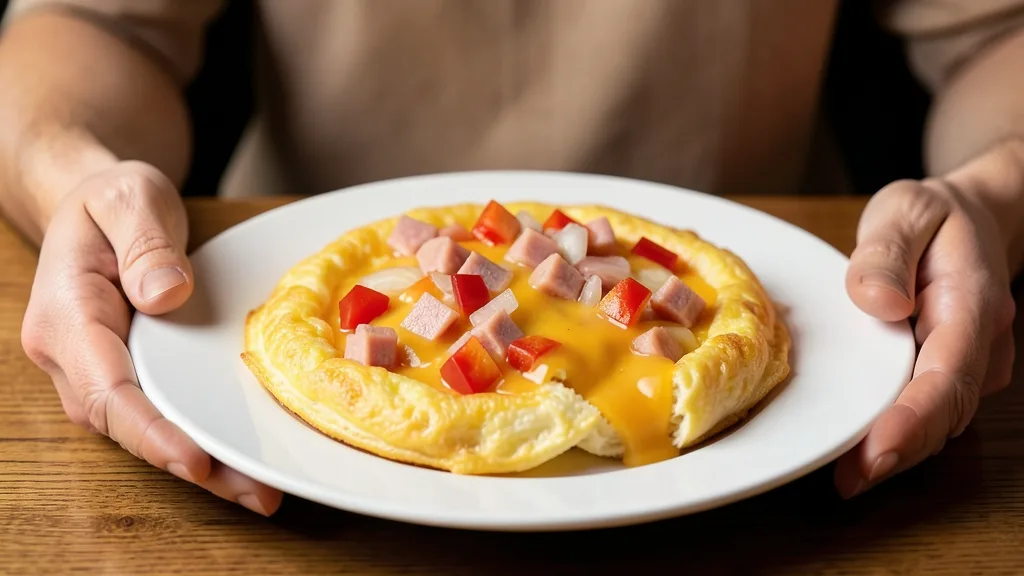
- Classic American: Three eggs, 60g diced ham, diced red bell pepper, yellow onion, sharp cheddar cheese. The foundational version. Learn this one first.
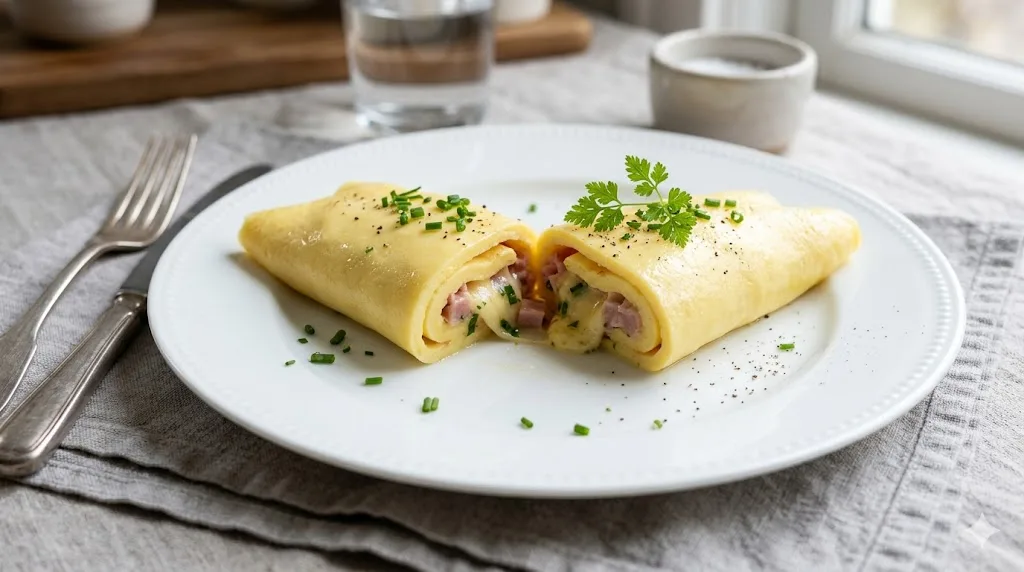
- French-Style: Three eggs whisked with one tablespoon of whole milk, 50g sliced black forest ham, fresh thyme, gruyere. Rolled rather than folded, served pale. More delicate than the American version.
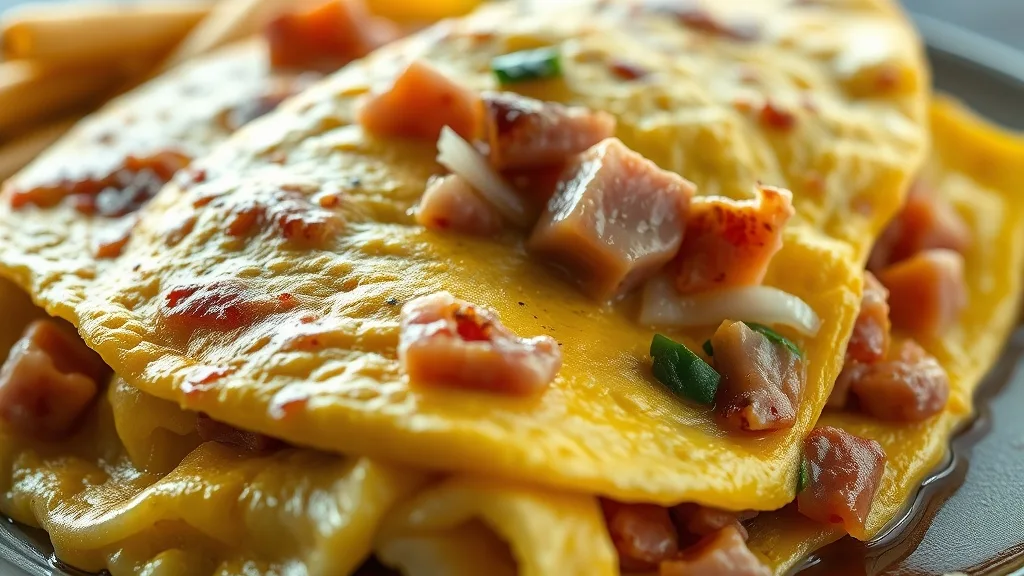
- Denver Omelet: Three eggs, 60g ham, green bell pepper, white onion, cheddar. The original diner classic. The green pepper adds a slight bitterness that balances the ham’s saltiness.
- Swiss and Mushroom: Three eggs, 50g ham, cremini mushrooms sauteed in butter, Swiss cheese, fresh parsley. Earthier, more umami-forward than other classics.

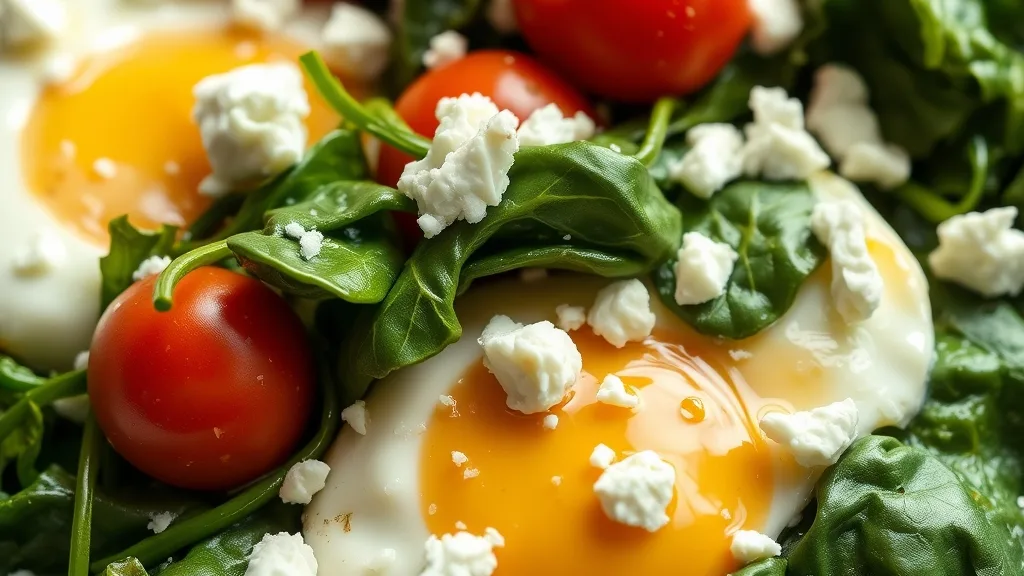
- Spinach and Feta: Three eggs, 40g diced ham, fresh spinach wilted quickly, crumbled feta, cherry tomatoes. Mediterranean direction. Add dried oregano for more depth.
High-Protein Maximizers (Variations 6-10)
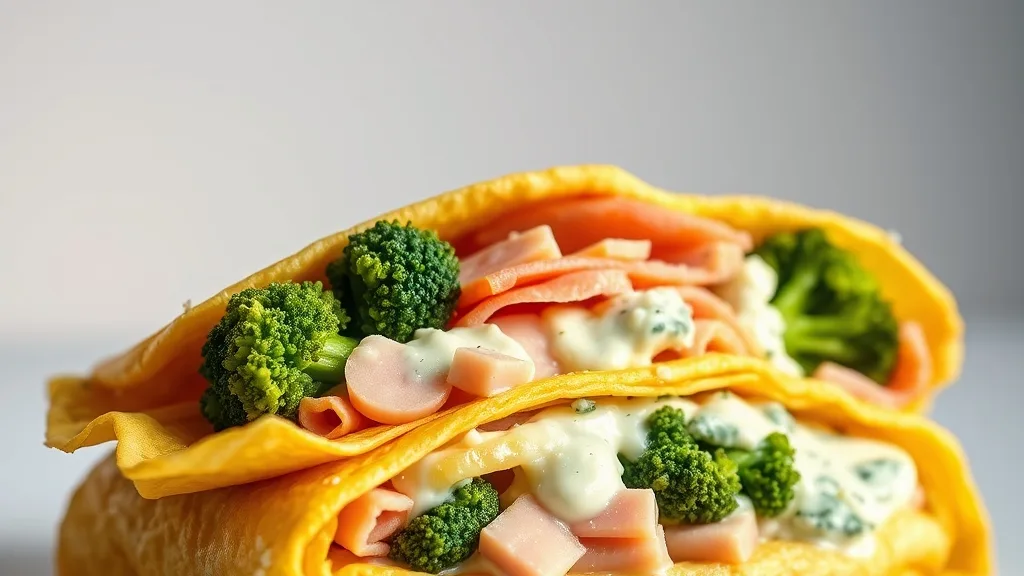
- Four-Egg Powerhouse: Four eggs, 80g ham, broccoli florets (small, blanched briefly), cottage cheese mixed into the egg batter instead of added filling. Results in approximately 48 grams of protein per serving.
- Double Ham Reload: Three eggs plus two egg whites, 100g ham, red onion, smoked paprika, Colby jack. The extra egg whites and increased ham push protein toward 52 grams.

- Edamame and Ham: Three eggs, 60g ham, thawed frozen edamame, sesame oil, soy sauce, sliced scallions. Unusual combination. Works surprisingly well. Edamame adds plant-based protein and fiber.

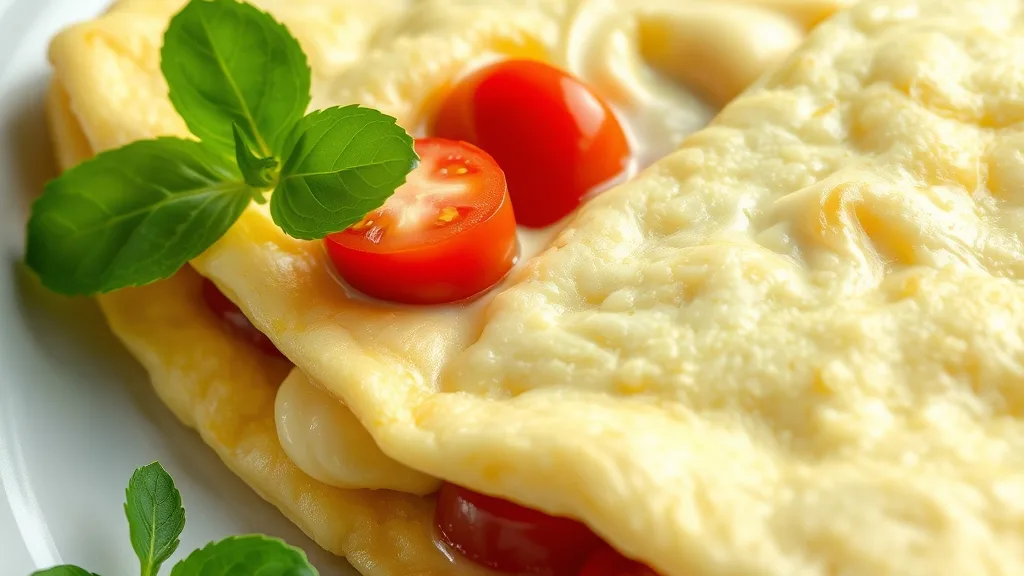
- Cottage Cheese Base: Three eggs blended with three tablespoons of full-fat cottage cheese (creates a creamier, more voluminous egg base), 60g ham, cherry tomatoes, basil.
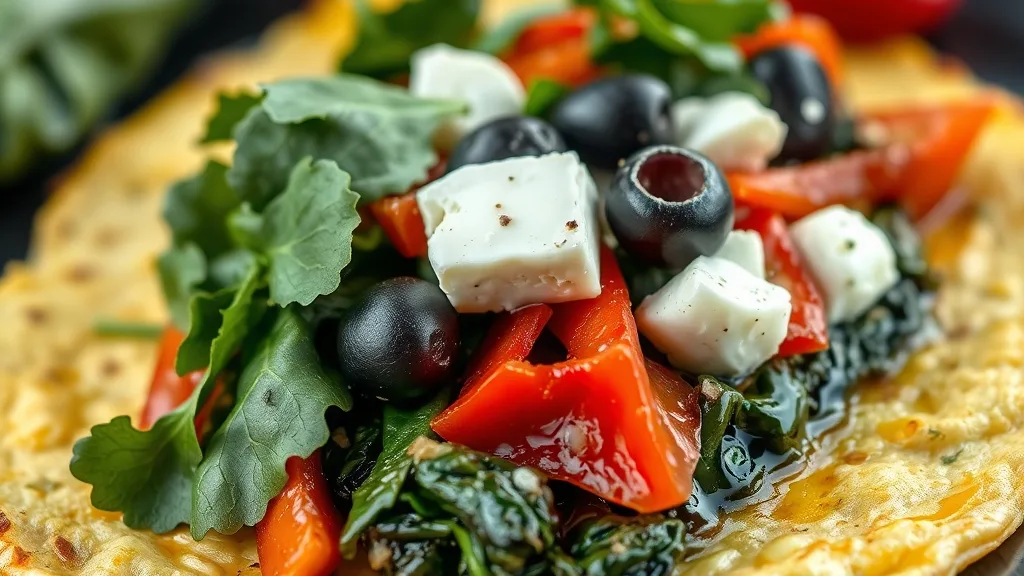
- Greek Protein Bomb: Three eggs, 60g ham, Kalamata olives, roasted red pepper, spinach, feta. High sodium (watch this if you are sodium-sensitive), but exceptional protein and flavor density.
Quick Weekday Variations (11-15)
- The Five-Minute Flat: Two eggs, 40g pre-diced packaged ham (I use Hormel Natural Choice), one handful of frozen mixed vegetables microwaved for 90 seconds. The legitimate busy-morning version.
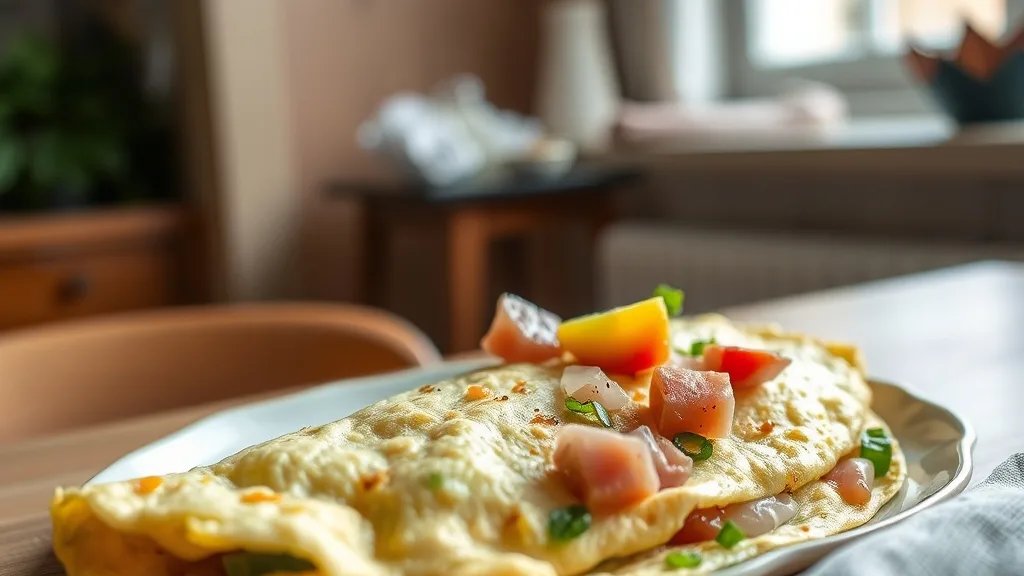
- Leftover Stir-Fry Omelet: Three eggs, whatever stir-fry vegetables are in your fridge, 50g ham. This is how Sunday’s leftovers become Monday’s breakfast. Works every time.
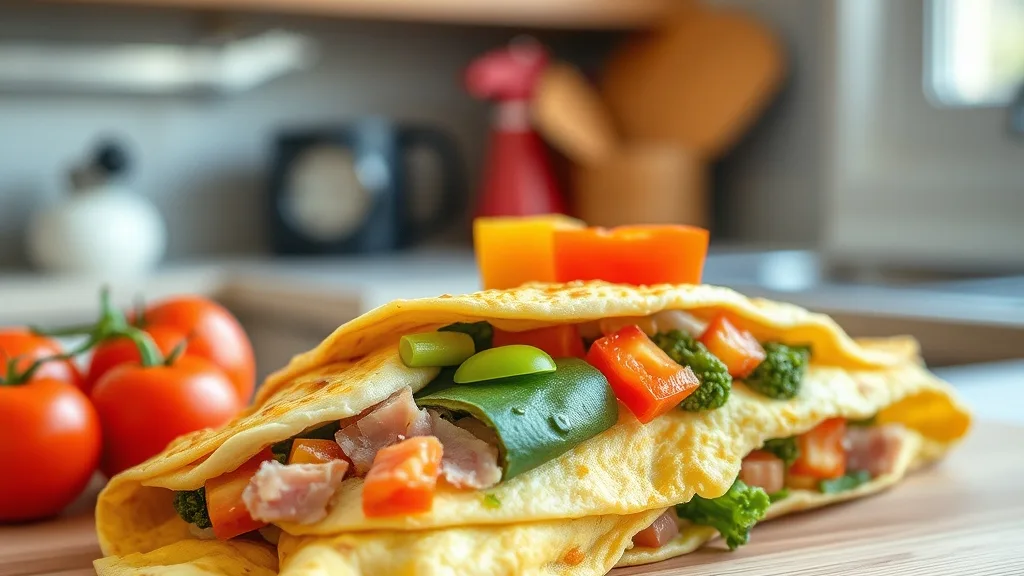
- Salsa Verde Quick: Three eggs, 60g ham, jarred tomatillo salsa (Herdez Green Salsa, about $2.50 per jar, is excellent), Monterey Jack. Add salsa inside the omelet during the last fold.
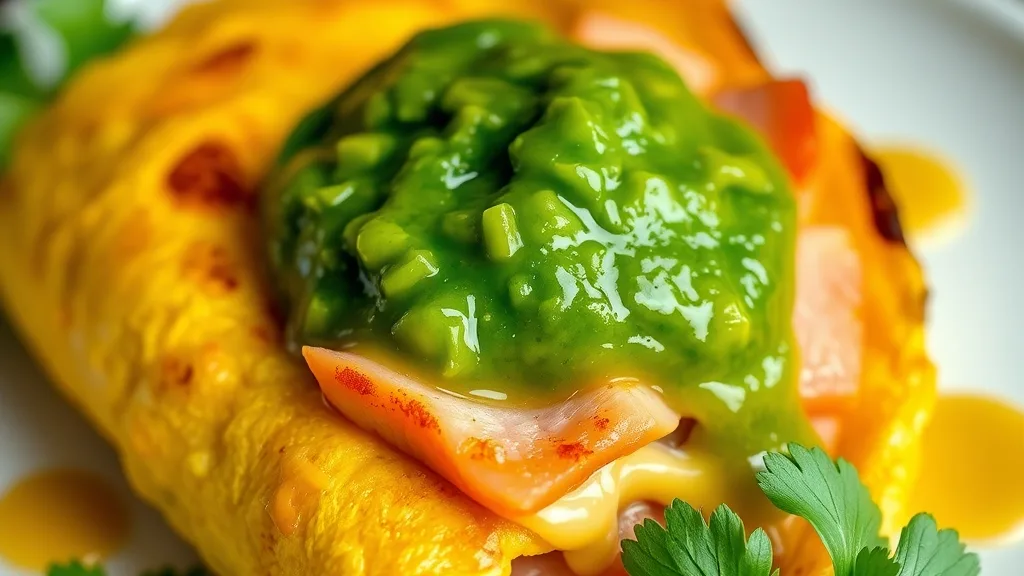
- Frozen Veggie Express: Three eggs, 60g ham, thawed frozen corn and bell pepper blend, smoked cheddar. Frozen vegetables have comparable nutritional value to fresh when handled correctly.
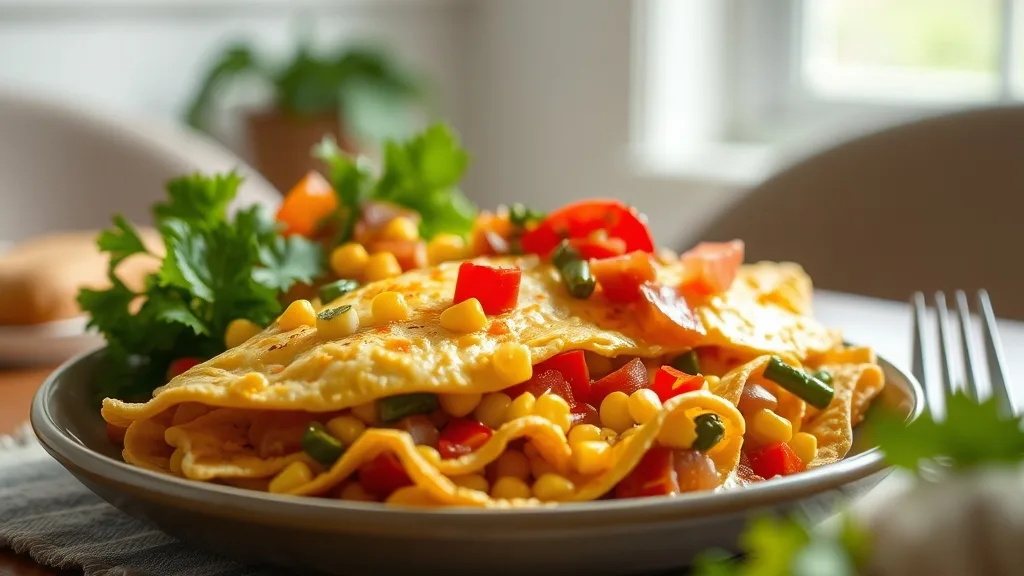
- The Minimalist: Two eggs, 50g ham, three tablespoons of salsa, salt and pepper. Nothing else. Sometimes the lowest-effort version is genuinely good enough.
Global Flavor Profiles (16-20)
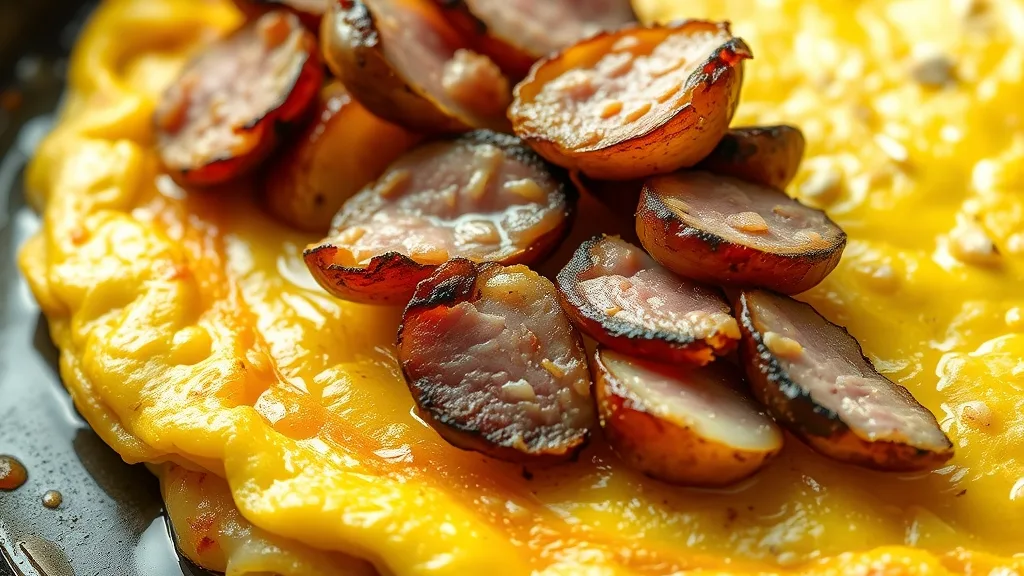
- Spanish Tortilla Style: Four eggs, 60g diced Serrano ham or prosciutto, sauteed potatoes (thin slices), onion, olive oil. Thicker and cooked more slowly. Traditionally flipped rather than folded.
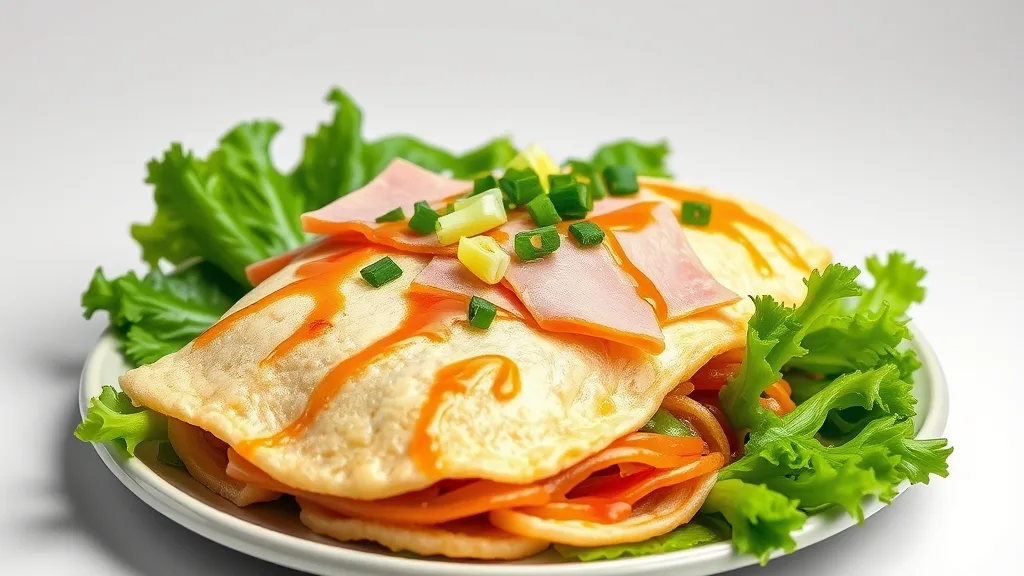
- Asian Fusion: Three eggs, 50g ham, napa cabbage, ginger, soy sauce, sesame seeds, sliced scallions. Serve with a small drizzle of chili oil on top.
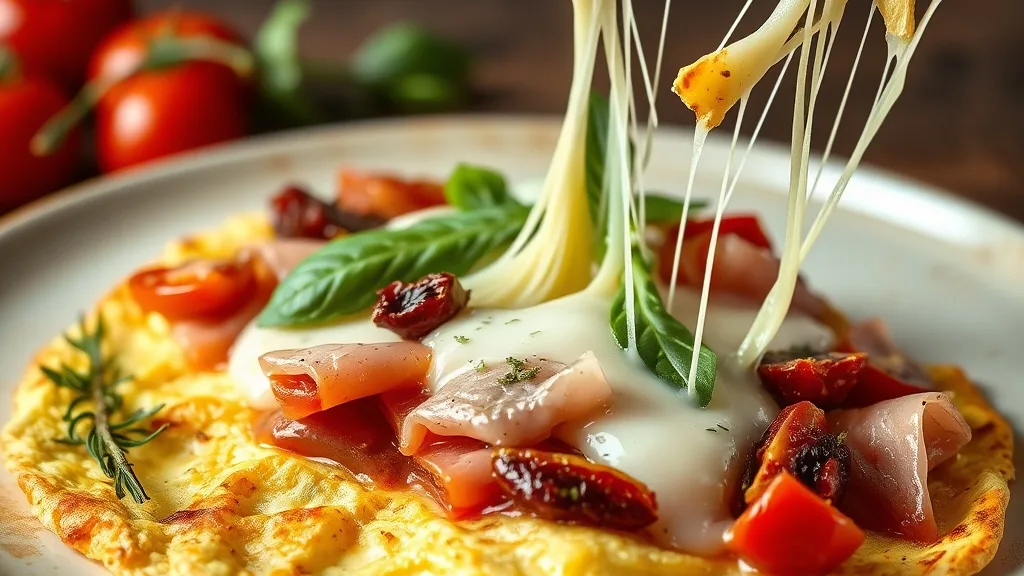
- Italian-Inspired: Three eggs, 60g diced prosciutto cotto (Italian cooked ham), sundried tomatoes, fresh basil, mozzarella. Use olive oil instead of butter.
- Korean Gochujang: Three eggs, 60g ham, kimchi (squeeze out excess liquid first), gochujang paste (half a teaspoon is enough), sliced scallions. The fermented kimchi provides probiotics alongside the protein.

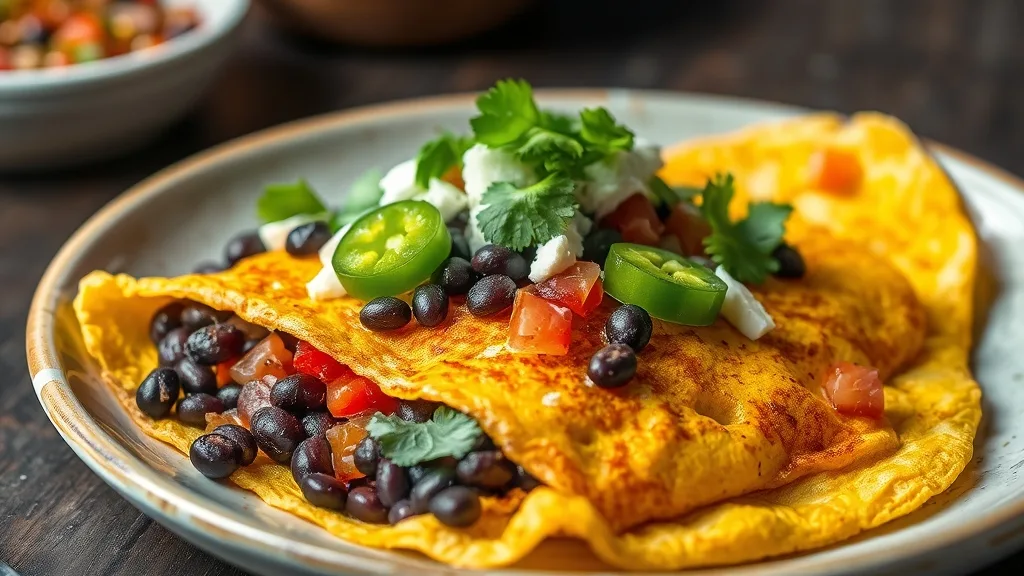
- Mexican Street Style: Three eggs, 60g ham, black beans (drained), fresh or pickled jalapeno, cotija cheese, cilantro. Higher carbohydrate than other variations but excellent for athletes or those with high energy demands.
Dietary Adaptations (21-25)
- Dairy-Free Version: Three eggs, 60g ham, roasted zucchini and red pepper, nutritional yeast (two tablespoons adds a cheese-like umami note), avocado on the side. Cook in olive oil, not butter.
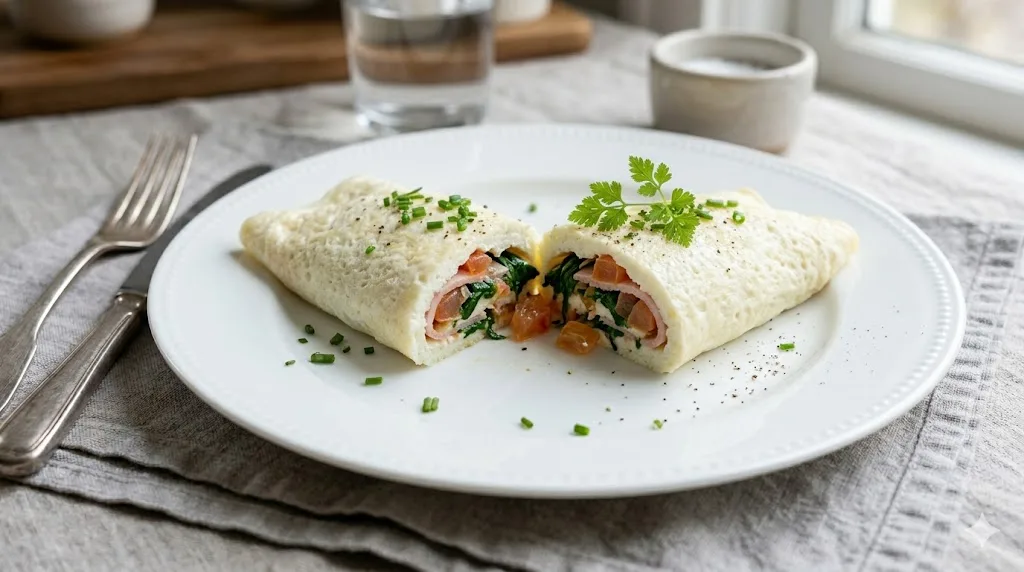
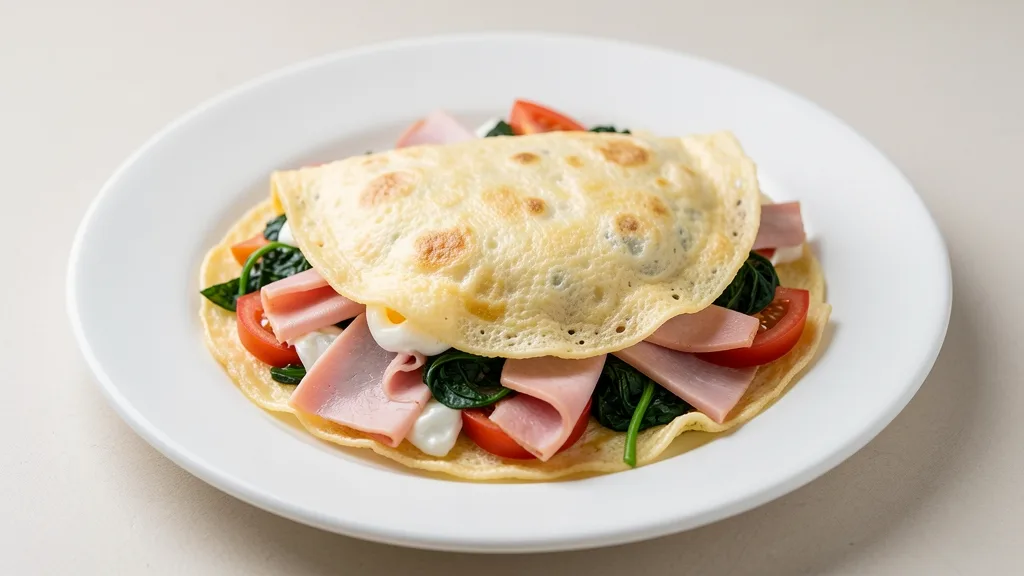
- Lower-Calorie Option: Two eggs plus three egg whites, 40g 96-percent-lean ham (Applegate Naturals Uncured Ham, roughly $5.99 per package), baby spinach, cherry tomatoes. Under 240 calories with 32 grams of protein.
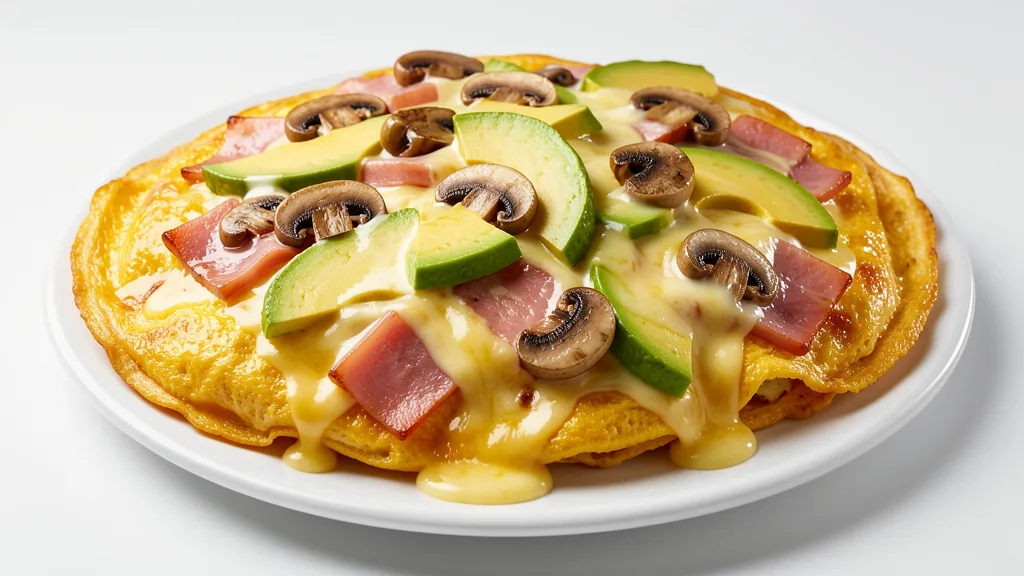
- Keto-Optimized: Three eggs, 60g ham, sauteed mushrooms, diced avocado inside the fold, full-fat brie or gouda. Higher fat, near-zero carbohydrates.
- Anti-Inflammatory Focus: Three eggs, 50g ham, turmeric in the egg batter (half a teaspoon), roasted broccoli, red onion, fresh ginger grated into the vegetable saute.
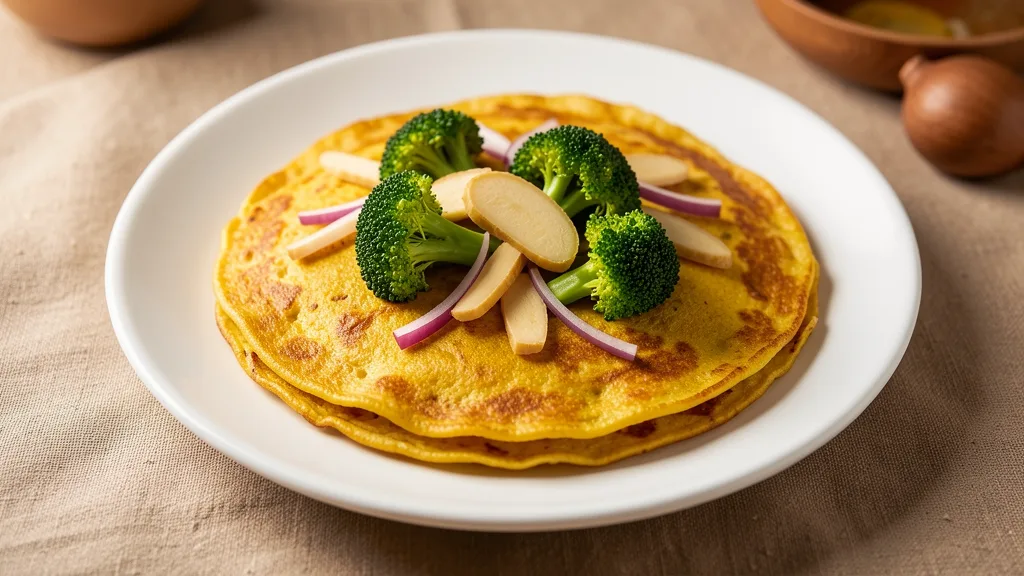
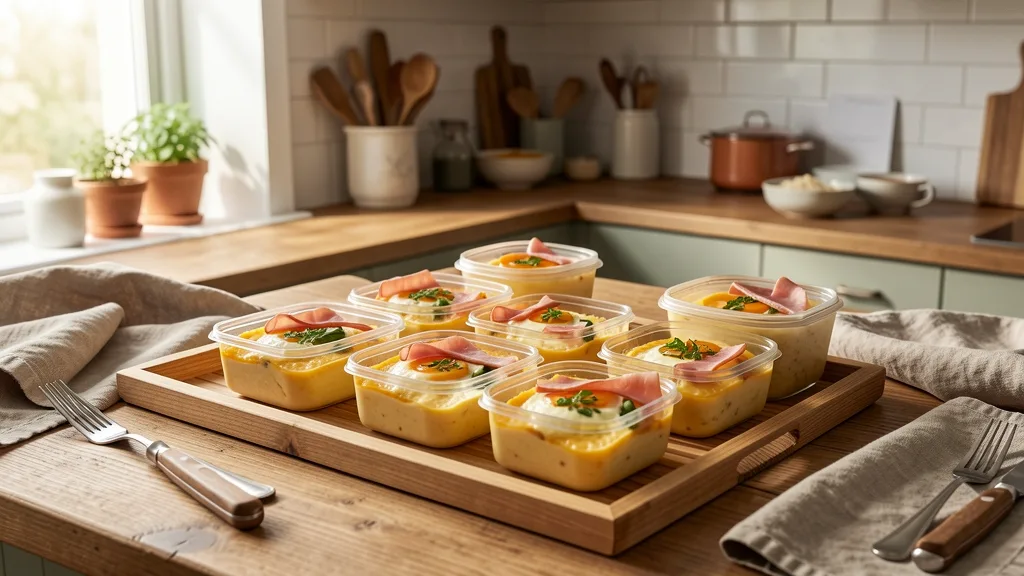
- Meal-Prep Batch Version: Eight eggs, 200g diced ham, two cups mixed vegetables. Make four two-egg omelets at once on a griddle, refrigerate in airtight containers. Reheat in a non-stick skillet over low heat for 90 seconds. Quality holds surprisingly well for up to three days.
Top 8 Ham Brands: Honest Assessment for Omelet Use
| Brand | Price (approx.) | Protein/oz | Sodium Level | Best For |
|---|---|---|---|---|
| Boar’s Head Diced Ham | $5.99-6.99/lb | 6g | Medium-High | Classic flavor, consistent quality |
| Applegate Naturals Uncured | $5.99/6oz pkg | 7g | Lower | Clean ingredients, lower sodium |
| Hormel Natural Choice | $4.49/6oz pkg | 6g | Medium | Convenience, widely available |
| Oscar Mayer Deli Fresh | $3.99/7oz pkg | 5g | High | Budget weekday option |
| Columbus Craft Meats | $6.49/lb | 6g | Medium | Premium flavor, artisan-style |
| Kirkland Signature (Costco) | $3.99/lb | 6g | Medium | Best value for bulk users |
| Prosciutto di Parma | $8-12/lb | 7g | Medium-Low | Italian-style omelets |
| Black Forest Ham (store brand) | $2.99-3.99/lb | 5g | High | Budget-conscious cooking |
The Equipment That Actually Makes a Difference
You do not need expensive equipment to make a great omelet. But a few specific tools make a measurable difference.
The Pan: Your Most Important Decision
A 10-inch nonstick skillet is the right size for a two or three-egg omelet. Anything smaller and the eggs pile up too thick. Anything larger and the eggs spread too thin and dry out before you can fold them. My daily driver is the Cuisinart Classic Nonstick 10-inch (around $25). I replaced it after about 18 months of daily use when the coating started showing wear. For those willing to invest more, the GreenPan Valencia Pro (around $60) uses a ceramic nonstick coating free of PFAS chemicals and has held up better in my testing over a shorter period.
Cast iron, stainless steel, and carbon steel all require significantly more fat and precision temperature control to achieve a non-stick result with eggs. They can work, but they add unnecessary complexity for everyday use. Save the carbon steel pan for steak.
Silicone Spatula vs. Fish Spatula
For folding omelets, a thin, flexible silicone spatula is more forgiving than a fish spatula. The OXO Good Grips silicone spatula (around $12) has been my standard tool for years. It gets under the egg cleanly without tearing and handles the fold in one smooth motion. Fish spatulas are better for flipping items. Silicone spatulas are better for delicate folding.
Whisking Tools
A simple dinner fork, whisked briskly for 30 to 45 seconds, produces the right egg texture for most omelets. An electric hand mixer or immersion blender incorporates too much air. A balloon whisk is acceptable but tends toward overbeating. The fork is genuinely the right tool here.
Meal Prep Strategy: Making Ham and Vegetable Omelets Work All Week
The most common objection I hear to eating omelets daily is time. On a rushed Tuesday morning, who has fifteen minutes? The answer is: nobody. That is why meal prep strategy for omelets is worth understanding.
The Egg Bite Alternative
Egg bites — essentially crustless mini-quiches baked in a muffin tin — use the same ingredients as an omelet but can be made in a batch of 12 in about 25 minutes. Combine eight eggs, 120g diced ham, one cup mixed vegetables, half a cup of shredded cheese. Pour into a greased silicone muffin tin. Bake at 350 degrees Fahrenheit for 18 to 22 minutes. Refrigerate for up to four days. Reheat two pieces in the microwave for 60 to 90 seconds. You have effectively batch-cooked five mornings of breakfast in one Sunday session.
Starbucks built an entire product category around this concept. Their Bacon and Gruyere Egg Bites retail for $6.45 for two pieces and contain 20 grams of protein. Homemade ham and vegetable egg bites cost approximately $0.60 each and deliver 12 to 14 grams of protein per piece — meaning two pieces reach 24 to 28 grams at roughly one-fifth the cost.
Pre-Chopping Vegetables
Spend 20 minutes on Sunday washing and dicing bell peppers, onions, mushrooms, and any other vegetables you plan to use. Store them in airtight containers in the refrigerator. They hold well for three to four days. Having pre-chopped vegetables reduces morning omelet time from 12 minutes to about 6 minutes.
Frequently Asked Questions
How many calories are in a ham and vegetable omelet?
A three-egg omelet with 60 grams of diced ham, one cup of mixed vegetables, and a light coating of cooking oil or butter contains approximately 290 to 350 calories. Adding cheese increases this by 80 to 120 calories depending on quantity and variety. This places it well within a reasonable morning calorie budget for most adults.
Can I make an omelet with ham ahead of time?
Yes, with some texture trade-off. A fully cooked omelet refrigerates well for up to 48 hours. Reheat on a nonstick skillet over low heat with a lid on for 90 seconds. Microwave reheating is faster but tends to produce a rubbery texture. Egg bites (see above) hold up significantly better than folded omelets for meal prep.
What vegetables go best in an omelet with ham?
Bell peppers, onions, mushrooms, spinach, zucchini, cherry tomatoes, and broccoli are all excellent choices. The key variable is moisture content. High-moisture vegetables like zucchini and mushrooms should be sauteed and slightly dried before adding to prevent a watery omelet. Low-moisture vegetables like bell peppers can be added directly.
Is a ham and vegetable omelet good for weight loss?
For most people following a calorie-controlled diet, yes. The high protein content produces sustained satiety that reduces mid-morning snacking. A 2019 meta-analysis in Nutrients journal found that high-protein breakfasts were associated with lower total daily calorie intake across diverse populations. The omelet’s protein-to-calorie ratio is genuinely excellent compared to most common breakfast options.
Can I use deli ham instead of packaged ham in an omelet?
Absolutely. Deli-sliced ham can be stacked and diced in about 30 seconds. Boar’s Head Smoked Ham and Maple Glazed Ham from most deli counters both work excellently. Avoid overly sweet varieties (honey-glazed) if you prefer a savory omelet — the sweetness can clash with sauteed vegetables and cheese.
What is the healthiest way to cook an omelet?
Use a nonstick pan with a small amount of olive oil or a cooking spray rather than butter to reduce saturated fat. Choose a high-quality ham with lower sodium (Applegate Naturals is a reliable choice). Load up on vegetables to increase fiber and micronutrient content. Use egg whites in place of some whole eggs if cholesterol is a concern. The omelet itself is a nutritionally sound base regardless of cooking method.
The Last Omelet You’ll Ever Need to Google
Six-forty-seven a.m. on a Tuesday in February. Nine minutes. One pan. Thirty-eight grams of protein. That is where this started for me.
The omelet with ham and vegetables is not a trend. It is not a fad diet staple or a social media moment. It is a nutritionally precise, cost-efficient, endlessly adaptable breakfast that has been underrated for decades because it looks simple. Simple things that work are worth understanding deeply.
Start with Variation 1. Master the temperature. Learn the fold. Understand why protein matters before 8 a.m. Then branch out. The 25 variations in this article represent months of testing across different ingredient budgets, dietary needs, and time constraints. Not every one will suit you. But at least three or four of them will become part of your weekly routine.
My honest prediction: high-protein breakfast culture is going to accelerate significantly through 2025 and 2026 as more research connects morning protein intake to metabolic health, appetite regulation, and muscle preservation. The omelet was ahead of that curve long before the algorithm noticed.
Start tomorrow. Pick one variation, pre-chop your vegetables tonight, and set your pan on medium heat before you do anything else. The rest takes nine minutes.
Which variation are you starting with? And if you have a ham and vegetable omelet combination that belongs on this list, describe it in the comments. I genuinely want to know what is working in other people’s kitchens.
Published: April 2024 | Updated: April 2026 | Reading time: approx. 13 minutes