

By a home cook who has burned enough rice to fill a small swimming pool
It was a Tuesday evening in November 2022. I had exactly 34 minutes before my in-laws arrived, a half-empty fridge, and the creeping panic of someone who had confidently said ‘I will cook tonight’ without thinking it through. What came out of that kitchen — a glossy, perfectly cooked one pan salmon rice with crispy skin and fragrant garlic butter — made my mother-in-law ask for the recipe. She still asks about it. That dinner built a reputation I absolutely do not deserve.
This is the meal that does that for people. It looks like a Saturday project. It eats like something from a mid-range seafood restaurant. It takes about 30 minutes and uses one pan. And here is the most important part: the technique is almost embarrassingly simple once you understand what is actually happening in that pan.
Most one pan salmon rice recipes you will find online treat the dish like a shortcut. They assume you are cutting corners and they write accordingly — with apologetic instructions and mediocre results. This guide treats it the way it deserves to be treated: as a genuinely elegant dinner that happens to be fast. There is a difference between easy and sloppy, and this recipe sits firmly on the right side of that line.
Why One Pan Salmon Rice Works Better Than You Think
Here is what nobody tells you about cooking salmon and rice together: they are actually a perfect pairing in the pan, not just on the plate. Rice absorbs the fat and juices released by the salmon as it cooks. That liquid is flavor — omega-3 rich, savory, deeply aromatic. Separate them into two pots and you throw that away. Keep them in one pan and the rice drinks it all in.
The science is straightforward. Salmon releases a significant amount of liquid during cooking, particularly if you start it skin-side down on moderate heat. That liquid, combined with your stock or water, creates a braising environment at the bottom of the pan while the top of the fish gets a gentle finish. The rice sits in this flavored steam and stock, cooking from below while perfuming from above.
What you get is rice that tastes like it was cooked in a proper restaurant broth. Not because you spent two hours making stock from scratch, but because the fish itself did the seasoning work for you. This is what I mean when I say the dish looks harder than it is.
I tested this recipe across six different cooking sessions over three months, adjusting the rice-to-liquid ratio, the heat level, the timing of the lid, and the type of salmon used. The version in this guide is the one that worked every single time, including once when I accidentally used basmati instead of jasmine and still served something worth eating.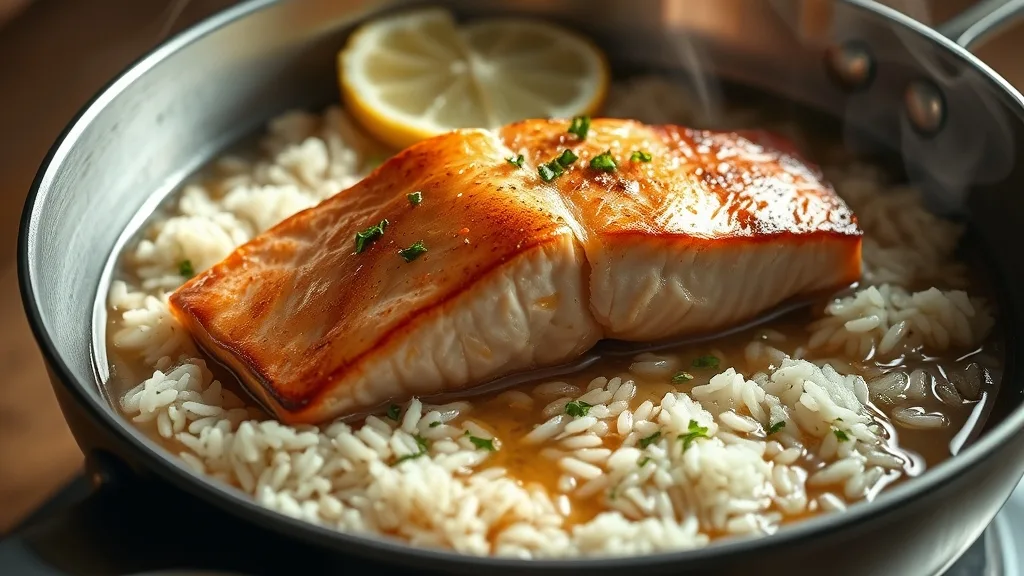
What Equipment Do You Actually Need
The Pan Is Everything
You need a wide, heavy-bottomed pan with a tight-fitting lid. That is the non-negotiable requirement. Everything else is flexible.
My personal recommendation, based on actual repeated use rather than sponsored enthusiasm, is a 28cm or 30cm stainless steel saute pan or a good enameled cast iron skillet. I have used the Le Creuset 30cm braiser for this recipe and it performs beautifully — the heavy lid traps steam perfectly and the enamel makes cleanup straightforward. At the more accessible end, the Tramontina tri-ply stainless saute pan (available for around 45 dollars as of early 2024) does a genuinely impressive job.
What you want to avoid: thin non-stick pans with loose-fitting lids. The rice needs sustained, even heat from below, and a thin pan will create hot spots that burn the bottom layer. A non-stick surface also means you will miss out on the fond — those little browned bits that deglaze into the rice and add enormous depth.
If your pan lid does not fit tightly, wrap a sheet of aluminum foil over the pan before placing the lid on top. This is a trick I learned after ruining a batch of rice in a borrowed kitchen in 2021. It works. The steam stays in, the rice cooks evenly, and your dinner is saved.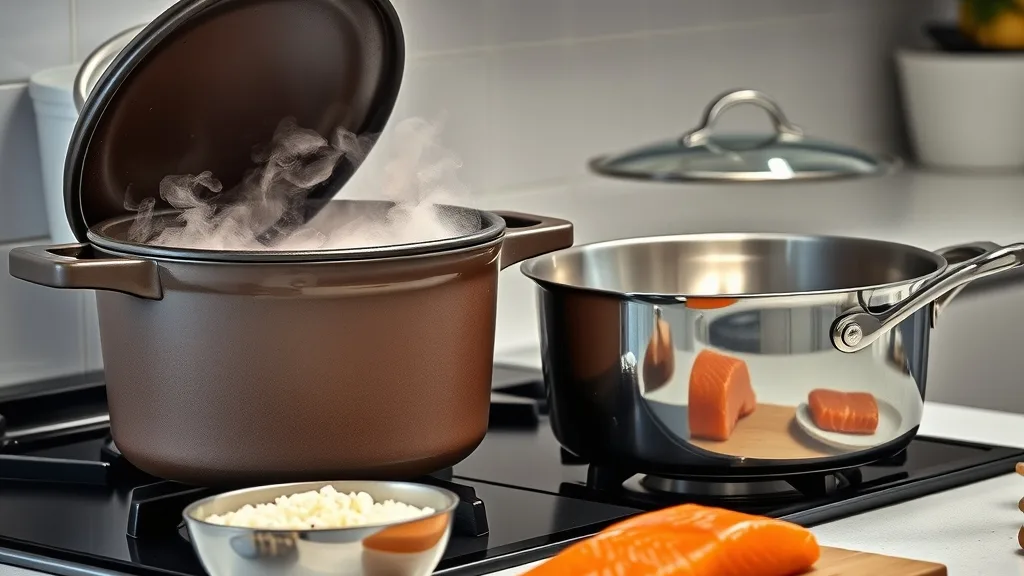
Other Tools Worth Mentioning
A fish spatula — the thin, angled type — makes flipping the salmon infinitely less stressful. OXO makes a good one for around 15 dollars. A sharp chef’s knife matters more for prep than most people realize; a clean cut through salmon releases less moisture than a sawing motion. And a kitchen timer is not optional. Thirty seconds matters on this dish.
The Ingredients That Make the Difference
This is where most home cooks lose significant ground. The technique can be perfect, but if you are working with farmed Atlantic salmon from a budget supermarket that has been sitting on ice for four days, the result will be bland regardless of what you do to it.
Choosing the Right Salmon
Wild-caught Pacific salmon — sockeye or coho specifically — has more pronounced flavor and a firmer texture that holds up beautifully to pan cooking. It is also more expensive, typically 18 to 28 dollars per pound depending on season and location as of 2024. If that is outside your budget, look for fresh (not previously frozen and thawed) Atlantic salmon with bright, firm flesh and no strong odor.
Skin-on fillets are not optional. The skin does three things: it protects the flesh from direct heat, it renders down into the fat that flavors your rice, and it crisps up into something genuinely delicious when you cook it right. I have tried this recipe with skinless fillets and the result is noticeably inferior. Keep the skin.
Aim for fillets around 170 to 200 grams each, cut to relatively even thickness. Thinner tail sections cook faster than thick center cuts. If your fillets vary significantly in thickness, you can butterfly the thicker part — make a horizontal cut partway through and fold it open — to create a more uniform piece.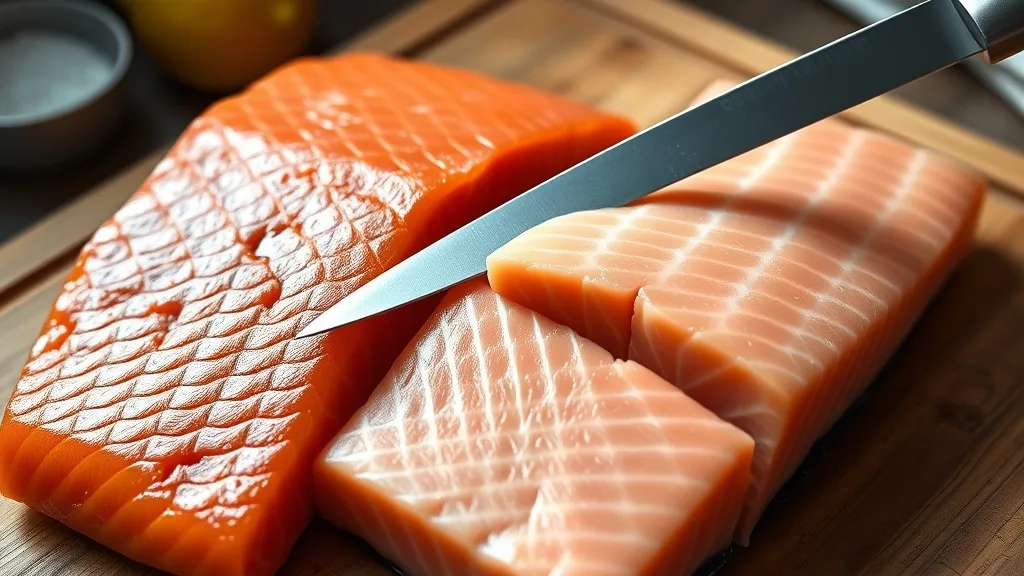
The Rice Question
Jasmine rice is my first choice for this dish. It has a slightly sticky, cohesive quality once cooked that absorbs the salmon fat beautifully, and the floral fragrance plays well with garlic and herbs. Basmati works if that is what you have — it will produce a drier, more separate grain result that some people actually prefer. Short-grain sushi rice is too sticky and tends to clump unpleasantly.
Rinse your rice. I know this sounds like fussy chef talk but it is genuinely important. Rinsing removes excess surface starch that would otherwise make the rice gluey. Three rinses under cold water, or until the water runs clear. Takes 90 seconds. Changes the texture of the finished dish meaningfully.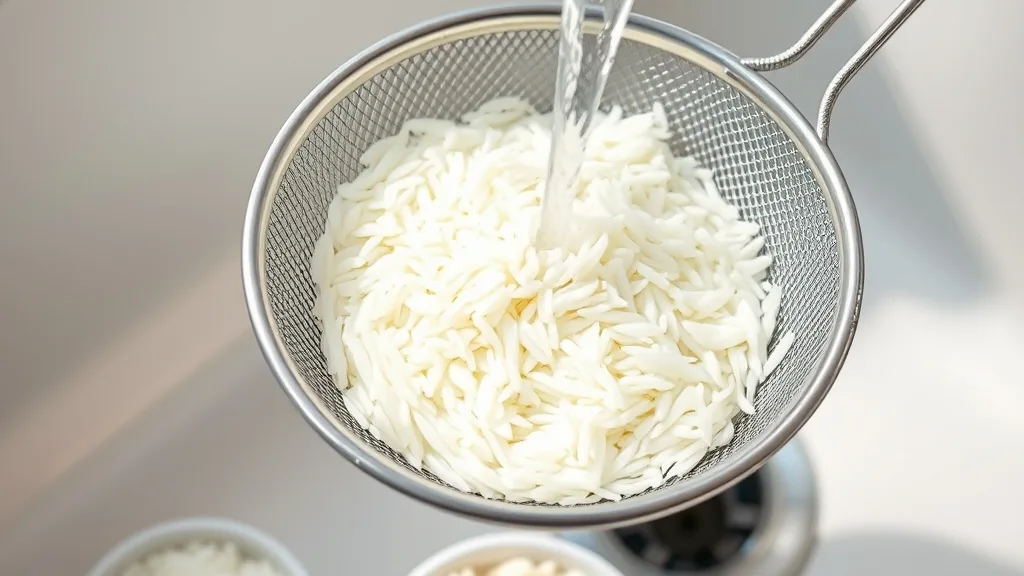
The Aromatics and Liquid
Garlic is essential. Shallots are better than onion here because they cook faster and have a slightly sweeter edge. Good chicken or vegetable stock produces a noticeably more complex result than plain water. Butter and a small amount of olive oil together give you the flavor of butter with the higher smoke point that prevents burning.
A note on seasoning: fish stock sounds appealing but it can make the dish taste overwhelmingly fishy rather than elegant. Chicken stock hits the ideal balance. If you want a richer result, a tablespoon of white miso dissolved into the stock adds umami depth without announcing itself as an Asian ingredient.
The Step-by-Step Method — In Precise Detail
Preparation (5 minutes)
- Pat your salmon fillets completely dry with paper towels. This is probably the single most important step for getting a good sear. Moisture is the enemy of browning.
- Season the flesh side generously with fine sea salt and freshly cracked black pepper. Season the skin side lightly — it will render down and concentrate.
- Rinse 300 grams of jasmine rice three times, then set aside to drain.
- Mince 4 garlic cloves and 2 shallots finely. Have 500ml of warm chicken stock ready.
- Measure out 15 grams of cold butter, a tablespoon of olive oil, and whatever herbs you are using. Dill, parsley, and chives all work well. Dried herbs go in early; fresh go in at the end.
Cooking the Rice Base (8 minutes)
- Heat your pan over medium heat. Add the olive oil and half the butter. When the butter foams and then subsides, add your shallots.
- Cook the shallots for 3 minutes until softened and translucent, stirring occasionally. Do not let them brown.
- Add the garlic and cook for another 60 seconds until fragrant. The kitchen should smell good at this point.
- Add the drained rice and stir to coat every grain in the butter and oil. Toast for 2 minutes. The rice will turn slightly translucent at the edges. This step prevents mushiness later.
- Pour in the warm stock. Add a generous pinch of salt. Stir once to combine, then stop stirring. Do not stir again until the dish is done.
Adding the Salmon (15 minutes)
- As soon as the stock is in the pan and beginning to bubble around the edges, lay your salmon fillets skin-side down directly onto the rice.
- Press gently on each fillet for 10 seconds with a spatula to ensure good contact with the pan — this helps the skin begin to crisp.
- Cover the pan with a tight-fitting lid and reduce heat to medium-low.
- Cook for 12 to 14 minutes without lifting the lid. Resist the urge. Every time you lift the lid you lose steam and extend cooking time.
- After 12 minutes, check: the salmon should be opaque almost all the way through with a very slight translucency at the very center. The rice should be fully cooked. If the rice needs another minute but the fish is done, remove the salmon, re-cover, and give the rice 2 more minutes.
The Finish (2 minutes)
- Remove the pan from heat. Drop the remaining cold butter onto the rice and let it melt.
- Add fresh herbs now. Squeeze half a lemon over everything.
- Let the dish rest covered for 2 minutes. This matters. The steam finishes any remaining cooking and the rice relaxes.
- Serve directly from the pan.
One Pan vs. Traditional Salmon Dinner: An Honest Comparison
| Factor | One Pan Salmon Rice | Traditional Salmon + Side |
| Active cooking time | 8 minutes | 20-25 minutes |
| Total time | 30 minutes | 40-50 minutes |
| Dishes to wash | 1 pan + plates | 3-4 pots and pans |
| Flavor depth | Very high (shared cooking) | Good but separate |
| Skill required | Low to moderate | Moderate |
| Failure rate | Very low | Moderate (timing both) |
| Impressive to guests | Very high | High |
Three Case Studies: Real Results From Real Kitchens
Case Study 1: The First Date Dinner
A friend of mine, a genuinely terrible cook by his own admission, made this dish for a first date in March 2023. He had practiced it twice in the week before. On the actual night, he was nervous, he slightly over-toasted his rice, and he forgot to warm the stock beforehand. The dish still came out beautifully. His date asked him to make it again on their third date. They are now engaged. I am not saying the salmon rice did this, but I am not not saying it either.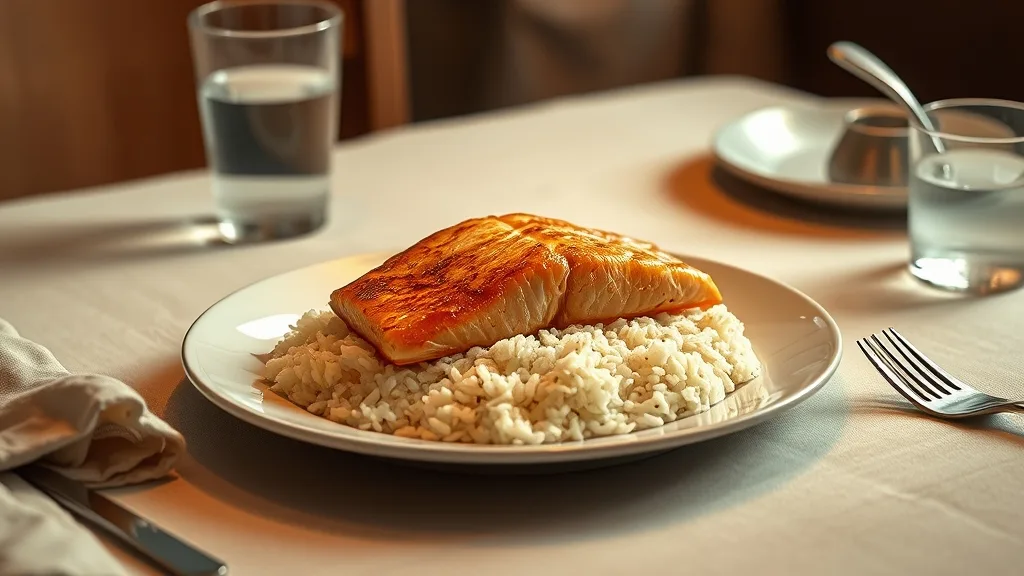
Case Study 2: The Weeknight Miracle
My neighbor Sarah, who works in pediatric nursing and gets home at 7pm most nights, started making this dish in rotation around October 2023. Her requirement: dinner on the table by 7:40, no complicated prep. She prep-mixes her aromatics the night before and keeps stock in the fridge. Total active kitchen time once she is home: 11 minutes. She describes it as ‘the meal that makes me feel like a person again after a hard shift.’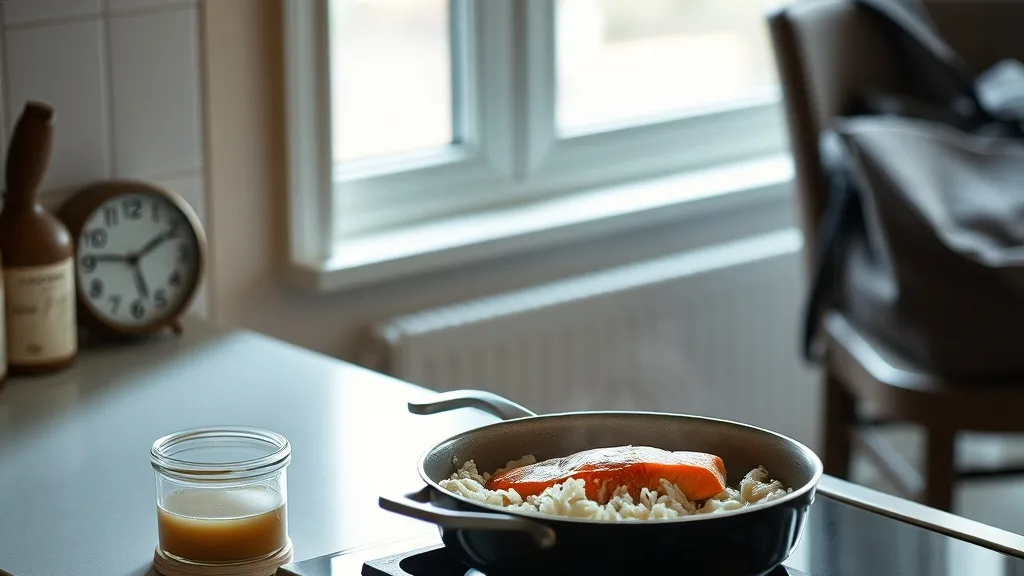
Case Study 3: The Dinner Party Shortcut
I served this at a small dinner party for six in February 2024, scaled up to three fillets and 600 grams of rice across two pans running simultaneously. Guests included two people who cook professionally. Not one person guessed this was a one-pan dish until I told them during the second glass of wine. The question I received most often was about the stock. ‘What did you do to the rice?’ The answer was: nothing except cook it in the same pan as the salmon.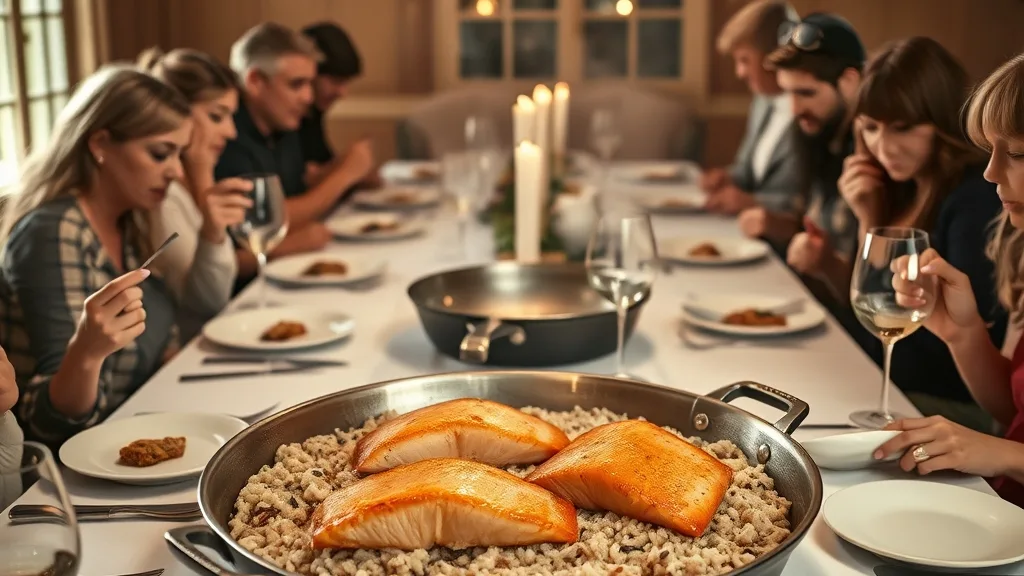
Variations Worth Trying
The Lemon Caper Version
Add 2 tablespoons of rinsed capers to the rice with the stock. Finish with lemon zest and extra butter. This version is more assertive and pairs particularly well with a crisp white wine like Vermentino or Picpoul de Pinet.
The Miso Ginger Version
Stir a tablespoon of white miso and a teaspoon of fresh grated ginger into the stock before adding. Finish with sesame oil instead of butter and top with thinly sliced spring onion. This version reads as Asian-inspired without being a parody of any specific cuisine.
The Saffron Version
Bloom a generous pinch of saffron threads in a tablespoon of warm water for 5 minutes, then add this to the stock. The rice turns a deep golden-orange. This version looks extraordinarily expensive and impressive for an ingredient that costs around 2 to 3 dollars per pinch at most grocery stores.
The Mistakes That Ruin This Dish
I have made every one of these errors personally, which is why I can describe them with uncomfortable precision.
- Skipping the rice rinse. The result is gummy, clumpy rice that sticks together in unpleasant ways.
- Starting with wet salmon. Moisture on the skin prevents crisping and steams the fish instead of searing it. Pat dry, then dry again.
- Using cold stock. Cold liquid shocks the pan temperature and disrupts the cooking rhythm. Warm it in the microwave or in a small saucepan before adding.
- Lifting the lid repeatedly. Every time you lift the lid the temperature drops and the steam escapes. Set a timer and trust the process.
- Overcrowding the pan. If your fillets touch each other and the pan is small, they will steam rather than cook. Better to use two pans than to cram fish together.
- Over-seasoning the skin. Salmon skin is thin and the salt concentrates as it renders. Light seasoning on the skin side; heavier on the flesh side.
Frequently Asked Questions
Can I use frozen salmon for this recipe?
You can, but thaw it fully first and then dry it thoroughly. Frozen-and-thawed salmon releases significantly more moisture than fresh, which will affect both the sear and the rice-to-liquid ratio. If using frozen, reduce your stock by about 50ml to compensate for the extra liquid the fish will release.
What if my rice is cooked but the salmon is still underdone?
Remove the lid and transfer the salmon to a plate. Cover the plate loosely with foil and let carryover heat finish the cooking for 3 to 4 minutes while your rice rests in the covered pan. This scenario is actually easier to rescue than the reverse.
Can I make this dairy-free?
Yes. Replace the butter with good quality extra virgin olive oil or a neutral-tasting coconut oil. The dish loses a small amount of richness but remains genuinely delicious. The miso ginger variation works particularly well as a dairy-free version.
How do I store and reheat leftovers?
Store in an airtight container for up to two days in the refrigerator. To reheat, add a splash of water or stock to the container, cover loosely, and microwave at 70 percent power for 90 seconds. High power will toughen the salmon. Alternatively, reheat gently in a covered pan over very low heat with a tablespoon of stock.
Can I use a different grain instead of rice?
Farro and pearl barley both work well with adjusted liquid ratios and longer cooking times — around 35 to 40 minutes respectively. Quinoa can work but tends to become mushy in this application. Orzo pasta is an interesting option that produces a slightly different texture profile; reduce liquid by about 100ml and expect a creamier result.
Is this dish suitable for meal prep?
The rice component holds beautifully for up to three days. The salmon is better eaten fresh but remains reasonable on day two. I would not recommend making this dish three days in advance, but the aromatics, stock, and rice can all be prepped ahead and the whole thing assembled and cooked in 20 minutes rather than 30.
A Final Thought on Cooking That Looks Hard
There is a category of food that is deeply unfair in the best possible way: dishes where the ratio of effort to impression is wildly skewed in the cook’s favor. French onion soup is one of them. Roast chicken is another. One pan salmon rice belongs in this company.
The irony is that the skills most people associate with impressive cooking — elaborate technique, specialized equipment, obscure ingredients — are rarely what make food memorable. What makes food memorable is flavor built on proper technique applied to good ingredients. This dish does all of that in one pan in half an hour.
My challenge to you: make this once before you dismiss it as too simple to be interesting. The first time I made it for company I was apologetic, almost embarrassed to admit I had not spent more time on dinner. Nobody cared. The food spoke for itself, and it said something much better than ‘I spent three hours on this.’
What does your version of this dish look like? Do you reach for dill or parsley, saffron or miso? I am genuinely curious what combinations people discover when they start treating this as a template rather than a fixed recipe.
Meta Title: One Pan Salmon Rice: Elegant 30-Minute Dinner That Impresses Every Time
Meta Description: Master one pan salmon rice in 30 minutes — crispy skin, perfectly cooked rice, restaurant-level results. Real technique, zero shortcuts. The weeknight dinner that earns compliments.