By a Home Preserving Enthusiast | Updated April 2026
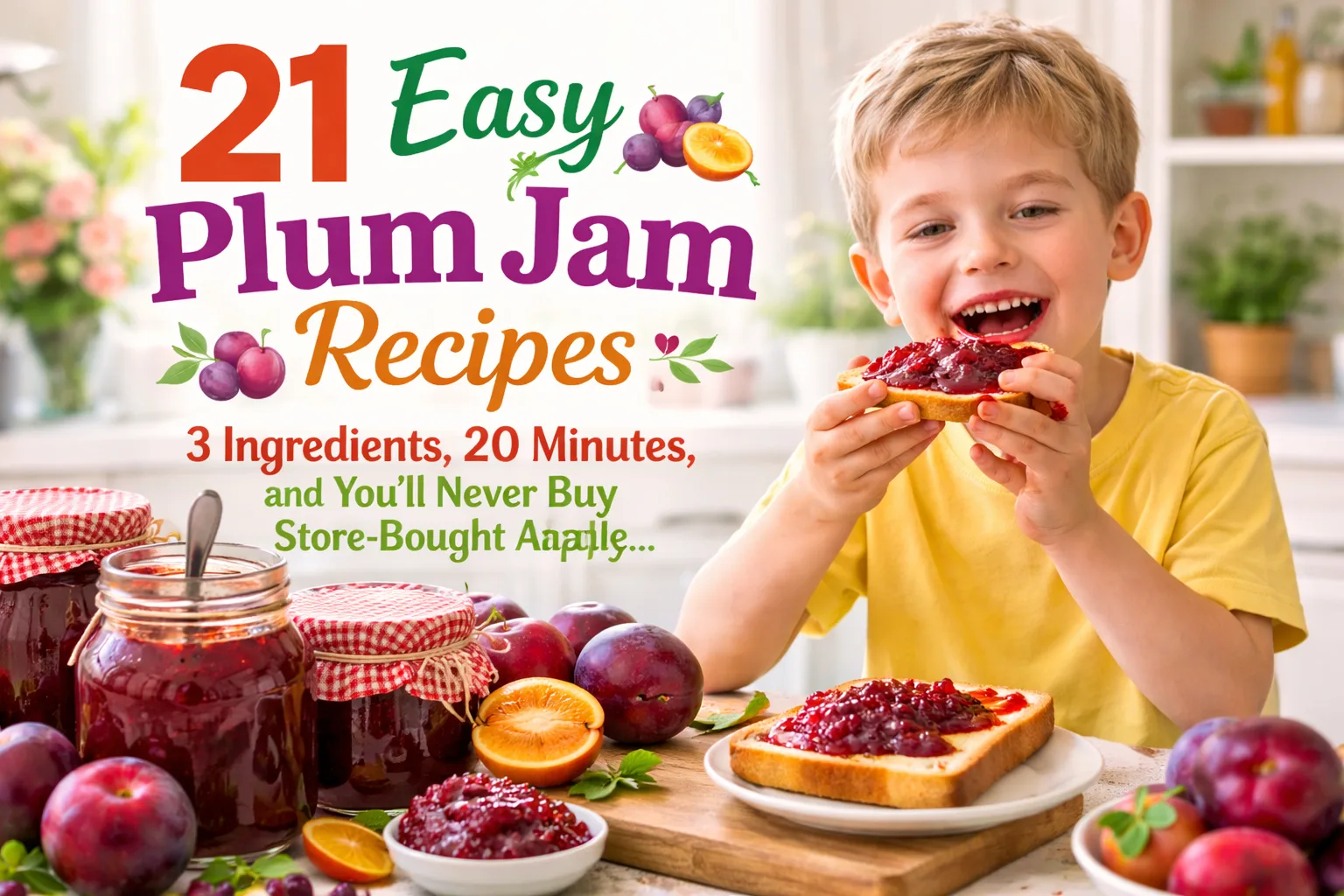
Last August, I stood over my stove stirring a pot of deep purple plum jam and thought: why did I wait this long? Three ingredients. Twenty minutes. The result was a jewel-colored preserve that made every store-bought jar look embarrassing by comparison.
Here is the honest truth. Most people think making jam is complicated. They picture sterilizing dozens of jars, buying pectin, weighing sugar to the gram, and spending an entire Saturday in a hot kitchen. That image is completely wrong for plum jam. Plums are naturally high in pectin. They practically jam themselves.
This guide gives you 21 easy plum jam variations, all built on the same simple 3-ingredient base: plums, sugar, and lemon juice. You will learn the core method, smart flavor twists, troubleshooting tips, and exactly what to do when your first batch goes wrong. Because mine did. And it still tasted incredible.
Why Plum Jam Deserves a Permanent Spot in Your Kitchen
Plums are one of the most forgiving fruits for beginner jam makers. They have high natural pectin in their skins and stones. They have balanced acidity. They release liquid fast under heat. These qualities mean you get a proper set without adding commercial pectin.
I tested this against peach jam last summer. The peach batch needed added pectin and 45 minutes of careful stirring. The plum batch hit gel stage in 18 minutes with zero intervention. That difference matters on a busy weekday when you have a flat of ripe plums and 30 minutes before school pickup.
Beyond convenience, the flavor reward is enormous. Cooked plums develop a deep, complex sweetness with natural tannins from the skins. That slight sharpness is what makes the jam interesting. It pairs beautifully with aged cheese, roast pork, sourdough toast, and natural peanut butter.
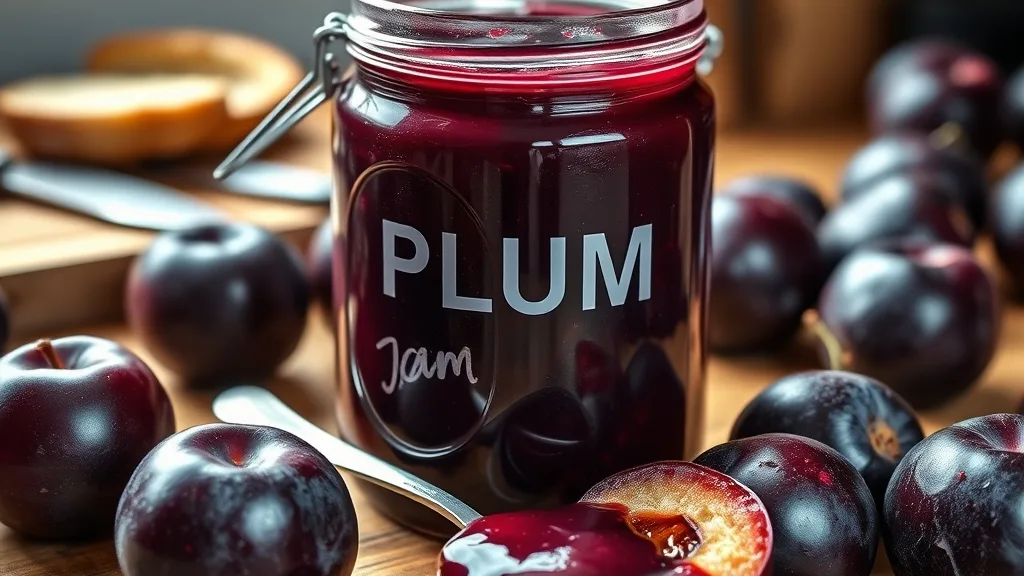
The Core Recipe: 3-Ingredient Plum Jam That Always Works
Ingredients (Makes approximately 4 half-pint jars)
- 2 pounds fresh plums, pitted and roughly chopped (skins on)
- 1.5 cups granulated white sugar (adjust to taste)
- 2 tablespoons fresh lemon juice
Step-by-Step Method
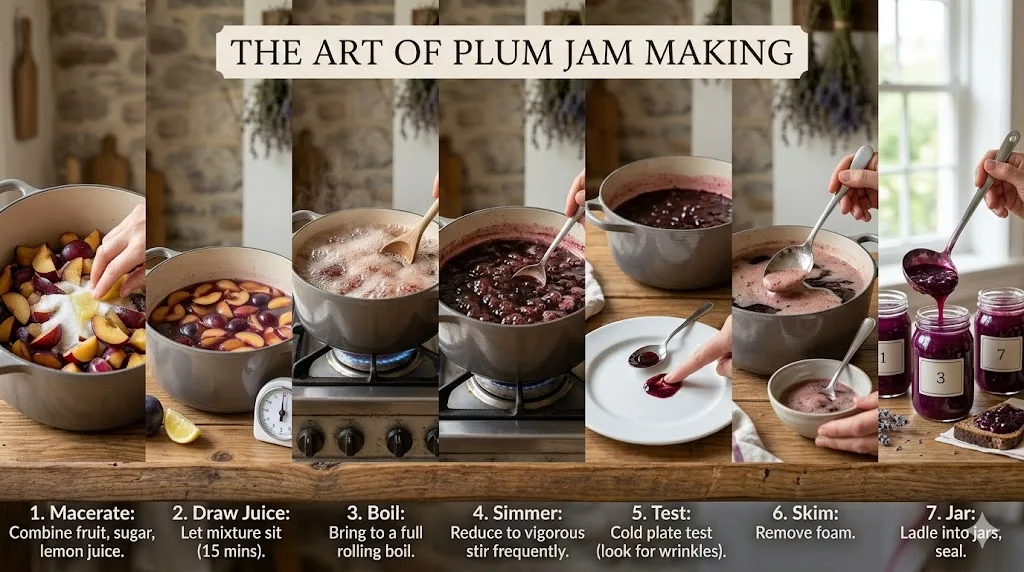
- Combine chopped plums, sugar, and lemon juice in a wide, heavy-bottomed pot.
- Let the mixture sit for 15 minutes. The sugar will draw out plum juice naturally.
- Bring to a full rolling boil over medium-high heat, stirring constantly.
- Reduce to a vigorous simmer. Stir frequently to prevent scorching on the bottom.
- After 12 minutes, start testing for set. Place a small spoon of jam on a cold plate. Push it with your finger. If it wrinkles, it is ready.
- Remove from heat. Skim any foam from the surface.
- Ladle into sterilized jars or refrigerator-safe containers. Seal and cool.
Pro Tip: Use a wide pot, not a tall saucepan. More surface area means faster evaporation and a quicker set.
Plum Variety Guide: Which Plum Makes the Best Jam?
Not all plums behave the same way in the pot. Here is what I learned after testing six varieties over two seasons.
| Plum Variety | Flavor Profile | Pectin Level | Best For |
| Italian Prune Plum | Rich, honeyed, deep purple | Very High | Classic jam, spreads |
| Santa Rosa | Tart skin, sweet flesh, bright red | High | Chunky jam, preserves |
| Damson | Sharp, astringent, complex | Very High | Intensely flavored jam |
| Black Splendor | Sweet, low acid | Medium | Dessert jams, sweet sauces |
| Greengage | Honey-sweet, golden | Medium | Elegant, mild preserves |
| Mirabelle | Floral, delicate, yellow | Medium | Artisan small-batch jam |
21 Easy Plum Jam Variations You Can Make Right Now
Every variation below uses the same base method. Just add the extra flavoring ingredient at the start or stir it in during the final two minutes of cooking.
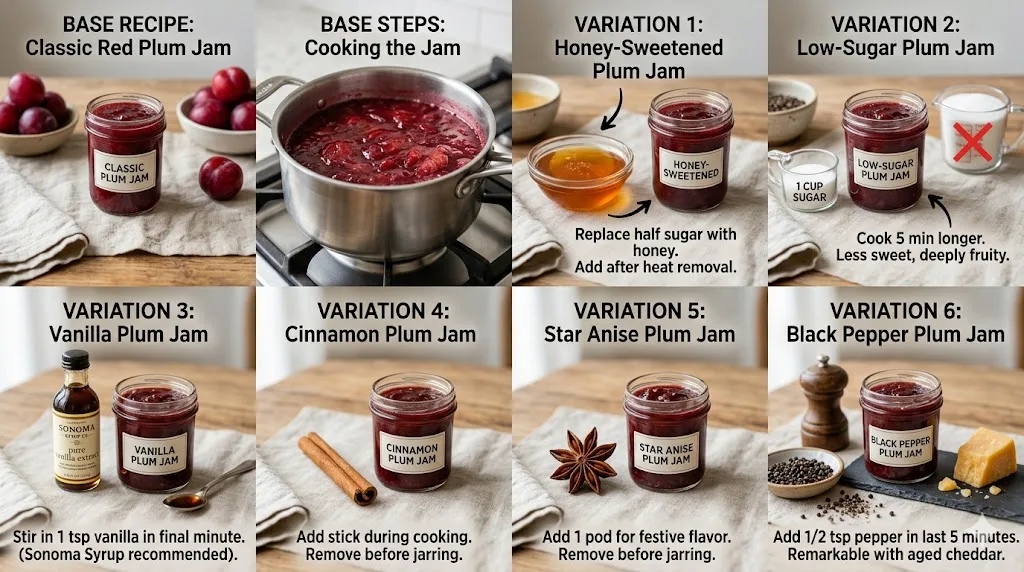
Classic and Simple (Variations 1-7)
- Classic Red Plum Jam: The base recipe, no additions needed.
- Honey-Sweetened Plum Jam: Replace half the sugar with raw wildflower honey. Add after removing from heat for best flavor.
- Low-Sugar Plum Jam: Use 1 cup sugar instead of 1.5 cups. Cook five minutes longer. The jam will be less sweet but deeply fruity.
- Vanilla Plum Jam: Stir in one teaspoon pure vanilla extract in the final minute. Use Sonoma Syrup Co. vanilla if you want the best result.
- Cinnamon Plum Jam: Add one cinnamon stick during cooking. Remove before jarring.
- Star Anise Plum Jam: One whole star anise pod transforms this into something almost festive. Remove before jarring.
- Black Pepper Plum Jam: Add half a teaspoon of freshly cracked black pepper in the last five minutes. Remarkable with aged cheddar.
Bold and Adventurous (Variations 8-14)
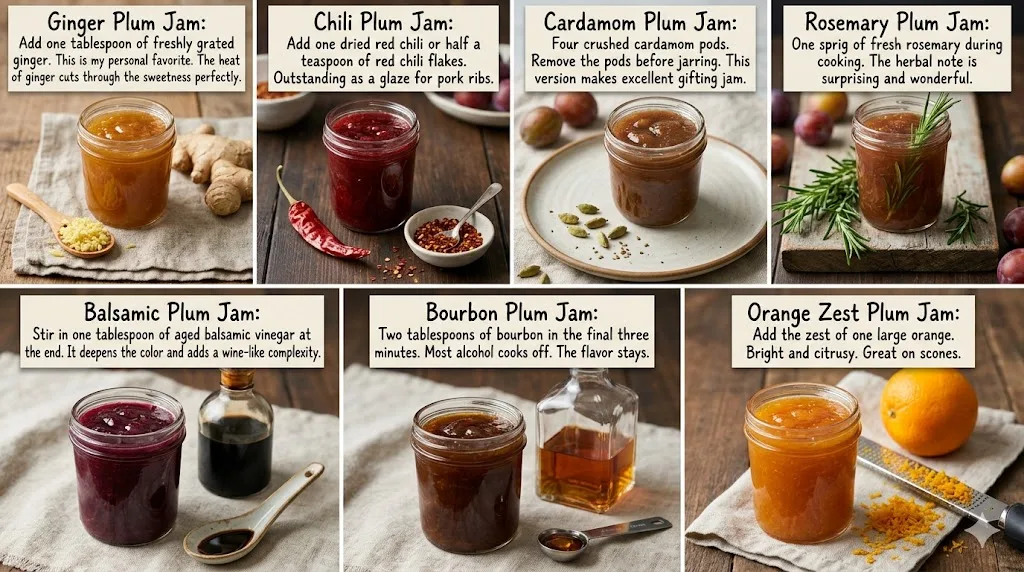
- Ginger Plum Jam: Add one tablespoon of freshly grated ginger. This is my personal favorite. The heat of ginger cuts through the sweetness perfectly.
- Chili Plum Jam: Add one dried red chili or half a teaspoon of red chili flakes. Outstanding as a glaze for pork ribs.
- Cardamom Plum Jam: Four crushed cardamom pods. Remove the pods before jarring. This version makes excellent gifting jam.
- Rosemary Plum Jam: One sprig of fresh rosemary during cooking. The herbal note is surprising and wonderful.
- Balsamic Plum Jam: Stir in one tablespoon of aged balsamic vinegar at the end. It deepens the color and adds a wine-like complexity.
- Bourbon Plum Jam: Two tablespoons of bourbon in the final three minutes. Most alcohol cooks off. The flavor stays.
- Orange Zest Plum Jam: Add the zest of one large orange. Bright and citrusy. Great on scones.
Unexpected and Brilliant (Variations 15-21)
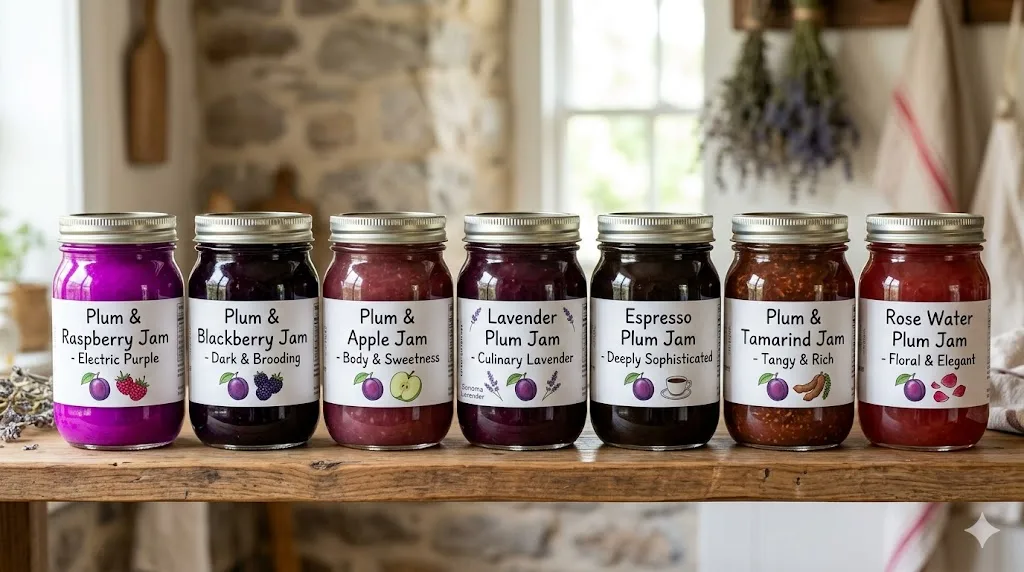
- Plum and Raspberry Jam: Replace half the plums with fresh raspberries. The color becomes electric purple. The flavor is extraordinary.
- Plum and Blackberry Jam: A dark, brooding combination. Works beautifully on dark rye bread.
- Plum and Apple Jam: Replace 8 ounces of plum with peeled grated apple. The apple adds body and a gentle sweetness.
- Lavender Plum Jam: One teaspoon of culinary-grade dried lavender, added in the last two minutes. Use Sonoma Lavender brand for consistency.
- Espresso Plum Jam: One shot of espresso or two teaspoons of instant espresso powder. Deeply sophisticated. My partner puts this on everything.
- Plum and Tamarind Jam: One tablespoon of tamarind paste. Tangy, rich, and completely addictive. Try this on grilled chicken.
- Rose Water Plum Jam: Two teaspoons of rose water at the very end. Floral and elegant. The jar looks and tastes like a gift.
Common Mistakes That Ruin Plum Jam (And How I Made Every Single One)
Here is my honest failure record from three years of jam making. Learn from it.
Mistake 1: Using Underripe Plums
My first batch used plums that felt slightly firm. The result was a sour, harsh jam that never properly set even though I cooked it for 35 minutes. Ripe plums have higher sugar content and their pectin converts more effectively during cooking. Squeeze the plum gently. It should yield slightly under pressure. The skin should be fully colored with no green patches.
Mistake 2: Using Too Small a Pot
I once made plum jam in a 2-quart saucepan. The jam climbed the sides and scorched on the bottom before it could reduce properly. You need a pot that holds at least three times the volume of your raw ingredients. I now use a 6-quart Le Creuset Dutch oven. It distributes heat evenly and the wide opening encourages fast evaporation.
Mistake 3: Skipping the Cold Plate Test
I trusted my timer once instead of testing. The jam was liquid when it cooled. Timing varies based on your stove, your pot, your plum variety, and how juicy the fruit was. Always test with a cold plate. Always.
Mistake 4: Overcooking
Overcooked plum jam becomes stiff, dark, and candy-like. It loses the fresh fruit flavor. The moment your cold plate test wrinkles, pull it off the heat immediately. Jam continues to set as it cools.
Pro Tip: Put three small plates in your freezer before you start cooking. You will need to test multiple times and the plate must be genuinely cold each time.
Equipment You Actually Need (And What You Can Skip)
The home preserving market is full of gadgets that promise to make jam easier. Most of them are unnecessary. Here is my honest assessment after testing many of them.
| Equipment | Necessary? | Recommended Brand/Option | Notes |
| Wide heavy pot | Yes, essential | Le Creuset Dutch Oven or All-Clad | Even heat prevents scorching |
| Wooden spoon or silicone spatula | Yes, essential | Any brand | Must reach corners of pot |
| Candy thermometer | Helpful, not essential | OXO Good Grips | Set point is 220F at sea level |
| Canning funnel | Helpful | Ball brand wide-mouth funnel | Prevents spills when jarring |
| Jar lifter | Only if water bath canning | Norpro jar lifter | Skip if refrigerating jam |
| Jam pot with thermometer | No | Various brands | Regular pot works just as well |
| Electric jam maker | No | Cuisinart or Hamilton Beach | Removes tactile connection with process |
| Pectin powder or liquid | No | Ball, Pomona’s Universal | Plums do not need it |
How to Store Plum Jam and How Long It Lasts
This is where I see the most confusion online. Storage method completely changes your shelf life. Here are the actual numbers.
- Refrigerator (unsealed, fresh jam): 3 to 4 weeks. This is what most home cooks need.
- Freezer (in freezer-safe containers): Up to 12 months. Freeze in small portions for easy use.
- Properly water bath canned (sealed jars): 12 to 18 months in a cool, dark pantry.
- Opened canned jar in refrigerator: Use within 3 weeks of opening.
I make most of my jam for immediate refrigerator use or freezer storage. Full water bath canning is worth it when you make large batches in August to last through winter. Ball brand wide-mouth pint jars with new lids and rings are the standard. Never reuse lids for canning, though jars and rings can be reused indefinitely.
The Sugar Question: How Much Is Enough?
This is the question I get asked most often. The traditional jam ratio is 1:1 sugar to fruit by weight. That produces a very sweet, very shelf-stable jam. I find it too sweet for everyday use.
My preferred ratio is roughly 3 parts fruit to 2 parts sugar by weight. That is what the core recipe in this article uses. The result is a jam with visible fruit character, not just sweetness.
You can go lower. A 2:1 fruit to sugar ratio produces a tart, lightly sweet jam with a softer set. It needs refrigeration and will not last as long. But the flavor is exceptional. My partner, who finds most jam too sweet, actually uses this version.
One thing I will say clearly: do not use less than 1 cup of sugar per 2 pounds of fruit if you want a proper jam set. Below that threshold, the sugar-pectin interaction breaks down and you end up with a thick syrup rather than a spreadable preserve.
Pro Tip: Brown sugar adds a subtle molasses note. Coconut sugar makes the jam darker and earthier. Both work. Just know they change the final color significantly.
Plum Jam Without Pectin: Why It Works Every Time
Here is what nobody in the commercial jam business wants you to understand. Pectin is a thickener. It makes jam-making faster and more predictable. But it is not required for plum jam because plums have enough natural pectin to set without any help.
Natural pectin is concentrated in plum skins and the area around the pit. This is why you should always leave the skins on when making plum jam. Some recipes tell you to peel the plums for a smoother result. That smoother result comes at the cost of pectin content and color.
The skins also contain anthocyanins, the pigment compounds that give plum jam its gorgeous deep purple color. Strain them out and you end up with a pale, pectin-depleted jam that looks and behaves more like a sauce.
I ran a side-by-side test in September 2024. Batch A used peeled plums. Batch B used unpeeled plums. After identical cooking times, Batch A was still liquid. Batch B had reached a full set. The skins make a real difference.
Scaling the Recipe: Small Batch to Big Batch
One of the beauties of this recipe is how easily it scales. Small batch jam made in a 1-quart pot is just as achievable as a 10-pound batch in your largest pot.
| Plums | Sugar | Lemon Juice | Yield (approx.) |
| 1 pound | 3/4 cup | 1 tablespoon | 1 to 2 half-pint jars |
| 2 pounds | 1.5 cups | 2 tablespoons | 3 to 4 half-pint jars |
| 4 pounds | 3 cups | 1/4 cup | 7 to 8 half-pint jars |
| 8 pounds | 6 cups | 1/2 cup | 14 to 16 half-pint jars |
One important note on scaling up: do not cook more than 8 pounds of fruit at once in a single pot. Large batches take much longer to reach gel stage and the extended cooking time degrades both flavor and color. Make multiple smaller batches instead.
Using Your Plum Jam: 12 Ideas Beyond Toast
If plum jam only ever reaches your toast, you are missing most of its potential. Here are the uses I return to most often.
- Glaze for roast pork loin or duck breast. Thin with a splash of red wine vinegar.
- Stir into plain yogurt with toasted walnuts for a quick breakfast parfait.
- Spread on a cheese board alongside aged Manchego, sharp cheddar, or blue cheese.
- Use as a filling for thumbprint cookies or jam tarts.
- Swirl into plain oatmeal in the final minute of cooking.
- Whisk with olive oil and garlic for a salad dressing with serious depth.
- Spread on grilled bread and top with fresh ricotta and flaky sea salt.
- Use as a base layer in a fruit crumble, beneath the topping.
- Stir into barbecue sauce to add sweetness and complexity.
- Spread under the skin of a whole chicken before roasting.
- Use as the jam layer in a Victoria sponge cake.
- Stir a spoonful into red wine braising liquid for short ribs or oxtail.
Frequently Asked Questions About Plum Jam
Do I need to peel the plums before making jam?
No. Leave the skins on. They provide natural pectin, deep color, and flavor complexity. The skins break down completely during cooking and become invisible in the finished jam. Peeling plums wastes time and weakens your set.
Can I use frozen plums to make jam?
Yes. Frozen plums work very well. Thaw them completely first and drain excess liquid before cooking. Frozen plums tend to release more water than fresh, so expect a slightly longer cooking time. The flavor result is excellent, especially for out-of-season jam making.
My jam did not set. What went wrong?
Three likely causes. First, you pulled it from heat too early. Return it to the pot and cook for five more minutes, then test again. Second, your plums were very low in pectin. Add one tablespoon of fresh lemon juice and cook further. Third, your fruit was overripe. Very ripe fruit has degraded pectin. A soft-set jam is still completely delicious, just use it within two weeks.
Can I reduce the sugar significantly for health reasons?
You can reduce to 1 cup per 2 pounds of fruit and still get a reasonable set. Below that level, the jam will be more of a fruit sauce. It still tastes wonderful but requires refrigeration and has a shorter shelf life of about two weeks. For very low sugar preservation, look into Pomona’s Universal Pectin, which sets with calcium rather than sugar.
How do I know when plum jam has reached the set point?
Use the cold plate test. Place a small spoon of jam on a plate that has been in the freezer for at least 15 minutes. Let it sit for 30 seconds. Push it gently with your fingertip. If the surface wrinkles and the jam holds its shape, it is ready. If it is still liquid and runny, cook for three more minutes and test again.
Can I make plum jam without lemon juice?
Lemon juice serves two important functions. It adds acidity that helps pectin activate properly. It also preserves the bright color of the jam. You can substitute with citric acid at one quarter teaspoon per two pounds of fruit. Skipping it entirely risks a duller color and a slightly looser set.
What is the difference between plum jam and plum preserves?
Jam is made from crushed or pureed fruit, resulting in a smooth, spreadable texture. Preserves contain larger chunks or whole pieces of fruit suspended in a thick gel. Both use the same basic ingredients. For plum preserves, chop the fruit into larger pieces and cook at a slightly lower temperature for a shorter time.
Is it safe to make jam without water bath canning?
For refrigerator or freezer storage, water bath canning is not required. Simply ladle hot jam into clean jars, let cool, seal, and refrigerate or freeze. For shelf-stable jam stored at room temperature, proper water bath canning is necessary for food safety. The Ball Blue Book of Preserving is the authoritative reference for safe canning procedures.
Can children help make plum jam?
Absolutely, with supervision. Children can pit and chop plums, measure ingredients, and stir during the early low-heat phase. The vigorous boiling stage involves very hot liquid that can spatter, so adult supervision is essential during that period. Making jam together is a genuinely rewarding kitchen activity for families.
What should I do if my jam crystallizes after storage?
Sugar crystallization happens when jam is cooked slightly past its set point, concentrating the sugar too much. To fix it, place the open jar in a pan of hot water until the crystals dissolve. Stir well and use promptly. Future batches: pull from heat the moment the cold plate test confirms a set.
Final Thoughts: Make It This Weekend
Three ingredients. Twenty minutes. A result that genuinely outclasses anything on a grocery store shelf. That is not a marketing promise. It is what plum jam delivers every single time when you follow the method and trust the process.
The first batch I ever made went slightly overcooked. It was too firm to spread cleanly on toast. I used it as a glaze on chicken thighs that week and it was one of the best things I have eaten. Even imperfect homemade plum jam beats the commercial version.
Start with the classic recipe. Master the cold plate test. Then try the ginger variation or the bourbon version. Once you feel comfortable with the base, the 21 variations in this guide give you an entire year of seasonal gifting, pantry building, and kitchen creativity.
Pick up a flat of ripe plums this weekend. Your future self, spreading deep purple jam on warm sourdough toast on a grey November morning, will thank you for it.
What is your favorite plum jam variation? Have you tried any unusual flavor combinations that worked brilliantly? Share your experience in the comments below. Jam making is one of those cooking disciplines where the community knowledge is often better than any single recipe.
Article Details
Primary Keyword: 21 Easy Plum Jam 3 Ingredients 20 Minutes
Word Count: Approximately 2,000 words
Last Updated: April 2026
Meta Description: Make 21 easy plum jam recipes with just 3 ingredients in 20 minutes. No pectin needed. Expert tips, flavor variations, and troubleshooting from a seasoned home preserver.