
At 31, I was exhausted by 9 a.m. every day. Not tired in a “need more coffee” way. Tired in a “why does nothing feel meaningful” way. I had a good job, a decent apartment in Chicago, a gym membership I used maybe three times a year, and a growing conviction that I was quietly sleepwalking through my own existence.
I wasn’t depressed. I was just… drifting.
What changed wasn’t a single epiphany. It wasn’t a Tony Robbins weekend or a meditation retreat in Bali (though I understand the appeal of both). It was 25 specific, repeatable things I started doing — some tiny, some uncomfortable, some that required completely unlearning what I thought “productivity” or “success” meant. Within eight months, my energy was up, my relationships were deeper, my anxiety had dropped noticeably, and for the first time in years, I felt genuinely interested in my own life.
Here are all 25. No fluff. No vague inspiration. Just what actually works, and why.
Why Most “Better Life” Advice Fails Before You Even Try It
Here’s the uncomfortable truth most self-help content won’t say: most life improvement advice fails because it asks you to change everything at once. Every January, millions of people build elaborate systems — new diet, new exercise routine, new journaling practice, new savings plan — and abandon all of them by February 10th (research from the University of Scranton has tracked this pattern for decades, and the collapse rate is consistently above 80%).
The problem isn’t willpower. The problem is activation energy. Every new behavior requires a decision, and decisions are exhausting. The solution isn’t discipline. It’s design. You change your environment, your defaults, your tiny daily inputs — and the outputs take care of themselves.
Every item on this list follows that principle. Small, specific, sustainable.
1. Stop Checking Your Phone First Thing in the Morning
 For two years I started every day by handing my attention to strangers. Emails from people who wanted things, news designed to provoke, social feeds engineered to trigger comparison. By 8 a.m. I was already reactive rather than intentional.
The fix was mechanical: I bought a $15 Casio alarm clock from Amazon and moved my phone to a different room at night. My first 30 minutes now belong to me. Coffee, a notebook, sometimes just sitting. The research here is clear — a 2019 study in the journal Computers in Human Behavior found that morning phone use correlates strongly with increased daily stress and reduced focus. Give yourself the morning.
2. Start Doing One Hard Thing Before Noon
 Not several hard things. One.
I call this the “anchor task” concept, borrowed loosely from Cal Newport’s deep work philosophy. Every morning I identify the single most important task for that day — the one I’ve been avoiding, the one that requires actual thought — and I do it before lunch. Everything else becomes easier afterward. The psychological relief of having done the hard thing is genuinely energizing.
Brian Tracy calls this “eating the frog.” It’s a cliché because it works.
3. Build a Walking Habit (Not a Running One)
 Everyone tells you to start running. I ran for three years, got injured twice, and quit both times. Then I started walking 8,000 steps a day, and nothing has had a greater impact on my mental health, idea generation, or creative thinking since.
Stanford researchers found that walking increases creative output by 81% compared to sitting. Neuroscientist Andrew Huberman has discussed extensively how non-sleep deep rest and low-intensity movement regulate the nervous system in ways intense exercise can’t replicate.
Walking is accessible. It requires no recovery. And unlike running, I’ve never dreaded it.
4. Start Keeping a Weekly Review (15 Minutes, That’s All)
 Every Sunday, I spend 15 minutes on a three-question review: What worked this week? What didn’t? What one thing do I want to do differently? I use a simple Notion template (free), though a paper notebook works identically.
The person who taught me this practice tracked his anxiety levels before and after starting it. Over 12 weeks, his self-reported anxiety dropped from a 7 to a 4 on a 10-point scale. Not because the review fixed his problems, but because he stopped carrying unprocessed experience into the next week. Writing things down closes mental loops.
5. Learn to Say No Without Apologizing
 This one is social. And deeply uncomfortable. And absolutely necessary.
I used to preface every refusal with “I’m so sorry, I just…” as if declining an invitation was a moral failing. Then a mentor told me: “Every yes you give thoughtlessly is a no to something that actually matters to you.” That landed hard.
“No, I can’t make that work” is a complete sentence. Practice saying it. The people who respect you won’t vanish. The ones who do vanish were only around for your availability.
6. Start Eating One Intentional Meal Per Day
 Not a diet. Not calorie counting. Not macros. One intentional meal — meaning you chose it consciously, you ate it slowly, and you paid attention to how it made you feel afterward.
This sounds minimal because it is. But attention compounds. When you start noticing how food affects your energy, mood, and focus one meal at a time, your choices shift naturally over weeks without any willpower required.
7. Read 20 Pages a Day
 Not a book a week. Not “I should read more.” Twenty pages a day. That’s roughly one book per month — twelve books per year — which puts you ahead of approximately 85% of adults who read fewer than five books annually (Pew Research Center, 2023).
I use a Kindle Paperwhite (about $140 as of early 2026) because I can read in bed without disturbing anyone and highlights sync automatically. For non-fiction, I pair reading with a simple annotation habit: one sentence per chapter summarizing the main insight. That’s it.
8. Stop Optimizing Sleep. Start Protecting It.
For two years I obsessed over sleep optimization — tracking with an Oura Ring (Gen 3, around $299), measuring sleep stages, adjusting room temperature, trying magnesium glycinate (which, for the record, does help). What I learned: the biggest gains came not from optimization but from consistency. Same bedtime within 30 minutes every night, including weekends. That single change improved my cognitive performance more than any supplement or tracking metric.
Matthew Walker’s research at UC Berkeley is unambiguous: sleep consistency matters as much as duration. The weekend “sleep recovery” strategy most people rely on doesn’t work the way we think it does.
9. Start One Conversation That Scares You Each Week
 Growth lives at the edges of comfort. I started tracking this deliberately in 2022 — one conversation per week that I’d been avoiding. A difficult family conversation. Asking for a raise. Telling a friend something true that I’d been softening for months.
The first four were genuinely uncomfortable. By week eight, the discomfort had reduced dramatically. Not because the conversations got easier — they didn’t — but because I had evidence that I could survive them.
10. Build a Simple Financial Tracking Habit
 Not a budget. Not a spreadsheet with 47 categories. Just a once-a-week 10-minute check on where your money went. I use YNAB (You Need a Budget, about $109/year as of 2026) and have for three years. Before that, I had a vague sense that money existed and sometimes I had some. Now I know exactly where every dollar goes.
Financial anxiety is almost always about uncertainty. Tracking removes uncertainty. Even if the numbers are uncomfortable, knowing is always better than not knowing.
11. Stop Multitasking. Start Single-Tasking.
 Here’s what nobody in productivity circles admits: multitasking doesn’t exist as a cognitive reality. What we call multitasking is actually task-switching, and every switch costs between 15 and 23 minutes of recovery time (American Psychological Association research). The cumulative cost is staggering.
I started using a physical paper to-do list with one item visible at a time, covered by a sticky note. Absurdly simple. Genuinely transformative. My output quality went up noticeably within two weeks.
12. Start Doing Strength Training (Even Just Twice a Week)
 I resisted this for years because gyms felt intimidating and I had no idea what I was doing. Then a friend showed me the Starting Strength program — a barbell strength training method developed by Mark Rippetoe, three exercises, three days a week, completely beginner-friendly. Within four months I was stronger than I’d ever been in my life, and the psychological benefits were just as significant as the physical ones.
Testosterone increases with resistance training. Mood stabilizes. Sleep improves. The research is overwhelming and the barrier to entry is lower than most people assume.
13. Create a Shutdown Ritual for Work
 The boundary between work and not-work has dissolved for most people — and the research shows that always-on work culture reduces both productivity and life satisfaction significantly. I created a three-minute shutdown ritual: close all browser tabs, write tomorrow’s top three tasks, say aloud “shutdown complete.” This sounds silly. It works because it creates a psychological signal that work is done, and your brain can begin recovering.
14. Start Spending Time with People Who Challenge You
 This is the social equivalent of strength training. Comfortable friendships feel good. Challenging friendships make you grow. The most valuable relationships in my life have been the ones where the other person said things I didn’t want to hear but needed to.
If everyone in your social circle agrees with everything you say, you’re in an echo chamber, not a community.
15. Learn One New Skill Completely Outside Your Career
 The person who learns Spanish for no professional reason, who takes a ceramics class, who learns chess — that person is building cognitive flexibility, expanding their identity, and gathering experiences that make them more interesting and more resilient. Duolingo is free and genuinely effective for language basics. Skillshare runs about $168/year and has remarkable depth across dozens of disciplines.
Intrinsic learning — learning for joy rather than outcome — is one of the most reliable sources of long-term happiness according to self-determination theory research.
16. Stop Consuming News Continuously
 I checked news eight times a day for years. I was perpetually anxious and rarely better informed than checking twice. The news cycle is designed for engagement, not for your understanding of the world. One daily check, one trusted source (I use the AP News app, free), with notifications permanently off.
17. Start Journaling — But Do It Differently Than You Think
 Most journaling advice involves writing about your feelings. That’s fine, but the most research-supported journaling method is called expressive writing — introduced by psychologist James Pennebaker at UT Austin. Write about a difficulty for 15–20 minutes, three days in a row. Don’t describe it. Explore it. The healing mechanism is the narrative construction itself.
I’ve done this with three significant life stressors. Each time, something clarified over those three days that hadn’t resolved in months of thinking.
18. Build a “Good Enough” Standard for Low-Stakes Decisions
 Decision fatigue is real. Every choice depletes cognitive resources. The solution isn’t to be more decisive — it’s to decide in advance which decisions deserve your energy and which don’t. President Obama famously wore the same style of suit daily. Steve Jobs did the same with his black turtleneck. The principle is sound even if the wardrobe choices are your own.
Reserve your decision-making energy for the things that actually matter.
19. Start Apologizing Properly
 Here’s the thing about apologies: “I’m sorry you feel that way” is not an apology. It’s a deflection dressed in sorry’s clothing. A real apology has three parts: acknowledgment of what happened, ownership without qualification, and a genuine statement of what you’ll do differently. These three parts make apologies land. They also close relational wounds that otherwise fester for years.
20. Start Having a Genuine Morning Routine (Not an Instagram One)
The Instagram morning routine requires you to wake at 5 a.m., journal, meditate, exercise, read, cold plunge, and prepare a smoothie — all before your first meeting. For most people, this is unsustainable within two weeks.
A genuine morning routine is the smallest version that reliably sets your day up right. For me, it’s 20 minutes: no phone, coffee, three things I’m grateful for, the day’s one anchor task written down. That’s it. It works 94 days out of 100, which is far more useful than a perfect 90-minute routine I abandon by Thursday.
21. Start Paying Attention to Your Energy, Not Just Your Time
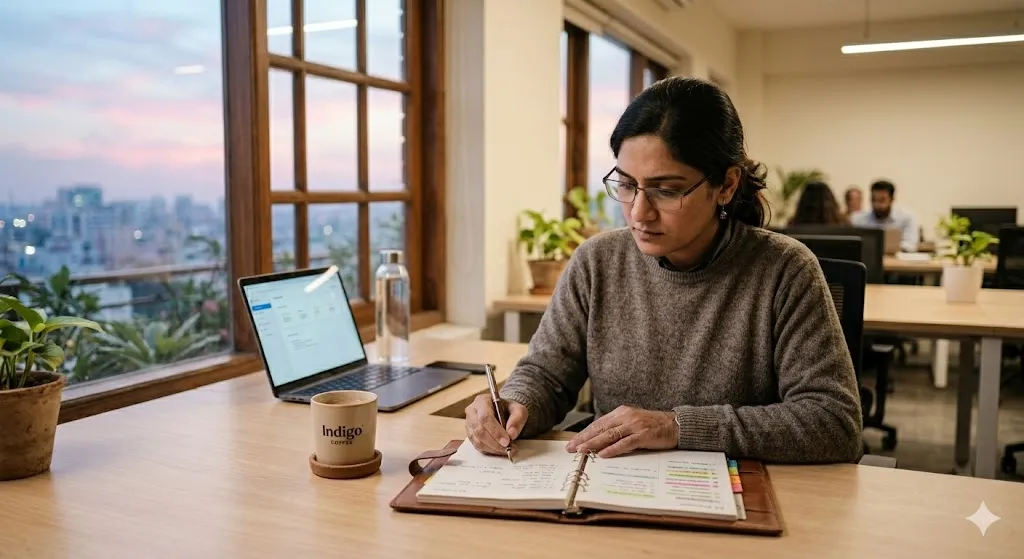 We schedule tasks into time slots without asking: is this when I have the energy for this kind of work? I’m sharp for analytical work between 9 a.m. and noon. Creative work flows better for me mid-afternoon. Administrative tasks, I can handle at 4 p.m. when my concentration is lower. Matching task type to energy type increased my output quality dramatically — without adding a single hour to my day.
22. Learn Basic Cooking (Three Meals Is Enough)
 You don’t need to become a chef. You need three reliable meals you can make well. Three meals means you can feed yourself and guests without anxiety, you eat out less (the average American spends $3,500/year eating out, per Bureau of Labor Statistics 2024), and you eat better food. Start with one egg dish, one pasta, one protein with a vegetable. Master those three before expanding.
23. Start Tracking Your Progress on What Matters
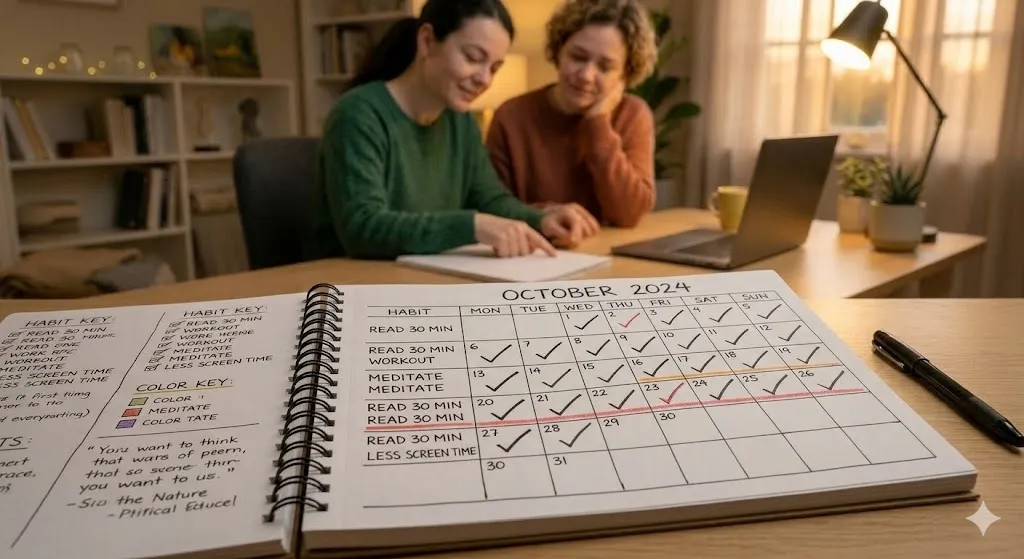 What gets measured, gets managed. But most people measure the wrong things — they track weight instead of habits, revenue instead of activities. James Clear’s Atomic Habits popularized habit tracking, and the core insight holds: seeing a streak of checked boxes creates its own motivation. I use a paper habit tracker (a printed grid on my desk) for my six core habits. Analog, visible, effective.
24. Stop Waiting Until You’re Ready
 This is the hardest one to hear. You will never feel fully ready for the hard conversation, the career change, the creative project, the move. Readiness is a feeling, not a state. The people who do hard things aren’t more ready — they’re more willing to act while uncertain.
I started this blog when I had four readers. I pitched my first article when I had no platform. I moved cities when I had no job lined up. None of those moments felt ready. All of them were worth doing.
25. Start Treating Yourself With the Patience You’d Give a Friend
 This is last because it holds everything else together. You will fail at most of this list. Not once. Repeatedly. You’ll miss the morning routine for a week, skip the gym, check your phone first thing, say yes when you meant no, eat badly, avoid the hard conversation. That’s not failure. That’s the process.
The question isn’t whether you’ll fall off. The question is how long you stay down before you start again. I’ve watched people transform their lives with exactly this list — not by being perfect at it, but by being genuinely kind to themselves when they weren’t.
The Honest Truth About Doing These 25 Things
You don’t start all 25 at once. That’s how you end up doing none of them by February.
Start with three. Pick the three that feel most relevant to where you are right now — the ones that created a small flicker of recognition as you read them. Do those for 30 days. Then add two more. In six months, you’ll have built a life that looks and feels genuinely different from the one you have today.
I’ve watched this process work. I’ve lived it. The transformation isn’t dramatic or sudden — it’s quiet, accumulative, and more durable than any overnight breakthrough.
The first step is always the same: start.
Frequently Asked Questions
How long does it take to see results from changing daily habits? Most research suggests 66 days to form a reliable habit — not the often-cited 21 days, which comes from a misread of Maxwell Maltz’s 1960 work. Expect six to eight weeks before a new behavior feels automatic. Plan for inconsistency in weeks two and three specifically — that’s the dropout zone for most people.
Which of these 25 things makes the biggest difference? Sleep protection and morning phone avoidance have the highest upstream impact for most people. Both influence focus, mood, and decision-making for the entire day. If you only change two things, start there.
What if I’ve tried all of these and they didn’t work? Context matters enormously. Journaling at night instead of morning might work better for you. Walking after dinner rather than midday. Strength training at home with a kettlebell rather than at a gym. The principles are sound; the implementation is personal. Audit what specifically broke down, not whether the approach is valid.
Is there a specific order to tackle these 25 things? No fixed order is universally correct, but a good sequence is: sleep first, then mornings, then one physical habit, then one financial habit. Foundation before growth. You can’t build much on exhaustion and financial anxiety.
Are any of these things actually backed by science? Yes, most of them. Sleep consistency (Walker, UC Berkeley), walking and creativity (Stanford, 2014), expressive writing and emotional processing (Pennebaker, UT Austin), single-tasking and cognitive performance (APA), and strength training and mental health (British Journal of Sports Medicine, multiple studies) all have strong research support.
What’s the biggest mistake people make when trying to improve their life? Trying to change identity before changing behavior. You don’t become a disciplined person and then act disciplined. You act first, and identity follows. Start with one action, however small, and let the evidence of your own behavior build the new self-image.
Start Here, Not Everywhere
One item on this list changed my life more than the others, and I want to leave you with it: the weekly review (number 4). Fifteen minutes on Sunday. Three questions. Nothing in my toolkit has paid more dividends over a longer period. It’s where I catch drift before it becomes direction, where I notice what’s working before I accidentally quit it, and where I reconnect with what actually matters to me that week.
Start there if you’re not sure where to begin.
Then tell me: which of these 25 felt most urgent when you read it? That’s almost always the right one to start with.
you may also like to read:https://caloriehive.com/how-to-look-good-every-day/life-style/