

Two years ago, I spent every Sunday the same way: half-watching Netflix, half-dreading Monday, doing absolutely nothing useful. By 9 p.m. I had that hollow, vaguely anxious feeling — the Sunday Scaries. I called it “rest.” My therapist called it avoidance.
The fix wasn’t hustle. It wasn’t a 6 a.m. cold plunge or a 47-item checklist. It was a handful of deliberate Sunday habits that made Monday feel like I’d already gotten a running start. Within three weeks of changing my Sunday routine, my stress levels dropped noticeably and I started finishing work by 5 p.m. most days.
Here are 24 productive Sunday to-do ideas that actually hold up — organized by time of day. I’ll also tell you which ones I tried and abandoned, and why.
“Sundays are not the end of the week. They are the quiet architecture of the next one.”
Why Your Sunday Routine Is the Highest-Leverage Hour of Your Week
A 2023 study from the American Psychological Association found that people who engage in a consistent weekly review ritual report 31% lower work-related stress than those who don’t. One hour on Sunday can functionally change how your brain processes the coming week.
The key insight: productive Sundays are not about doing more. They’re about removing friction before friction finds you.
Morning Ideas: Start Slow, Think Big (Ideas 1–8)
The biggest mistake people make with Sunday mornings is treating them like Monday mornings. They don’t need to be. These ideas work best between 8 a.m. and noon, before the week’s momentum fully kicks in.
1. Do a Brain Dump Journal
Write every open loop in your head — worries, tasks, ideas — onto paper. Takes 10 minutes. Clears mental RAM you didn’t know was full. This single habit reduced my morning anxiety more than any app ever did.
2. Set Your Three Non-Negotiables for the Week
Not 10 goals. Three. The three things that, if done, make the week a success. Write them somewhere visible. A sticky note on your monitor works better than a buried Notion page.
3. Review Last Week’s Wins — Not Failures
Most people do a post-mortem on what went wrong. I spend 5 minutes acknowledging what went right. It rewires how you enter the next week. Positive momentum compounds just like negative momentum does.
4. Go for a 20-Minute Walk Without Your Phone
Not exercise. Thinking time. Solve one problem per walk by letting your mind wander deliberately. I’ve made better decisions on sidewalks than in conference rooms. This is not a wellness cliché — it genuinely works.
5. Read for 30 Minutes — Something Unrelated to Work
Kindle, paperback, a magazine. The goal is to activate a different part of your brain. I use Libby (free, connects to your library card) and it costs nothing. No subscription required.
6. Meditate or Try Breathwork for 10 Minutes
I use Insight Timer (free tier is excellent — genuinely, the free version is better than most paid apps). Box breathing — inhale 4, hold 4, exhale 4 — takes two minutes and works better than coffee for focus.
7. Write One Handwritten Letter or Card
To a friend, parent, mentor. The act of physical writing slows your thinking down in a useful way. People remember cards in ways they never remember texts. I’ve kept every card I’ve ever received. I can’t say the same for texts.
8. Spend 15 Minutes on a Personal Creative Project
Not a side hustle. A creative outlet: sketching, playing guitar badly, writing a terrible poem. The point is expression without output pressure. You’re not building a brand. You’re being a person.
Personal Note: I tried combining ideas 1 and 2 for six months. The brain dump always improves the three non-negotiables. Do them in sequence, not separately.
Midday Ideas: The Practical Reset (Ideas 9–16)
This is where most Sunday productivity advice starts — and most people stop. Grocery lists. Laundry. Meal prep. These matter, but they’re not the whole picture. The ideas below mix the logistical with the intentional.
9. Meal Prep for at Least Three Dinners
You don’t need to prep everything. Prepping three dinners eliminates the 6 p.m. “what are we eating” spiral that costs more time and money than people realize. I batch-cook on Sundays using simple sheet-pan recipes from Budget Bytes — the site is free and the recipes are genuinely excellent for beginners.
10. Do a 20-Minute Home Reset — Not a Deep Clean
There’s a difference. A reset means every item goes back to its place. Clear surfaces, empty the dishwasher, deal with the mail pile. A clean environment measurably reduces cortisol according to research from UCLA’s Center on Everyday Lives of Families. It sounds soft. The data isn’t.
11. Check and Organize Your Finances
Not an audit. A 10-minute Monarch Money or YNAB check-in: Did I stay on budget? Any unexpected charges? Is my savings transfer set? Doing this weekly removes financial anxiety from your background processes. Money stress is the number one thing people say interrupts their focus at work.
12. Schedule Your Week with Time Blocks
Open Google Calendar or Fantastical and block out your three non-negotiables first. Then fill in meetings, workouts, and buffer time. Don’t leave Monday morning as a blank canvas — blank canvases become chaos. This is the single most impactful habit on this entire list for most people.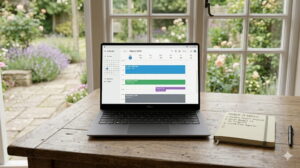
13. Batch Reply to All Non-Urgent Emails
Sunday afternoon is the ideal time for this. Write the emails, schedule them to send Monday at 9 a.m. using Boomerang or Gmail’s built-in scheduling feature. You respond when you have clarity. They receive when they’re ready. It looks professional and feels effortless.
14. Declutter One Drawer, Shelf, or Digital Folder
One. Not your whole house. The compound effect of one decluttered space per week adds up to a profoundly cleaner life by December. I’ve followed this rule for two years. My home is dramatically different than it was. I didn’t do a big purge. I did 104 small ones.
15. Prep Your Bag, Outfit, or Workspace for Monday
This takes eight minutes and saves 20 minutes of groggy Monday fumbling. My laptop bag is packed by 5 p.m. Sunday. My Monday morning runs noticeably smoother every single time I do this and noticeably worse every time I skip it.
16. Do a Grocery Order with a Meal-Based List
Build the list around meals, not ingredients. Instacart and Walmart+ delivery on Sundays means the food arrives while you’re doing other things. Lazy efficiency is real efficiency. The delivery fee costs less than the impulse purchases you make when you shop hungry and distracted.
The Failure I Had With Meal Prep (And What Fixed It)
For three months, I attempted full meal prep — prepping every breakfast, lunch, and dinner for the week. By Thursday, I hated everything in my fridge. The food was fine. The problem was the lack of spontaneity. I switched to prepping just proteins and grains, leaving the combinations flexible. That approach stuck and I’ve maintained it for 14 months.
Afternoon Ideas: Invest in Your Future Self (Ideas 17–21)
Here’s what nobody tells you about Sunday productivity: the best use of Sunday afternoon isn’t getting things done. It’s learning something, connecting with someone, or building a skill that makes next month easier. These ideas are often skipped because they don’t feel urgent. That’s exactly why they matter.
17. Take a 30-Minute Online Course Lesson
Coursera, Skillshare, or LinkedIn Learning. One lesson per Sunday equals 52 lessons per year. That’s a significant education compounded over time without burning out. I learned the fundamentals of copywriting this way — one Sunday at a time over four months.
18. Have a Meaningful Call with a Friend or Family Member
Not a text. A call. Connection is a productivity multiplier — it reduces emotional noise that would otherwise surface as distraction all week. The research on social connection and cognitive performance is consistent and clear. Your relationships are not separate from your productivity. They are part of it.
19. Review Your Long-Term Goals for 10 Minutes
Where do I want to be in 12 months? Is this week’s plan aligned with that? Most people know their yearly goals but never look at them again after January. This habit corrects drift before it becomes a detour. Five minutes of review in February is worth more than five hours of course-correcting in November.
20. Move Your Body — Intentionally
A yoga class, a long bike ride, a swim. Not a quick workout squeezed between tasks. Sunday movement should restore, not deplete. I use the Down Dog app ($30/year — genuinely excellent) for yoga at home. One class on Sunday changes my energy for two days.
21. Listen to One Insightful Podcast Episode
Specifically: one you’ve been saving. Not casual background noise. Sit down, listen with attention, and take one note. I keep a running Notion note called “Sunday Podcast Takeaways.” Three years of entries, and I reference it constantly. The best ideas I’ve acted on came from this list.
“Future-you is a person you’re either investing in or borrowing from. Sundays determine which.”
Evening Ideas: Wind Down with Intention (Ideas 22–24)
The Sunday Scaries are real. But they’re almost entirely caused by one thing: unresolved uncertainty about the week ahead. Evening routines that close open loops are the cure. Not wine. Not TV. Closure.
22. Write Your Monday Morning First Action
Not your whole to-do list. Your first action. “Open project file and review last draft.” That’s it. Your brain stops generating anxiety when it has a specific starting point. Specificity is the antidote to dread. This is the simplest idea on the list and possibly the highest-leverage one.
23. Do a Digital Sunset — Screens Off by 9 p.m.
This is the one people resist most and benefit from most. Blue light aside, the content you consume in your last 90 minutes shapes your subconscious overnight. Sunday night is not the time to doomscroll LinkedIn or check Slack. Your Monday morning mood begins Sunday evening.
24. Write One Thing You’re Genuinely Grateful For — in Detail
Not a list of five gratitudes. One thing, written with specificity. “I’m grateful that my sister called and we laughed for an hour.” That level of detail activates the same neurological benefit as the event itself. Research from UC Berkeley’s Greater Good Science Center supports this consistently. Vague gratitude produces vague results.
The Honest Tool List: What I Actually Use Every Sunday
I’ve tried most of the popular productivity apps. Here’s a no-nonsense breakdown of what survives contact with real Sundays:
- Notion (free or $10/mo) — Weekly review template lives here. Flexible but requires setup time upfront. Worth it if you like building systems. Not worth it if you just want a quick list.
- Todoist (free or $4/mo) — My actual task manager. Clean, cross-platform, reliable. The Sunday review feature is underrated by most users.
- Fantastical ($4/mo) — Best calendar app I’ve used. Natural language scheduling (“Tuesday at 3pm meeting with Sara”) saves real time.
- Insight Timer (free) — Genuinely the best free meditation app. No guilt-tripping, no upsell pressure.
- YNAB ($109/year) — Changed how I think about money. Not for everyone but transformative if it clicks with your brain.
- Down Dog Yoga ($30/year) — Customizable sessions, no subscription guilt. Better than most studio classes for home use.
Frequently Asked Questions About Productive Sundays
How many of these 24 ideas should I actually do each Sunday?
Start with five. Pick two from morning, two from midday, and one from evening. That’s usually under two hours total. Doing all 24 isn’t the goal — doing the right ones consistently is. Build the habit before you build the list.
What if Sunday is my only real rest day?
Then protect that rest first. Many of these ideas — the walk, the reading, the gratitude note — are rest activities. They restore you rather than deplete you. You don’t have to choose between rest and readiness. The right Sunday habits give you both.
How do I stop the Sunday Scaries from ruining my reset day?
The Scaries come from unresolved uncertainty. The most effective fix is Idea 22: write your Monday first action before 8 p.m. Sunday. It sounds too simple. It works almost every time. Anxiety needs ambiguity to survive — remove the ambiguity.
Is Sunday productivity just hustle culture in disguise?
That’s a fair challenge, and honestly, it can be. If your Sunday checklist makes you feel behind instead of ahead, you’ve got the wrong list. The goal is a calmer, more capable week — not a gold star. If it’s adding stress, cut it in half.
What’s the single most impactful Sunday habit for beginners?
The weekly time block (Idea 12). Open your calendar. Block your three priorities for the week. Everything else flows from that. It takes 15 minutes and changes your Monday from reactive to intentional. That’s the biggest return per minute of any habit on this list.
Can I do productive Sunday habits if I have kids?
Absolutely — but the timing shifts. Many parents do their Sunday reset between 7–9 a.m. before the household wakes up, or during nap time. The brain dump and time block take 20 minutes combined. That’s findable in almost any schedule.
A Contrarian Thought Before You Go
Most Sunday productivity content tells you to optimize. To systemize. To build a morning routine that would impress a productivity influencer. That’s the wrong frame entirely.
The best version of a productive Sunday isn’t about doing more. It’s about entering Monday with a quieter mind. Some weeks that means meal prep and time blocking. Other weeks it means a long walk, a good book, and calling your dad. Both are productive if they move you toward the week you actually want.
The goal is not a perfect Sunday. The goal is one that makes the next six days feel like yours.
Try This First: This week, just do Ideas 2, 12, and 22. Three non-negotiables, one time-blocked calendar, one Monday first action. That’s 30 minutes total. See how Monday feels different. Then build from there.
What’s the Sunday habit that’s changed your week the most? Drop it in the comments — the readers who push back on this list teach me more than the ones who agree with it
you may also like to read:https://caloriehive.com/things-to-do-when-bored/blog/