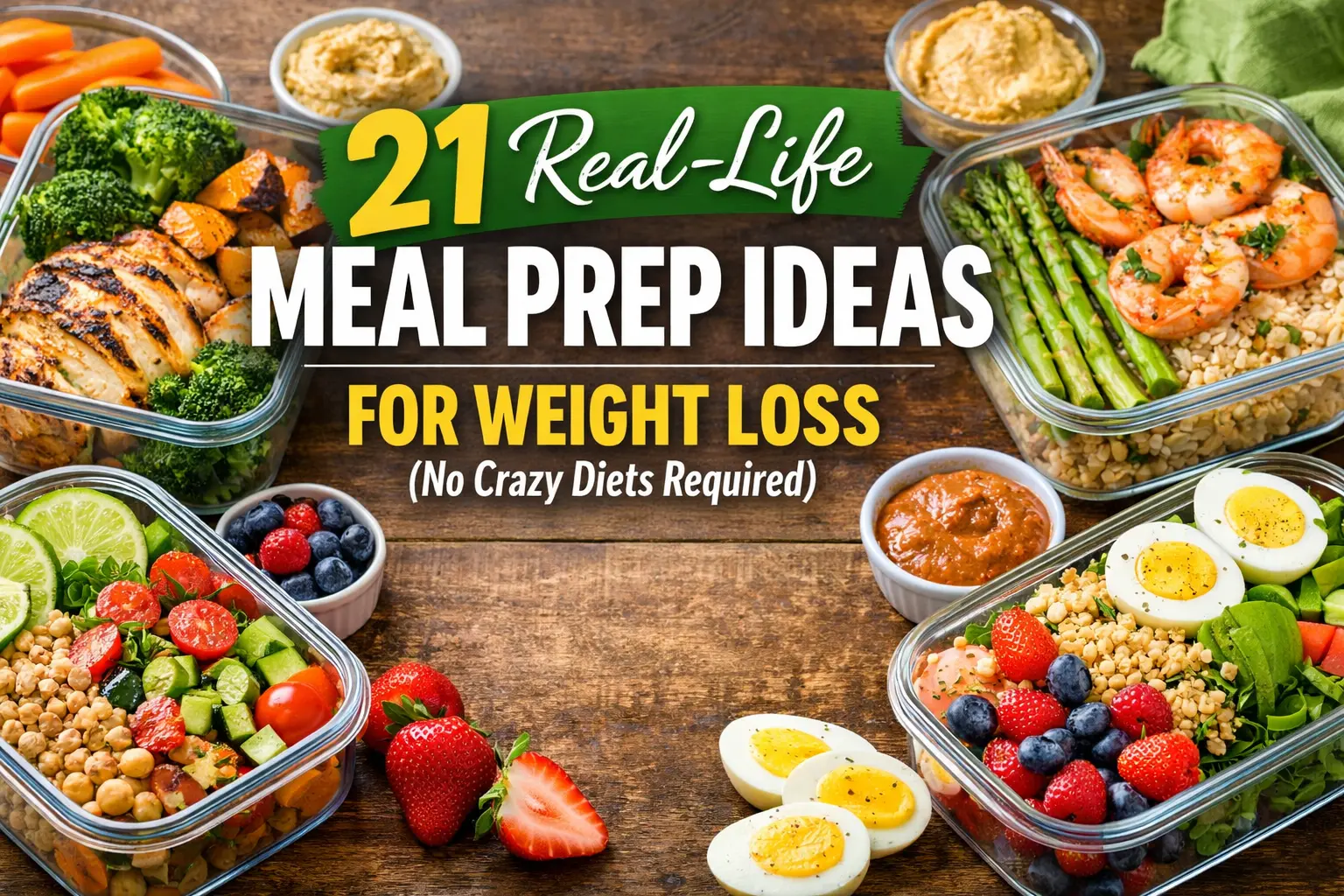
Sunday, 4 PM. I had just spent $180 at the grocery store, my kitchen looked like a cooking show set mid-disaster, and I had successfully prepared exactly nothing useful for the week ahead.
That was my third attempt at meal prep. I had watched the YouTube videos, bought the matching glass containers from OXO (the 3-piece set runs about $35, for the record), and written out a plan that involved six different proteins, four grain options, and eight sauces. By 6 PM I was ordering pizza. By Wednesday, half my carefully purchased groceries had gone soft and been quietly relocated to the trash.
The problem wasn’t commitment. It was design. I had designed a meal prep system for a person with a restaurant kitchen, six hours of free time, and no opinions about eating the same thing three days in a row. I am not that person. Neither, I’d wager, are most people reading this.
Here’s what I’ve learned through three years of trial, failure, and eventual success: meal prep for weight loss works when it removes decisions, not when it eliminates flexibility. The goal isn’t a week of identical containers. The goal is a refrigerator full of good decisions waiting to be assembled.
The 21 ideas below reflect that philosophy. Each one includes a specific recipe, realistic time estimates, and the honest insight about why it works for weight management specifically.
What Makes Meal Prep Actually Work for Weight Loss
Before the recipes: let’s address the mechanism. Meal prep supports weight loss through three pathways, not one.
First, it reduces decision fatigue. A 2011 study published in the Journal of Personality and Social Psychology found that the quality of decisions deteriorates as more decisions are made throughout the day. By 7 PM, your willpower is genuinely depleted. A prepped fridge removes the decision — you reach in and there’s a good option ready. This is why meal prep works even when you don’t follow your plan exactly.
Second, it controls portion architecture before hunger strikes. Portioning food when you’re calm, full, and clear-headed produces dramatically different results than portioning when you’re hungry and standing over the stove. Pre-portioned meals train your perception of appropriate serving sizes over weeks of consistent exposure.
Third, it reduces the cost of eating well. Meal prepped lunches average $2 to $4 per serving when made at home. The same meal purchased at a restaurant or food hall typically costs $12 to $18. That financial structure makes healthy eating sustainable in a way that $15 salads rarely are for most people long-term.
The Foundation: How to Think About Meal Prep for Weight Loss
Effective weight-loss meal prep has three components: a protein base, a fiber vehicle, and a flavor system. The protein base drives satiety. The fiber vehicle (vegetables, legumes, whole grains) creates volume and digestive satisfaction. The flavor system makes all of it something you want to eat on Thursday when enthusiasm is low.
You do not need to prep complete meals. Prepping components — a big batch of roasted chicken, a pot of quinoa, a sheet pan of roasted vegetables — and assembling them differently each day produces less boredom and more compliance than prepping seven identical containers on Sunday.
With that framework in mind, here are 21 specific ideas that work.
The 21 Meal Prep Ideas
1. Sheet Pan Lemon Herb Chicken Thighs
Calories per serving: ~280 | Protein: 32g | Prep time: 10 minutes active
Chicken thighs are better than chicken breasts for meal prep. They stay moist after reheating, cost roughly 40% less per pound, and have more flavor from their slightly higher fat content. People who say they prefer breasts for weight loss are usually wrong about the math — a skin-off thigh has about 40 more calories than a breast and about 50% more flavor. That trade-off is worth it for a prep you’ll actually eat.
Recipe: Toss 6 bone-in, skin-off chicken thighs with 3 tablespoons olive oil, juice of 2 lemons, 4 minced garlic cloves, 1 teaspoon dried oregano, 1 teaspoon smoked paprika, salt, and pepper. Spread on a sheet pan with a layer of halved cherry tomatoes and zucchini coins. Roast at 425°F for 35 minutes. Cool completely before storing. Keeps 4 days refrigerated.
You may also like to read https://caloriehive.com/overnight-oats-recipes/recipes/
2. Big Batch Turkey and Vegetable Meatballs
Calories per serving (4 meatballs): ~220 | Protein: 28g | Prep time: 20 minutes active
Meatballs are the most versatile meal prep protein. Put them in tomato sauce over zucchini noodles on Monday. In lettuce cups with sriracha on Tuesday. In a grain bowl on Wednesday. One batch, three completely different meals.
Recipe: Combine 500g lean ground turkey, 1/4 cup finely grated zucchini (squeeze out excess moisture in a towel), 1/4 cup almond flour, 2 garlic cloves minced, 1 egg, 1 teaspoon Italian seasoning, salt, and pepper. Roll into golf ball-sized portions (about 20 meatballs). Place on a lined baking sheet. Bake at 400°F for 20 minutes, turning once. Freeze half for the following week.
3. Overnight Oats (Four Variations)
Calories per jar: ~320 | Protein: 14g | Prep time: 5 minutes per jar
Overnight oats are the most reliable weight-loss breakfast prep because they’re filling, portable, and genuinely fast to assemble. The protein-fat-fiber combination keeps most people satisfied for 3 to 4 hours — longer than any comparable calorie count from processed breakfast options.
Base recipe: In a mason jar (wide-mouth 16 oz, Ball brand is around $1.50 per jar and perfect for this), combine 1/2 cup rolled oats (not instant), 3/4 cup Greek yogurt, 1/4 cup milk of choice, 1 tablespoon chia seeds, and 1 teaspoon honey. Stir and refrigerate overnight.
Four variations to prevent boredom: (1) Strawberry vanilla — add 1/2 cup sliced strawberries and 1/2 teaspoon vanilla extract. (2) Peanut butter banana — add 1 tablespoon natural peanut butter and 1/2 sliced banana, added fresh in the morning. (3) Apple cinnamon — add 1/4 cup diced apple, 1/2 teaspoon cinnamon, and a tablespoon of chopped walnuts. (4) Dark chocolate cherry — add 1/4 cup frozen cherries (thawed) and 1 teaspoon unsweetened cocoa powder.
4. Roasted Chickpeas
Calories per half cup: ~120 | Protein: 6g | Prep time: 5 minutes active
Roasted chickpeas solve one specific problem: what to eat at 3 PM when you’re hungry but dinner is two hours away. This is the moment when most people make the decision that undoes the day. A 100-calorie serving of roasted chickpeas with real crunch and savory flavor satisfies that craving better than most packaged snacks at twice the cost.
Recipe: Drain and rinse 2 cans chickpeas. Pat completely dry — this is the critical step, wet chickpeas steam instead of crisp. Toss with 2 tablespoons olive oil, 1 teaspoon smoked paprika, 1/2 teaspoon garlic powder, 1/2 teaspoon cumin, salt. Spread in a single layer on a baking sheet. Roast at 400°F for 30 to 35 minutes, shaking the pan twice, until golden and crunchy. Cool completely before storing in an open container (they soften in sealed containers). Best within 3 days.
5. Quinoa Power Base
Calories per cup: ~220 | Protein: 8g | Prep time: 5 minutes active, 20 minutes cook
Quinoa is the most useful grain base for weight-loss meal prep because it contains all nine essential amino acids, making it a complete protein — unusual for a plant food. One big batch (3 cups dry quinoa, which yields about 6 cups cooked) covers lunch for five days and breakfast grain bowls for two mornings.
Recipe: Rinse 3 cups quinoa thoroughly under cold water for 60 seconds (removes the bitter saponin coating). Combine with 5.5 cups water or broth and 1 teaspoon salt in a large pot. Bring to boil, reduce to simmer, cover and cook 15 minutes. Remove from heat and let steam, covered, for 5 minutes. Fluff with a fork. Store in a flat, wide container so it cools quickly and evenly. Keeps 5 days refrigerated.
6. White Bean and Vegetable Soup
Calories per serving: ~240 | Protein: 14g | Prep time: 10 minutes active, 30 minutes cook
Soup is underused as a weight-loss tool. Research from Penn State University found that eating a low-calorie soup before a meal reduces total calorie intake at that meal by approximately 20%. One batch of this soup serves as a starter before dinner or a complete lunch.
Recipe: Sauté 1 onion, 3 carrots, 3 celery stalks, and 4 garlic cloves in olive oil. Add 1 can (400g) diced tomatoes, 2 cans white beans (drained), 4 cups vegetable broth, 1 teaspoon thyme, 1 teaspoon rosemary, salt, and pepper. Simmer 20 minutes. Add 2 large handfuls of baby spinach in the final 2 minutes. The spinach wilts into almost nothing and adds iron and folate with minimal caloric impact. Keeps 5 days refrigerated, freezes beautifully for up to 3 months.
7. Greek Chicken and Cucumber Salad Jars
Calories per jar: ~310 | Protein: 30g | Prep time: 15 minutes
Mason jar salads maintain crispness for four days when layered correctly — dressing at the bottom, sturdy vegetables next, grains in the middle, greens on top. The worst mistake in jar salad prep is putting greens near the dressing.
Recipe: To a wide-mouth quart jar, add in this order: 2 tablespoons Greek dressing at the bottom, then diced cucumber, cherry tomatoes, Kalamata olives, and red onion, then a layer of quinoa or farro, then sliced grilled chicken breast or thigh, then crumbled feta cheese, then baby spinach and romaine at the very top. Seal and refrigerate. When ready to eat, shake vigorously or dump into a bowl and toss. The dressing migrates up perfectly.
8. Hard-Boiled Eggs (Batch of 12)
Calories per egg: 70 | Protein: 6g | Prep time: 20 minutes
Twelve hard-boiled eggs prepared on Sunday disappear by Thursday in most households because they’re the most universally useful protein prep available. Add them to salads, eat them as standalone snacks with hot sauce and a pinch of salt, slice them into grain bowls, or smash them with a fork, a teaspoon of Dijon mustard, and a pinch of paprika for a two-minute egg salad.
The foolproof method: Lower eggs directly from the refrigerator into already-boiling water. Set a timer for 10 minutes for firm yolks, 8 minutes for slightly jammy. Transfer immediately to an ice bath for 10 minutes. Peel under running water. Store unpeeled in a covered container for up to a week. Peeled eggs keep for 5 days submerged in cold water changed daily.
9. Sheet Pan Roasted Vegetables (Master Recipe)
Calories per cup: ~80 to 120 depending on vegetables | Prep time: 10 minutes active
A large batch of roasted vegetables is the most flexible meal prep component. They go under eggs at breakfast, beside chicken at lunch, tossed with pasta at dinner, or eaten cold directly from the container at 11 PM when better judgment has gone to sleep.
Recipe: Cut any combination of vegetables into roughly equal sizes: broccoli florets, bell peppers, red onion wedges, zucchini coins, asparagus, cherry tomatoes, sweet potato cubes. Toss with 3 tablespoons olive oil, 2 teaspoons garlic powder, 1 teaspoon smoked paprika, salt, and pepper. Spread in a single layer on two large sheet pans — never crowd the pan, crowding creates steaming instead of roasting. Roast at 425°F for 25 to 30 minutes, tossing once halfway through.
10. Salmon with Miso Glaze
Calories per fillet: ~320 | Protein: 34g | Prep time: 5 minutes active, 12 minutes cook
Salmon is the most nutritionally dense protein you can prep for weight loss. The omega-3 fatty acids in salmon have been associated with reduced inflammation, improved insulin sensitivity, and — in a 2010 study in the International Journal of Obesity — modest but measurable improvements in body composition when combined with caloric restriction.
Recipe: Whisk together 2 tablespoons white miso paste, 1 tablespoon soy sauce, 1 tablespoon rice vinegar, 1 tablespoon honey, and 1 teaspoon sesame oil. Brush liberally over 4 salmon fillets (about 150g each). Place on a lined baking sheet and broil on high for 10 to 12 minutes until the glaze caramelizes and the salmon flakes easily. Cool before refrigerating. Keeps 3 days. Does not freeze well — the texture suffers significantly.
11. Turkey Lettuce Wrap Components
Calories per wrap: ~180 | Protein: 22g | Prep time: 15 minutes
Prepping the components separately — spiced ground turkey, washed butter lettuce leaves, diced cucumber and carrot, a quick hoisin-sriracha sauce — takes fifteen minutes and produces four days of lunches that feel different each time depending on how you load the wrap.
Recipe: Brown 500g ground turkey in a hot skillet. Add 3 minced garlic cloves, 2 tablespoons soy sauce, 1 tablespoon oyster sauce, 1 tablespoon sesame oil, 1 teaspoon ginger, and 1 teaspoon sriracha. Cook 3 minutes until sauce reduces. Cool completely. Store turkey, lettuce, and diced vegetables separately. Assemble fresh. Mix 2 tablespoons hoisin sauce with 1 teaspoon sriracha for dipping.
12. Black Bean and Sweet Potato Meal Prep Bowls
Calories per bowl: ~380 | Protein: 16g | Prep time: 15 minutes active, 30 minutes roast
This is the best plant-based weight-loss bowl on this list because it’s genuinely filling, highly portable, and improves in flavor over 24 to 48 hours as the components meld. People who think they need meat at every meal should make this first.
Recipe: Cube and roast 2 large sweet potatoes with olive oil, cumin, and smoked paprika at 425°F for 25 minutes. Warm 2 cans drained black beans with 1 teaspoon cumin, 1/2 teaspoon garlic powder, and a pinch of cayenne. Cook 2 cups brown rice or quinoa. Assemble bowls with a base of grains, black beans, roasted sweet potato, 1/4 sliced avocado, and a spoonful of salsa. The avocado should be added fresh when serving — it browns in storage.
13. Greek Yogurt Parfait Components
Calories per parfait: ~290 | Protein: 22g | Prep time: 5 minutes
Prep the granola and berry compote once. Assemble fresh each morning in 90 seconds.
Granola recipe: Toss 2 cups rolled oats with 2 tablespoons honey, 2 tablespoons coconut oil, 1 teaspoon cinnamon, 1/4 cup chopped almonds, and a pinch of salt. Spread on a lined sheet pan and bake at 325°F for 20 minutes, stirring once. Keeps 2 weeks in an airtight container.
Quick berry compote: Simmer 2 cups mixed frozen berries with 1 tablespoon honey and 1 teaspoon lemon juice for 10 minutes until slightly thickened. Keeps 1 week refrigerated.
Assembly: Layer 3/4 cup full-fat Greek yogurt (Fage 5% or Chobani whole milk), 2 tablespoons granola, and 3 tablespoons berry compote.
14. Egg Muffins (12-Muffin Batch)
Calories per muffin: ~95 | Protein: 9g | Prep time: 15 minutes active
Egg muffins solve the most common breakfast problem: the gap between wanting something hot and protein-rich in the morning and having six minutes before leaving the house. These reheat in 60 seconds in a microwave.
Recipe: Whisk 10 large eggs with 3 tablespoons milk, salt, and pepper. Add any fillings: diced bell pepper, spinach, feta, sun-dried tomatoes, crumbled cooked turkey sausage. The key is to fill each greased muffin cup only two-thirds full — eggs expand significantly. Bake at 350°F for 18 minutes until set. Cool completely before refrigerating. Keeps 4 days. Reheat two at a time for 60 seconds.
15. Cold Soba Noodle Salad
Calories per serving: ~310 | Protein: 14g | Prep time: 15 minutes
Cold noodle salads are the most underrepresented category in mainstream weight-loss meal prep content. They improve over two to three days as the dressing absorbs into the noodles, making them genuinely better on Wednesday than on Monday.
Recipe: Cook 200g soba noodles (buckwheat-based, higher protein than regular pasta) per package directions, rinse under cold water immediately. Whisk together: 3 tablespoons soy sauce, 2 tablespoons rice vinegar, 1 tablespoon sesame oil, 1 tablespoon honey, 1 teaspoon grated ginger, 1 garlic clove minced, 1 teaspoon sriracha. Toss noodles with dressing, 2 cups shredded purple cabbage, 1 cup shredded carrots, 3 sliced green onions, and 2 tablespoons sesame seeds. Top with sliced chicken or edamame for protein.
16. Cauliflower Fried Rice
Calories per serving: ~190 | Protein: 12g | Prep time: 15 minutes active
Cauliflower rice has a reputation problem. People try it as a sad substitute for real rice and are predictably disappointed when it tastes like neither. But cauliflower fried rice — with soy sauce, sesame, eggs, and proper high-heat cooking — is its own thing entirely, not a replacement for anything.
Recipe: Pulse 1 large head of cauliflower in a food processor until rice-sized. Heat 2 tablespoons sesame oil in a large skillet or wok over high heat. Add cauliflower and cook without stirring for 3 minutes until it begins to brown. Add 3 garlic cloves and 2 teaspoons ginger. Push cauliflower to the side, scramble 3 eggs in the empty space. Add 1 cup frozen peas and carrots, 3 tablespoons soy sauce, 1 tablespoon rice vinegar. Toss everything together. Finish with 3 sliced green onions and a drizzle of sesame oil. Top with cooked shrimp or chicken for a complete meal.
17. Lentil and Roasted Tomato Soup
Calories per serving: ~270 | Protein: 18g | Prep time: 10 minutes active, 35 minutes cook
Red lentils dissolve during cooking and create a naturally thick, creamy soup without any dairy or blending required. They also contain resistant starch, which slows digestion and produces a prolonged satiety effect that most soups don’t deliver.
Recipe: Roast 500g cherry tomatoes at 400°F for 20 minutes until collapsed and caramelized. Meanwhile, sauté 1 onion, 4 garlic cloves, 1 teaspoon cumin, 1 teaspoon coriander, 1/2 teaspoon turmeric, and 1/2 teaspoon smoked paprika in olive oil. Add roasted tomatoes, 1.5 cups red lentils (rinsed), and 5 cups vegetable broth. Simmer 20 minutes. Blend partially for texture. Finish with lemon juice, salt, and a drizzle of good olive oil. Serves 6. Freezes for 3 months.
18. Teriyaki Chicken Rice Bowls
Calories per bowl: ~420 | Protein: 35g | Prep time: 20 minutes active
This is the meal prep bowl that converts skeptics. It tastes exactly like takeout, costs about $2.50 per serving, and takes less time to assemble on a weeknight than ordering delivery would.
Recipe: For teriyaki sauce, whisk 4 tablespoons soy sauce, 2 tablespoons honey, 1 tablespoon rice vinegar, 1 teaspoon sesame oil, and 1 teaspoon cornstarch with 2 tablespoons water. Slice 500g chicken breast or thigh thin. Sear in a hot pan with a little oil 2 minutes per side. Pour sauce over, let it bubble and thicken, coating the chicken, about 2 minutes more. Serve over brown rice with steamed broccoli and a sprinkle of sesame seeds. The sauce is the thing — make double and keep it in the refrigerator for a week.
19. Tuna and White Bean Protein Salad
Calories per serving: ~280 | Protein: 32g | Prep time: 10 minutes
No cooking required. This is the emergency meal prep — the one for Sundays when life intervenes and you have twenty minutes total.
Recipe: Drain 2 cans tuna in water (Wild Planet is consistently good quality, around $5 per can) and 1 can white beans. Combine with 1/2 red onion finely diced, 2 tablespoons capers, juice of 1 lemon, 3 tablespoons good olive oil, fresh parsley, salt, and pepper. Serve over arugula, in lettuce cups, on whole grain crackers, or stuffed into a half an avocado. Keeps 3 days refrigerated.
20. Baked Oatmeal
Calories per slice: ~220 | Protein: 8g | Prep time: 10 minutes active, 35 minutes bake
Baked oatmeal is cut into portions like a baking-dish-sized bar and reheated for 90 seconds each morning. It produces the same slow-release energy as regular oatmeal with the textural satisfaction of something you can actually bite into. Most overnight oat skeptics (they exist, and I was one) become baked oatmeal converts.
Recipe: Combine 3 cups rolled oats, 1 teaspoon baking powder, 1.5 teaspoons cinnamon, 1/4 teaspoon salt. In a separate bowl, whisk 2 eggs, 2 cups milk, 1/3 cup maple syrup, 3 tablespoons melted coconut oil, and 2 teaspoons vanilla extract. Fold wet into dry. Add 1.5 cups blueberries or sliced bananas. Pour into a greased 9×13 baking dish. Bake at 375°F for 35 minutes until set and golden. Cut into 8 portions. Keeps 5 days refrigerated.
21. Spiced Ground Beef and Vegetable Stuffed Peppers
Calories per pepper half: ~280 | Protein: 26g | Prep time: 20 minutes active, 25 minutes bake
Stuffed peppers are the meal prep idea that looks impressive, requires minimal skill, reheats beautifully, and satisfies the specific craving for something that feels like a proper dinner rather than a meal prep bowl. That psychological satisfaction matters more than most nutrition content acknowledges.
Recipe: Brown 500g lean ground beef (90/10) with 1 diced onion, 3 garlic cloves, 1 teaspoon cumin, 1 teaspoon smoked paprika, 1/2 teaspoon chili powder, salt, and pepper. Add 1 cup cooked brown rice and 1 cup tomato sauce to the beef. Mix well. Halve 4 large bell peppers lengthwise and remove seeds. Fill each half generously with beef mixture. Top with 2 tablespoons shredded cheese per half. Bake at 375°F for 25 minutes until peppers are tender and cheese is bubbly. Keeps 4 days refrigerated.
The Container Question
Every meal prep conversation eventually lands on storage, and the honest answer is less exciting than the influencer-curated glass-container aesthetic suggests.
Glass containers (Pyrex 10-piece set, around $40 at Target) are best for soups, sauces, and anything you’ll reheat in the container. They’re heavy, which matters if you carry lunch to work. Plastic containers (Rubbermaid Brilliance 14-piece set, around $35) are better for portability and lighter for daily transport. Stainless steel (Stasher bags for snacks, about $15 each) work well for roasted chickpeas and things that need airflow.
The single most useful purchase for weight-loss meal prep is a kitchen scale, not a fancy container set. A simple digital scale (OXO Good Grips 11-pound, around $50, or the more affordable Ozeri Pronto at $13) allows accurate portioning, which is the single highest-leverage habit in any weight management effort.
Frequently Asked Questions
How many hours should meal prep take each week? Two to three hours is the realistic ceiling for most people. More than that and adherence drops sharply. The meals above are designed to be prepped in parallel — roasting vegetables and baking oatmeal simultaneously while hard-boiling eggs uses the oven once rather than three times.
Is meal prep actually necessary for weight loss? No. But it dramatically improves the odds. A 2017 study in the International Journal of Behavioral Nutrition and Physical Activity found that people who planned their meals in advance had significantly better diet quality and were less likely to be obese than those who made food decisions in the moment. Planning is the mechanism. Meal prep is the most practical form of planning.
Can I meal prep if I hate eating the same thing twice? Yes — prep components, not complete meals. A batch of quinoa, roasted vegetables, and grilled chicken can assemble into entirely different bowls each day with different sauces, seasonings, and additions. The components are neutral. The flavor system changes.
What’s the best container to keep salads fresh for a week? Wide-mouth quart mason jars with the dressing at the bottom and greens at the top keep salads crisp for four days. Day five is pushing it. Five full days of meal prep salads works better with two smaller prep sessions (Sunday and Wednesday) rather than one large one.
Do meal prep ideas for weight loss have to be low-carb? No, and I’d argue that low-carb meal prep has a high dropout rate specifically because it removes the foods most people find most satisfying. The recipes above include brown rice, quinoa, oats, sweet potatoes, and black beans deliberately. Sustainable weight loss requires meals you want to eat at the end of a hard week, not just meals that score well on a macros spreadsheet.
Where to Start
If you’ve failed at meal prep before, start with exactly three of these ideas for your first week: the quinoa base (recipe 5), the sheet pan vegetables (recipe 9), and the overnight oats in two flavors (recipe 3). That’s two hours of actual work, roughly $35 in ingredients, and a refrigerator full of components that can become eight different meals.
Add one new idea per week until you have a rotation of six to eight that you genuinely enjoy. That rotation — not a rigid plan, but a fluid collection of reliable components — is what sustainable meal prep actually looks like in practice.
The pizza I ordered on my third failed prep attempt cost $24 and I barely remember eating it. The quinoa bowl I made three weeks later, once I’d simplified everything, I still think about sometimes. Not because it was complicated. Because it was exactly what I needed.
What meal prep idea has worked or completely failed for you? I’d love to know in the comments — especially the failures, because those tend to be more instructive than the wins.