
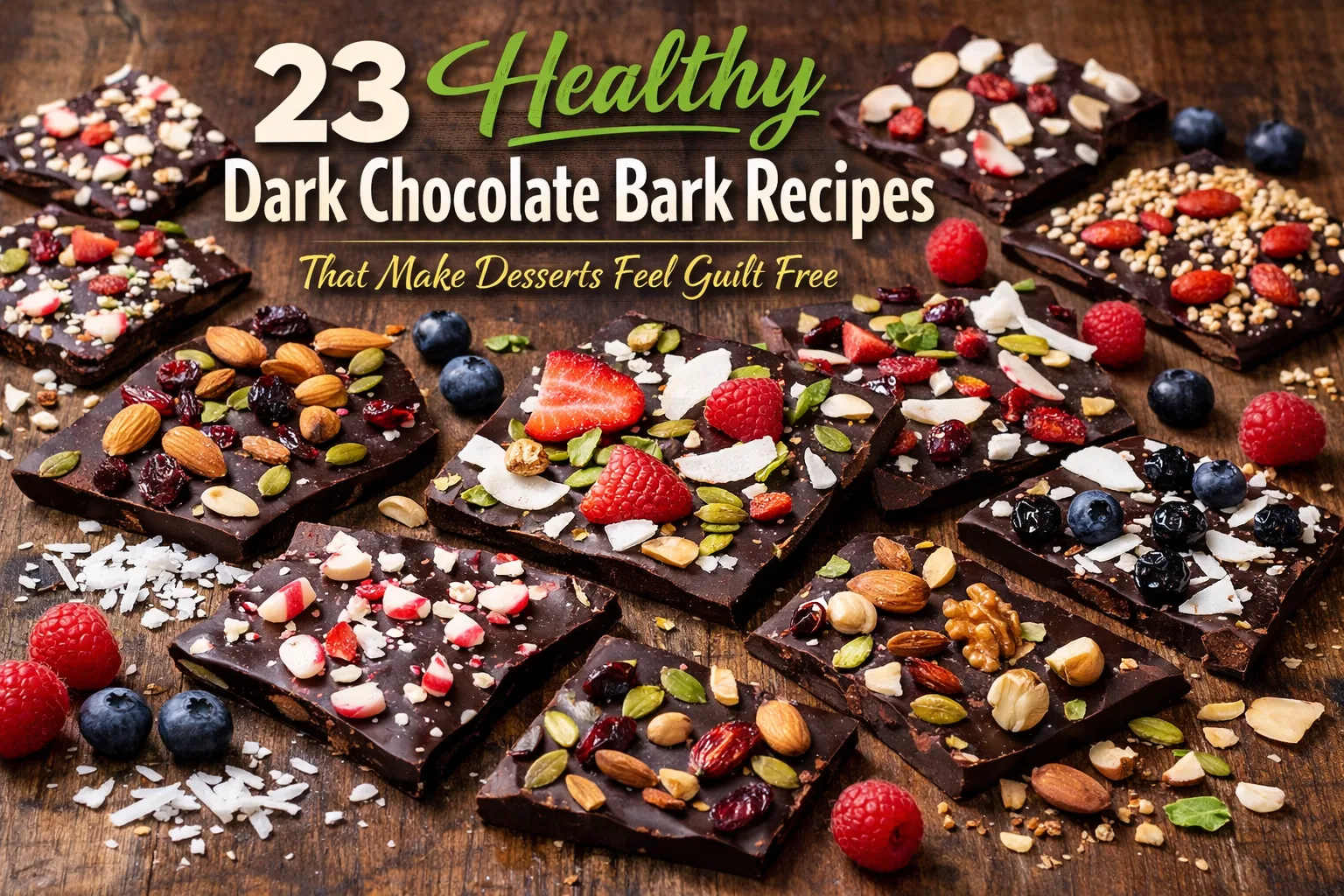
Last February, I made a batch of dark chocolate bark with sea salt and toasted almonds for a dinner party. By the time the main course was cleared, the bark was completely gone. Three guests asked me for the recipe. Two of them were actively avoiding sugar. That moment told me something important: healthy desserts do not have to taste like a compromise.
Dark chocolate bark is, without question, one of the most underrated weapons in the healthy eating arsenal. It takes under 30 minutes, requires almost no equipment, and the flavor combinations are essentially infinite. Whether you are managing blood sugar, following a plant-based lifestyle, or simply trying to eat less processed junk, dark chocolate bark checks every box.
This guide gives you 23 genuinely delicious, nutritionist-approved dark chocolate bark recipes, plus the science behind why dark chocolate deserves its health halo, common beginner mistakes, and a straightforward method that works every single time. Let us get into it.
Why Dark Chocolate Bark Is the Smartest Healthy Dessert You Can Make
Here is what nobody tells you about healthy eating: the hardest part is not giving up pizza or pasta. It is dealing with the 9 PM sugar craving that has you standing in front of the pantry like a disappointed archaeologist. Dark chocolate bark solves that problem better than almost anything else.
First, the nutrition is genuinely impressive. A 70 to 85 percent cacao dark chocolate bar is loaded with flavonoids, which are plant compounds linked to improved heart health, lower blood pressure, and better insulin sensitivity. A 2022 study published in the British Journal of Nutrition found that regular consumption of high-cacao dark chocolate was associated with reduced inflammation markers in adults over 40. That is not marketing language. That is peer-reviewed science.
Second, dark chocolate bark is one of the few desserts where the healthy version tastes better than the junk food version. Milk chocolate bark loaded with artificial flavors cannot compete with 72 percent cacao Lindt melted with toasted hazelnuts and a pinch of fleur de sel. The depth of flavor is on a completely different level.
Choosing the Right Dark Chocolate: What Actually Matters
Not all dark chocolate is created equal, and this is where most beginners go wrong. Here is my honest breakdown after testing over a dozen brands:
- Lindt Excellence 70% or 85%: The gold standard for baking bark. Melts evenly, has a clean flavor profile, and is widely available. Around $4 to $5 per 100g bar.
- Hu Kitchen Simple Dark Chocolate: My top recommendation for those avoiding refined sugar and soy lecithin. Made with coconut sugar. Slightly pricier at $7 to $8 per bar but worth it for specific dietary needs.
- Trader Joe’s 72% Dark Chocolate Pound Plus Bar: Outstanding value for bulk bark-making. Excellent snap and melt behavior.
- Ghirardelli 72% Cacao Twilight Delight: A reliable grocery store option with good flavor. Works well for beginner recipes.
- Valrhona Guanaja 70%: The premium choice for special occasions. Complex, deep flavor. Reserve it for your most impressive bark creations.
The rule I follow: never use anything below 65 percent cacao for bark. Below that threshold, the sugar content starts to undermine the health benefits, and the flavor becomes flat and one-dimensional.
The Foolproof Method for Melting and Setting Dark Chocolate Bark
I ruined my first three batches of bark before I understood tempering. Not the advanced patisserie version, but the basic principle that determines whether your bark snaps cleanly or turns into a crumbly, streaky mess.
Step-by-Step: The Double Boiler Method
- Break your chocolate into even pieces. Uneven pieces melt at different rates and cause scorching.
- Fill a saucepan with two inches of water and bring it to a gentle simmer, not a boil.
- Place a heatproof bowl on top. The bottom should not touch the water.
- Add three-quarters of your chocolate and stir constantly with a silicone spatula.
- Once melted, remove from heat and stir in the remaining chocolate. This is the key step. Adding unmelted chocolate to melted chocolate drops the temperature, which encourages proper crystal formation.
- Pour onto a parchment-lined baking sheet and spread to about 6mm thickness.
- Add your toppings immediately, then refrigerate for 45 minutes minimum.
- Break into shards. Store in an airtight container at room temperature for up to two weeks, or refrigerate for one month.
The microwave method works too. Use 30-second intervals at 50 percent power, stirring between each interval. Stop when a few lumps remain and stir until smooth. This takes patience but is faster for small batches.
23 Healthy Dark Chocolate Bark Recipes (Organized by Flavor Profile)
I have grouped these by flavor profile so you can choose based on your mood or what is in your pantry. Every recipe starts with approximately 200g of quality dark chocolate (70 percent or higher) as the base.
Classic and Nutty Recipes
- Sea Salt Almond Bark: Scatter 80g of roughly chopped toasted almonds over melted dark chocolate. Finish with a generous pinch of Maldon sea salt flakes. This is the recipe that started my bark obsession. The contrast between the bitter chocolate, crunchy almond, and that last hit of salt is genuinely addictive.
- Pistachio and Rose Bark: Spread 60g of shelled pistachios and a tablespoon of dried rose petals over dark chocolate. It looks stunning and tastes even better. The earthiness of the pistachio cuts through the chocolate in a way that feels almost Mediterranean.
- Hazelnut Espresso Bark: Mix a teaspoon of instant espresso powder into your melted chocolate before spreading. Top with 70g of roughly chopped roasted hazelnuts. This one is dangerously close to eating a Ferrero Rocher without the guilt.
- Walnut and Maple Bark: Toss 80g of walnut halves in half a teaspoon of pure maple syrup and a pinch of cinnamon. Toast for 5 minutes at 180C. Scatter over your bark. The maple-walnut combination is deeply satisfying on cold evenings.
- Cashew Cardamom Bark: Stir a quarter teaspoon of ground cardamom directly into the melted chocolate. Top with 80g of lightly salted roasted cashews. Unexpected and genuinely wonderful.
- Brazil Nut and Sea Salt Bark: Brazil nuts are often overlooked in bark recipes, which is a mistake. They provide a creamy, almost buttery bite that pairs beautifully with 75 to 85 percent cacao chocolate. Top with coarse sea salt and serve at room temperature for best texture.
Fruit and Superfood Recipes
- Cranberry Almond Bark: Scatter 50g of unsweetened dried cranberries and 50g of sliced almonds over dark chocolate. The tartness of the cranberry balances the bitterness of high-cacao chocolate beautifully. This is my most-requested recipe for holiday gift boxes.
- Goji Berry and Pumpkin Seed Bark: Goji berries are antioxidant powerhouses. Combine 40g of dried goji berries with 50g of toasted pumpkin seeds for a bark that looks like a sunset and packs serious nutritional value.
- Blueberry Lemon Zest Bark: Use freeze-dried blueberries rather than fresh for best results. Scatter 30g over your bark along with the zest of one lemon. Bright, fruity, and unexpectedly refreshing.
- Mango Chili Bark: This is the recipe people are always skeptical about until they try it. Scatter 40g of dried mango pieces over dark chocolate and dust lightly with a pinch of cayenne and a pinch of smoked paprika. The heat blooms slowly and creates an extraordinary flavor experience.
- Cherry Almond Bark with Vanilla: Stir half a teaspoon of pure vanilla extract into your melted chocolate. Top with 50g of unsweetened dried tart cherries and 50g of toasted almond slivers. This one disappears faster than any other recipe I have made.
- Raspberry and Coconut Bark: Use freeze-dried raspberries (30g) and unsweetened desiccated coconut (30g). The freeze-dried fruit gives you intense flavor without adding moisture that could make the bark seize. Visually stunning with the deep red against the dark chocolate.
Seed and Grain Recipes for Maximum Nutrition
- Quinoa Crunch Bark: Toast 60g of dry quinoa in a dry pan until it pops like tiny popcorn. Scatter over your chocolate for an incredible texture. This bark has a satisfying crunch that feels almost like a chocolate bar you would pay serious money for at a specialty chocolate shop.
- Hemp Seed and Chia Bark: Sprinkle 2 tablespoons of hemp seeds and 1 tablespoon of chia seeds over your melted chocolate. Add a pinch of fleur de sel. Simple, clean, and loaded with omega-3 fatty acids and complete protein.
- Sesame and Tahini Swirl Bark: Drizzle 2 tablespoons of runny tahini over your poured chocolate before it sets, then use a toothpick to create swirls. Scatter 2 tablespoons of toasted sesame seeds on top. This is Middle Eastern inspired and deeply satisfying.
- Sunflower Seed and Turmeric Bark: Stir half a teaspoon of turmeric and a quarter teaspoon of black pepper into your melted chocolate before spreading. The black pepper activates the curcumin in turmeric for better absorption. Top with 60g of toasted sunflower seeds. Earthy, slightly spiced, and anti-inflammatory.
Spiced and Adventurous Recipes
- Cinnamon Pecan Bark: Toast 80g of pecan halves with half a teaspoon of cinnamon and a drizzle of coconut oil for 7 minutes at 180C. Scatter over your chocolate while warm. The cinnamon also adds a mild blood sugar-stabilizing effect, which pairs nicely with the dark chocolate.
- Matcha White Chocolate Swirl Bark: Melt 50g of good quality white chocolate separately and stir in 1 teaspoon of ceremonial grade matcha powder from Ippodo or similar. Drizzle over your dark chocolate base and swirl. The visual contrast is dramatic and the flavor is elegant.
- Chili and Sea Salt Bark: Sometimes simplicity wins. Just dark chocolate, a generous pinch of ancho chili powder, and Maldon sea salt. Three ingredients, maximum impact. I served this at a corporate event last spring and it generated more conversation than the food from the Michelin-starred caterer.
- Ginger and Orange Zest Bark: Stir the zest of one orange into your melted chocolate. Top with 30g of finely chopped crystallized ginger. Both ginger and dark chocolate have documented anti-inflammatory properties, making this one of the most genuinely functional healthy bark recipes on this list.
- Black Sesame and Miso Bark: This is an advanced recipe that rewards the adventurous. Stir half a teaspoon of white miso paste into your melted chocolate before spreading. Top with black sesame seeds. The miso adds an umami depth that makes this bark completely unlike anything else.
Minimalist Recipes for Purists
- Three-Ingredient Pure Bark: Sometimes you just want to let the chocolate do the talking. Use a high-quality 85 percent bar, melt it perfectly, spread it thin, and finish with nothing but fleur de sel. The quality of your chocolate is everything with this recipe. Spend the extra money on Valrhona or Michel Cluizel and you will understand immediately.
- Coconut Oil Sheen Bark with Vanilla Sea Salt: Stir 1 teaspoon of extra virgin coconut oil into your melted chocolate before spreading. It gives the finished bark a beautiful gloss and slightly smoother texture. Finish with vanilla salt (mix Maldon salt with the scraped seeds from half a vanilla pod) and nothing else. This became my go-to for holiday gifts after a reader told me it was the best chocolate she had ever tasted outside of Paris.
Quick Reference: Bark Recipes by Dietary Need
| Recipe | Vegan | Nut-Free Option | Best For |
| Sea Salt Almond | Yes | Use seeds instead | Everyday snacking |
| Goji Berry & Pumpkin Seed | Yes | Yes | Maximum nutrition |
| Mango Chili | Yes | Yes | Adventurous palates |
| Quinoa Crunch | Yes | Yes | Texture lovers |
| Sesame Tahini Swirl | Yes | Yes | Nut allergy safe |
| Three-Ingredient Pure | Yes | Yes | Chocolate purists |
| Cherry Almond & Vanilla | Yes | Use seeds instead | Gift giving |
| Matcha White Chocolate Swirl | Yes | Yes | Special occasions |
The Biggest Mistakes People Make With Chocolate Bark (And How to Avoid Them)
I have made every single one of these mistakes personally, some of them multiple times. Consider this your shortcut to skipping the frustrating trial-and-error phase.
Mistake 1: Overheating the chocolate. Chocolate burns fast and seized chocolate cannot be rescued. Keep your heat low and your patience high. If your chocolate looks grainy or lumpy after melting, it has likely seized from heat or water exposure. Start over.
Mistake 2: Adding wet toppings. Fresh fruit releases moisture that prevents the bark from setting properly. Always use dried or freeze-dried fruit, and make sure any ingredients you add are completely dry.
Mistake 3: Spreading too thick. Bark should be about 5 to 7mm thick. Thicker than that and it loses its snappable texture. Thinner and it becomes too fragile to handle.
Mistake 4: Rushing the set time. 45 minutes in the refrigerator is the minimum. I leave mine for a full hour. Pulling the bark too early creates a soft, fingerprint-prone surface that never fully hardens.
Mistake 5: Using low-cacao chocolate. Anything under 65 percent will not have the structural integrity for good bark. It also will not snap. It also will not taste as interesting. Spend the extra dollar.
Storing, Packaging, and Gifting Dark Chocolate Bark
Dark chocolate bark is one of the best edible gifts you can make, and I say that as someone who has given food gifts professionally. Here is everything you need to know about making it last and making it look impressive.
At room temperature in an airtight container, bark keeps for up to two weeks, assuming the room stays below 22C. In a sealed container in the refrigerator, it keeps for four to six weeks. Avoid the freezer: the condensation when it returns to room temperature can cause white bloom on the surface.
For gifting, I use small clear cello bags tied with kraft paper ribbon. Place a folded card inside naming the bark variety and the ingredients for allergen transparency. A box of five or six different bark varieties in a kraft box with a window lid makes a genuinely impressive gift that costs around 15 to 20 dollars in materials but feels like it came from a specialty food shop.
Frequently Asked Questions About Dark Chocolate Bark
Is dark chocolate bark actually healthy?
Yes, when made with high-cacao dark chocolate (70 percent or above), bark provides genuine nutritional benefits. Dark chocolate is rich in magnesium, iron, zinc, and antioxidant flavonoids. The key is moderation: a 30 to 40g serving provides all the benefits without the caloric excess.
What percentage of dark chocolate is best for bark?
For balanced flavor and maximum health benefits, 70 to 75 percent cacao is the sweet spot for most people. If you prefer a more intense, less sweet experience, 80 to 85 percent is excellent. Anything above 90 percent requires some skill to make palatable for general audiences.
Can I make dark chocolate bark without a double boiler?
Yes. The microwave method works well for small batches. Use 30-second intervals at 50 percent power, stirring between each. Stop when the chocolate is about 90 percent melted and stir until fully smooth. This prevents overheating without specialized equipment.
Why does my chocolate bark turn white?
White streaks or a gray-white coating on chocolate is called bloom. It happens when chocolate experiences temperature fluctuations, moisture, or improper setting. Sugar bloom (white, rough texture) is caused by moisture. Fat bloom (gray, streaky) is caused by temperature changes. It is safe to eat but unappealing. Proper tempering and steady refrigerator storage prevent it.
How do I make chocolate bark nut-free?
Replace nuts with seeds (pumpkin, sunflower, hemp, sesame), dried fruit (cranberry, cherry, mango, goji berry), puffed rice, quinoa, coconut flakes, or freeze-dried fruit. The nut-free bark options in this guide work beautifully for school events or those with allergies.
Can I add protein powder to dark chocolate bark?
Yes, but use a flavorless or chocolate-flavored protein powder and add no more than 2 tablespoons per 200g of chocolate. Too much protein powder will affect the texture and can make the bark crumbly. Collagen peptides dissolve cleanly and add protein without altering texture.
How do I get bark to snap cleanly?
Proper tempering is the answer. The reserve-chocolate method described in this guide (adding 25 percent unmelted chocolate to the melted batch) encourages good crystal formation. Allow the bark to set fully in the refrigerator before breaking, and score it lightly with a knife before snapping for cleaner edges.
Is dark chocolate bark safe for diabetics?
High-cacao dark chocolate has a lower glycemic index than milk or white chocolate. However, it still contains carbohydrates. People managing diabetes should consult their healthcare provider and monitor portion sizes carefully. Brands like Hu Kitchen that use coconut sugar instead of refined sugar may offer better blood sugar response for some individuals.
What makes a good chocolate bark topping?
The best toppings combine at least two elements: something crunchy (nuts, seeds, puffed grains), something chewy or fruity (dried fruit, goji berries), and something that enhances flavor contrast (sea salt, spices, citrus zest). That three-element structure is the secret behind every great bark recipe.
Can children eat dark chocolate bark?
Yes, in appropriate portions. Children may find 70 percent and above quite bitter. For family-friendly bark, try using a 65 percent cacao chocolate with fruit-forward toppings like dried mango, cranberry, or coconut. Avoid adding caffeine-amplifying additions like espresso powder for children.
Your Next Step
Dark chocolate bark is one of those rare foods that sits comfortably in the intersection of genuinely healthy and genuinely delicious. It requires almost nothing in terms of skill, equipment, or time, but it rewards curiosity and experimentation more than almost any other recipe in the healthy eating world.
Start with Recipe 1 or Recipe 22. Master the basic technique. Then work your way through the more adventurous combinations. By the time you get to the Miso Bark or the Mango Chili, you will have developed enough confidence in the method to start creating your own signature recipe.
My prediction: within the next two years, we will see dark chocolate bark appear as a serious category in specialty food retail, the same way artisan granola made the jump from home kitchens to premium grocery shelves. The combination of nutrition, minimal processing, and infinite customization makes it almost inevitable.
What is your go-to bark combination? Have you discovered a pairing that surprised you? Share it in the comments below. The best bark recipes I have ever made came from suggestions I would never have thought of on my own.
Meta Title: 23 Healthy Dark Chocolate Bark Recipes That Feel Guilt Free
Meta Description: Discover 23 healthy dark chocolate bark recipes using 70%+ cacao chocolate. Easy, no-bake, and packed with superfoods. Perfect for gifting, snacking, and guilt-free indulging.