

Three months ago, my mornings looked like everyone else’s. Groggy. Coffee-dependent. That 2 PM energy crash hitting like clockwork.
Then my aunt from Mumbai convinced me to try something weird. “Just one shot,” she said. “Raw amla juice. Every morning for 30 days.” And she also told me so many amla juice benefits.
I’m not someone who falls for wellness trends. I’ve tried green smoothies, detox teas, all that stuff. Nothing stuck.
But this? This actually worked.
Not in some vague “I feel better” way. Real changes. My digestion improved within a week. That afternoon brain fog? Gone by day 12. And the biggest shock came at my quarterly health checkup when my doctor pulled up my blood work and said, “Whatever you’re doing, keep doing it.”
Here’s what nobody talks about when they list generic health benefits. The real story behind amla juice. The mistakes I made. The things that actually matter. And why this small green fruit might be the simplest health upgrade you’ll make this year.
What Actually Happens When You Drink Amla Juice Daily
Let me be straight with you. Amla tastes terrible.
That sour, astringent punch hits your taste buds like a slap. The first time I tried it, I made a face my husband still brings up at parties.
But here’s the thing about amla that makes it different from every other superfood claiming miracles. The science actually backs it up. Not in some cherry-picked study from 1987, but in recent research from 2024 that’s making endocrinologists pay attention.
A study published in Frontiers in Nutrition this past September found something remarkable. When researchers gave amla extract to people with prediabetes and type 2 diabetes, the results matched prescription medication. Not “kinda helped.” Actually matched metformin in reducing blood sugar levels.
The 600-700 mg of vitamin C packed into each amla fruit isn’t just impressive on paper. Your body absorbs it differently than the synthetic stuff in pills. Better. Faster. With compounds like gallic acid and ellagic acid working alongside it.
What surprised me most was the timeline. Everyone wants overnight miracles. Amla doesn’t work that way. The first week you might notice better digestion. By week two, your energy stabilizes. Real changes in cholesterol and blood sugar? Those take 21 to 90 days of consistent use.
That’s what the research shows. That’s what happened to me.
The Morning Ritual That Actually Works (Skip This and You’re Wasting Your Time)
I wasted two weeks doing it wrong.
Store-bought amla juice with added sugar. Drinking it at night. Mixing it with orange juice to kill the taste. All the shortcuts that destroy the benefits.
Here’s what actually works. I learned this from trial and error, plus conversations with three different Ayurvedic practitioners.
Wake up. First thing. Before your phone. Before coffee. Before anything else touches your lips.
Take 20-30 ml of pure amla juice. That’s about two tablespoons. Mix it with equal parts water if you need to. Add a pinch of black salt and a tiny bit of honey. Not sugar. Honey.
Drink it. Wait 30 minutes before eating.
Why empty stomach? Because when your digestive system isn’t processing food, nutrient absorption jumps dramatically. Studies measuring vitamin C uptake show 40% better absorption on an empty stomach compared to after meals.
The timing matters more than most people realize. Your metabolic rate peaks in early morning. Your body’s natural detox processes are finishing their overnight work. Amla juice supports both.
I tried drinking it at different times. Afternoon worked okay. Evening was fine. But morning on empty stomach? That’s when I felt the difference.
One warning the internet won’t tell you. Don’t drink it at night during winter. Amla has cooling properties in Ayurveda. Late night consumption can aggravate respiratory sensitivity in some people. I learned this the hard way with a week of annoying coughing.
How to Make Amla Juice That Doesn’t Taste Like Punishment
Store-bought bottles are convenient. They’re also often loaded with preservatives and have been sitting around losing nutrients.
Fresh is better. Not perfect, not always practical, but better.
I make a batch that lasts 2-3 days max. Here’s my process after refining it over three months.
Buy 8-10 fresh amlas. Look for firm, greenish-yellow fruit without brown spots. Those brown patches mean oxidation has already started breaking down the vitamin C.
Wash them thoroughly. I soak mine in salt water for 5 minutes. This removes any residual pesticides and softens the skin slightly.
Cut each amla into wedges around the seed. The seed is hard and bitter. You don’t want it.
Throw the pieces into a blender with half a cup of water. Blend until smooth. You’ll need that water for the blender to work properly.
Strain through a fine mesh. Press the pulp with a spoon to get every drop. This is where the patience pays off. Don’t rush this step.
What you’re left with is concentrated amla juice. Store it in a glass container. Not plastic. Glass. In the refrigerator.
Each morning, take your 20-30 ml and mix with water. Add your pinch of black salt and half teaspoon of honey.
Some people add ginger juice. That’s actually brilliant if you have any digestive sensitivity. The ginger calms your stomach while the amla does its work.
The taste? Still not great. But when you mix it right, it becomes drinkable. Sort of like how black coffee is terrible until you develop a taste for it.
After three months, I don’t even notice the sourness anymore. My taste buds adapted.
What Amla Juice Actually Does to Your Blood Sugar (The Research They Don’t Want You Ignoring)
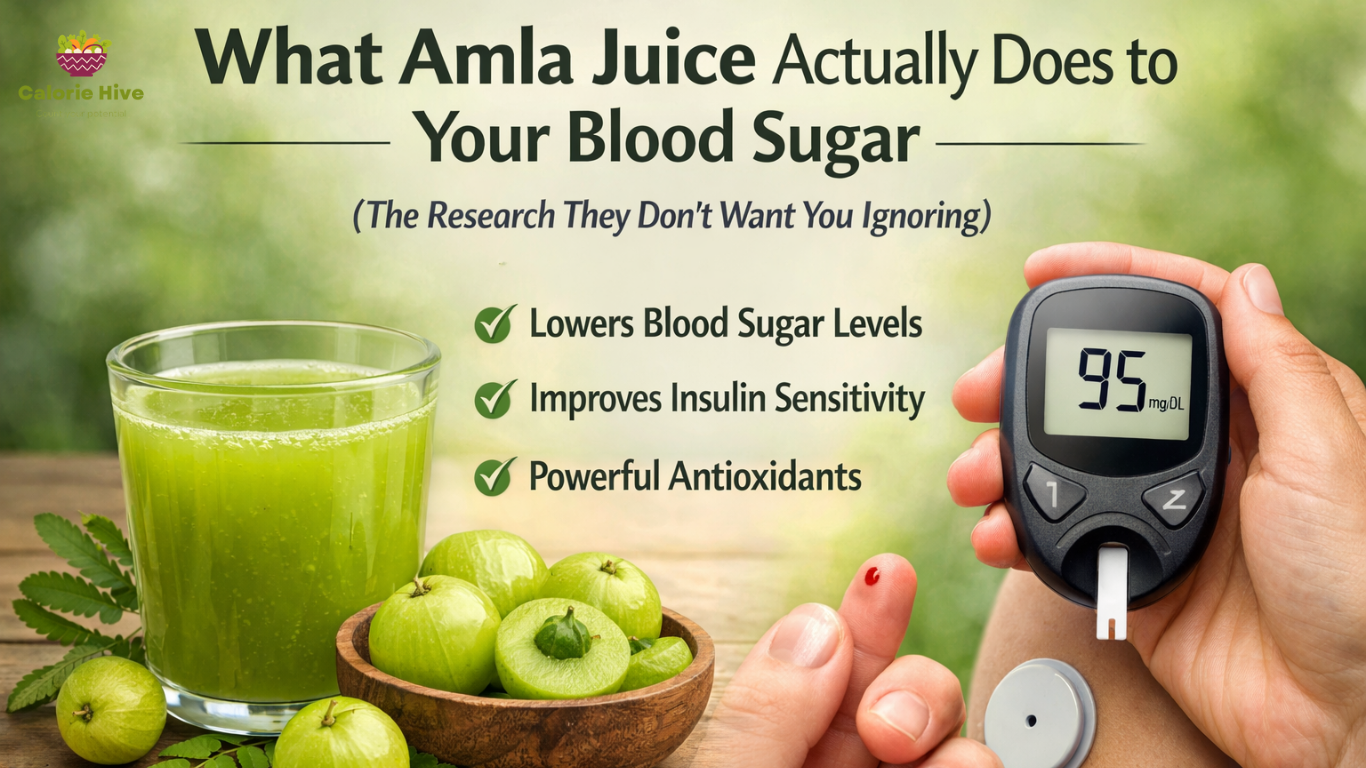 This is where things get interesting.
My uncle has type 2 diabetes. He’s been on metformin for six years. His doctor suggested adding amla juice after reading a 2024 clinical study.
The study compared amla extract to metformin in newly diagnosed diabetics. Three groups. One got 1g amla extract daily. Another got 2g. The third got 500mg metformin.
After 90 days, both amla groups showed significant drops in fasting blood sugar and HbA1c levels. The 2g group actually performed better than metformin in some markers.
Here’s what’s happening in your body. Amla stimulates your pancreatic beta cells. These cells produce insulin. In type 2 diabetes, these cells stop working efficiently. Amla helps wake them up.
It also has a low glycemic index. When you consume it, sugar releases slowly into your bloodstream. No spikes. No crashes.
The polyphenols and tannins in amla reduce insulin resistance. Your cells become more responsive to insulin. Glucose gets used instead of floating around causing damage.
My uncle started with 30 ml of fresh amla juice every morning. After three months, his fasting glucose dropped from 156 mg/dL to 118 mg/dL. His doctor reduced his metformin dose.
But here’s the critical part nobody mentions. Amla isn’t a replacement for diabetes medication. It’s supplementary. If you’re on diabetes drugs, monitor your blood sugar closely. Amla can lower it enough that your medication becomes too strong. That causes hypoglycemia.
I talked to a diabetic educator about this. She said at least five patients came in with low blood sugar episodes after starting amla without adjusting their meds. Don’t be that person. Work with your doctor.
For people without diabetes, amla helps prevent it. That matters more than people realize. Prediabetes is epidemic. Most people don’t know they have it until it becomes full diabetes.
The Immunity Boost That Actually Saved My Winter
I used to get sick three times every winter. Like clockwork. October: cold. December: flu. February: another cold.
This past winter? Nothing. Not one sick day.
I’m not saying amla juice is magic. But when you pack 600-700 mg of vitamin C into one small fruit, things happen.
Your white blood cell production increases. These cells are your immune system’s soldiers. More soldiers, better defense.
The antioxidants neutralize free radicals. These are unstable molecules that damage your cells and weaken immunity. Amla’s antioxidant activity is eight times higher than blueberries according to ORAC value measurements.
A 2017 study found vitamin C supplementation reduced cold duration by 14% in adults. But synthetic vitamin C doesn’t work as well as the natural form in amla. The bioavailability is different. Your body recognizes and uses natural vitamin C more efficiently.
I noticed this around week four. My coworker got sick. We share an office. Usually I’d be sick three days later. Didn’t happen.
Month two, my kids brought home whatever was going around their school. I was ready for the inevitable infection. Never came.
By month three, I realized I hadn’t been sick once. First winter in five years without missing work for illness.
The mechanism makes sense when you understand how vitamin C works. It enhances neutrophil function. These are white blood cells that eat bacteria and viruses. Literally surround and consume them.
Vitamin C also supports epithelial barrier function. That’s the protective lining in your nose, throat, lungs. Stronger barriers mean pathogens have a harder time getting in.
Why Your Skin Looks Different After 60 Days Drinking of Amla Juice (And What’s Really Happening)
I didn’t start drinking amla juice for my skin. That was an unexpected bonus.
Around day 45, my sister asked if I was using a new moisturizer. I wasn’t. My skin just looked different. Clearer. More even tone.
Here’s the science behind what people call the “amla glow.”
Collagen production increases with vitamin C. Your body can’t make collagen without it. Collagen is what keeps your skin firm and elastic. As you age, production naturally drops. That’s what causes wrinkles and sagging.
Amla juice provides the raw materials your body needs to maintain collagen synthesis.
The antioxidants fight free radical damage. UV exposure, pollution, stress. All these create oxidative stress that ages your skin. Antioxidants neutralize this damage.
I noticed the biggest difference around my eyes. Those fine lines looked less pronounced. My overall complexion became more even. The dark spots from old acne scars started fading.
A 2011 study found people using topical amla gel showed improved skin elasticity and hydration after regular use. Drinking it works from the inside out.
The antibacterial properties help with acne. I used to break out during stressful work weeks. That stopped happening around week eight.
But here’s what you need to know. Don’t expect overnight miracles. Skin cell turnover takes 28-40 days depending on your age. You need consistent intake for at least 6-8 weeks before visible changes appear.
The people who quit after two weeks never see these benefits. The ones who stick with it for three months? They notice the difference.
What Nobody Tells You About Amla Juice and Your Hair
My hairdresser noticed before I did.
“Your hair feels thicker,” she said during a cut. “What are you using?”
Nothing new on my hair. But I’d been drinking amla juice for 10 weeks at that point.
Amla has been used in Indian hair care for centuries. Not because of tradition or folklore. Because it actually works.
The vitamin C boosts collagen production in hair follicles. Stronger follicles mean stronger hair.
Iron absorption improves with vitamin C. Iron deficiency is a leading cause of hair loss, especially in women. The vitamin C in amla helps your body absorb iron from food better.
I noticed less hair in my brush around week six. Not dramatically less. But noticeable. The daily hair loss that seemed normal? Reduced.
My hair also became shinier. The antioxidants protect hair proteins from oxidative damage. Damage from heat styling, sun exposure, pollution. All that stress breaks down the protein structure of hair.
Some people apply amla juice directly to their scalp. I tried it twice. The smell lingered for days despite washing. Drinking it worked better for me.
A 2020 study tested a serum containing amla on 42 people with hair loss. After 90 days, they showed significant improvements in hair growth and density.
The mechanism involves promoting proliferation in specific hair follicle cells. Basically, it wakes up dormant follicles and encourages active ones to work better.
For premature graying, the evidence is more traditional than scientific. Ayurveda attributes graying to pitta imbalance. Amla supposedly balances pitta with its cooling properties. I can’t verify this from personal experience. My gray hairs didn’t disappear.
But the overall health and thickness? That improved noticeably by month three.
The Weight Loss Connection Everyone Gets Wrong
Amla juice won’t melt belly fat while you sleep. If someone tells you that, they’re lying.
What it does do is support weight management through multiple pathways.
First, fiber. Even in juice form, you get some soluble fiber. This slows digestion and keeps you fuller longer. I noticed I stopped snacking between breakfast and lunch after the first week.
Second, metabolism. The chromium in amla helps metabolize carbohydrates more efficiently. Your body converts food to energy instead of storing it as fat.
Third, detoxification. When your liver functions optimally, it processes toxins better. A sluggish liver struggles with fat metabolism. Amla supports liver function with its hepatoprotective properties.
I lost 4 pounds in three months without changing my diet or exercise. Not dramatic. But I wasn’t trying to lose weight. It was a side effect of better metabolic function.
The key is this. Amla juice enhances whatever else you’re doing. If you’re eating terribly and not moving, amla won’t fix that. But if you’re making reasonable efforts, it amplifies the results.
A 2025 article in a metabolic health journal noted amla juice helps regulate blood sugar, reducing cravings and preventing the insulin spikes that trigger fat storage.
Drink it 20 minutes before meals. That’s when the appetite-suppressing effect works best. The fiber and sourness signal satiety to your brain.
Don’t fall for marketed weight loss formulas mixing amla with random ingredients. Pure amla juice with water works. Keep it simple.
The Liver Detox That Actually Happens (Not the Trendy Kind)
Your liver processes 500+ functions every day. Detoxifying blood. Producing bile. Storing vitamins. Metabolizing medications.
Modern life overloads it. Alcohol. Processed foods. Environmental toxins. Medications. Your liver handles all this without complaining until it can’t anymore.
Amla juice supports liver function without the pseudoscience attached to most detox claims.
Studies show amla protects liver cells from damage. The antioxidants reduce oxidative stress. The polyphenols enhance the liver’s natural detoxification enzymes.
A 2018 study found amla effective in treating fatty liver disease. Participants taking amla extract showed reduced liver enzymes and improved function markers.
I noticed this indirectly. My digestion improved. Less bloating after meals. More regular bowel movements. These are signs your liver and gallbladder are working efficiently to produce and release bile.
The detox happens naturally when you drink amla juice consistently. You’re not “flushing toxins” in some dramatic weekend cleanse. You’re supporting your liver’s daily work.
For people with existing liver conditions, check with your doctor first. While amla is generally hepatoprotective, individual situations vary.
What Actually Happens to Your Digestion (Week by Week)
Week one: I noticed easier bowel movements. The fiber adds bulk and the juice stimulates digestive enzymes.
Week two: That heavy feeling after meals disappeared. Food digested more completely.
Week three: My chronic acid reflux reduced significantly. I was taking antacids three times a week. By week three, I hadn’t needed one in 10 days.
This isn’t just my experience. A 2018 study of 68 people with GERD found amla extract significantly reduced heartburn frequency and severity after four weeks.
The mechanism involves multiple factors. Amla has alkalizing properties despite its sour taste. It neutralizes excess stomach acid without suppressing production completely like antacids do.
The fiber supports healthy gut bacteria. These bacteria produce short-chain fatty acids that maintain gut lining integrity.
Amla also has mild antimicrobial properties. It helps balance gut flora without being harsh like antibiotics.
The cooling effect soothes inflammation in the digestive tract. If you’ve got irritation from acidic foods or stress, amla calms that down.
For constipation, the fiber and mild laxative effect work gradually. Not the urgent bathroom-run type. Just regular, comfortable bowel movements.
People with IBS need to start slowly. The high fiber can cause gas if your system isn’t used to it. Begin with 10-15 ml and gradually increase.
The Side Effects Nobody Mentions Until It’s Too Late
I need to be honest about this part. Amla juice isn’t perfect for everyone.
If you have low blood sugar or are on diabetes medication, monitor closely. Amla can drop your glucose too low. I mentioned my uncle’s success, but he reduced his metformin dosage under medical supervision. Don’t wing this.
Some people get digestive upset. The high acidity can irritate sensitive stomachs. If you have active ulcers or severe acid reflux, start very small or avoid it entirely.
Tooth enamel erosion is real. The acidity can soften enamel over time. Rinse your mouth with water after drinking. Wait 30 minutes before brushing. Brushing immediately can damage softened enamel.
During my second week, I drank it at night and developed a dry cough. Research later showed me that Ayurveda warns against nighttime consumption during cold weather. The cooling properties can aggravate respiratory sensitivity.
Pregnant and breastfeeding women should consult doctors before starting. There’s insufficient research on safety during pregnancy despite traditional use.
If you’re on blood thinners, be cautious. Amla has antiplatelet properties that could increase bleeding risk when combined with medications like warfarin.
Some people experience constipation despite amla’s reputation for helping it. The astringent tannins can have this effect in sensitive individuals or with excessive consumption.
The key is moderation. Stick to 20-30 ml daily. More isn’t better. I tried 50 ml once thinking I’d get faster results. Spent the afternoon dealing with stomach discomfort.
How to Choose Amla Juice That’s Actually Worth Buying
Most store-bought amla juice is garbage.
I learned this after wasting money on three different brands. Added sugars. Preservatives. Diluted with water until there’s barely any amla left.
Here’s how to identify quality.
Read the ingredient list. It should say one thing: amla. Maybe water. Nothing else. If you see sugar, glucose, artificial sweeteners, run away.
Check for preservatives. Sodium benzoate is common. It extends shelf life but you’re not drinking this for shelf stability. You’re drinking it for health benefits.
Glass bottles over plastic. Always. Plastic leaches chemicals, especially when storing acidic liquids like amla juice.
Look for cold-pressed or naturally extracted. Heat processing destroys vitamin C. The label should mention this.
Best option? Make it fresh. I know that’s not always practical. When I’m traveling or too busy, I buy from a local company that makes small batches with no preservatives. It lasts 5-7 days refrigerated.
Frozen amla works too. Some stores sell frozen amla cubes. Thaw what you need, blend with water, strain. Almost as good as fresh.
Amla powder is a decent backup. Mix 1 teaspoon with water. Not quite the same as fresh juice but maintains decent nutrient levels if stored properly in an airtight container.
Avoid anything marketed as “amla drink” with added flavors. That’s not the same as pure juice. You’re paying for sugar water with a hint of amla.
Price doesn’t always indicate quality but expect to pay reasonable amounts for genuine product. If it’s suspiciously cheap, question what corners they cut.
The 30-Day Challenge That Changed How I Think About Health
I’m not someone who sticks with health trends. My track record is terrible. Gym memberships I never use. Supplements that sit in the cabinet.
Amla juice stuck because the results were undeniable.
My energy stabilized without caffeine crashes. My immune system strengthened. My skin cleared up. My digestion improved. My doctor was impressed with my blood work improvements.
But the biggest change was mental. I proved to myself that small, consistent actions compound into significant results.
30 days felt manageable. Anyone can commit to 30 days. By the end, I didn’t want to stop.
Here’s my advice if you’re considering trying it. Don’t aim for perfection. I missed days. Sometimes I traveled and couldn’t prepare it. Life happens.
But more days than not, I drank that morning shot. Over three months, that consistency added up.
Start simple. Don’t overthink it. Fresh amla, blend, strain, drink. 20-30 ml every morning. That’s it.
Give it the full 30 days before judging. Week one you might notice nothing. Week two, slight improvements. Week three to four is when most people feel real differences.
Document how you feel. I wish I’d kept a journal. Memory tricks you into thinking nothing changed. Write down energy levels, digestion, sleep quality, skin condition. Compare after 30 days.
If you have existing health conditions, talk to your doctor first. This is especially important for diabetes, low blood pressure, or if you’re on blood thinning medications.
One morning shot. That’s all it takes to start. Not a complete health overhaul. Not a restrictive diet. Just one small change that supports everything else you’re doing.
The compound effect of consistent action is real. Amla juice taught me that.
Frequently Asked Questions About Amla Juice
Can I drink amla juice every day without side effects?
Most people can safely drink 20-30 ml daily. However, those with diabetes should monitor blood sugar levels closely as amla can lower glucose. People with low blood pressure or on blood-thinning medications should consult their doctor before daily consumption. Start with smaller amounts and gradually increase to assess your body’s response.
What’s the best time to drink amla juice for maximum benefits?
Early morning on an empty stomach provides optimal absorption. The vitamin C and nutrients absorb more efficiently when your digestive system isn’t processing other foods. Wait 30 minutes before eating breakfast. Avoid drinking it at night, especially during winter, as its cooling properties can aggravate respiratory sensitivity in some people.
How long does it take to see results from drinking amla juice?
Initial digestive improvements typically appear within 7-10 days. Energy stabilization occurs around week two. Visible skin improvements require 6-8 weeks of consistent use due to skin cell turnover rates. Blood sugar and cholesterol improvements show up in lab work after 21-90 days according to clinical studies. Hair thickness changes become noticeable after 8-12 weeks.
Can I mix amla juice with other juices to improve the taste?
You can mix it with water, honey, or ginger juice without reducing benefits. Adding a pinch of black salt also helps. However, avoid mixing with sugary juices as this defeats the purpose and can spike blood sugar levels. Don’t combine with orange or other citrus juices on an empty stomach as excessive acidity might cause digestive discomfort.
Will amla juice help me lose belly fat specifically?
Amla juice alone won’t target belly fat. It supports overall weight management by improving metabolism, increasing satiety, and stabilizing blood sugar to reduce cravings. The chromium content helps metabolize carbohydrates more efficiently. When combined with reasonable diet and exercise, it enhances results. Expect gradual, sustainable weight loss rather than dramatic changes.
Is fresh amla juice better than store-bought or powdered versions?
Fresh amla juice provides maximum vitamin C content and bioactive compounds. Store-bought juice often contains preservatives and added sugars that reduce benefits. Amla powder is a decent alternative if stored properly in airtight containers away from light and heat. If buying commercial juice, ensure it contains only amla and water with no additives or preservatives.
Can diabetics drink amla juice while taking medication?
Diabetics should consult their doctor before adding amla juice to their routine. While research shows amla helps lower blood sugar, combining it with diabetes medication can cause hypoglycemia if medication doses aren’t adjusted. Monitor blood glucose closely when starting amla juice. Your doctor may need to reduce medication dosage as amla becomes effective.
Does amla juice really prevent hair from turning gray?
Traditional Ayurvedic texts claim amla prevents premature graying by balancing pitta doshas. However, scientific evidence for this specific benefit is limited. What’s proven is that amla strengthens hair follicles, reduces hair loss, and improves overall hair health through its vitamin C and antioxidant content. For existing gray hair, effects vary individually.
Can I drink amla juice during pregnancy?
Pregnant and breastfeeding women should consult healthcare providers before consuming amla juice. While amla has been used traditionally, insufficient clinical research exists on safety during pregnancy. Some practitioners approve moderate use for morning sickness and immunity, but individual circumstances vary. Never self-prescribe during pregnancy.
What happens if I drink too much amla juice?
Excessive consumption can cause digestive upset, diarrhea, dehydration, and tooth enamel erosion due to high acidity. Some people experience constipation from excessive tannins. The recommended safe dose is 20-30 ml daily. Taking 50+ ml doesn’t accelerate benefits and may cause uncomfortable side effects. More isn’t better with amla juice.
That one small shot every morning changed how I approach health. Not through dramatic overhauls or restrictive diets. Through simple, consistent action that compounds over time.
Three months ago, I was skeptical. Today, I’m convinced. Not by marketing claims or wellness trends. By tangible results in my energy, digestion, immunity, and blood work.
The bottle sits on my kitchen counter every morning. My day doesn’t start until I take that shot. It’s become as automatic as brushing my teeth.
If you’re tired of complicated health advice that never sticks, maybe start here. One shot. One morning. See what happens after 30 days.
Your future self might thank you for it.
You may also like to read:https://caloriehive.com/pumpkin-seeds-benefits-for-hair/health-and-wellness/