
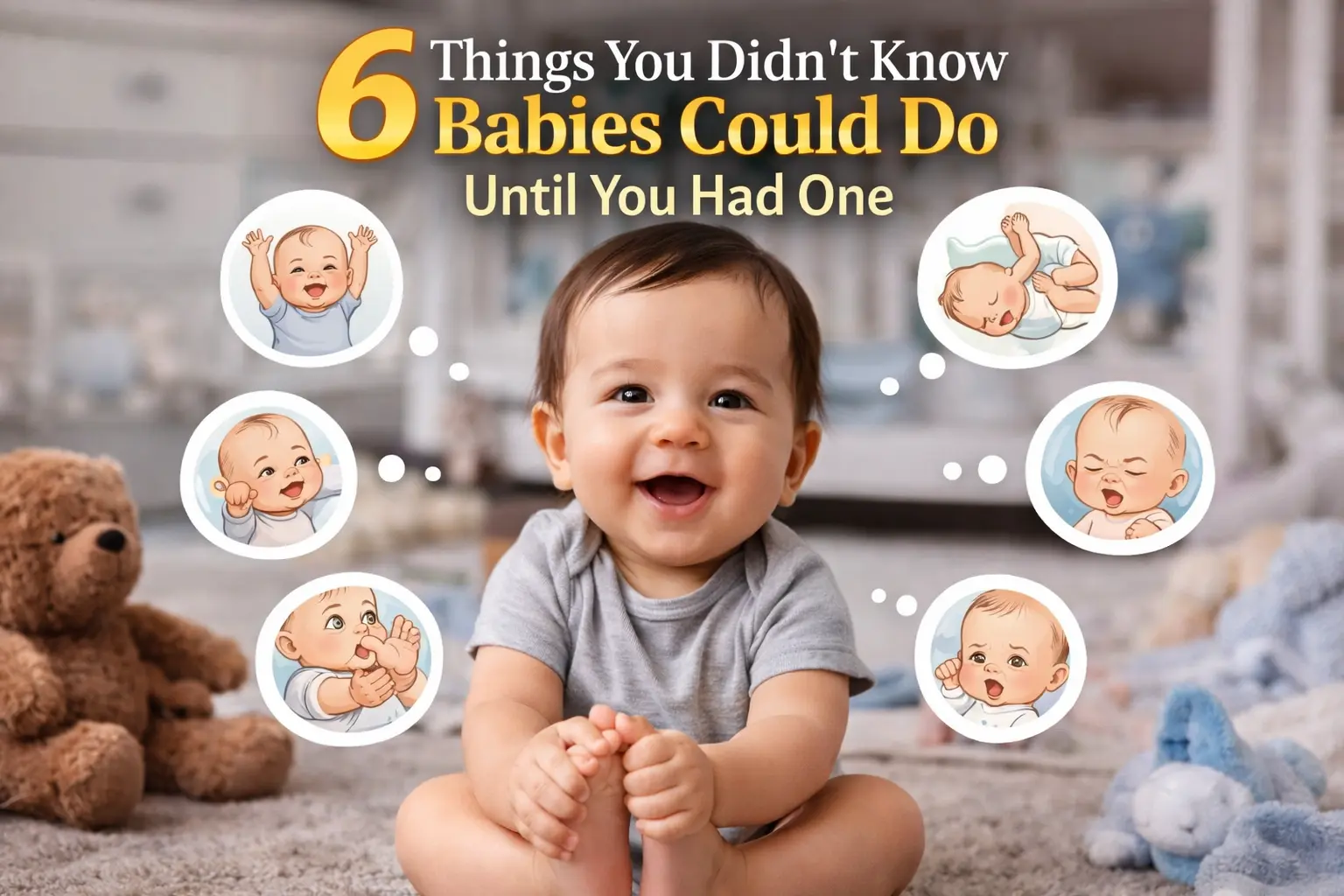
Nobody prepares you for the moment your three-day-old baby stares directly into your eyes like they’re reading your soul.
I was sitting in a hospital recliner at 2 a.m., exhausted in a way I had never experienced before, holding my newborn daughter after her feeding. She should have been asleep. Instead, she was absolutely locked onto my face tracking, studying, responding. I whispered something quiet and her mouth made a tiny shape in return.
I had read the books. Taken the classes. Bought the gear. But nothing told me about this the raw, strange, astonishing competence of a brand-new human being.
Here’s what nobody tells you before you become a parent: babies are not helpless little lumps waiting to be molded. From the moment they arrive, they are already doing things sophisticated, intentional, sometimes jaw-dropping things that modern science is only beginning to fully explain.
This post covers six of the most surprising capabilities your baby has right now, whether they’re three days old or three months. Some of these will change how you talk to your baby. All of them will change how you think about the tiny person in your arms.
Your Newborn Can Recognize Your Voice the Moment They’re Born
Most parents assume bonding takes time. It doesn’t not for your baby’s ears.
From around 25 weeks of pregnancy, your baby has been listening. Your voice travels through amniotic fluid, filtered but present, for months. By the time your baby is born, they have heard you more than any other sound on earth. Researchers at the University of North Carolina found that newborns show measurable preference for their mother’s voice within hours of birth not days, not weeks, hours.
The practical implication here is bigger than it sounds. When your baby cries and you speak calmly, you aren’t just making noise you’re triggering a neurological recognition response. Your voice is a known anchor in a very chaotic new world. That’s why a calm, familiar voice can slow a newborn’s heart rate even faster than a pacifier in some studies.
I tell every new parent I know: talk to your baby constantly in those first days, even when it feels ridiculous. Narrate your diaper changes. Whisper through feedings. Your voice is their first map of reality.
What about the father’s voice? Research shows babies can recognize voices they heard frequently in the womb, meaning an actively involved partner who talked and sang throughout pregnancy will also get early recognition. One dad in a parenting forum I follow described his newborn visibly turning toward his voice within 12 hours of birth. He cried. I would have too.
Babies Are Born Knowing How to Swim (Sort Of)
Technically, it’s called the bradycardic response and the diving reflex. Practically, it means that if you submerge a baby under approximately four months old in water, they will instinctively hold their breath and move their arms and legs in a swimming motion. They will not panic. They will not inhale water.
This blew my mind the first time I saw a demonstration video. A tiny infant, submerged, calmly moving through water with the serenity of someone who has absolutely done this before. Which, in a sense, they have they spent nine months in fluid.
The reflex fades after about four to six months as the baby’s nervous system develops and voluntary breathing takes over. Infant swim programs like those offered through the YMCA and Aqua-Tots Swim Schools actually capitalize on this window, using it to build early water comfort and survival skills.
Important caveat: this reflex does not make your baby a swimmer. Never leave an infant unattended in water for even a second. The reflex is real, but it’s brief, and it’s not a skill they can control. What it does tell you is that your baby’s body came pre-loaded with survival software you never knew existed.
Newborns Can Imitate Facial Expressions Within Hours of Birth
This one genuinely stopped me.
A 1977 study by Andrew Meltzoff and M. Keith Moore later replicated many times over showed that newborns as young as 42 minutes old could imitate facial expressions. Stick out your tongue slowly at a baby who is alert and calm, and many of them will stick out their tongue back.
At 42 minutes old.
There are a few competing theories about why this happens. Some researchers believe it’s an early form of social bonding a way babies say “I see you, I’m connecting with you” before they have any other tools to communicate. Others point to mirror neuron activity, the same neurological system that helps humans learn by watching.
What this means for you as a parent: your face is the most important developmental toy you own, and it cost nothing. Making exaggerated expressions, responding to your baby’s cues with your own face, and holding eye contact during alert periods is not just cute — it’s building neural pathways for emotional intelligence, empathy, and social learning.
A close friend of mine, a pediatric occupational therapist with 14 years of experience, told me that parents who engage in consistent face-to-face interaction in the first three months report measurably more responsive babies by six months. Her advice: put your phone down during awake windows and just be present with your face. It’s the highest-ROI parenting move in the newborn stage.
Babies Can Feel and Respond to Emotions Not Just Their Own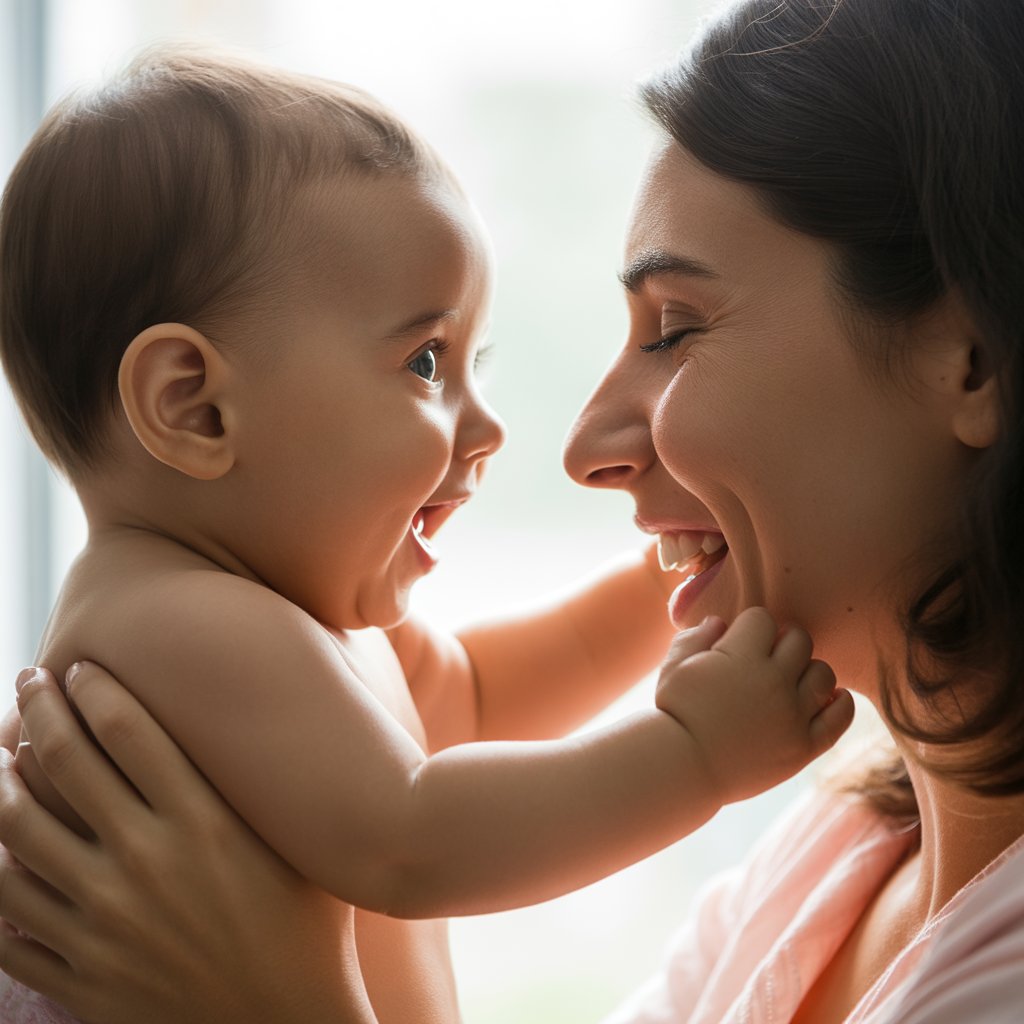
New parents often think of their babies as emotionally basic: hungry, tired, uncomfortable, or content. The reality is significantly more complex.
Research published in Developmental Psychology found that infants as young as five months can distinguish between happy, fearful, and neutral emotional expressions and adjust their own behavior accordingly. When caregivers displayed fearful expressions, babies became more cautious and hesitant in their explorations. Happy expressions encouraged more confident movement and interaction.
This is called social referencing, and it’s one of the more humbling things you will learn about your baby.
Here’s the part that landed hard for me: your emotional state is contagious to your infant in ways that are neurological, not just behavioral. The still-face experiment where a caregiver suddenly goes emotionally blank while interacting with a baby is one of the most used teaching tools in infant development research. Babies escalate quickly through smiling, vocalizing, pointing, and eventually distress when their caregiver stops responding emotionally.
Your baby is reading you. Constantly. This doesn’t mean you have to perform happiness when you’re postpartum and exhausted it means your emotional world matters and getting support for yourself is directly connected to your baby’s sense of safety.
Babies Are Doing Math Before They Can Walk
Not calculus. But something real.
In 1992, Karen Wynn at Yale University showed five-month-old babies a sequence of events: one doll is placed on a stage, a screen goes up, and then another doll is placed behind the screen. When the screen drops, sometimes there are two dolls (correct), sometimes one (incorrect). Babies stared significantly longer at the wrong outcome.
They expected two. They understood that one plus one should equal two.
This research, which has since been replicated and expanded upon in dozens of studies, suggests that basic numerical understanding sometimes called “number sense” or numerical cognition is innate. Babies are not blank slates absorbing math later. They come in with a starter kit.
What can you do with this information? Talk about quantities naturally. “Let’s put two socks on. One sock, two socks.” Don’t drill it. Just name the world accurately and with specificity. Your baby’s brain is already tracking; you’re just giving that tracking system language to anchor to. Programs like Building Blocks (developed with National Science Foundation funding) have built entire curricula around exactly this kind of early mathematical conversation.
Your Baby Is Learning Language Through Statistical Probability
This is the one that changes everything about how you talk to your baby.
Patricia Kuhl’s landmark research at the University of Washington’s Institute for Learning and Brain Sciences showed that babies are, essentially, statistical learning machines. By six to eight months, your baby is tracking which sounds appear together most frequently in your language, building a probability map of how words are structured. They are identifying patterns before they have a single word.
The critical finding: this statistical learning requires live human interaction. Babies exposed to the same linguistic content via screen or audio recording showed dramatically lower learning than babies in face-to-face conversations. The emotional and social context of human interaction appears to activate the learning in a way that passive exposure simply does not.
This is why “parentese” that higher-pitched, slower, exaggerated speech pattern most adults instinctively use with babies is not embarrassing. It’s pedagogically brilliant. The exaggerated vowels and slower pace give babies more statistical data to work with. Linguists at MIT have been studying parentese seriously for decades because the structure is genuinely sophisticated.
So yes, talk to your baby in that silly voice. Explain what you’re cooking for dinner. Read them the sports scores. Narrate the grocery run. Every word is statistical data going into a system that is building your language from scratch, from the inside out.
What All of This Actually Means
When you know that your baby can recognize your voice, read your face, track numbers, absorb language, and swim (sort of) it fundamentally changes how you show up.
You stop waiting for your baby to “get interesting.” You realize they already are. You put down the enrichment toys and pick up your own face. You talk more, perform less, and stop worrying about the right way to interact because your genuine attention is the right way.
I’ve spoken to dozens of new parents over the years who describe a shift that happens when they learn these things a shift from feeling like a caretaker to feeling like a partner in something extraordinary. Your baby is not waiting to become a person. They are already one, right now, with capabilities that took your breath away when you first heard about them.
The most practical thing you can take from all of this: your ordinary presence your voice, your face, your emotional honesty, your running commentary on the world is doing more developmental work than any app, toy, or program on the market.
That’s both humbling and, if you’re willing to let it be, incredibly freeing.
Frequently Asked Questions
When do babies start recognizing their parents’ faces? Most babies begin showing preferential recognition of familiar faces by four to six weeks. However, they show preference for faces in general from birth, and voice recognition happens even earlier, often within hours of delivery.
Is the baby swimming reflex safe to test at home? No. The bradycardic/diving reflex is real but fragile and requires controlled conditions. Never submerge a baby without certified infant swim instruction. The reflex disappears by around four months and cannot be relied upon for safety.
Do all babies imitate facial expressions? Most do in the early weeks, though responsiveness varies by alertness state, temperament, and neurological development. Babies are most imitative when calm and alert, not drowsy or overstimulated.
Does screen time really affect language development that much? Yes, based on current evidence. Research from Patricia Kuhl’s lab at the University of Washington consistently shows that live interaction — with its social and emotional responsiveness — produces language learning outcomes that screen-based exposure simply cannot replicate in infants under 18 months.
What’s the best way to support my baby’s early development? Talk. Make faces. Respond consistently when they vocalize or make expressions. Hold eye contact during awake windows. Be emotionally present. The research is remarkably consistent: attentive human interaction is the single highest-impact developmental input available.
Your baby is already extraordinary. You just needed someone to point it out.