
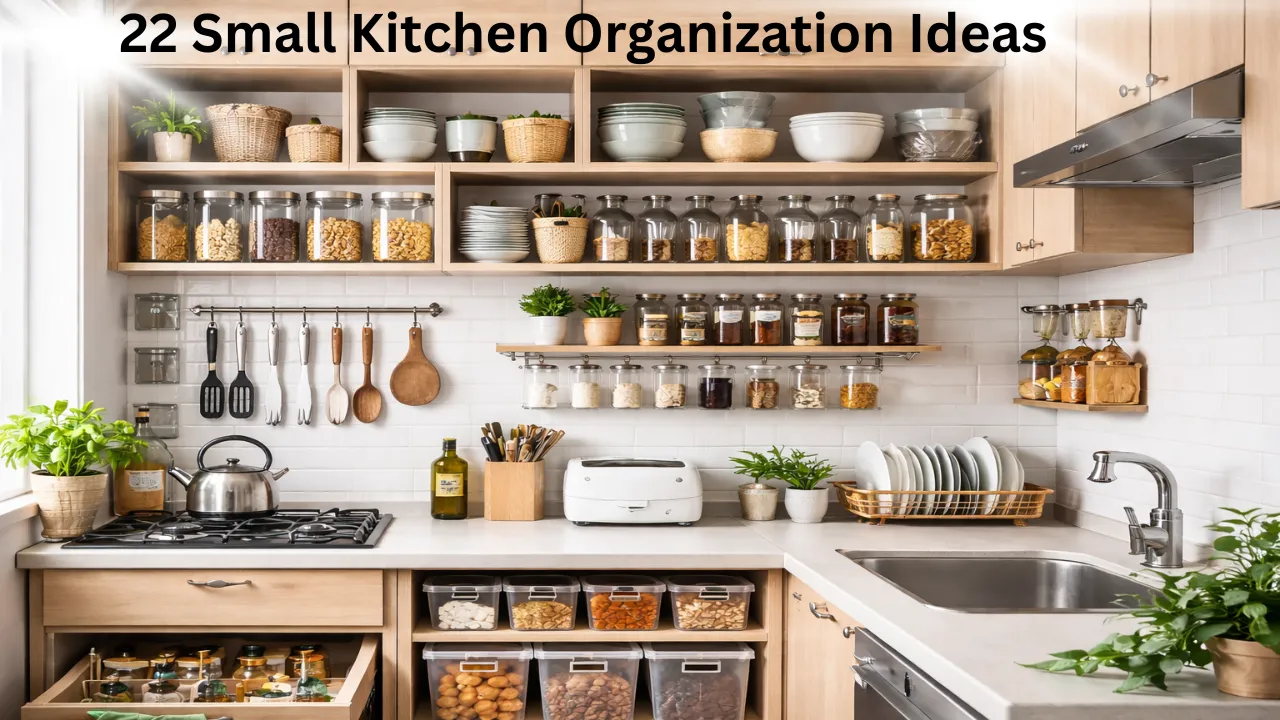
The first week in my Brooklyn apartment, I unpacked my kitchen into a space smaller than most hotel bathrooms. Two upper cabinets, one lower cabinet with a broken shelf, and a drawer that opened directly into the refrigerator handle. My spice rack lived on the bathroom windowsill for two months. I am not joking.
Here is what I learned from that experience: most small kitchen storage advice is written by people who have never actually cooked a real meal in a small kitchen. They show you Pinterest photos of pristine pegboards and forget to mention you need studs to mount them, or that most rental apartments will not let you drill through tile. The advice looks stunning. It is often useless.
This guide is different. These 22 small kitchen storage ideas come from real use from cooking dinner for four people in a kitchen with negative counter space, from testing products that failed spectacularly, and from solutions that genuinely changed how the kitchen worked. Some of these will surprise you. A few will contradict what you have probably read elsewhere. All of them actually work.
“The single biggest small kitchen mistake is buying more organizers before you edit what you own. Organization cannot fix accumulation.”
Before You Buy a Single Organizer, Do This First
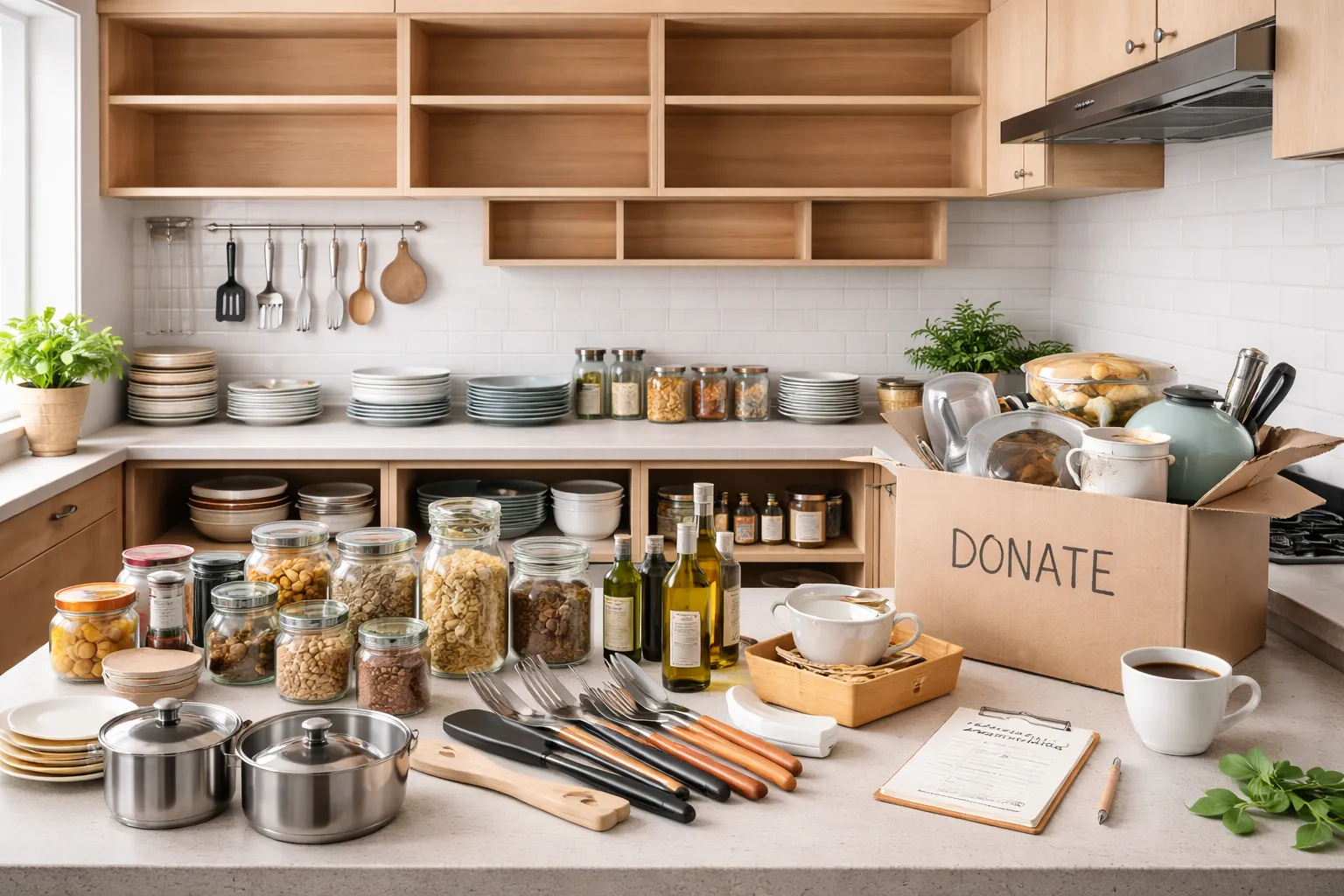 Most people make the same mistake. They see a clever under-shelf basket or a magnetic spice rack on social media, they buy it, and then they discover it does not fit their cabinets, or they already have too much stuff to make it functional. I spent about $200 on organizers in my first month that I eventually threw away.
The right move is an edit first. Pull everything out of your cabinets and ask one question: do you actually use this? Not “could I use it” or “did I use it once in 2019” actually use it, regularly. Studies from the National Association of Professional Organizers consistently show that most households use about 20 percent of their kitchen items 80 percent of the time. You are storing a lot of dead weight.
In my apartment, the edit freed up an entire cabinet shelf. That single shelf changed how functional the whole kitchen felt. No purchase required. This is the foundation all 22 ideas below are built on: ruthless editing comes first, then smart storage.
Box up anything you haven’t touched in three months. Leave the box in a closet for 30 days. If you don’t go searching for something in it, donate the entire box without opening it again.
Ideas 1–5: Use Vertical Space You Are Ignoring
Every small kitchen has underused vertical real estate. The walls above your counter, the inside of cabinet doors, the gap between your refrigerator top and the ceiling these are essentially free storage that most people walk past every single day.
Magnetic Knife Strip
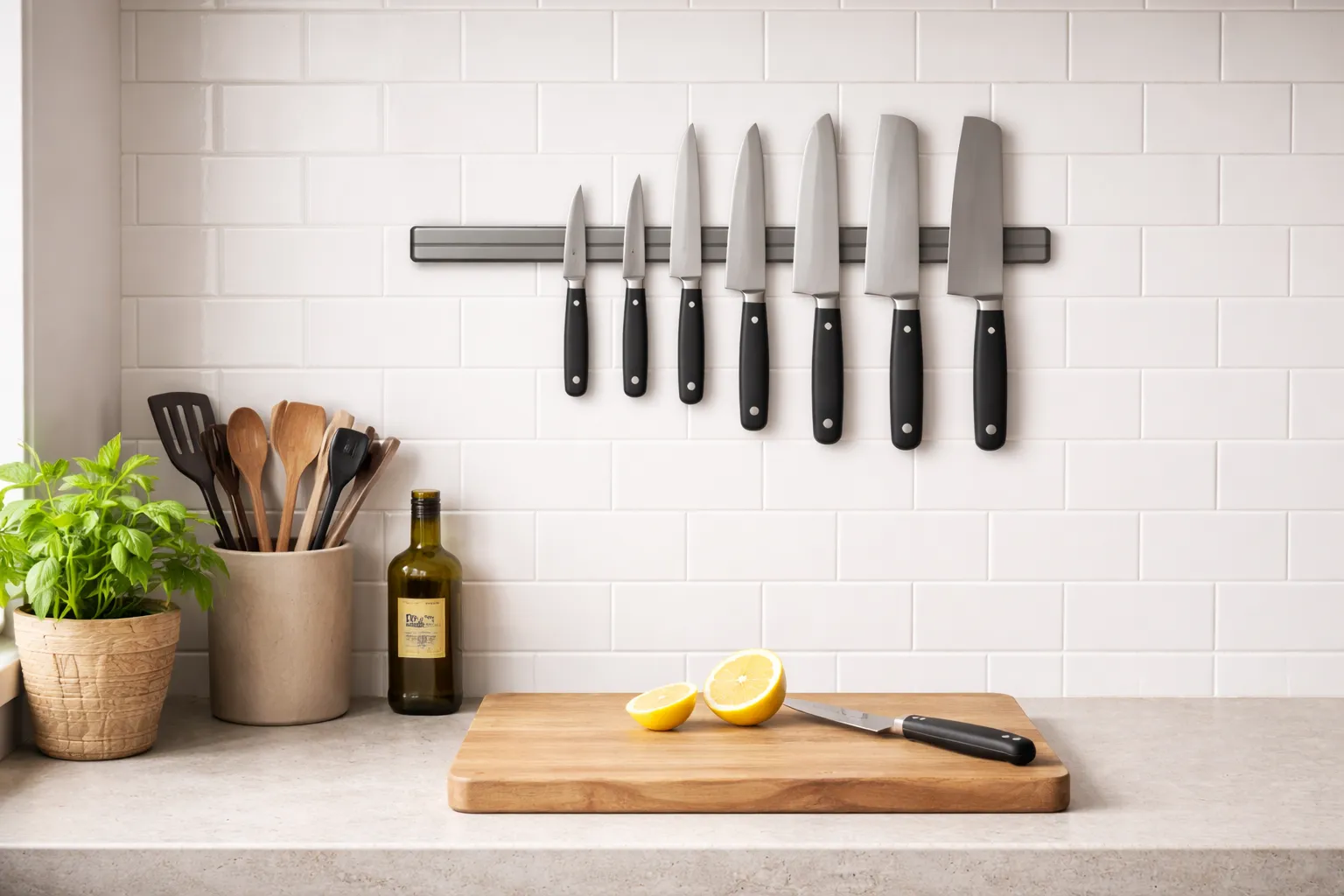 Mount a magnetic knife strip on an empty wall patch instead of using a block on the counter. The OXO Good Grips model ($35) holds up to seven knives and frees an entire countertop zone. Renters note: two Command strips hold it on painted drywall without damage.
Inside Cabinet Door Organizers
The inside of every cabinet door is wasted space. The Rev-A-Shelf door mount system (~$28) turns a lower cabinet door into spice or cleaning supply storage. Measure twice cabinet depth varies, and a door organizer that hits your shelf when closing is worse than useless.
Over-Refrigerator Shelf
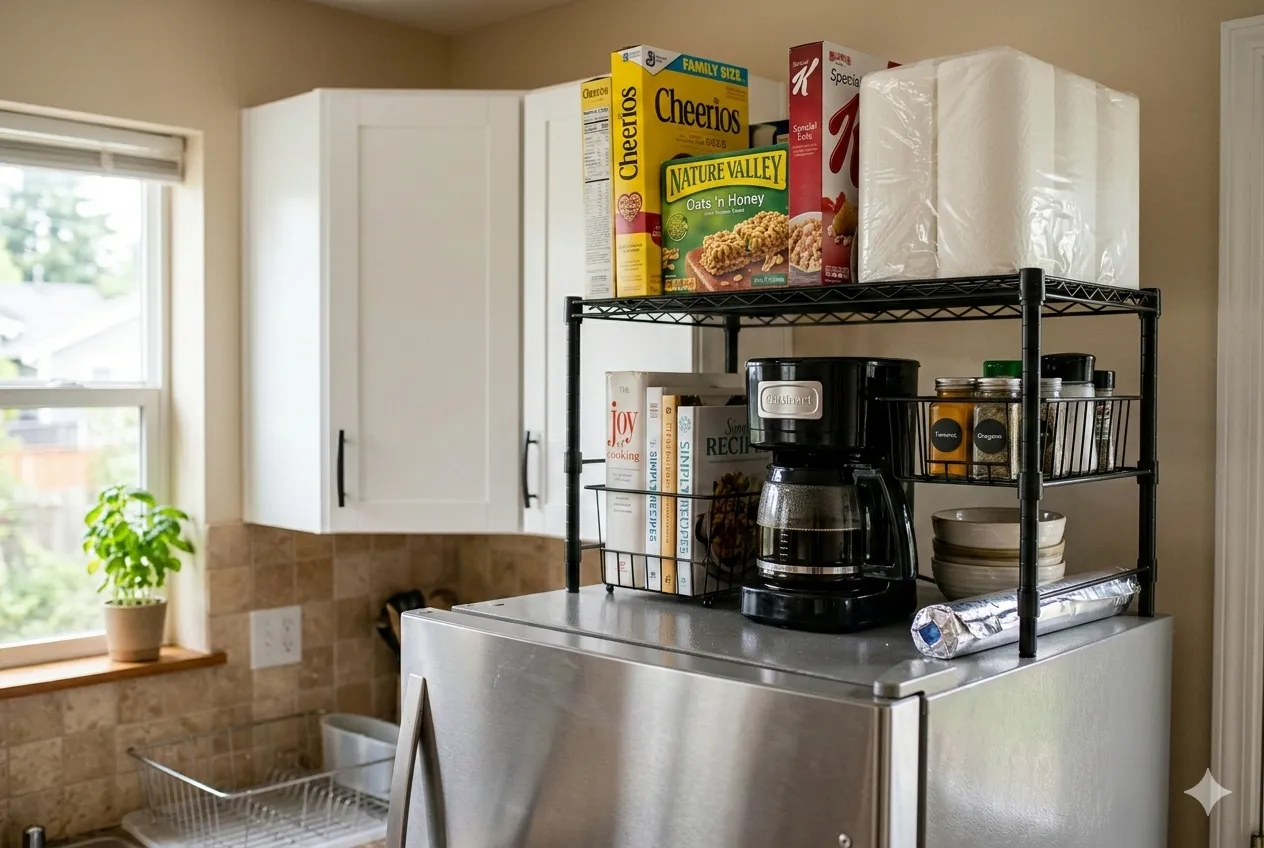 The top of your refrigerator is either a crumb-collecting disaster or prime real estate. A wire shelf unit from IKEA’s OBSERVATÖR series adds two tiers above the fridge for cereals, extra paper towels, or seldom-used appliances. This alone added about eight cubic feet of storage in my apartment.
Pegboard Wall Panel
A pegboard requires studs do not let anyone tell you otherwise. But if you rent, a freestanding pegboard frame (SimpleHouseware, ~$45) leans against the wall and holds pots, utensils, and spice jars without a single hole in your wall.
Tension Rod Dividers
 Vertical tension rods inside a cabinet create instant dividers for baking sheets, cutting boards, and lids. A set of four adjustable rods costs under $15 and works in almost any cabinet width. No tools, no adhesive, fully reversible.
Ideas 6–9: Make Your Drawers Actually Work
I used to have one junk drawer so chaotic that I once found a 2017 bus pass, three batteries I could not identify, and a spatula I had been looking for since Thanksgiving. Sound familiar? Bad drawer organization is not a character flaw it is a design problem.
The issue in most small kitchens is that drawer organizers are designed for wide, spacious drawers. If your drawers are narrow (mine were 11 inches wide practically a slot), most commercial organizers simply do not fit. This is where bamboo expandable dividers from Bambüsi work well. They telescope to fit any drawer width and are less likely to slide around than plastic versions. Cost is about $22 for a set.
The Utensil Edit
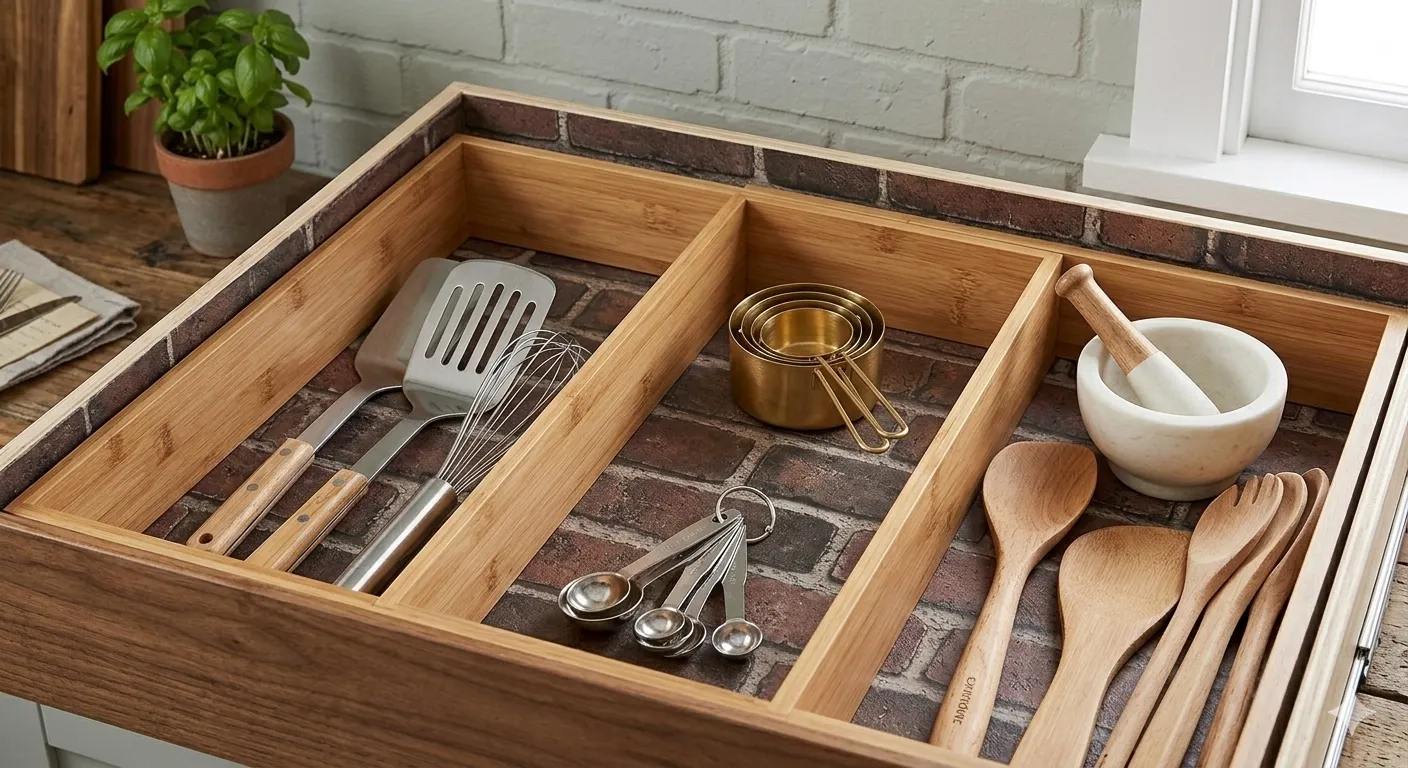 Before organizing utensils, count how many spatulas you actually own. My personal record among people I know is eleven. You need two, maybe three. The utensil crock on your counter should hold only daily-use items. Everything else lives in a drawer or leaves the kitchen entirely.
Drawer-Within-a-Drawer
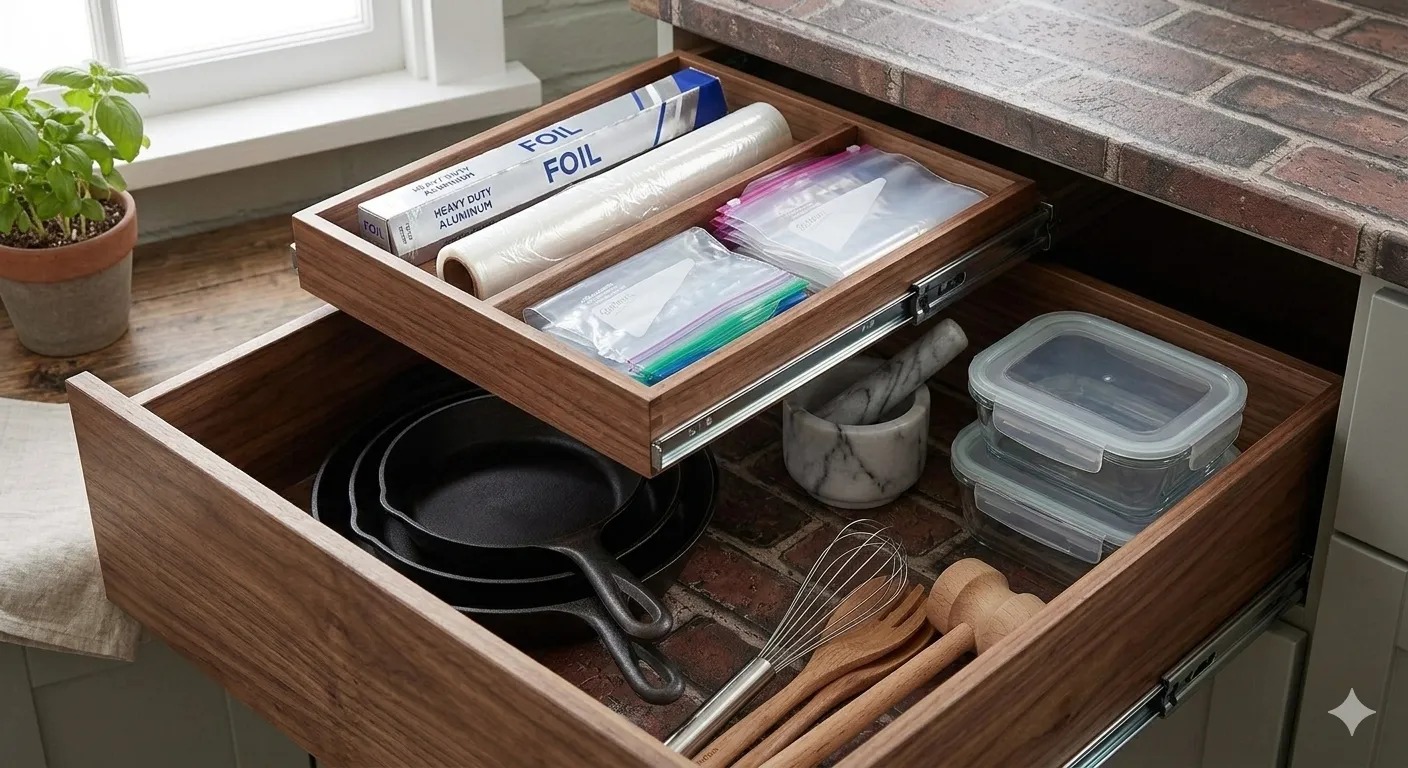 Deep drawers are often misused as one-layer storage. A shallow tray (like the IKEA GRUNDTAL at $12) sits on top of items already in the drawer and creates a second tier ideal for wraps, foil, and zip bags that otherwise tangle into a maddening nest at the back.
The Lid Drawer
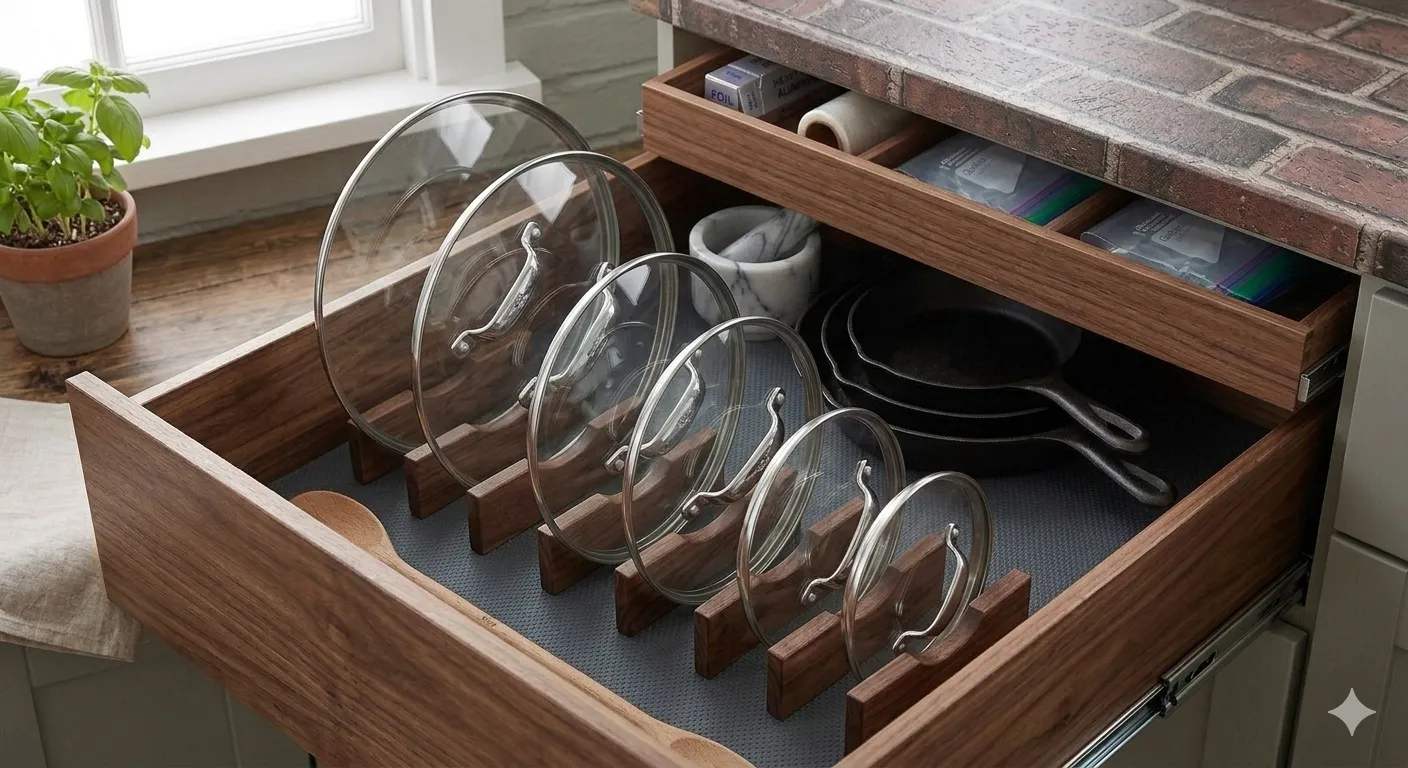
Designate one drawer exclusively for pot lids. Line it with a silicone mat to prevent sliding, and store lids vertically using tension rods from Idea 5. Finding the right lid in under three seconds is a quality-of-life improvement you cannot quantify until you have it.
Junk Drawer Triage
Every kitchen needs a small miscellaneous space. The trick is a defined container for it — a simple 6×9 inch bin from The Container Store’s Linus line ($8). When the bin is full, something leaves before anything new enters. This single rule has kept my junk drawer functional for two years running.
Ideas 10–13: A Counter Strategy That Does Not Sacrifice Function
Here is the controversial opinion: clear counters are overrated for small kitchens. The zero-counter-clutter aesthetic looks incredible in a magazine photoshoot and creates about 20 extra minutes of work per day when you cook regularly. Every item you store “away” is an item you retrieve and put back dozens of times a year.
The smarter goal is intentional counters, not empty counters. Everything on your counter should earn its spot by frequency of use. My counter holds my coffee maker, a cutting board, a knife strip, and a single crock of five utensils. Those items stay out because I use them every single day, and packing them away would add real friction to my cooking life.
Counter Corner Shelf
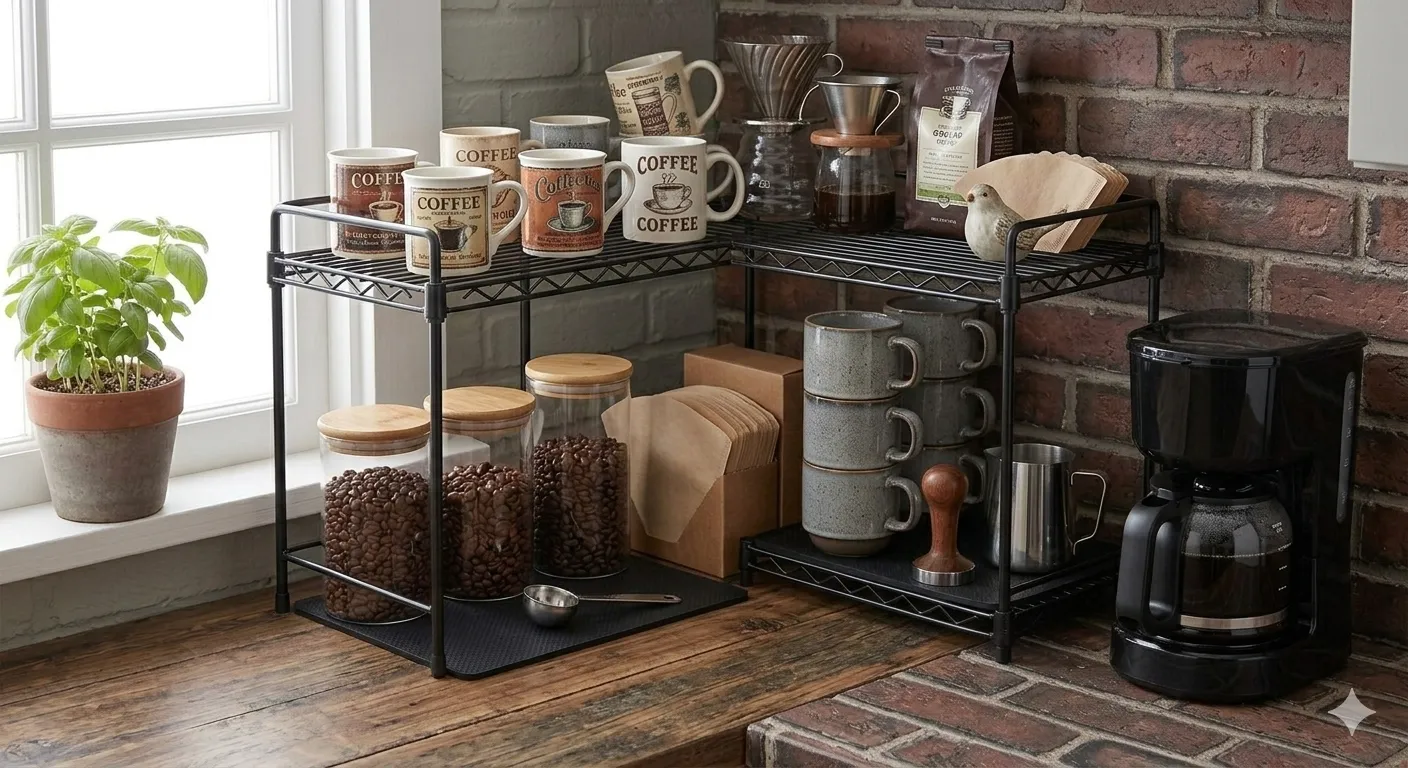
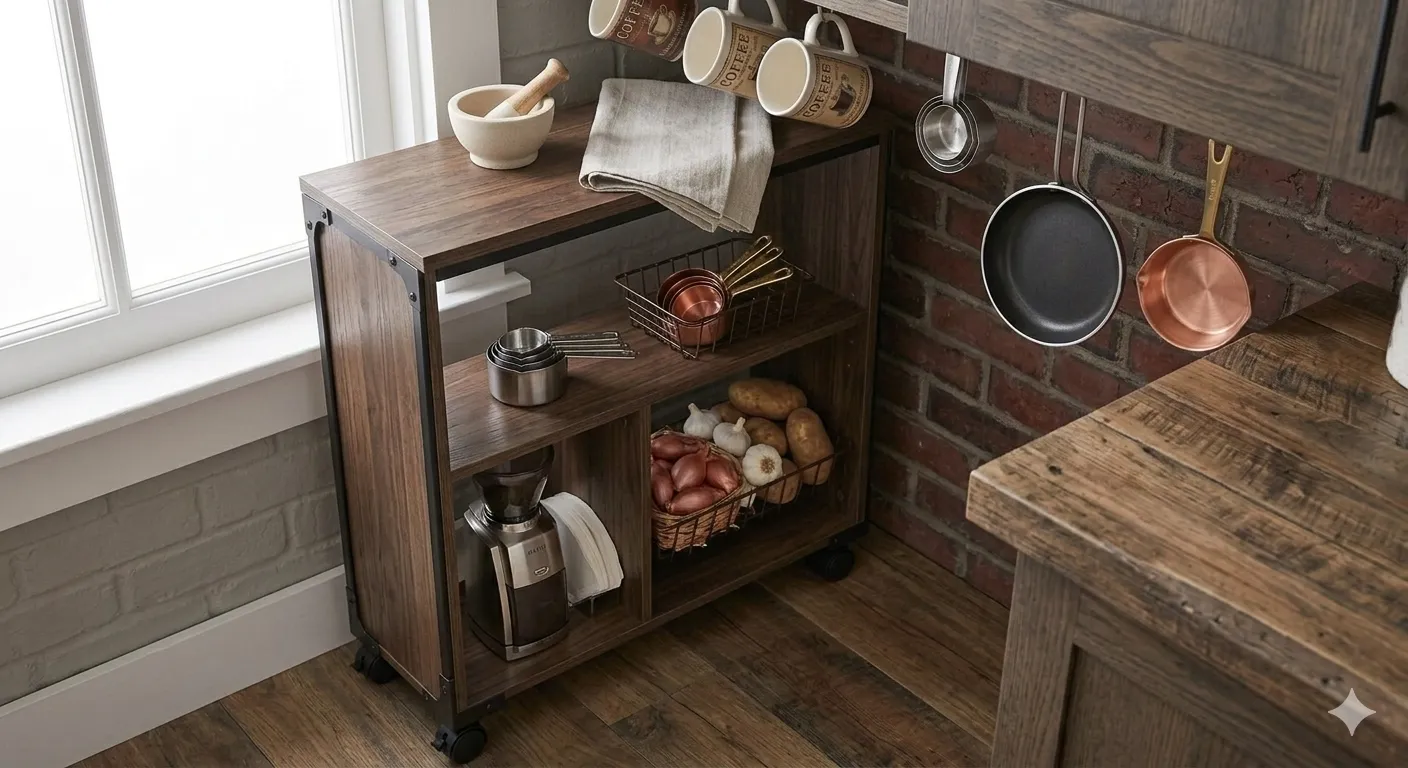 A two-tier corner shelf (Seville Classics stainless version, $34) turns a dead corner into vertical counter storage. Ideal for a coffee station where the maker sits below and beans, filters, and mugs sit above — all within arm’s reach, none taking up prime counter real estate.
Under-Cabinet Hooks
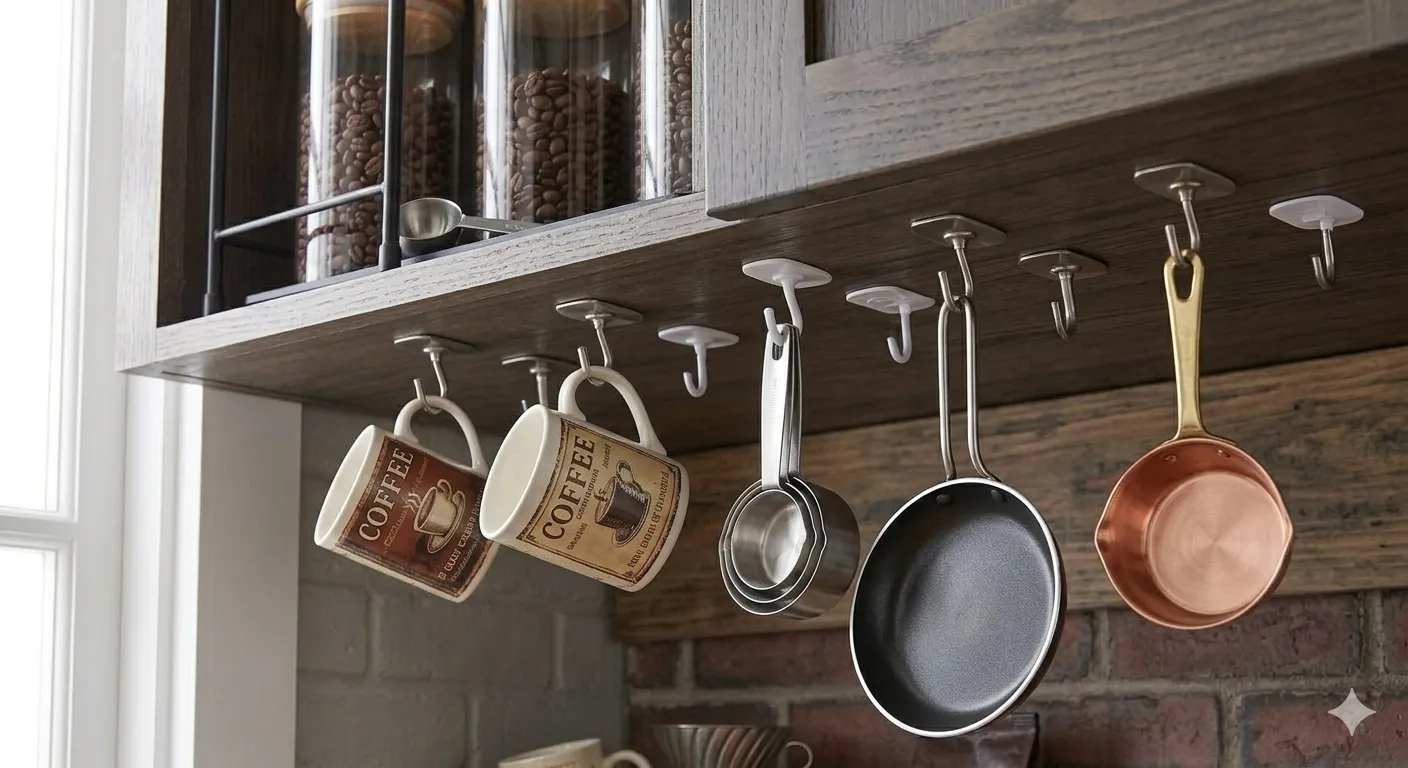 The underside of upper cabinets is almost universally ignored. Large Command adhesive hooks (rated for 7.5 lbs) hold mugs, colanders, or small pans without drilling. In a rental kitchen, this one change felt like gaining a whole new shelf.
Rolling Cart as Island
 A rolling kitchen cart does triple duty: adds counter space, adds storage underneath, and moves when you need floor room. The IKEA RÅSKOG ($25) is shallow and great for small spaces. The Seville Classics UltraHD ($120) is sturdier and better for food prep.
The Appliance Rule
Any appliance used less than once a week should be stored, not displayed. My air fryer moved to a high shelf after I admitted I was using it three times per month. The counter space it freed up changed the entire feel of cooking in my kitchen.
“The real measure of kitchen storage isn’t how it looks when clean — it’s how fast you can find what you need when you’re mid-recipe and something is boiling.”
Ideas 14–17: Maximize What’s Inside Your Cabinets
Most kitchen cabinets are badly designed for the things people actually store. The shelves are too high, too deep, and too inflexible. A single large pot sits on a shelf with eight inches of wasted vertical space above it. This is a solved problem — but the solutions require a small investment and about an hour of work.
The first time I installed a shelf riser inside a cabinet — a simple wire shelf that rests on existing shelf pins — it felt almost silly how much space it created. My dish cabinet went from holding eight plates to holding sixteen. Same cabinet. Just a $12 Sorbus risers kit and fifteen minutes of work.
Cabinet Shelf Risers
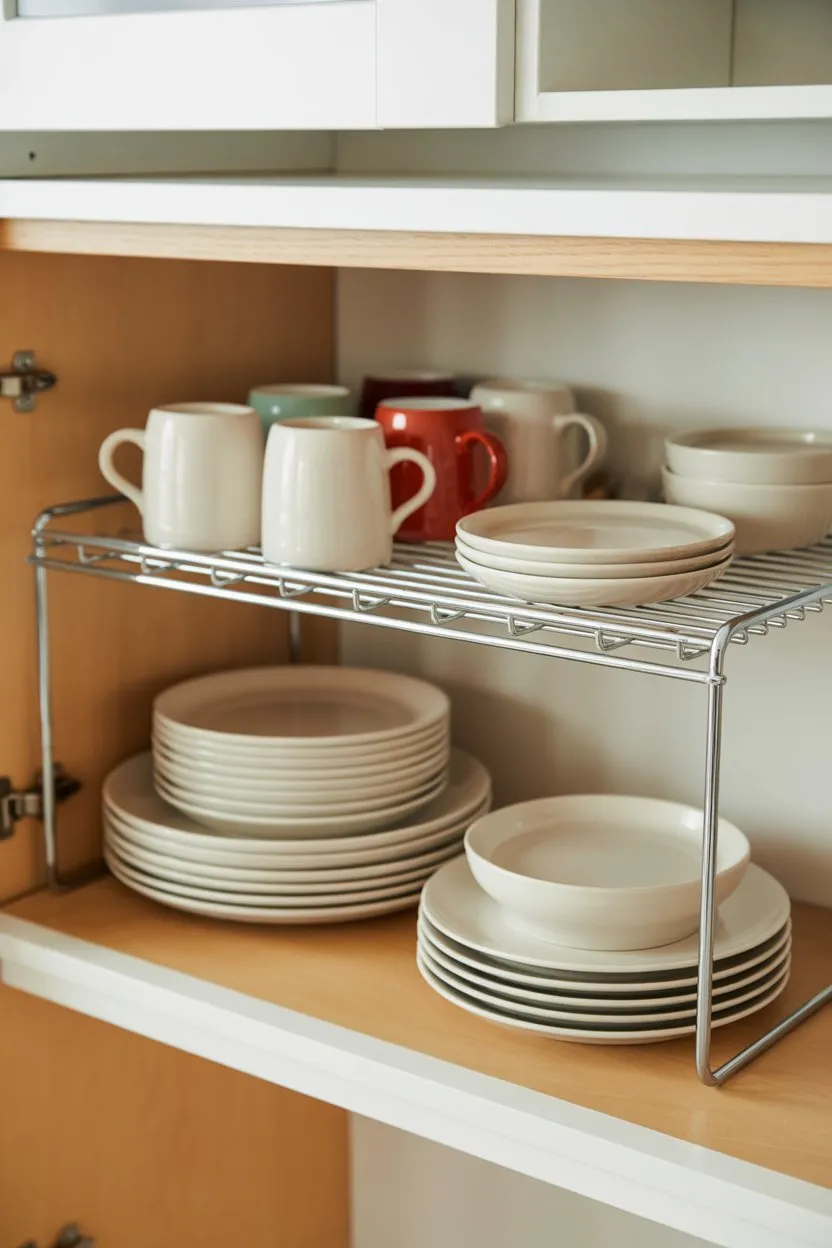 Shelf risers double the usable capacity of any shelf. Sorbus and SimpleHouseware both make reliable versions for $10 to $15. They sit inside the cabinet and create a second level for plates, cups, or canned goods. Stackable mugs above, single-layer bowls below.
Lazy Susan for Corner Cabinets
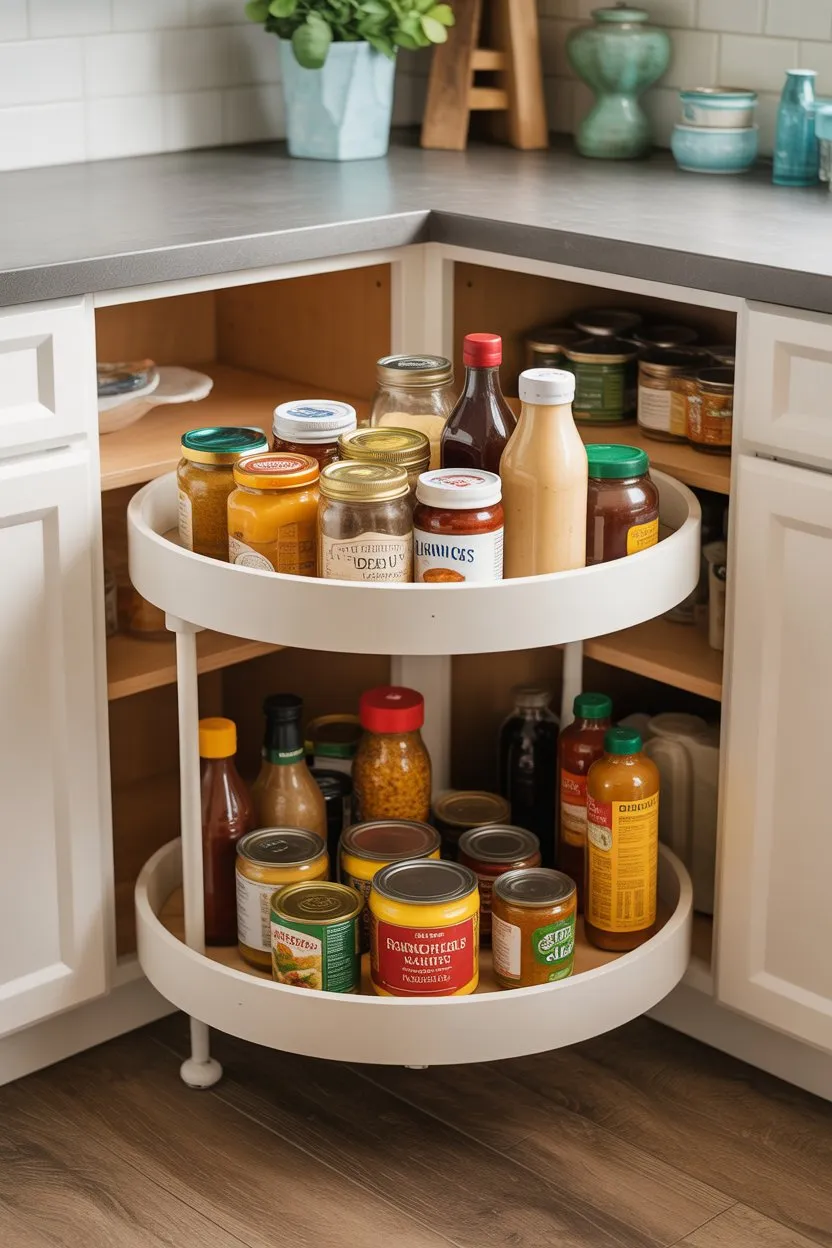
Corner cabinets are accessibility nightmares — the stuff at the back is essentially lost. A two-tier lazy Susan ($18 to $30 from Copco or IKEA) turns that dead corner into genuinely accessible storage. My pantry cabinet had three years of forgotten canned goods in its back corner before I made this change.
Stackable Clear Bins
The iDesign Linus line and OXO Pop containers are the two brands worth recommending. Clear bins let you see what you have and stack reliably. OXO Pop containers ($40 for a starter set) are worth it for dry goods — the airtight seal keeps food fresh significantly longer too.
Stack and Nest Pots
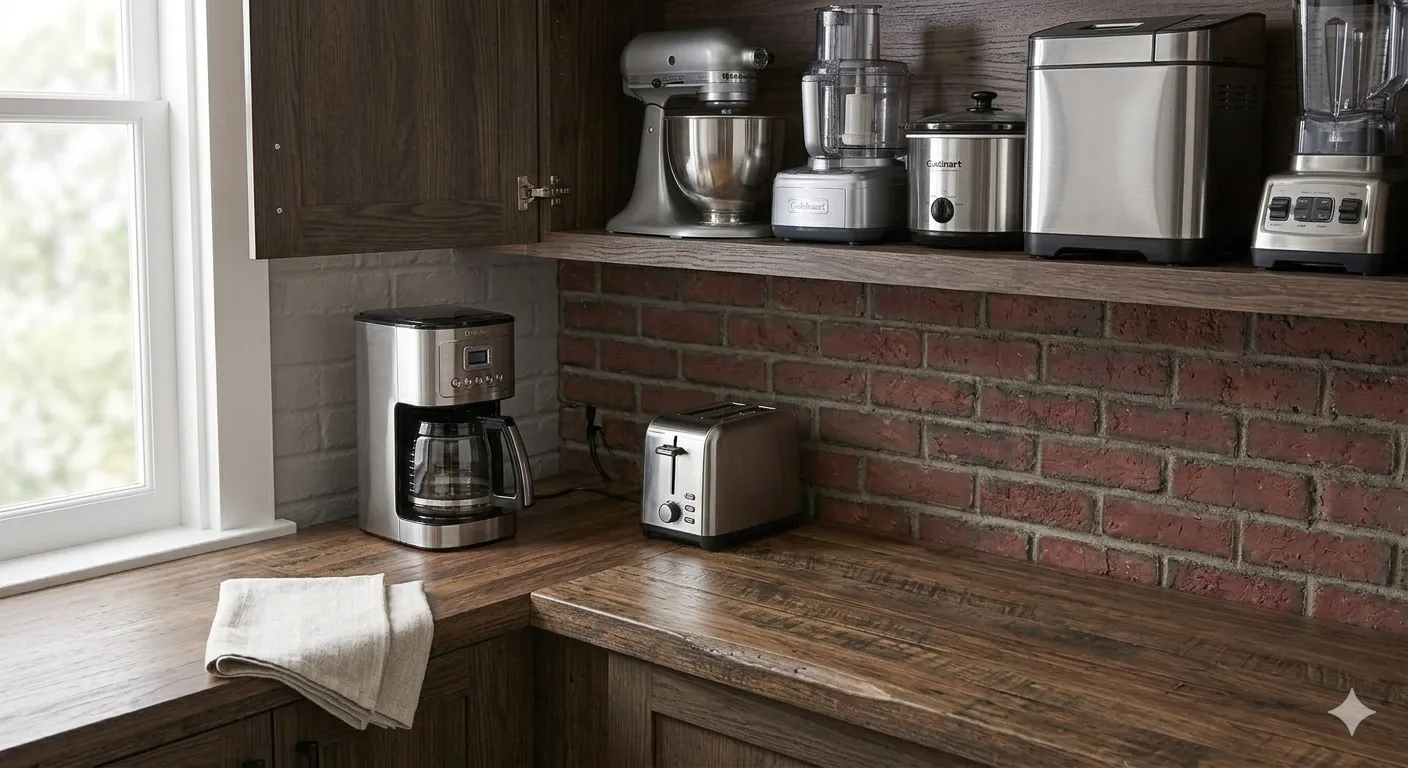 Most standard cookware sets are not designed to nest. If replacing pots, the GreenPan Levels or Cuisinart Advantage stackable sets nest down to half the cabinet space of conventional cookware. I switched in 2023 and freed an entire lower cabinet that had been used entirely for pots and lids.
Ideas 18–20: Pantry and Food Storage Done Right
If you do not have a dedicated pantry — welcome to the club. About 40 percent of American apartments have no pantry space at all, according to NKBA kitchen design surveys. Your “pantry” might be a single upper cabinet, or a stretch of open shelves, or a closet you have optimistically designated for food. These ideas work for all three scenarios.
Over-Door Pantry Organizer
An over-door organizer for a pantry or kitchen closet is one of the highest-value storage upgrades available. The SimpleHouseware 24-pocket version ($28) holds spices, oils, snacks, and small bottles on the back of any door. I installed one on my coat closet door and solved my spice storage problem in fifteen minutes.
Freestanding Pantry Cabinet
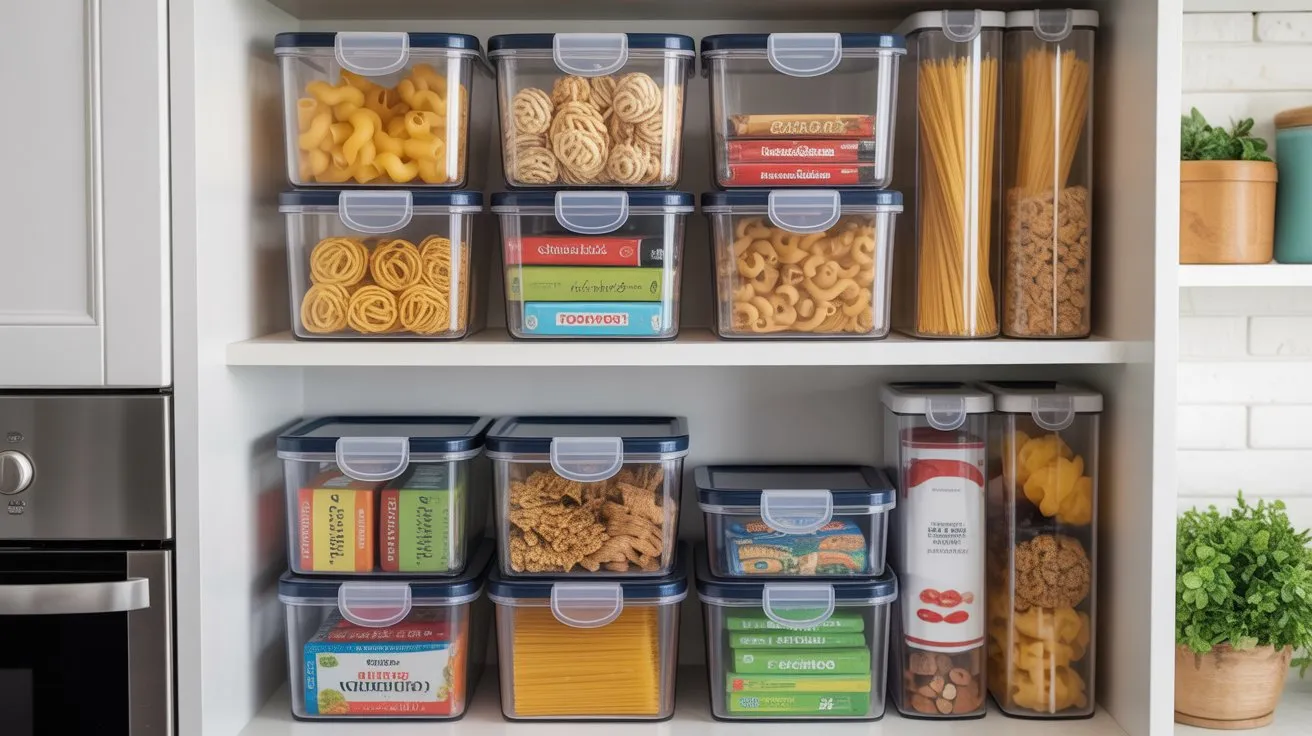 If budget allows ($150 to $400 depending on size), a freestanding pantry cabinet from IKEA’s BRIMNES line or Sauder’s furniture collection adds significant storage without renovation. This is the move I most often recommend to people who feel like their kitchen is unsalvageable.
FIFO Labeling System
First-in, first-out labeling is a restaurant practice that applies to home pantries. Use a Brother P-Touch label maker ($25) or masking tape and a Sharpie. New cans go to the back, old ones come to the front. My estimate: a two-person household saves about $200 per year in reduced food waste.
Ideas 21–22: The Under-Sink Zone
Under the sink is the most universally neglected kitchen storage zone. Plumbing takes up space, the area is oddly shaped, and it tends to collect cleaning supplies in a chaotic pile. Two changes make it genuinely useful.
Adjustable Under-Sink Organizer
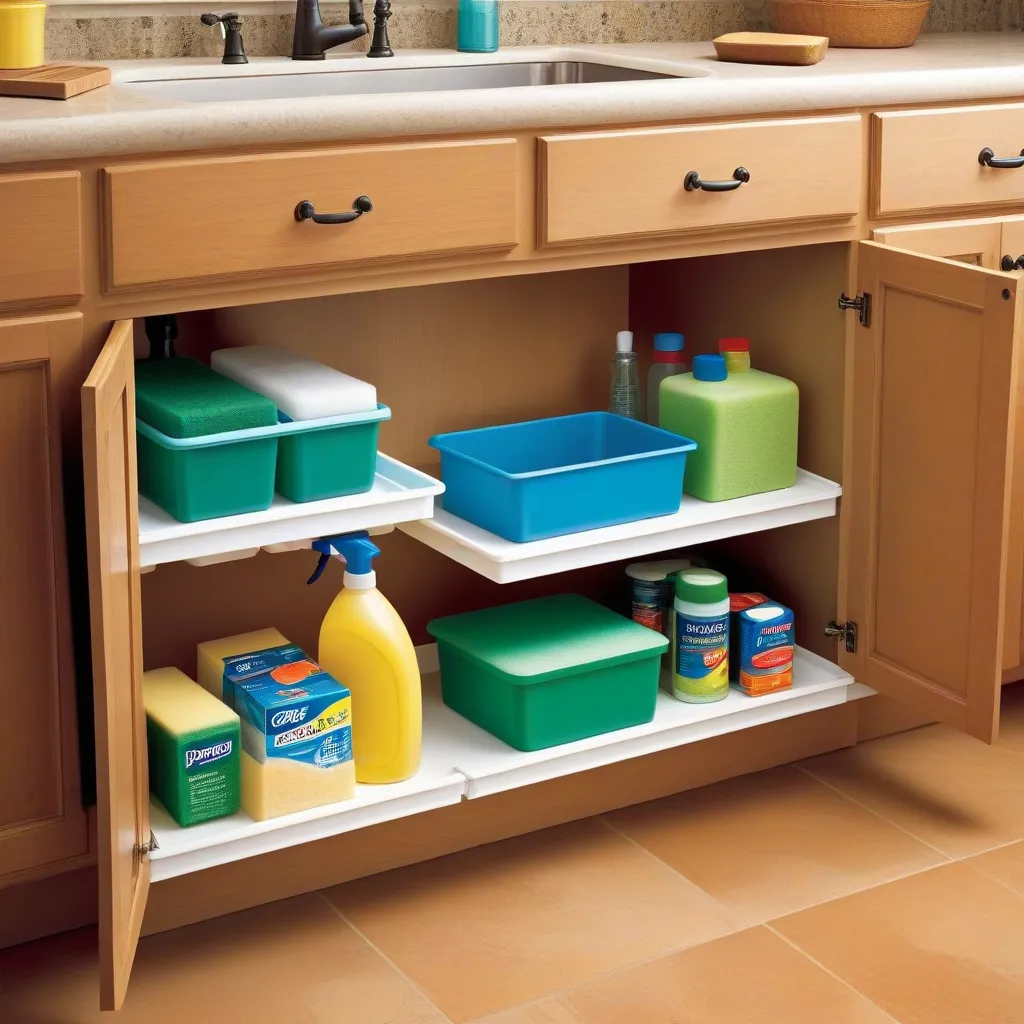 The mDesign adjustable under-sink organizer system (~$30) works around plumbing with a configurable design. It adds two shelves that sit beside not over pipes, and adjustable legs accommodate uneven cabinet floors. Before this, I had three years of loosely stacked cleaning bottles under my sink.
Tension Rod Spray Bottle Holder
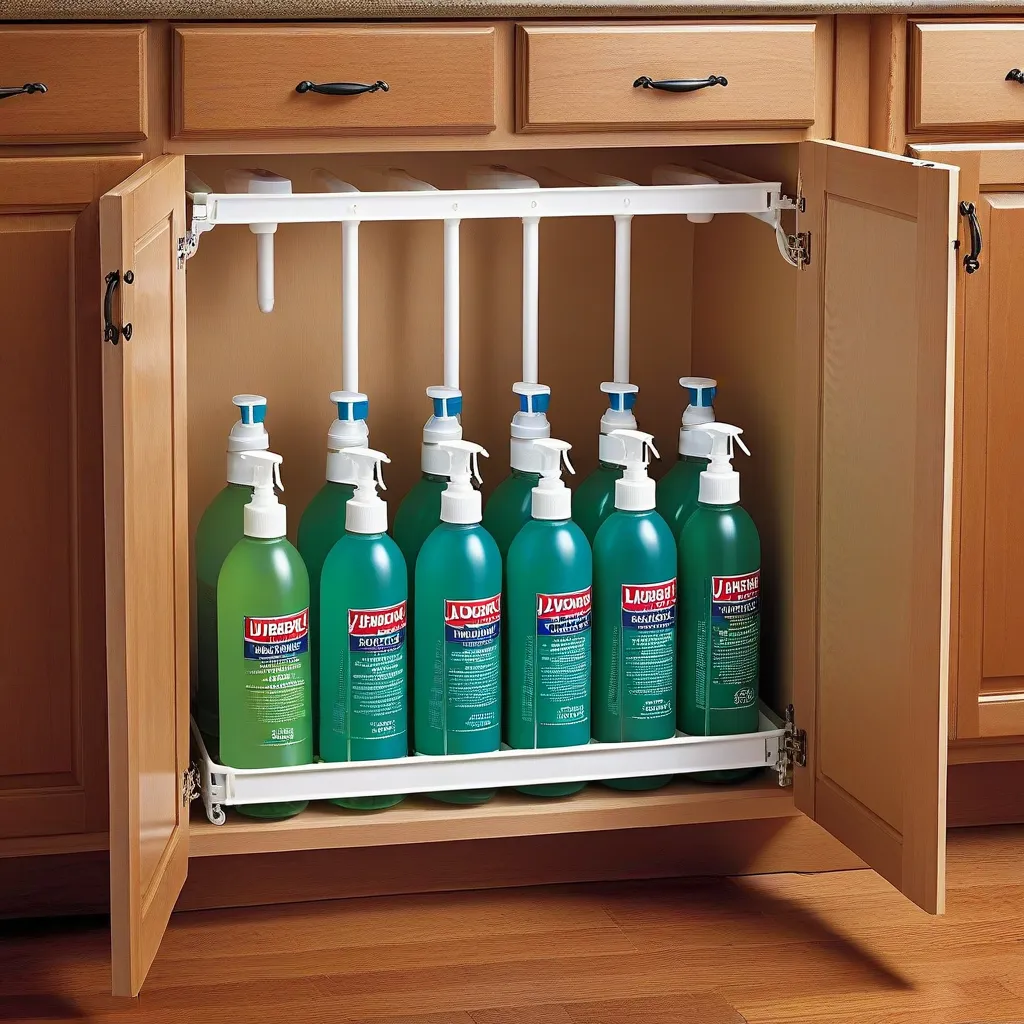 A single tension rod stretched horizontally in your under-sink cabinet holds spray bottles by their triggers, keeping them upright and off the floor entirely. This costs about $4, takes two minutes, and people cannot believe they didn’t think of it earlier. My most-shared tip, by far.
Honest Product Comparison: What’s Actually Worth Buying
After years of buying, testing, returning, and occasionally throwing things away, here is my honest read on the most popular small kitchen storage products.
| Product | Price Range | Best For | Verdict |
|---|---|---|---|
| OXO Pop Containers | $35–80 / set | Dry goods, flour, grains | Buy it |
| IKEA RÅSKOG Cart | $25 | Extra surface + storage | Buy it |
| Rev-A-Shelf Door Mount | $25–45 | Cabinet door spice storage | Buy it |
| SimpleHouseware Pegboard | $40–55 | Renters with no drill access | Buy it |
| Magnetic Acrylic Spice Jars | $30–50 / set | Fridge-side spice display | Situational |
| Hanging Pot Racks (ceiling) | $60–200 | Kitchens with 9+ ft ceilings | Situational |
| Bambüsi Bamboo Dividers | $18–25 | Narrow or odd-width drawers | Buy it |
| “All-in-one” organizer kits | $50–100 | Nothing specific | Skip it |
A word about those all-in-one kits: they are sold everywhere and they solve almost nothing. The pieces are always either slightly too big or slightly too small, and the system requires a kitchen that already has the right proportions. Buy individual solutions for specific problems instead.
Frequently Asked Questions
How do I organize a kitchen with almost no cabinet space?
Start vertical. Wall-mounted magnetic strips, over-door organizers, and under-shelf baskets add storage without touching existing cabinet space. Then look at what you are storing that does not need to be in the kitchen at all. Many people store appliances they almost never use simply because they’ve always been there. A freestanding pantry cabinet is the single highest-impact purchase for genuinely cabinet-poor kitchens.
What is the best way to organize a small kitchen pantry?
Group by category, not by container type. Baking items together, canned goods together, snacks together — even in a small space, this grouping approach means you find things in under five seconds. Clear bins and shelf risers are the two most useful products for pantry organization. Lazy Susan turntables help in deep spaces where back-of-shelf items get lost.
How do I organize a small kitchen without spending a lot of money?
Tension rods cost $3 to $5 and solve multiple problems: drawer dividers, vertical baking sheet storage, and under-sink spray bottle holders. Command adhesive hooks cost about $1 each and add hanging storage anywhere. Before any purchase, the edit — removing what you do not use — costs nothing and typically frees more space than any product could add.
Should I store things on the counter in a small kitchen?
Only what you use every single day. The counter is your most valuable workspace in a small kitchen. The coffee maker earns its spot because it runs seven days a week. The blender you use monthly does not. Frequency of use is the only fair criterion — not how the item looks, not how often you imagine using it.
What are the best kitchen storage solutions for renters?
Anything that does not require drilling or permanent adhesive. Command hooks, tension rods, freestanding organizers, over-door systems, and rolling carts are all renter-friendly. The SimpleHouseware freestanding pegboard is specifically designed for renters who want wall-style storage without wall damage.
How do professional organizers recommend organizing kitchen cabinets?
Zone by activity, not by item type. Everything for making coffee lives together. Everything for baking lives together. Items you use for cooking dinner live nearest the stove. This activity-based organization means you pull one cabinet open and everything you need for a task is right there — you stop making ten trips across the kitchen per meal.
Start With One Drawer
If you read this whole guide and feel paralyzed by the scope of it, here is the simplest possible starting point: pick one drawer, empty it completely, edit it down to only what you actually use, and put it back organized. That is it. Do not start with the whole kitchen. Start with the drawer.
Small kitchen storage improvement is not a one-Saturday project. It is a series of small decisions over weeks — each one making the kitchen slightly easier to use, slightly less stressful, slightly more like a place where cooking feels good instead of chaotic. The best storage idea is always the one you will actually implement.
The kitchens I find most impressive are never the biggest ones. They are the ones where someone has thought carefully about every inch — and the cooking that happens in them shows it.
What is the one storage problem in your kitchen that has driven you the most crazy? Drop it in the comments — the answer to that question is exactly where to start.
You may also like to read:-https://caloriehive.com/keto-breakfast-quiche/recipes/
https://caloriehive.com/lentil-soup/recipes/———————————————————————————————————————————————-