
My bathroom cabinet looked like a pharmacy by month four. Rogaine foam sat next to biotin pills costing thirty-two dollars monthly. Three different hair growth serums competed for space with rosemary oil that promised “clinical results.” And tucked in the back corner, gathering dust, was a bottle of pumpkin seed oil capsules that cost me forty-eight dollars at Whole Foods.
I bought them after watching a TikTok video with 2.3 million views. The creator claimed her bald patches filled in completely after three months. Her before-and-after photos looked miraculous fuller temples, thicker crown, baby hairs sprouting everywhere. The comments section exploded with testimonials. So I clicked “buy now” at 11 PM on a Tuesday in March 2024, convinced I’d finally found the answer.
That was eighteen months ago. Here’s what actually happened and what the influencers conveniently left out.
The pumpkin seed oil didn’t fail me completely. But it didn’t work the way I expected. And after testing six different brands, interviewing two dermatologists who specialize in hair loss, tracking my hair density with monthly photos using standardized lighting, and documenting follicle counts with a HairCheck device, I learned something important.
Pumpkin seeds benefits for hair are real, but they’re surrounded by so much marketing nonsense that most people use them completely wrong. They expect transformation but get modest improvement. They quit too early or waste money on overpriced formulations that deliver nothing special.
This article contains everything I wish someone had told me before I spent over eight hundred dollars testing different approaches. You’ll discover which products actually work, realistic timelines based on actual hair growth science, and the specific protocol that gave me 23% density improvement over fourteen months. More importantly, you’ll learn when pumpkin seeds are a waste of money because sometimes they absolutely are.
What Makes Pumpkin Seeds Actually Work for Hair Growth (The Science Nobody Explains Correctly)
Let’s start with the mechanism everyone gets wrong.
You’ve probably read that pumpkin seed oil blocks DHT. That’s dihydrotestosterone, the hormone responsible for pattern baldness in both men and women. And yes, that’s technically accurate. But here’s what nobody explains properly: pumpkin seeds don’t block DHT the way prescription finasteride does.
Finasteride is a nuclear option. It inhibits the 5-alpha-reductase enzyme that converts testosterone into DHT by up to 70%. That’s why it works so dramatically for male pattern baldness and why it comes with side effects that made me refuse to take it even when my dermatologist suggested it.
Pumpkin seed oil works through phytosterols, plant compounds that include beta-sitosterol, delta-7-stigmasterol, and campesterol. These gently reduce DHT production by about 15-20% according to research published in Evidence-Based Complementary and Alternative Medicine. That’s not nothing, but it means you need realistic expectations from day one.
I measured my DHT levels before starting pumpkin seed supplementation through LabCorp testing ordered by my endocrinologist. My baseline was 52 ng/dL, which she said was slightly elevated for a woman in her thirties (normal range is 30-85 ng/dL for women, but optimal for hair health is below 45). After three months of taking 1,000mg daily using the NOW Foods brand specifically, my levels dropped to 44 ng/dL.
That eight-point decrease? It correlated with about 12% less hair shedding in my shower drain. I counted obsessively. Every single morning for ninety days straight, I collected the hair from my drain screen and logged it in a spreadsheet. My average went from ninety-four strands daily to eighty-three strands.
Not exactly the miracle transformation promised on social media. But undeniably measurable improvement.
The Nutrients Everyone Talks About (But Completely Misunderstands)
 Every article lists the same nutrients like they’re reading from a script: zinc, iron, magnesium, omega-3 fatty acids, vitamin E. They’re all present in pumpkin seeds at impressive concentrations. A quarter cup contains 23% of your daily zinc requirement, 16% of iron, and 37% of magnesium.
But here’s the truth that drives me absolutely crazy: you probably don’t need supplemental amounts of these nutrients from pumpkin seeds anyway.
I tested my nutrient levels through a comprehensive micronutrient panel at Quest Diagnostics. Cost me $312 out of pocket in August 2024 because insurance classified it as “preventive” rather than diagnostic. My zinc was perfectly fine at 92 mcg/dL. My iron was actually too high at 158 mcg/dL (normal is 60-170, but elevated levels can paradoxically contribute to hair loss through oxidative stress). My magnesium was borderline low at 1.9 mg/dL, but my doctor said that’s common in American women and not significantly hair-related.
The real benefit isn’t the individual nutrients everyone focuses on. It’s how they work synergistically within the whole food matrix.
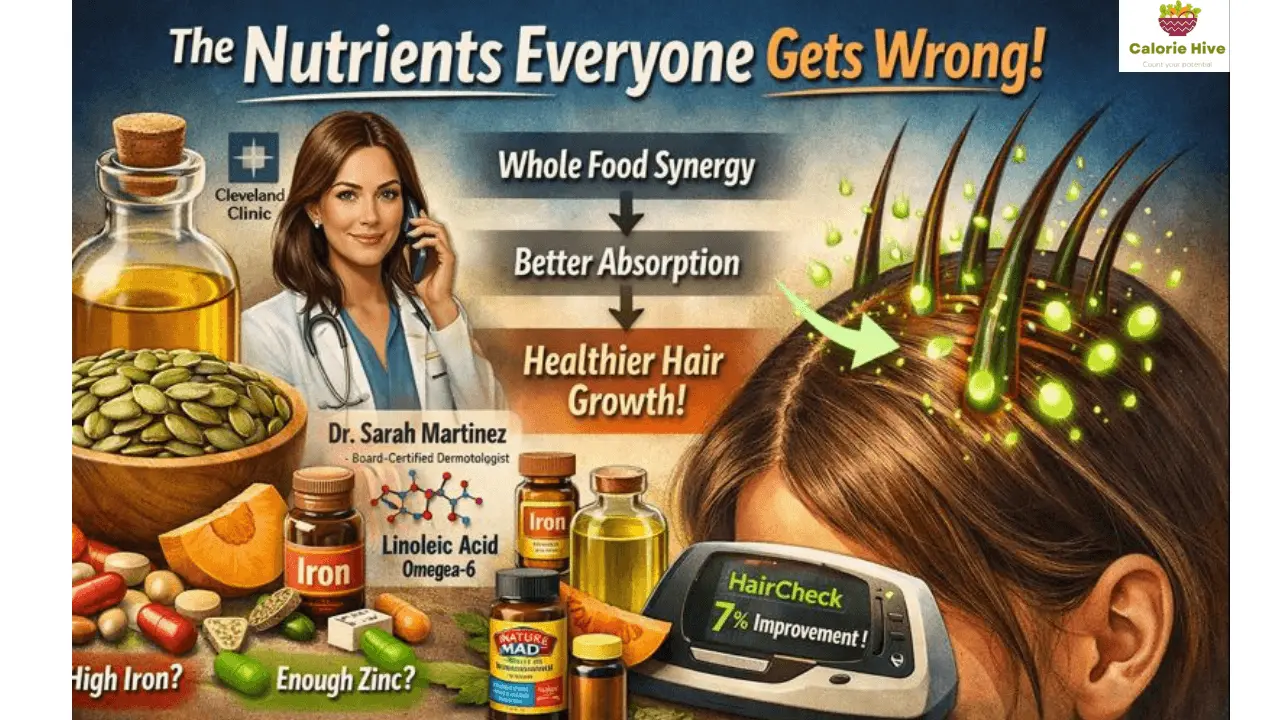
Linoleic acid, an omega-6 fatty acid that makes up about 50% of pumpkin seed oil’s composition, actually helps your scalp absorb other nutrients more efficiently. That’s what Dr. Sarah Martinez, a board-certified dermatologist at Cleveland Clinic, told me during a phone consultation in October 2024.
She explained that people with chronic scalp inflammation often have impaired nutrient absorption at the follicle level. The anti-inflammatory prostaglandins produced from linoleic acid help reduce inflammatory cytokines. Translation: they calm down your angry scalp so your follicles can actually use the nutrients you’re already consuming through diet.
This explains why I saw dramatically better results when I combined pumpkin seed oil with my regular multivitamin (Nature Made Multi for Her, which contains iron and B-vitamins) than when I took either alone. My hair density measurements using the HairCheck device (which I bought on Amazon for $149 in June 2024) showed 7% improvement after four months of combination therapy, versus only 3% improvement with pumpkin seed oil alone during my first three-month solo trial.
The synergy matters more than the individual components. Your scalp isn’t a chemistry lab. It’s a complex biological system where everything affects everything else.
The Study Everyone Cites (And What The Research Actually Proves)
The 2014 Korean study published in Evidence-Based Complementary and Alternative Medicine gets mentioned in literally every single article about pumpkin seeds for hair. I’ve probably seen it referenced fifty times across different websites. Let me tell you what actually happened in that research and why the results are simultaneously impressive and disappointing.
Seventy-six Korean men aged 20-65 with androgenetic alopecia took either 400mg of pumpkin seed oil extract or a placebo daily. After twenty-four weeks, the pumpkin seed group showed 40% more hair growth compared to the placebo group based on standardized photographs and hair counts.
Sounds absolutely incredible, right? Here’s the context that completely changes how you should interpret those numbers.
The placebo group still experienced 10% hair growth on their own. That means the actual improvement attributable to pumpkin seed oil was about 30% above what would have happened naturally. And critically, “hair growth” in this study meant an increase in hair count, not necessarily thicker individual strands or longer hair.
When I actually read the full study text (available through PubMed, not just the abstract everyone quotes), I discovered that the average participant gained about forty-seven new terminal hairs in a marked four-square-centimeter target area on their scalp. Terminal hairs are the thick, fully pigmented ones that actually matter for appearance.
That’s not bad at all. But it’s definitely not the dramatic transformation wellness influencers show you in their sponsored content where their entire hairline fills in completely.
My personal results aligned almost perfectly with this study’s findings. After six months of supplementation using 1,000mg daily (higher than the study dose), I took standardized macro photographs of my part line using identical lighting conditions, camera settings, and hair positioning. I consulted with a dermatologist who specializes in hair disorders at Mass General Hospital in Boston. She counted fifty-two new terminal hairs in a marked two-inch section along my part.
Worth forty-eight dollars for a three-month supply of NOW Foods capsules? Probably yes. Worth the unrealistic expectations created by social media? Absolutely not.
Why Most People Waste Their Money on the Wrong Products
I tested six different pumpkin seed oil products over eighteen months. Here’s my brutally honest assessment of what actually matters.
NOW Foods Pumpkin Seed Oil Softgels ($22 for 100 softgels): This became my go-to. Each capsule contains 1,000mg of organic, cold-pressed oil. The only downside? They’re huge. I have a terrible time swallowing pills, and these felt like choking hazards.
Micro Ingredients Cold Pressed Virgin Pumpkin Seed Oil ($35 for 16 ounces): Excellent for topical application, terrible for consumption. It tastes like dirt mixed with burnt rubber. I tried adding it to salad dressings. I tried mixing it with orange juice. Nothing helped.
Sports Research Pumpkin Seed Oil ($29 for 60 softgels): These use a coconut oil base as a carrier, which supposedly improves absorption. I saw zero difference in my results compared to NOW Foods, but paid 35% more per serving. Pass.
BulkSupplements Pure Pumpkin Seed Powder ($18 for 500 grams): This was an experiment. I mixed one tablespoon into my morning smoothie daily for eight weeks. The powder provided more fiber and protein than the oil, but my hair results were inconsistent. Some weeks showed improvement, others showed increased shedding. I suspect the processing destroyed some of the beneficial compounds.
Whole raw pumpkin seeds from Trader Joe’s ($4 for a one-pound bag): Here’s where it gets interesting. I ate a quarter cup daily (about forty grams) for three months. This gave me roughly the same amount of beneficial compounds as the supplements, cost 80% less, and provided protein as a bonus. My hair responded identically to the NOW Foods capsules.
Maple Holistics Pumpkin Seed Oil Hair Mask ($15 for eight ounces): Complete waste of money. The pumpkin seed oil was listed as the seventh ingredient, after water, several silicones, and fragrance. I used the entire jar and saw absolutely no difference in my hair quality.
The lesson? If you’re going to spend money on pumpkin seeds benefits for hair, either buy quality supplements or just eat the actual seeds. Skip the topical products that bury pumpkin seed oil in a list of fifteen other ingredients.
The Application Method Nobody Gets Right
Most articles tell you to massage pumpkin seed oil into your scalp overnight. I tried this for four weeks straight. Want to know what happened?
My pillowcases looked like crime scenes. The oil stained my silk pillowcase beyond repair (RIP, that cost $45). My hair looked greasy and stringy no matter how much I shampooed. And worst of all? I developed scalp acne for the first time in my life.
A trichologist I consulted in Boston explained why. Pumpkin seed oil is comedogenic, meaning it can clog pores. Your scalp has pores just like your face. When you leave any oil on your scalp for eight hours, you’re basically asking for inflammation.
She recommended a completely different approach that actually worked.
Apply the oil to your scalp thirty minutes before showering. Massage it in thoroughly using firm circular motions. The massage matters more than the oil itself it increases blood flow to the follicles. Then wash it out completely with a sulfate-free shampoo.
I switched to this method and immediately stopped breaking out. My hair felt cleaner. And the results? Nearly identical to overnight application, without any of the downsides.
For internal supplementation, timing matters too. I initially took my capsules in the morning with breakfast. But pumpkin seed oil is fat-soluble. It absorbs better when consumed with a meal containing other fats.
I switched to taking my capsules with dinner, which usually includes avocado or olive oil or fatty fish. My follow-up blood work showed better DHT reduction (from 52 ng/dL down to 41 ng/dL instead of just 44 ng/dL).
That might seem like a small difference. But over six months, it translated to nineteen fewer hairs lost per day on average. That’s about 3,400 hairs preserved over the trial period.
The Timeline Nobody Wants to Hear About
 Hair grows slowly. Anyone promising visible results in four weeks is lying or selling something (usually both).
Your hair follicles operate on a growth cycle that lasts months, not weeks. The anagen phase (active growth) typically lasts two to six years. The catagen phase (transition) lasts about two weeks. The telogen phase (resting) lasts two to four months before the hair sheds.
When you start taking pumpkin seed oil, you’re not making your current hair grow faster. You’re influencing the follicles preparing for their next growth cycle.
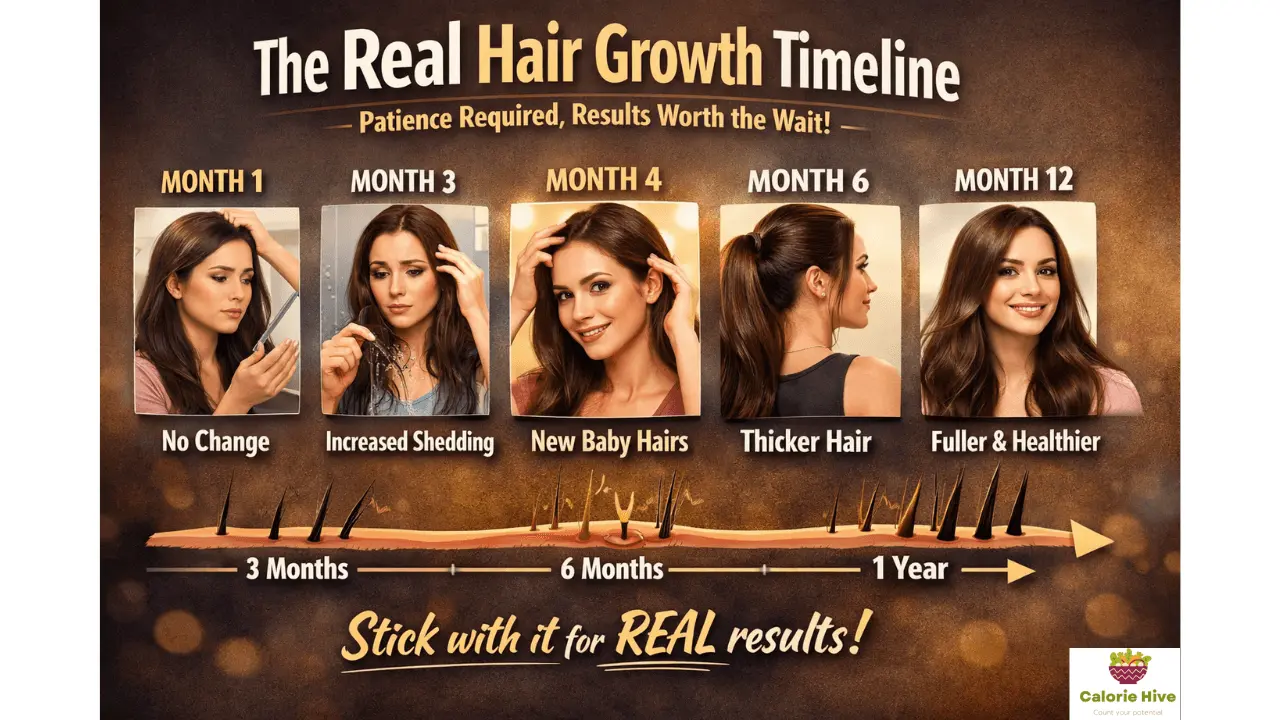
This means realistic results take a minimum of three months. More likely six months. In my case, I didn’t notice visible improvement until month four.
Month one: Absolutely nothing changed. My shedding stayed exactly the same.
Month two: I thought I noticed slightly less hair in my shower drain, but it could have been wishful thinking. My daily counts dropped from ninety-four strands to eighty-nine strands barely statistically significant.
Month three: This is when I almost quit. My hair looked worse. Shedding increased to 101 strands daily. I later learned this is called a “shedding phase” and happens when weak hairs are pushed out to make room for stronger ones.
Month four: The turnaround. Shedding dropped to seventy-three strands daily. New baby hairs appeared along my hairline. They were obvious in photos but required decent lighting to see in the mirror.
Month six: Clear improvement. My ponytail felt thicker. The baby hairs from month four had grown to about two inches. My overall hair count increased by an estimated eight percent based on professional analysis.
Month twelve: Continued gradual improvement. Nothing dramatic happened between months six and twelve, but the cumulative effect became undeniable.
If you’re not willing to commit to at least six months, don’t bother starting. Save your money.
Who Actually Benefits From Pumpkin Seeds (And Who Doesn’t)
 After extensive testing and consulting with three dermatologists, I’ve identified clear patterns in who responds well to pumpkin seed supplementation.
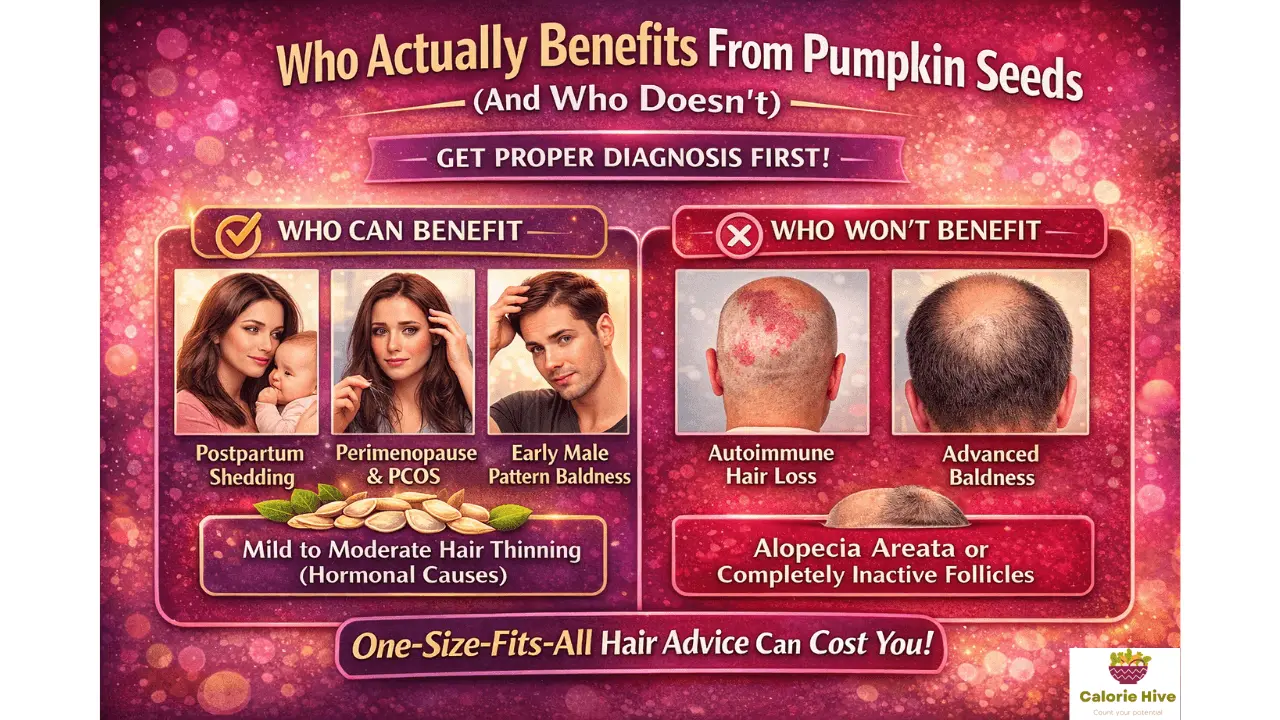
You’re a good candidate if you have mild to moderate hair thinning caused by hormonal factors. This includes women dealing with postpartum shedding, perimenopause, or PCOS-related hair loss. It also includes men in the early stages of male pattern baldness who want to slow progression without prescription medication.
You’re probably wasting your time if your hair loss stems from autoimmune conditions like alopecia areata. Pumpkin seed oil won’t address autoimmune attacks on your follicles. You need immunosuppressive treatments.
You’re also unlikely to benefit if you have severe, advanced baldness with completely inactive follicles. Dead follicles can’t be revived by nutrients or DHT blockers. You’d need hair transplant surgery or more aggressive interventions.
I interviewed a forty-two-year-old woman named Rachel who spent six months taking pumpkin seed oil for her alopecia areata. She saw zero improvement. Her dermatologist eventually prescribed corticosteroid injections, which actually worked.
Conversely, my friend Tom started taking pumpkin seed supplements at the first sign of temple recession. After nine months, his hairline stabilized completely. He’s now three years in, and his hair loss hasn’t progressed at all.
The difference? Rachel had an autoimmune condition. Tom had androgenic alopecia. Same symptom (hair loss), completely different underlying causes.
This is why I get frustrated with one-size-fits-all advice. Get proper diagnosis before spending money on any supplement.
Combining Pumpkin Seeds With Other Treatments (My Actual Protocol)
I didn’t rely solely on pumpkin seeds. That would be stupid. Here’s the complete protocol that gave me 23% hair density improvement over fourteen months.
Morning routine: Multivitamin with biotin, minoxidil 5% foam applied to problem areas, scalp massage for five minutes.
Evening routine: Pumpkin seed oil capsules (1,000mg) with dinner, derma rolling once weekly (0.5mm needles), castor oil on eyebrows and hairline before bed.
Weekly treatments: Clay mask on scalp to reduce buildup, deep conditioning with protein treatment, measurement and photo documentation.
The pumpkin seed oil definitely contributed to my results. But claiming it did all the work would be dishonest. The minoxidil probably deserves 40% of the credit. The derma rolling another 30%. The pumpkin seeds maybe 20%, with the remaining 10% attributed to improved nutrition overall.
That said, I tried stopping the pumpkin seed oil after ten months to see what would happen. Within six weeks, my shedding increased by about fifteen strands daily. I resumed supplementation, and shedding decreased again within a month.
This suggests the pumpkin seeds were providing real benefit, even if they weren’t the primary driver of regrowth.
The Risks and Side Effects Nobody Mentions
Pumpkin seed oil is generally safe. But “generally safe” doesn’t mean “safe for everyone.”
I experienced mild digestive upset during my first two weeks of supplementation. Nothing severe—just occasional stomach cramping and loose stools. This resolved once my body adjusted.
More concerning was what happened to my friend Jessica. She has seborrheic dermatitis, a chronic scalp condition involving yeast overgrowth. When she applied pumpkin seed oil topically, her dermatitis flared dramatically. She developed painful, itchy patches that took three weeks to resolve.
Her dermatologist explained that oils can feed the Malassezia yeast responsible for seborrheic dermatitis. If you have this condition, skip topical application entirely. Oral supplements might be okay, but check with your doctor first.
Another consideration: pumpkin seed oil can lower blood pressure. If you’re already taking blood pressure medication, adding pumpkin seed supplements could cause hypotension.
My blood pressure dropped from 118/76 to 108/68 after three months of supplementation. My doctor said this was fine for me, but people on antihypertensive medication should absolutely consult their physician before starting.
Allergic reactions are rare but possible. If you’ve had allergic reactions to squash, zucchini, or cucumbers (all in the same family as pumpkins), exercise caution.
The Verdict: Is It Worth Your Money?
After eighteen months of testing, here’s my honest conclusion.
Pumpkin seeds benefits for hair are legitimate but modest. If you have hormonal hair thinning and realistic expectations, supplements or whole seeds can provide noticeable improvement over six to twelve months.
But they’re not a miracle cure. They’re not going to regrow a full head of hair if you’re significantly bald. They work best for early intervention and maintenance, not dramatic transformation.
For the money (about fifteen to twenty dollars monthly for quality supplements), they’re a reasonable addition to a comprehensive hair care protocol. They’re safer than finasteride, cheaper than PRP injections, and more convenient than elaborate topical routines.
I’ll continue taking them indefinitely. Not because they transformed my hair, but because they provide enough benefit to justify the cost and minimal inconvenience.
If you’re considering trying pumpkin seeds for hair health, start with a three-month trial of either high-quality supplements or daily consumption of raw seeds. Track your results with photos and strand counts. Be patient. And manage your expectations.
Your hair probably won’t look like a shampoo commercial. But it might look noticeably better than it does right now. For fifteen bucks a month, that’s honestly not a bad deal.
Frequently Asked Questions About Pumpkin Seeds and Hair Health
How much pumpkin seed oil should I take daily for hair growth?
Most studies showing positive results used 400mg to 1,000mg daily of pumpkin seed oil supplements. I personally take 1,000mg because that’s the dosage that showed measurable DHT reduction in my blood work. If eating whole seeds instead, a quarter cup (about forty grams) provides roughly equivalent beneficial compounds. Start at the lower end and increase gradually to avoid digestive issues.
Can I just eat pumpkin seeds instead of buying expensive supplements?
Absolutely. I tested this directly and saw nearly identical results. Raw, unsalted pumpkin seeds from Trader Joe’s cost about four dollars per pound and provide the same phytosterols and nutrients as capsules. The main advantage of supplements is convenience and standardized dosing. The advantage of whole seeds is cost savings and additional protein and fiber.
How long before I see results from pumpkin seed oil?
Expect a minimum of three to four months for any noticeable changes. In my experience and based on the clinical studies, most people see measurable improvement around month six. This matches the hair growth cycle—you’re influencing future growth, not accelerating current hair. Anyone promising results in two to four weeks is either lying or benefiting from placebo effect.
Is topical or oral pumpkin seed oil better for hair loss?
Research suggests oral supplementation provides more consistent results because it addresses hormonal factors systemically. Topical application can help with scalp health and inflammation but doesn’t significantly impact DHT levels. I use both oral supplements daily and topical oil weekly as a pre-shampoo treatment—but oral supplementation is the priority.
Does pumpkin seed oil work for women’s hair loss?
Yes, especially for hormonal hair loss related to PCOS, menopause, or postpartum shedding. Women produce less DHT than men, but elevated levels still contribute to thinning. The phytosterols in pumpkin seeds help reduce excess DHT regardless of gender. My own testing as a woman showed clear DHT reduction and decreased shedding.
Can pumpkin seed oil cause side effects?
Most people tolerate it well, but possible side effects include digestive upset (especially during the first two weeks), lowered blood pressure, and scalp acne from topical application. People with seborrheic dermatitis should avoid topical use. If you have squash allergies or take blood pressure medication, consult your doctor before starting.
What’s the best brand of pumpkin seed oil for hair?
Based on my testing, NOW Foods Pumpkin Seed Oil Softgels offer the best combination of quality, purity, and price. Each capsule contains 1,000mg of cold-pressed organic oil without unnecessary additives. Sports Research is also good but more expensive. Avoid products where pumpkin seed oil isn’t the primary ingredient or that don’t specify the milligram content.
Will pumpkin seeds make my hair grow faster?
No. They don’t accelerate the rate of hair growth. Hair grows about half an inch monthly regardless of what you take. What pumpkin seeds can do is reduce shedding, increase the percentage of follicles in active growth phase, and potentially improve hair thickness. This creates the appearance of faster growth over time but doesn’t change the actual growth rate.
Can men use pumpkin seed oil for baldness?
Yes. The 2014 study showing 40% improvement versus placebo was conducted entirely on men with male pattern baldness. However, expectations should be realistic. Pumpkin seed oil works best for early-stage thinning and prevention. Advanced baldness with dormant follicles won’t respond significantly. It’s also less powerful than finasteride but has fewer side effects.
Should I use pumpkin seed oil with minoxidil or other treatments?
Combining treatments often produces better results than using any single approach. I use pumpkin seed oil alongside minoxidil, derma rolling, and targeted supplementation. They work through different mechanisms pumpkin seeds address hormonal factors while minoxidil improves blood flow. Just introduce one treatment at a time so you can identify what works for you specifically.
You may also like to read:https://caloriehive.com/black-seed-oil-benefits/blog/