The Week That Changed How I Think About Food and My Heart
My father had his first heart attack at 54. I was 22 years old, standing in a hospital corridor eating vending machine chips while a cardiologist explained arterial blockage using terms I barely understood. What I understood clearly was this: his diet had been killing him slowly for decades, and nobody had given him a practical map out.
That moment planted something in me. Not obsession, but a quiet determination to understand what food actually does to the cardiovascular system. Years later, after studying nutrition research, working with a registered dietitian, and eventually overhauling my own eating after a borderline-high cholesterol result at 36, I built what I wish someone had handed my father thirty years earlier. A real plan. Seven days. Grounded in science. Genuinely edible.
This is that plan.
Before we get into the meals, let me say something that most plant-based content refuses to admit: going fully plant-based forever is not required to protect your heart. The research does not demand perfection. What it demands is a meaningful shift toward whole, fiber-rich, anti-inflammatory foods. Seven days is enough to begin that shift and, more importantly, to feel it happening.
What Plant-Based Eating Actually Does to Your Cardiovascular System
Here is the mechanism most people skip past, and it matters because understanding it keeps you motivated when the novelty wears off around Day 4.
Your arteries are lined with a delicate layer of cells called the endothelium. When you eat saturated fat and refined carbohydrates consistently, this lining becomes inflamed. Inflammation triggers LDL cholesterol to stick to arterial walls, forming plaques that narrow the vessels and raise blood pressure. This is not theory. It is what happens inside millions of people who have no idea it is occurring.
Plant foods interrupt this cycle at multiple points. Soluble fiber, found in oats, beans, and flaxseeds, binds to cholesterol in the gut and removes it from circulation before it can cause damage. Potassium, abundant in leafy greens, bananas, and sweet potatoes, counteracts the blood-vessel-tightening effects of sodium. Flavonoids in berries and dark chocolate improve endothelial function directly. Omega-3 fatty acids from walnuts and chia seeds reduce triglycerides and calm systemic inflammation.
A 2019 study published in the Journal of the American Heart Association followed over 12,000 adults across 30 years. Those with the highest plant-based diet scores showed a 32 percent lower risk of cardiovascular mortality. That number did not require veganism. It required consistent, intentional eating.
Seven days will not undo decades of damage. But it will begin changing your internal chemistry in ways that compound over weeks and months. Think of this week as the foundation, not the finished house.
The 6 Ingredients That Anchor This Plan
Every meal in this plan revolves around foods with proven cardiovascular benefits. Knowing why each one earns its place helps you adapt and improvise when life gets in the way.
Rolled oats deliver beta-glucan, a soluble fiber that the FDA recognizes as cholesterol-lowering. Three grams per day, achievable from a single serving of oatmeal, can reduce LDL by up to 10 percent over time.
Legumes — lentils, chickpeas, black beans, kidney beans — provide plant protein without saturated fat, plus folate and magnesium that support healthy arterial pressure. A meta-analysis of 26 clinical trials found one daily serving of legumes reduced LDL by an average of 5 percent.
Leafy greens like kale, spinach, and Swiss chard contain dietary nitrates that the body converts into nitric oxide, a compound that relaxes and dilates blood vessels. Blood pressure often responds within days of significantly increasing green vegetable intake.
Walnuts stand apart from other nuts for heart health. A 2021 study in the Journal of the American College of Cardiology linked regular walnut consumption to measurable reductions in LDL and inflammatory markers including C-reactive protein.
Ground flaxseed is one of the most concentrated plant sources of ALA omega-3 fatty acids and lignans, which reduce arterial inflammation. Two tablespoons ground into meals daily is the therapeutic target.
Berries contain anthocyanins that directly improve endothelial function. A Harvard study tracking over 93,000 women found those eating three or more servings of blueberries and strawberries per week had a 32 percent lower risk of heart attack.
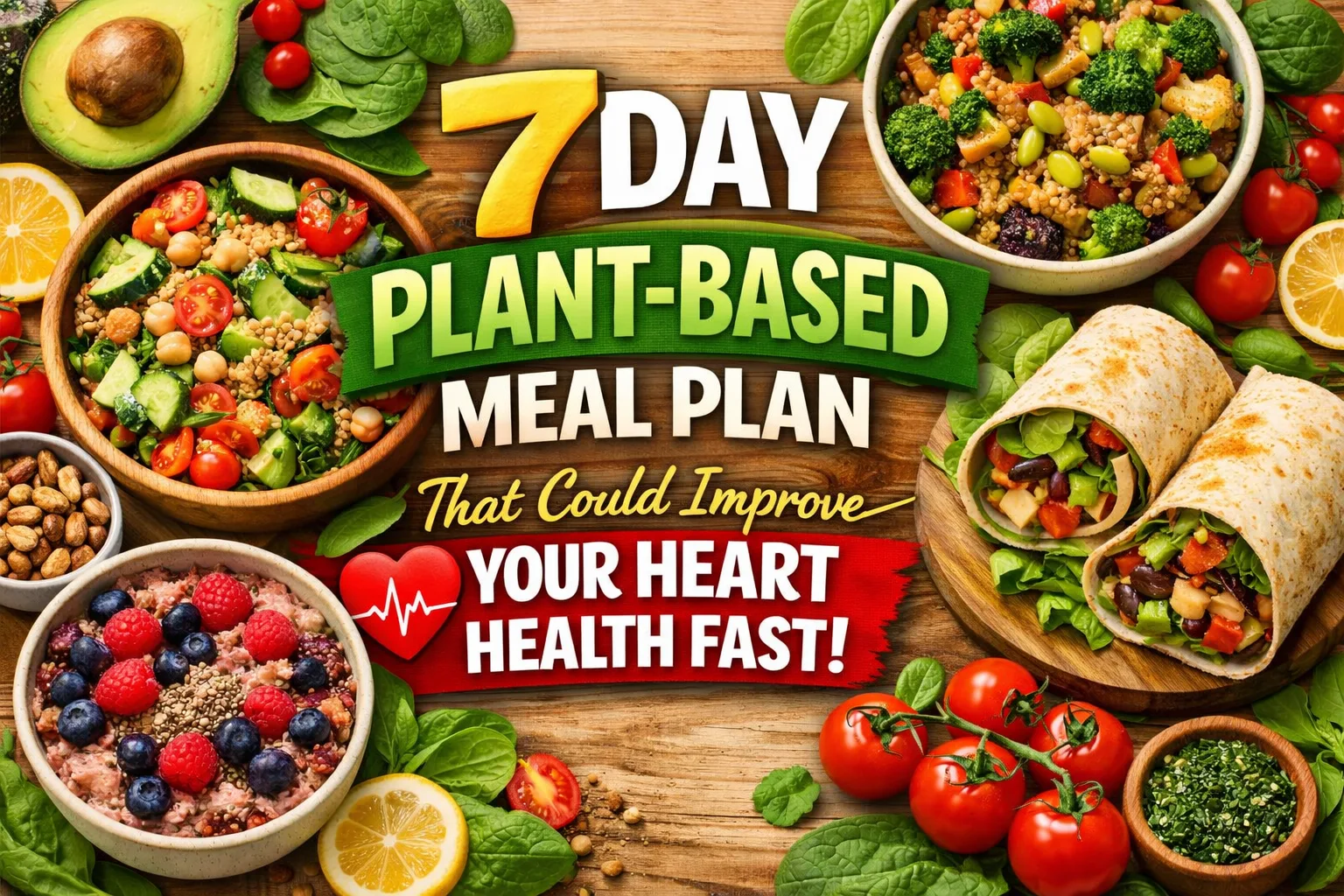
Your Complete 7 Day Meal Plan
Day 1: Start Simple, Start Strong
The goal on Day 1 is not to overwhelm your kitchen or your palate. Keep it simple. Prove to yourself that this is manageable.
Breakfast: Overnight oats with half a cup of rolled oats, one cup of unsweetened oat milk, one tablespoon of ground flaxseed, a handful of blueberries, and a light drizzle of pure maple syrup. Assemble the night before. Breakfast takes 90 seconds in the morning.
Lunch: Spinach salad with half a can of rinsed white beans, cherry tomatoes, sliced cucumber, thin-cut red onion, and a lemon-tahini dressing made from two tablespoons of tahini, the juice of one lemon, one minced garlic clove, and warm water to thin. White beans provide both soluble fiber and plant protein in a single bowl.
Dinner: Red lentil soup with two cups of red lentils, diced carrots, celery, onion, garlic, one teaspoon of turmeric, one teaspoon of cumin, and low-sodium vegetable broth. Simmer 25 minutes. Finish with fresh lemon juice. Serve with one slice of whole grain sourdough. Make extra. You will use it.
Snack: 28 grams of walnuts and one medium apple.
Day 2: Introduce Color
Breakfast: Berry smoothie with one frozen banana, one cup of frozen mixed berries, a large handful of baby spinach (you will not taste it), one tablespoon of ground flaxseed, and one cup of unsweetened almond milk. The spinach provides nitrates. The banana provides potassium. The berries do the rest.
Lunch: Whole grain wrap with hummus spread generously on a whole wheat tortilla, then filled with roasted red peppers from a jar, shredded purple cabbage, sliced avocado, and a handful of arugula. Avocado provides oleic acid, the same monounsaturated fat that makes olive oil beneficial.
Dinner: Baked sweet potato topped with seasoned black beans warmed in a pan with cumin and smoked paprika, fresh salsa, corn kernels, a squeeze of lime, and diced avocado. Sweet potatoes deliver both potassium and beta-carotene, two nutrients associated with reduced arterial stiffness.
Snack: Carrot sticks with two tablespoons of hummus.
Day 3: Omega-3 Focus
Breakfast: Chia pudding made with three tablespoons of chia seeds stirred into one cup of coconut or oat milk, left overnight. Top with sliced kiwi and a small handful of granola. Chia seeds form a gel that slows glucose absorption, preventing the blood sugar spikes that drive inflammatory processes.
Lunch: Miso soup bowl with low-sodium miso paste dissolved in warm water, silken tofu cubes, dried seaweed, edamame, green onions, and a side of brown rice. Edamame provides isoflavones linked to modest LDL reductions, particularly meaningful for women going through hormonal changes.
Dinner: Tofu and vegetable stir-fry with extra-firm tofu pressed and cubed, broccoli florets, snap peas, bok choy, minced garlic, grated ginger, and a sauce made from low-sodium tamari, rice vinegar, and a touch of sesame oil. Serve over quinoa for a complete protein profile.
Snack: A small handful of walnuts and one pear.
Day 4: Midweek Grounding
Breakfast: Avocado toast on two slices of whole grain bread, topped with half a mashed avocado, halved cherry tomatoes, everything bagel seasoning, red pepper flakes, and a squeeze of lemon. This takes under five minutes. The healthy fats in avocado improve the absorption of fat-soluble nutrients from everything else you eat that day.
Lunch: Roasted vegetable and chickpea bowl with chickpeas and whatever vegetables you have roasted together at 400 degrees for 25 minutes. Toss with olive oil, smoked paprika, garlic powder, and cumin. Serve over a bed of kale massaged with a little olive oil and lemon so it softens slightly.
Dinner: Black bean and vegetable chili with two cans of black beans, one can of kidney beans, diced tomatoes, corn, bell peppers of any color, onion, garlic, and a generous hand with chili powder, smoked paprika, and oregano. Simmer 30 minutes. Make a large pot. This becomes your Day 6 lunch.
Snack: One medium apple sliced with one tablespoon of almond butter.
Day 5: Anti-Inflammatory Peak
Breakfast: Turmeric golden oatmeal with half a cup of rolled oats cooked in oat milk, half a teaspoon of turmeric, a pinch of black pepper (which increases curcumin absorption by up to 2,000 percent according to research published in Planta Medica), half a teaspoon of cinnamon, and topped with sliced banana and a small handful of walnuts.
Lunch: Mediterranean plate with whole wheat pita, classic hummus, tabbouleh made from fine bulgur wheat tossed with fresh parsley, mint, cherry tomatoes, cucumber, and lemon juice, plus a handful of Kalamata olives. The Mediterranean dietary pattern has more long-term cardiovascular outcome data behind it than virtually any other eating style.
Dinner: Baked herb tempeh with marinated tempeh slices in lemon juice, garlic, dried thyme, and olive oil. Bake at 375 degrees for 25 minutes. Serve alongside roasted asparagus and a cup of farro. Tempeh is fermented, which improves nutrient bioavailability and adds beneficial probiotic properties. Emerging research links gut microbiome health directly to cardiovascular inflammation levels.
Snack: A bowl of fresh mixed berries.
Day 6: Comfort Meets Purpose
Breakfast: Two-ingredient banana oat pancakes made by blending one ripe banana with half a cup of oats until smooth, then cooking in a non-stick pan over medium heat. No oil needed. Top with fresh strawberries and a tablespoon of pure maple syrup. These are genuinely satisfying and come together in 12 minutes flat.
Lunch: Leftover chili from Day 4 served over shredded kale. The residual heat from the chili wilts the kale just enough to make it easy to eat. Add a squeeze of lime and fresh cilantro if you have it.
Dinner: Lentil and cauliflower shepherd’s pie using green lentils simmered with diced carrots, celery, onion, garlic, tomato paste, and thyme as the base. Top with mashed cauliflower blended with a little oat milk and garlic. Bake at 375 degrees for 20 minutes until the top is golden. Cauliflower provides sulforaphane, a compound studied for its anti-inflammatory effects on arterial tissue.
Snack: 28 grams of walnuts and a mandarin orange.
Day 7: Celebrate What You Started
Breakfast: Acai smoothie bowl made by blending one packet of frozen acai with one frozen banana and just enough oat milk to get the blender moving. Pour into a bowl and top with sliced kiwi, a tablespoon of chia seeds, a small handful of granola, and a drizzle of raw honey. This feels indulgent. It is also genuinely good for your cardiovascular system.
Lunch: Red lentil pasta with marinara sauce. Use red lentil pasta rather than conventional wheat pasta for nearly double the protein and significantly more fiber. Warm a simple marinara over it, stir in a handful of baby spinach until wilted, and top with nutritional yeast for a savory, cheesy depth without any dairy.
Dinner: Golden chickpea and spinach curry with two cans of chickpeas, a large bag of baby spinach, one can of diced tomatoes, one can of full-fat coconut milk, onion, garlic, ginger, garam masala, cumin, coriander, and turmeric. Simmer 20 minutes. Serve over brown basmati rice. End your week with something warm, aromatic, and deeply satisfying, because the only eating pattern that protects your heart long-term is one you actually want to return to.
Snack: Two squares of 85 percent dark chocolate and a small handful of almonds. Flavonoids in high-cacao chocolate measurably improve endothelial function. This is not a compromise. It belongs here.
What to Realistically Expect in 7 Days
Day 1 through 3 often brings increased satiety, some digestive adjustment from the fiber increase, and more time cooking than you planned for. This is temporary on all counts.
By Day 4, most people notice more stable energy across the afternoon. The blood sugar steadiness from fiber-rich plant foods reduces the cortisol spikes that cause afternoon crashes. Sleep quality often improves alongside it.
By Day 7, blood pressure can begin to shift noticeably, particularly if yours was elevated before. Cholesterol changes take four to eight weeks of consistent eating to show up meaningfully on a lab panel. But the cellular work is beginning on Day 1, whether you feel it yet or not.
Three months after making this style of eating consistent, a close friend with a family history identical to mine dropped his LDL from 178 to 131 without medication. His cardiologist asked him what he had changed. The honest answer was: mostly this kind of week, repeated until it became habit.
The Mistakes That Derail Most People in Week One
Skipping the prep. Overnight oats and batch-cooked lentil soup take 15 minutes of evening effort and save you from every bad decision the next morning when you are hungry and short on time.
Relying on processed plant foods. Vegan cheese, plant-based deli slices, and coconut milk ice cream are technically plant-based. They do not support heart health the way whole foods do. This plan stays close to ingredients in their original form.
Under-eating protein. Hunger is the number one reason people abandon a new eating pattern. Legumes, tofu, tempeh, edamame, and quinoa must appear at every meal. Protein keeps you full, prevents muscle loss, and stabilizes blood sugar.
Ignoring sodium on canned goods. Canned beans and vegetable broths often carry significant sodium loads. Rinse beans under cold water and choose low-sodium or no-salt-added versions where possible. For blood pressure specifically, this detail matters.
Frequently Asked Questions
Does this plan work if I am also managing diabetes? Yes, with attention to carbohydrate portions. The high fiber content of this plan naturally blunts blood sugar responses. However, anyone managing diabetes with medication should monitor blood glucose closely during dietary changes and consult their physician, as improved diet can reduce medication requirements faster than expected.
How much will this week of food cost? In most cities, this plan runs between $65 and $95 for one person for the full week. Oats, lentils, dried beans, frozen berries, and canned tomatoes are among the most affordable foods available. Tofu, tempeh, and quinoa are the premium items. Buying legumes dried rather than canned cuts costs further.
Can I eat out at all during this week? Yes. Most cuisines have plant-forward options that fit this plan. Indian dal, Japanese edamame and miso, Mexican bean-based dishes, and Mediterranean mezze all align well. The challenge is sodium, not philosophy.
Will I get enough protein? A day on this plan delivers approximately 60 to 80 grams of plant protein, which meets the recommended dietary allowance for most adults. Bodybuilders and highly active people may need to supplement with additional legume servings or hemp seeds.
What about B12? Vitamin B12 is the one critical nutrient plant foods do not reliably provide. If you extend this eating style beyond the first week, a B12 supplement is essential. Many plant milks are fortified, but supplementation ensures adequacy. This is not negotiable for long-term plant-based eating.
Why Seven Days Is Enough to Begin, But Not Enough to Finish
My father eventually did change how he ate. Not overnight, not perfectly, but meaningfully. At 68, his cardiologist described his arterial health as better than expected for his age and history. He credits the consistency, not any single week.
Seven days is a proof of concept. It shows you that plant-based heart-healthy eating is possible in your life, with your kitchen, and your schedule. The meals taste good. The effort is manageable. The body responds.
The goal after Day 7 is not to maintain perfection. It is to find five or six meals from this plan that you genuinely want to eat again and build outward from there. A 70 percent shift toward whole plant foods, sustained across months, will do more for your cardiovascular system than a flawless week followed by a return to old patterns.
Start here. Cook one thing today. Your heart has been waiting for this week longer than you know.
What was the most surprising part of reading through this plan? What felt manageable, and what felt like the biggest stretch? That tension is worth exploring because it is usually where the real work begins.