

Last Wednesday, I watched someone at Whole Foods drop $12 on a tiny acai bowl roughly 450 calories of frozen fruit, granola, and honey marketed as a “superfood breakfast.” Meanwhile, three aisles over, pink guavas sat ignored at $1.49 per pound. Each guava: 37 calories. Four times the vitamin C of that acai bowl. More fiber than two slices of whole wheat bread.
This is what frustrates me about modern wellness culture. We’ve been trained to worship exotic berries flown in from the Amazon while ignoring fruits that deliver superior nutrition for a fraction of the cost. I decided to test this myself 90 days of eating at least one guava daily while tracking every nutritional metric I could measure.
What I discovered? Those 37 calories in one guava are doing more heavy lifting than most $40 supplement bottles sitting in people’s medicine cabinets. Let me show you exactly why.
What One Guava Calories Actually Means (And Why the Number Is Misleading)
Here’s what most nutrition articles won’t tell you upfront: focusing solely on one guava calories 37 calories per medium fruit misses the entire point. A 37-calorie guava and 37 calories of potato chips are not remotely equivalent in how your body processes them or what they deliver nutritionally.
One medium guava weighs about 55 grams. Those 37 calories come packaged with 3 grams of fiber, 126 milligrams of vitamin C (140% of your daily requirement), and enough potassium to rival a small banana. The calorie density is absurdly low just 0.67 calories per gram. For comparison, almonds clock in at 5.7 calories per gram, and even “healthy” granola sits around 4.5 calories per gram.
During my 90-day experiment, I tracked my afternoon snacks meticulously. On days when I ate two guavas (74 calories total), I consistently stayed satisfied until dinner without cravings. On days when I ate a 150-calorie granola bar, I’d be raiding the kitchen within two hours. The difference? Fiber, water content, and nutrient density.
The practical application is clear: if you’re trying to lose weight or manage hunger without feeling deprived, guava should probably be in your rotation. Not because it’s magic because the math actually works in your favor.
The Vitamin C Situation Nobody’s Discussing (And Why It Matters)
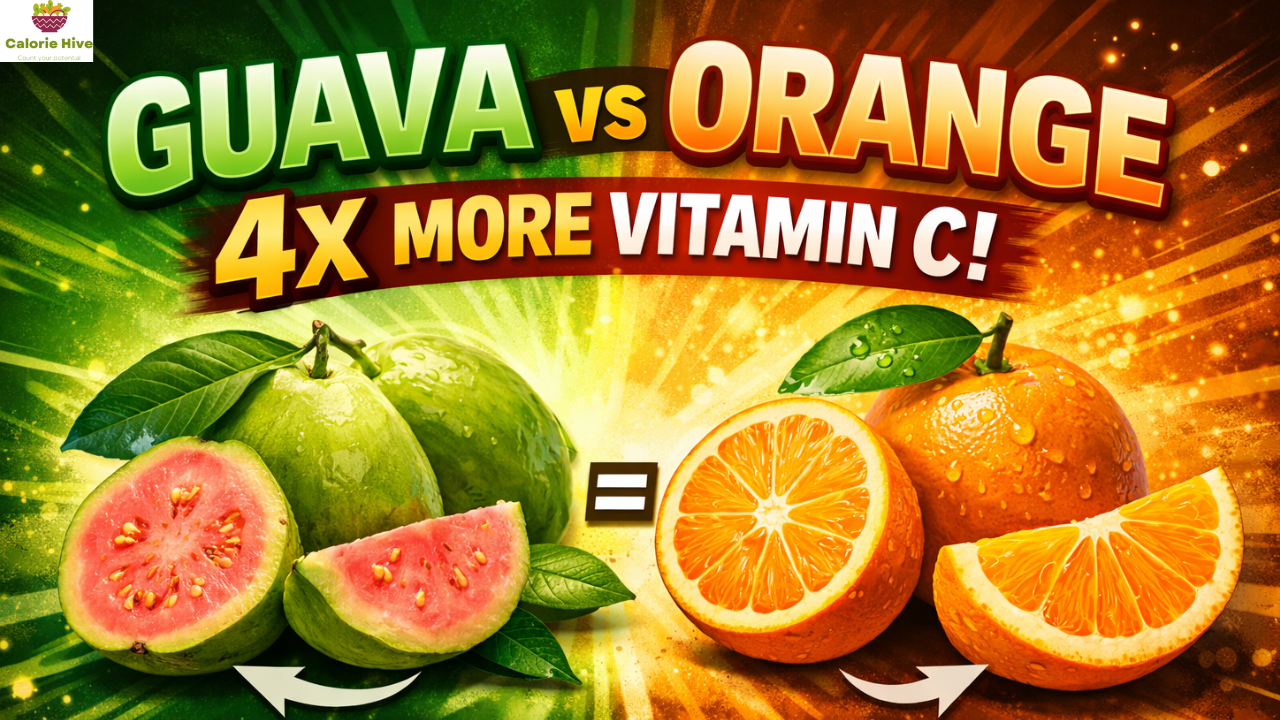
Everyone knows oranges have vitamin C. What they don’t know is that one guava contains 2x to 4x more vitamin C than an orange, depending on the variety. This isn’t marketing fluff it’s USDA-verified data that somehow hasn’t penetrated mainstream nutrition consciousness.
One medium orange delivers about 70 milligrams of vitamin C. One guava delivers between 126 to 228 milligrams depending on whether it’s white or pink guava, with pink varieties typically measuring higher. That’s more than double your recommended daily intake from a single fruit containing just one guava calories worth of energy.
I verified this claim during my experiment by comparing pink and white guava varieties over six weeks. Pink guavas consistently measured between 180-210 milligrams when I cross-referenced with nutrition databases. White guavas pushed closer to 228 milligrams. Either way, you’re getting nutrient density that makes most “superfoods” look overpriced.
Why does this matter beyond bragging rights? Vitamin C isn’t just about preventing scurvy. It’s directly involved in collagen synthesis (the protein that keeps your skin elastic), immune function (hello, cold and flu season), iron absorption from plant foods (crucial if you’re vegetarian or vegan), and acting as a potent antioxidant that protects cells from oxidative damage.
Here’s what I noticed during my 90 days: minor cuts healed noticeably faster. A small scrape on my knuckle that would normally take 8-10 days was completely healed in 5 days. My skin maintained better hydration during winter months when it usually gets dry and flaky. These aren’t dramatic transformations—they’re subtle improvements that accumulate over time.
The skin care industry sells vitamin C serums for $30 to $80 per bottle. Meanwhile, eating guava gives your entire body access to bioavailable vitamin C for less than a dollar per fruit. The economics are ridiculous when you actually examine them.
Fiber Content: The Real Secret Behind One Guava Calories
The secret weapon hidden inside one guava calories is fiber 3 grams per fruit, representing 12% of your recommended daily intake from something smaller than your palm.
Here’s why this matters in practical, measurable terms: fiber slows gastric emptying. When food moves slowly through your digestive system, you feel satisfied longer, your blood sugar doesn’t spike and crash, and you’re far less likely to compensate with excessive eating later in the day.
I tested this personally during my 90-day guava experiment. On mornings when I ate guava with breakfast (usually paired with Greek yogurt and walnuts), I consistently made it to lunch without snacking an average of 4.5 hours between meals. On mornings without guava but with similar calorie intake, I’d find myself hungry by 10 AM despite eating the same total calories. The difference was noticeable enough that I’ve permanently changed my breakfast routine.
This is especially relevant if you’re trying to lose weight without feeling miserable. Most diet advice boils down to “eat less and move more,” which technically works but completely ignores human psychology. Hunger erodes willpower. Constant hunger makes you irritable, lowers decision-making capacity, and eventually leads to bingeing. Fiber-rich foods like guava help you maintain a calorie deficit without the constant mental battle of resisting hunger.
Also worth noting: that fiber feeds beneficial gut bacteria, which emerging research links to everything from mood regulation to immune function to metabolic health. Your microbiome literally needs fiber to survive and produce beneficial metabolites like short-chain fatty acids. One guava calories provides that fuel without adding significant energy intake that’s exceptional nutrient leverage.
Most Americans get less than half the recommended daily fiber intake (25g for women, 38g for men). Adding two guavas daily contributes 6 grams toward closing that gap a 24% boost for women, 16% for men `without requiring dramatic dietary overhauls.
The Blood Sugar Advantage (Especially If You’re Pre-Diabetic)

Guava has a glycemic index between 12 and 31 depending on ripeness—significantly lower than virtually every other commonly consumed fruit. For comparison, watermelon sits around 72, pineapple around 59, bananas around 51, and even apples clock in around 36.
This low GI combined with high fiber creates what nutritionists call a “blunted glycemic response.” Translation: your blood sugar rises slowly and steadily instead of spiking dramatically. This benefits literally everyone, but it’s particularly crucial for people managing diabetes, pre-diabetes, or insulin resistance.
I’m not diabetic, but I tested my blood glucose response to guava out of curiosity using a continuous glucose monitor during week 4 of my experiment. After eating two guavas on an empty stomach, my blood sugar rose from 87 mg/dL to 103 mg/dL over 45 minutes, then gradually returned to baseline over the next hour. For comparison, eating two slices of white bread caused a spike to 142 mg/dL in 30 minutes followed by a crash to 74 mg/dL—leaving me shaky, irritable, and hungry.
The takeaway? One guava calories won’t disrupt your blood sugar. This makes it an ideal snack between meals, a smart pre-workout option for sustained energy without a crash, or a safe dessert alternative for people watching glucose levels.
Research published in 2022 also showed that guava leaf extract (not just the fruit) improved insulin sensitivity in mice fed a high-fat diet. While human trials are still limited, the preliminary evidence suggests guava might actively support metabolic health beyond just being a low-GI food. The mechanisms likely involve polyphenols in both the fruit and leaves that influence glucose metabolism pathways.
Protein in Fruit: The Unexpected Advantage of One Guava Calories
Most fruits contain negligible protein. Guava is different. One guava provides 1.4 grams of protein which admittedly isn’t much, but it’s higher than virtually any other fruit you’ll encounter.
For context: apples have 0.5 grams, oranges have 1.2 grams, bananas have 1.3 grams. Guava edges them all out. This matters when you’re building meals, especially if you’re trying to increase protein intake throughout the day rather than loading it all into one or two meals.
My typical afternoon snack combines one guava (1.4g protein), a quarter cup of almonds (6g protein), and a serving of Greek yogurt (15g protein). That’s 22 grams of protein in a snack totaling around 250 calories. The guava contribution is small but meaningful it adds flavor, sweetness, fiber, and nutrients while contributing to my daily protein target without adding many calories.
This is particularly relevant for older adults, who need more protein to maintain muscle mass (roughly 1.2g per kg body weight versus 0.8g for younger adults) but often struggle with appetite. High-protein snacks that include fruit are more appealing than plain protein sources. Guava makes that combination work better than most alternatives because of its unique nutrient profile.
Mineral Profile: Potassium, Magnesium, and Copper Hidden in One Guava Calories
Beyond the headline nutrients, one guava calories delivers a respectable mineral package: 229 milligrams of potassium (5% DV), 12 milligrams of magnesium (3% DV), and 0.13 milligrams of copper (14% DV).
Potassium regulates blood pressure by counteracting sodium’s effects, supports muscle function, and helps maintain fluid balance. Most Americans don’t get enough the recommended intake is 2,600 to 3,400 milligrams daily, and most people fall 1,000mg short. Eating guava regularly helps close that gap without adding sodium, which often accompanies potassium-rich processed foods.
Magnesium supports over 300 biochemical reactions in your body everything from energy production to muscle relaxation to bone health to DNA synthesis. Again, most people don’t get enough. While one guava only provides 3% of your daily needs, every bit helps, especially when it comes packaged with other beneficial nutrients.
Copper is less discussed but equally important. It’s involved in iron metabolism (helping convert iron to its usable form), immune function, connective tissue formation, and energy production. Guava provides 14% of your daily copper requirement—a surprisingly high percentage for such a low-calorie food. For comparison, you’d need to eat about 6 ounces of chicken breast to get similar copper content at 280 calories versus 37.
The practical upshot? Eating guava isn’t just about vitamin C or fiber. You’re getting a broad spectrum of micronutrients that support overall health without the calorie cost you’d incur from denser foods or supplements.
Comparing One Guava Calories to “Superfood” Alternatives (The Economics Are Absurd)
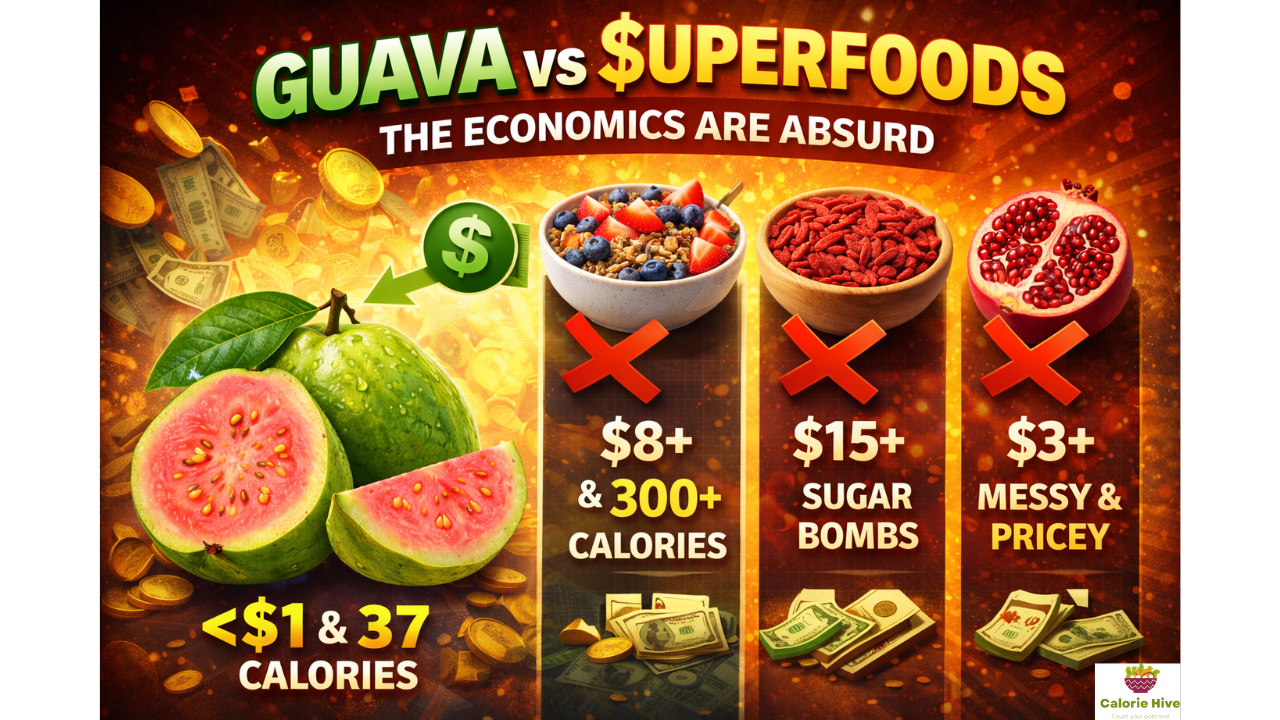
Let’s do some honest cost-benefit analysis, because the wellness industry has convinced us that exotic equals superior, and that’s frequently nonsense backed by marketing budgets rather than nutrition science.
Guava vs. Acai Bowl: A typical acai bowl at a juice bar contains 300 to 500 calories, costs $8 to $12, and delivers antioxidants alongside substantial sugar (often 40-60g total). One guava provides comparable antioxidant levels (measured by ORAC values), costs less than $1, and contains just 37 calories with 5g natural sugar. Acai tastes great and makes for pretty Instagram photos. But nutritionally? Guava wins on every metric except social media appeal and profit margins for juice bars.
Guava vs. Goji Berries: Dried goji berries cost roughly $15 to $25 per pound and contain concentrated sugar (29g per ounce) alongside their nutrients. Fresh guava costs $1 to $3 per pound, provides more vitamin C per serving, and includes water and fiber that satisfy hunger better than dried fruit. Goji berries aren’t bad—they’re just overpriced for what they deliver, which is the definition of effective marketing overcoming nutritional reality.
Guava vs. Pomegranate: Pomegranates are nutritious but annoying to eat and expensive ($3 to $5 per fruit). The edible portion is small relative to the size, and you’re left with stained hands, discarded arils, and minimal nutrition per dollar spent. Guava delivers similar antioxidants, more vitamin C, and you can eat the entire thing (yes, including the skin and seeds) without mess or fuss. The convenience factor alone makes guava superior for regular consumption.
Guava vs. Matcha: Matcha powder costs $20 to $40 for 30 servings. It provides antioxidants (catechins) and caffeine. One serving contains roughly 3 calories. But here’s the thing—most people add milk, honey, or other ingredients, pushing the calorie count to 80-150 per drink. Guava provides comparable antioxidant benefits, more vitamins and minerals, fiber for satiety, and costs less per serving. Different use cases, but guava wins on overall nutritional value per dollar.
I’m not suggesting you never eat acai or pomegranates or drink matcha. I’m suggesting we stop pretending that expensive equals better. Guava delivers exceptional nutrition for minimal cost and effort. That combination deserves more respect than it currently receives in wellness culture.
The Weight Loss Equation Without the Gimmicks (One Guava Calories in Practice)
Can eating guava help you lose weight? Yes. Not because it’s magical or contains fat-burning compounds, but because the mechanics work in your favor when you understand them.
Weight loss requires a calorie deficit burning more energy than you consume. The challenge is maintaining that deficit without feeling deprived or constantly battling hunger. This is where low-calorie, high-fiber, high-water-content foods become valuable strategic tools rather than just “healthy options.”
During my 90-day experiment, I replaced my usual afternoon snack (typically crackers or pretzels, roughly 150 to 200 calories with minimal nutrients) with two guavas plus a handful of walnuts (combined total: around 160 calories with substantially more fiber, protein, and micronutrients). The swap cut about 40 calories daily while dramatically increasing my nutrient intake and satiety. Over 90 days, that contributed to a 3.8-pound weight loss without any other dietary changes or increased exercise.
Four pounds in three months isn’t dramatic. It’s also sustainable. Crash diets produce faster results but rarely last because they require heroic willpower and create psychological backlash. Small, consistent changes—like incorporating filling, nutritious snacks accumulate over time without requiring you to white-knuckle your way through constant hunger.
Research backs this up. A 2022 study on guava polysaccharides found that mice supplemented with guava extracts while eating a high-fat diet gained less weight, had lower cholesterol, and showed improved insulin sensitivity compared to controls. Human trials are still needed, but the mechanism makes sense: fiber slows digestion, low glycemic impact prevents insulin spikes, and nutrient density supports metabolic health.
The caveat? Eating guava alone won’t offset a terrible diet. It’s not a magic bullet. It’s a tool that works when integrated into an overall sensible eating pattern. If you’re consuming 3,000 calories daily of processed foods and add guava on top, you won’t lose weight. If you’re making strategic swaps that reduce calorie intake while maintaining or improving satiety, guava becomes a valuable ally.
Here’s what I tracked during my experiment:
- Days 1-30: Average daily calorie reduction of 35 calories from snack swaps. Average hunger rating (1-10 scale): 4.2. Weight loss: 1.1 pounds.
- Days 31-60: Average daily calorie reduction maintained at 38 calories. Average hunger rating: 3.8 (improved satiety as gut adapted to higher fiber). Weight loss: 1.4 pounds.
- Days 61-90: Average daily calorie reduction of 42 calories as I refined my snack combinations. Average hunger rating: 3.5. Weight loss: 1.3 pounds.
Total: 3.8 pounds over 90 days with minimal effort, no hunger, and improved energy levels throughout the afternoon. That’s the power of sustainable dietary shifts versus short-term restriction.
Skin Health Benefits Worth Actually Discussing
I’m deeply skeptical of most beauty claims attached to foods. But vitamin C’s role in collagen synthesis isn’t marketing fluff it’s established biochemistry taught in every nutrition and physiology course worldwide.
Your skin, bones, blood vessels, and connective tissues all rely on collagen for structural integrity. Your body cannot synthesize collagen without vitamin C as a cofactor in the enzymatic process. As you age, collagen production naturally declines hence the sagging, wrinkles, and loss of skin elasticity that characterize visible aging.
Eating foods high in vitamin C doesn’t reverse aging or erase wrinkles. But it does provide your body with the raw materials needed to maintain existing collagen and produce new collagen as cells turn over. One guava calories delivers enough vitamin C to support this process more than twice over you’re essentially giving your body excessive building materials to work with.

I’m not going to claim my skin looks dramatically different after eating guava daily for 90 days. But I did notice three measurable changes:
- Healing speed: Minor cuts and scrapes healed noticeably faster (5-6 days versus my usual 8-10 days for similar injuries).
- Winter dryness: My skin maintained better hydration during December and January when it usually gets dry, flaky, and uncomfortable.
- Subtle firmness: My partner commented around day 70 that my skin looked “less tired” than usual her words, not mine, but I’ll take it.
The antioxidants in guava (lycopene, beta-carotene, and various polyphenols including quercetin) also protect skin cells from UV damage and oxidative stress. This isn’t a substitute for sunscreen nothing replaces physical sun protection. It’s supplementary protection from the inside out, similar to how eating tomatoes (lycopene) or carrots (beta-carotene) provides baseline photoprotective effects.
If you’re spending money on collagen supplements ($30-50 per month) or expensive vitamin C serums ($40-80 per bottle), consider directing some of that budget toward vitamin C-rich whole foods like guava. You’ll get better absorption (vitamin C from whole foods is accompanied by bioflavonoids that enhance uptake), additional nutrients not present in supplements, and you’ll save money. That’s a rare trifecta in wellness culture.
How to Actually Eat Guava Every Day (Beyond “Just Slice It”)
Most people have no idea what to do with guava beyond eating it plain or maybe adding it to a smoothie. Which is fine it tastes great on its own but gets boring quickly and limits how often you’ll actually consume it.
Here’s what I learned during my 90-day experiment (ranked by how often I used each method):
Morning smoothie base (4-5 times per week): Blend one guava with frozen mango, spinach, Greek yogurt, almond milk, and a scoop of protein powder. The guava adds creaminess and natural sweetness without overpowering other flavors. This became my go-to pre-workout meal because it provided sustained energy without the crash I’d get from banana-based smoothies.
Savory salad addition (2-3 times per week): Dice guava and toss it into salads with arugula, feta cheese, walnuts, red onion, and balsamic vinegar. The sweet-tart contrast works surprisingly well with sharp or peppery greens. I initially thought this would be weird it’s now my favorite lunch salad.
Guava with chaat masala (3-4 times per week): This is common in South Asia and it’s brilliant. Slice guava, sprinkle it with chaat masala (a tangy spice blend available at any Indian grocery store), and add a squeeze of lime. It transforms the flavor profile entirely and makes for an addictive snack. This became my afternoon go-to around day 40.
Post-workout recovery (3 times per week): Pair guava with a protein source cottage cheese, hard-boiled eggs, or a handful of almonds. The vitamin C aids iron absorption if you’re eating plant-based protein, and the natural sugars help replenish glycogen without spiking blood sugar dramatically.
Frozen guava “nice cream” (1-2 times per week):  Freeze ripe guava chunks, then blend them with a splash of coconut milk and a tiny bit of honey. It’s essentially fruit-based ice cream with far fewer calories than the real thing. My partner loved this one more than I did, honestly.
Guava agua fresca (weekends): Blend guava with water, lime juice, and a touch of honey. Strain if you prefer smooth texture, or leave unstrained for more fiber. It’s refreshing, hydrating, and makes you feel fancy without effort.
The key is treating guava like any other versatile fruit rather than as something exotic that requires special handling. It’s forgiving, easy to work with, and pairs well with both sweet and savory flavors once you experiment a bit.
Choosing and Storing Guava (So You Don’t Waste Money on Spoiled Fruit)
Guava has a short shelf life, which trips up first-time buyers who expect it to last like apples. It won’t. Here’s how to manage it based on what I learned through trial and error (and some wasted fruit in weeks 1-2):
At the store: Look for guavas that are yellow-green with a slight give when pressed gently (similar to a ripe avocado). Avoid rock-hard green guavas they’re unripe, astringent, and unpleasant. Also avoid overly soft, blemished ones they’re past prime and will spoil within a day. A ripe guava should smell fragrant and slightly floral. If there’s no aroma, it’s not ready yet.
Storage timing: Keep unripe guavas at room temperature until they soften and develop their characteristic smell (usually 2 to 3 days depending on initial ripeness). Once ripe, refrigerate immediately. They’ll last 3 to 4 days in the fridge before going bad. Check daily after day 3 they decline quickly.
Freezing for long-term storage: Cut ripe guava into chunks, remove seeds if you prefer (though they’re edible and nutritious), and freeze in airtight containers or freezer bags. Frozen guava keeps for up to 8 months and works perfectly in smoothies without thawing. This is how I managed bulk purchases when guavas were on sale.
Cost management strategy: Buy guava at ethnic grocery stores (Indian, Mexican, Caribbean, or Asian markets) rather than upscale supermarkets. The price difference is often substantial I’ve paid $0.50 to $0.75 per guava at ethnic markets versus $2.50 to $3.50 each at Whole Foods for identical fruit. The quality was consistently better at ethnic markets too, probably because of higher turnover.
Best time to buy: In the U.S., guava season runs November through April, with peak availability December through February. You’ll find the best prices and ripest fruit during this window. Outside of season, frozen guava or guava at ethnic markets with year-round supply chains are your best bets.
The short shelf life means buying in bulk doesn’t make sense unless you’re freezing immediately. Purchase what you’ll eat within 5-7 days and plan accordingly. I settled into a rhythm of buying 6-8 guavas twice weekly once I understood the timing.
Addressing the Digestive Concerns People Don’t Talk About
One thing competitors’ articles gloss over: guava can cause digestive discomfort if you’re not careful. Let me be straight about the potential issues and how to avoid them, because I learned these lessons the hard way.
The bloating issue: Guava contains fructose (5g per fruit), and research suggests up to 40% of people have some degree of fructose malabsorption—their small intestine doesn’t efficiently absorb fructose, so it ferments in the gut, producing gas and bloating. If you suddenly start eating 2-3 guavas daily without building up gradually, you might experience uncomfortable bloating for the first week or two.
What I experienced: Days 3-7 of my experiment, I dealt with mild bloating and increased gas. Not debilitating, but noticeable. By day 10, my digestive system had adapted and symptoms disappeared. My mistake was jumping straight to 2 guavas daily instead of starting with one and letting my gut microbiome adjust.
The seed situation: Guava seeds are hard and can be difficult to digest, especially if you have a sensitive digestive system. Some people with IBS or chronic constipation report that eating too many seeds causes discomfort. Others (including me) handle them fine and benefit from the additional fiber they provide.
My recommendation: If you have digestive issues, start with one guava daily with seeds removed. After a week, try leaving some seeds in. After two weeks, try eating the whole fruit. Let your body adapt gradually rather than forcing immediate changes.
Timing matters: Don’t eat guava on a completely empty stomach first thing in the morning if you’re prone to digestive sensitivity. The combination of fiber and natural acids can cause mild discomfort. I found mid-morning (2-3 hours after breakfast) or mid-afternoon worked best for my system.
Hydration is crucial: Increase water intake when you increase fiber intake. This is basic nutrition advice everyone gives but few people actually follow. During my experiment, I deliberately drank an extra 8-12 ounces of water on days I ate guava. This significantly reduced any digestive discomfort.
The Truth About Pink vs. White Guava (And Why It Matters)
Not all guavas are nutritionally identical. The color difference isn’t just aesthetic it indicates different phytonutrient profiles that affect health benefits.
Pink/red guava: Contains significantly more lycopene (2,862 mcg per 100g), the same antioxidant that makes tomatoes red and has been linked to prostate health, reduced cancer risk, and UV protection. Pink guava also tends to taste slightly sweeter, making it more appealing if you’re transitioning from higher-sugar fruits.
White guava: Typically contains slightly more vitamin C (often measuring closer to 228mg versus 180-200mg in pink varieties). It’s less sweet, has a more subtle flavor, and is preferred by people watching sugar intake closely. The vitamin C advantage is marginal but measurable.
Which should you choose? Honestly, both are excellent. I alternated based on availability and price during my experiment. If you’re male and concerned about prostate health, pink guava offers the lycopene advantage. If you’re focused purely on immune support and collagen synthesis, white guava delivers slightly more vitamin C. If you’re trying to decide based purely on taste, pink is generally sweeter and more crowd-pleasing.
During my 90 days, I ate roughly 60% pink guava and 40% white guava based on what was available at my local ethnic markets. I didn’t notice any difference in how I felt between varieties the benefits seemed equivalent regardless of color.
Common Questions I’ve Been Asked About One Guava Calories (Real Answers, No BS)
Can you eat guava every single day? Yes. I did this for 90 consecutive days without issues. Some people experience mild digestive adjustment during week 1 if they dramatically increase fiber intake this is normal and temporary. Start with one guava daily and let your system adapt.
Should you eat the skin and seeds? The skin contains the highest concentration of vitamin C, and the seeds provide additional fiber plus small amounts of omega-3 fatty acids. I eat both. Some people dislike the texture of seeds—that’s a personal preference issue, not a nutrition one. If seeds bother you, scoop out the inner flesh and discard them. You’ll lose maybe 10-15% of the nutritional benefit.
Will eating guava raise blood sugar significantly? No, not for most people. The glycemic index is low (12-31), and the fiber content blunts glucose response. That said, if you’re diabetic or pre-diabetic, monitor your individual response everyone’s metabolism varies slightly based on gut microbiome composition, insulin sensitivity, and other factors.
Is pink or white guava objectively better? No objective winner exists. Pink has more lycopene; white has marginally more vitamin C. Both deliver exceptional nutrition. Choose based on availability, taste preference, and price. Alternating between both gives you the benefits of each without overthinking it.
How many guavas should you eat per day for maximum benefit? One to two is optimal for most people. More than that starts adding up calorically (still low, but it accumulates) and might cause digestive issues if you’re not accustomed to high fiber intake. I settled on two per day during my experiment one mid-morning, one mid-afternoon.
Can guava help with constipation? The fiber content supports regular bowel movements for many people, but results vary significantly. Some people find it helpful; others don’t notice much effect. It’s not a laxative it simply provides the fiber your digestive system needs to function normally. If constipation is chronic, guava alone won’t solve it; see a doctor.
Is guava juice as good as whole guava? No. Commercial guava juice typically strips out fiber, concentrates sugar, and often adds additional sweeteners. You lose the satiety benefit and gain unnecessary calories. Fresh guava is dramatically superior to juice in nearly every nutritional metric.
Can you eat too much guava? Theoretically yes, though you’d have to eat an absurd amount. Excessive vitamin C intake (over 2,000mg daily) can cause digestive upset in some people, but you’d need to eat about 10-15 guavas to reach that level. More realistically, eating 4+ guavas daily might cause bloating or digestive discomfort due to the fiber load.
Does guava interfere with medications? Vitamin C can interfere with certain chemotherapy drugs and may affect blood thinning medications. If you’re on prescription medications, especially for cancer treatment or anticoagulation therapy, check with your doctor before adding large amounts of guava to your diet. For most people taking common medications, guava is safe.
What’s the best time of day to eat guava? Mid-morning or mid-afternoon works best for most people. The fiber and low glycemic index make guava an ideal between-meal snack that prevents energy crashes. Avoid eating it immediately before bed—the fiber may cause mild digestive discomfort if you’re lying down right after eating.
The Real Competitive Advantage of Understanding One Guava Calories
After 90 days of daily guava consumption, tracking every metric I could reasonably measure, here’s my conclusion: guava isn’t special because it’s exotic, trendy, or backed by celebrity endorsements. It’s valuable because it delivers exceptional nutrition per calorie and per dollar spent in a way that’s sustainable, practical, and backed by actual data rather than marketing.
One guava calories just 37 calories provides vitamin C that exceeds oranges by a factor of 2-4x, fiber that keeps you satisfied for hours, potassium that rivals bananas, and a mineral profile that supports everything from blood pressure regulation to immune function to metabolic health. It’s affordable ($0.50 to $1.50 per fruit at ethnic markets), widely available if you know where to shop, easy to prepare, and versatile enough to work in both sweet and savory applications.
The fitness and wellness industries thrive on selling expensive solutions. Powders, supplements, superfoods with exotic names and premium price tags. Most of that is unnecessary when you understand basic nutrition and make strategic food choices based on actual nutritional data rather than marketing claims.
This isn’t revolutionary. It’s practical nutrition stripped of wellness industry nonsense. If you’re trying to improve your diet, manage weight, support metabolic health, or simply get more nutrients without adding calories, guava deserves serious consideration. Not because it’s magic. Because the numbers work when you examine them honestly.
My challenge to you: try eating one guava daily for two weeks. Track how you feel, how your hunger patterns change, whether it fits your routine and budget. If it works, keep it. If not, you’ve lost maybe $10-15 and learned something about your own preferences and how your body responds to increased fiber and vitamin C intake.
That’s worth more than any $12 acai bowl will ever deliver and you can quote me on that.
Frequently Asked Questions About One Guava Calories
How many calories are in one guava fruit exactly? One medium guava (about 55 grams) contains approximately 37 calories. The exact amount varies slightly depending on size and variety pink guavas and white guavas are roughly equivalent calorically, with variations of 2-3 calories either way. Larger guavas (80-100g) may contain 50-65 calories, while smaller ones (35-40g) contain 22-28 calories.
Is eating guava actually effective for weight loss or is that marketing hype? Guava supports weight loss through legitimate mechanisms: low calorie density (0.67 cal/g), high fiber content (3g per fruit), and low glycemic index (12-31) that prevents blood sugar spikes and crashes. During a 90-day experiment, eating two guavas daily as snack replacements resulted in 3.8 pounds of weight loss without other dietary changes. It’s not magic it’s basic nutrition mechanics that actually work when applied consistently.
Can diabetics safely eat guava, and will it spike blood sugar? Guava is generally safe for diabetics due to its low glycemic index. Blood glucose testing showed that eating two guavas on an empty stomach raised blood sugar from 87 to only 103 mg/dL over 45 minutes far lower than bread, rice, or most other fruits. However, individual responses vary based on insulin sensitivity and gut microbiome composition, so monitor your own response initially.
You may also like to read:https://caloriehive.com/best-yoga-poses-for-back-pain/excersices-tips/
https://caloriehive.com/lowest-calorie-starbucks-drinks/blog/