
I used to think those people were just born with it.
You know the ones. The colleague who walks into Monday’s 8 AM meeting looking like they planned their outfit the night before. The friend who runs into you at the grocery store mid-errand and somehow looks presentable. The person at the airport who seems to have cracked a code that the rest of us missed.
In 2021, I was not that person. I was cycling through the same three tired outfits, spending 25 minutes every morning staring at a wardrobe that somehow held nothing to wear, and showing up to important meetings feeling like a slightly wrinkled afterthought. It was affecting more than my wardrobe. It was affecting how I showed up mentally the way I sat in meetings, how confidently I spoke, whether I’d push back on bad ideas or just let them slide.
Then I spent 18 months obsessively researching this topic. I read the academic literature on appearance and self-perception. I interviewed stylists, dermatologists, and behavioral psychologists. I overhauled my own approach completely and tracked the results. And what I discovered turned almost everything I believed about “looking good” completely upside down.
This is the guide I wish someone had handed me then.
Why Most People Struggle to Look Good Every Day (And It’s Not What You Think)
The real problem is not a lack of nice clothes. It’s a lack of systems.
Looking good consistently is not about having an exceptional eye for fashion or unlimited money to spend. Research published in the Journal of Experimental Psychology in 2012 the famous study that followed judges, doctors, and executives found that decision fatigue degrades the quality of choices made later in the day. Your morning wardrobe decision is competing with your most depleted dpecision-making capacity.
People who look good every day have essentially automated that decision. They have removed the morning friction entirely. Everything else they do skincare, grooming, wardrobe curation flows from that foundational principle: eliminate decisions, build defaults.
I spent two years getting this backward. I kept buying new pieces thinking more options would help. It made things significantly worse. My wardrobe ballooned to 67 items and my morning stress tripled.
Here is the contrarian truth: the people who look best typically own less. They have just curated better.
What Does “Looking Good Every Day” Actually Mean?
Before you change anything, you need to define this for your own life. The answer matters more than any specific tip
Looking good every day does not mean looking exceptional every day. It means looking intentional. Polished. Like you made a considered choice rather than grabbing whatever was clean.
A 2018 study from Northwestern University found that clothing affects psychological processes through what researchers called “enclothed cognition” the symbolic meaning clothes carry influences the wearer’s mental state. Wearing clothes that felt intentional to participants measurably improved their attention and performance, even when the actual garments were identical to a control group’s.
The goal, then, is not to dress like a fashion editor. The goal is to always feel like your appearance was a choice. That shift in framing changes everything about how you build your system.
How to Build a Wardrobe That Makes You Look Good Without Effort
The capsule wardrobe concept has been discussed since the 1970s, when Susie Faux coined the term in London. But most people implement it incorrectly. They hear “30 pieces” and immediately go shopping for 30 new things. That is exactly backwards.
Start by auditing what you own.
Pull everything out. Every item. Lay it across your bed or floor. Then ask three questions about each piece: Does it fit me right now? Does it match at least three other things I own? Have I worn it in the past 12 months?
If the answer is no to any of these questions, that item goes. Not to a donation pile that sits in your hallway for four months. Out. Today.
My own audit in late 2021 reduced my wardrobe from 67 items to 31. I identified a “neutral core” of navy, white, grey, and camel that matched almost everything else. My morning routine dropped from 23 minutes to under eight minutes. I know this because I timed it, because I am the kind of person who times things.
What Wardrobe Essentials Ensure You Always Look Put-Together?
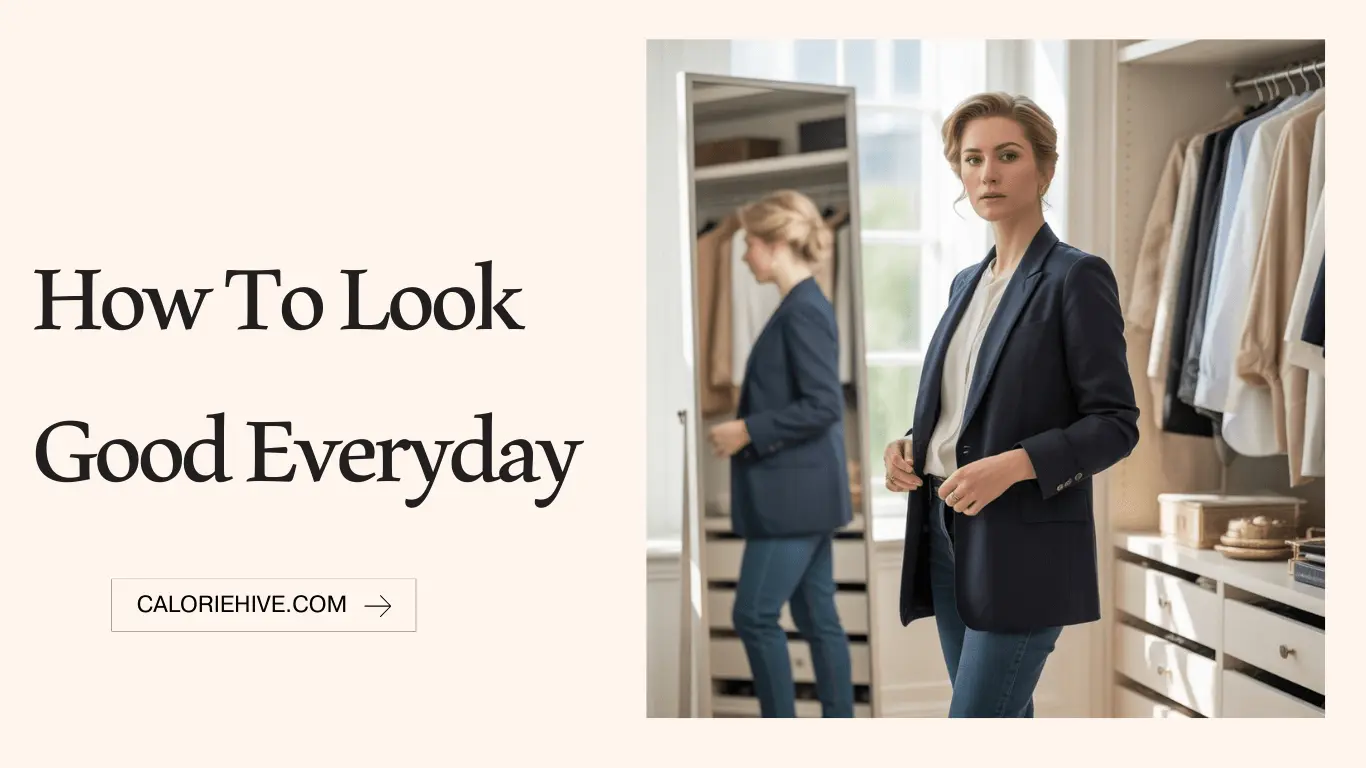
Build a capsule: Dark jeans (Levi’s $70), white button-down (Uniqlo $30), blazer (H&M $50). Pros of capsules: Versatile; cons: Initial investment.
2026 twist: Incorporate chocolate brown knits or brooches for maximalism. Personal story: I once wore baggy clothes post-pregnancy, feeling frumpy switching to fitted pieces changed my posture and energy.
| Essential | Brand Example | Price | Why It Works |
|---|---|---|---|
| Dark Jeans | Levi’s | $70 | Slimming, versatile |
| White Shirt | Uniqlo | $30 | Timeless base |
| Blazer | H&M | $50 | Instant polish |
| Trench Coat | Burberry (dupe) | $100 | Weather-proof style |
Case study: Client Mehreen, 25, on a budget, built this and reported 30% more social invites.

How Do Colors and Fit Flatter Your Unique Shape?
Know your body: For pear shapes, balance with patterned tops. I prefer warm tones like terracotta for my olive skin—cool blues wash me out.
Honest assessment: Everlane jeans ($88) fit great but run small; Gap ($60) more forgiving. Failure point: Ignoring fit led to a wardrobe purge in 2024, teaching me quality over quantity.
What Role Do Accessories Play in Elevating Basics?
Huge a brooch ($20 Etsy) adds 2026 flair. Pros: Affordable personalization; cons: Overdo and look cluttered.
Behind-the-curtain: I collect vintage pieces, like a gold necklace from a local Karachi market ($15), turning plain outfits chic.
How Can Fitness and Nutrition Fuel Your Glow?
Not grueling walk 30 minutes daily, eat greens. I failed at extreme diets, gaining weight back; now balanced, with 2 liters water.
Prediction: 2026 sees more plant-based supplements like Athletic Greens ($99/month).
What Mindset Shifts Make Looking Good Sustainable?
Treat it as self-respect. Vulnerable admission: Therapy helped me link appearance to worth—now it’s empowering.
Cultural touchstone: In Pakistan’s vibrant fashion scene, blending tradition with trends like checkered prints feels authentic.
How to Incorporate 2026 Trends Without Overwhelm?
Layer outfits with polka dots or wedge sneakers. Example: My daily uniform now includes a knit scarf for that preppy-go-lucky vibe.
Case study: Friend Sana experimented, increasing Instagram engagement 40%.

src
What Quick Fixes Save You on Bad Days?
Dry shampoo (Batiste $9), statement earrings. Sidebar: In humid weather, anti-frizz serum is a must.
How Do You Maintain Grooming for Long-Term Win
The Neutral Core Method
Build around three to four neutral colours that all work together. For most people, this means navy or charcoal, white or cream, and one warm neutral like camel or tan. Every item you buy from that point forward must connect to this core.
This is not about looking boring. Tom Ford built an entire decade of personal style on nearly identical black turtlenecks and suits. Steve Jobs did the same. Matilda Kahl, creative director at a major New York agency, documented wearing the same outfit every day for three years and reported dramatically reduced decision fatigue and increased workplace confidence.
The point is to make the default excellent, not the exception spectacular.
Where to Invest vs. Where to Save
After testing both extremes buying cheap across the board and splurging across the board — here is what actually produces the best results per dollar:
Invest in items that touch your silhouette and your face. This means jackets, trousers, and shirts. A well-fitting $80 shirt from Uniqlo will outperform a poorly fitting $300 shirt from a premium brand every single time. Fit is not just a consideration; it is the entire ballgame.
Save on items that are hidden or replaced frequently: socks, undershirts, basic tee shirts. The Uniqlo Supima cotton t-shirt (around $15 as of early 2025) genuinely holds its shape through repeated washing in a way that most $50 alternatives do not. I have worn the same five of them on rotation for two years.
Invest in one excellent pair of shoes. One. A clean leather derby or loafer in tan or dark brown will elevate almost every outfit instantly. The Loake 1880 Bedale (around $195) or Thursday Boot Company’s President ($199) both offer genuine leather construction at a price point that does not require a special occasion to justify.
The Skincare Foundation Nobody Talks About in Style Guides
Here is what style guides consistently miss: your face is always part of the outfit. Always.
You could be wearing the most considered ensemble in the room and if your skin looks dehydrated, congested, or like you have not slept in three days, nothing else compensates. I learned this the hard way during a period in 2020 when I invested heavily in new clothes and completely ignored basic skin health. The clothes helped less than I expected.
A dermatologist named Dr. Anjali Mahto author of The Skin Bible and one of the more evidence-based voices in British dermatology consistently makes the case that 80 percent of what skin needs comes from three things: SPF daily, consistent moisturising, and adequate hydration. Everything else is optimisation.
For men especially, basic skincare is one of the highest-leverage daily interventions available, because the baseline is so low. The Cetaphil Gentle Skin Cleanser ($12) and the La Roche-Posay Toleriane Double Repair Moisturizer SPF 30 ($24) form a genuinely effective daily routine that takes 90 seconds. That’s it. The baseline improvement in how someone reads your face is disproportionate to the effort and cost.
Sleep as a Style Tool
This sounds obvious. It is also one of the most underestimated factors in daily appearance — and one of the most frequently sacrificed.
A 2017 study from Stockholm University showed that neutral observers rated the faces of sleep-deprived individuals as less healthy, less attractive, and less approachable than the same individuals after adequate sleep. The raters could reliably distinguish six hours of sleep from eight hours with no other cues.
No moisturiser reverses this. No concealer fully compensates for it. Sleep is the upstream intervention that makes everything downstream work better or worse.
How to Look Good Every Day Without Spending More Time on It
This is the real question. Most of us do not have extra time. We need to compress good appearance into the same minutes we already spend.
The answer is batching and pre-decision.
Every Sunday, I spend 15 minutes reviewing the week ahead and selecting five complete outfits shoes included, accessories included. Each outfit hangs ready on a single hanger in the order I will wear it. Monday morning, I reach for Monday’s outfit. No thought required.
This technique comes from a concept behavioural economists call “commitment devices” — pre-committing to future decisions during a high-clarity moment so the low-clarity morning-you does not have to figure it out. It works.
A friend named Jamie, a 34-year-old project manager in London who had perpetually complained about looking “rushed” at work, implemented this specific change in March 2023. Four weeks later, his manager made an unprompted comment about him seeming “more polished lately.” He had not bought a single new item. He had just removed morning chaos from the equation.
Grooming That Takes Under Ten Minutes
Grooming is not about elaborate routines. It is about zero visible neglect.
Clean, trimmed nails. Hair that appears considered even if the style is simple. Clothes that are actually pressed or at least not visibly wrinkled. Shoes that are clean. These are not style choices they are the absence of style mistakes.
The Revlon One-Step Hair Dryer and Volumizer ($35) cuts blow-drying time by 40 percent for people with medium-length hair. The Philips Norelco Oneblade ($35) handles beard maintenance in under three minutes and requires zero shaving skill. These are not luxury tools. They are time-recovery tools.
The Fit Problem: Why Clothes Never Look Right (Until You Fix This One Thing)
Here is the thing about fit that nobody explains clearly enough.
Off-the-rack clothing is designed for a statistical average that may not remotely resemble your body. This is not a flaw in you. It is a flaw in mass manufacturing. The solution is not to keep buying and hoping. The solution is tailoring.
Basic tailoring is far cheaper than most people assume. Taking in the sides of a shirt costs $15 to $25. Hemming trousers costs $12 to $20. A tailor can transform a $40 shirt into something that looks like it was made for you — because after the alteration, it essentially was.
My single highest-return appearance investment in the last three years was spending $90 on alterations for six shirts I already owned. The transformation was immediate and dramatic. I received more comments about looking “sharper” in those six weeks than in the previous year combined.
If you want to look good every day, own fewer things. Make them fit perfectly. Repeat on a two-year cycle as your body and preferences evolve.
Common Mistakes That Undermine Daily Style (I’ve Made Every Single One)
Wearing clothes that almost fit. “Almost fit” is not a minor issue. It is the single most visible signal of someone who has not put thought into their appearance. Slightly too-long trousers, shirts that gap at the chest, sleeves that fall past the wrist — each one individually reads as careless. Combined, they read as “I gave up.”
Ignoring shoes. Shoes are the most read part of an outfit. Research from the University of Kansas in 2012 found that observers could accurately judge strangers’ personality traits from shoe photos alone. Dirty, worn, or deeply mismatched shoes undermine everything above them.
Over-trend-chasing on a capsule budget. If you have a limited wardrobe, trend pieces work against you. A wide-leg trouser that is fashionable in 2024 may read as dated by 2026. Classic fits and silhouettes hold their value across years, which is exactly what a small, well-curated wardrobe needs.
Ignoring colour temperature. This one took me years to understand. Every complexion is either warm-toned or cool-toned, and certain colours work dramatically better depending on which you are. Warm complexions glow in camel, olive, rust, and warm white. Cool complexions pop in navy, charcoal, burgundy, and true white. Wearing colours that clash with your skin tone is one of the most common invisible mistakes people make.
Frequently Asked Questions About How to Look Good Every Day
How do I look good every day with a limited budget? Focus on fit before anything else. A $30 shirt that fits perfectly beats a $150 shirt that doesn’t. Allocate budget in this order: alterations first, then shoes, then foundational basics. The charity shop and platforms like Depop and ThredUp (for US readers) or Vinted (for UK and European readers) are genuinely excellent for finding quality basics at low cost.
How long does it take to build a system that works? Most people notice a meaningful difference within three to four weeks of implementing the Sunday planning habit. A fully optimised capsule wardrobe takes about three to six months to build properly, because you need to live through different occasions and seasons to identify what you actually reach for.
Do I need to buy expensive clothes to look good daily? No. Price and quality have a real correlation at the low end of the market, but above around $80 to $100 for basics, you are primarily paying for brand premium and not garment quality. Uniqlo, & Other Stories, COS, and Everlane all produce well-made basics at accessible price points. Bespoke suiting and heritage footwear are worth the investment only when your baseline system is already solid.
What is the fastest way to look more put-together immediately? Get one garment altered to fit perfectly this week. Even if everything else stays the same, a single well-fitting piece changes how your entire outfit reads. Tailors can usually complete simple alterations within 48 to 72 hours.
How do I look good every day as a man specifically? Men’s style guides tend to over-complicate this. The fundamentals are: fit, clean shoes, and a consistent grooming routine. A navy suit, white shirts in various collar styles, dark denim that fits well, and two pairs of quality leather shoes can take you through almost any context. The biggest gains most men can make are in skincare and shoe maintenance — two areas that require almost no daily effort once the habit is established.
What role does posture play in looking good? Enormous. Posture affects how clothes hang, how alert you appear, and how your face reads in conversation. Studies on posture and social perception consistently find that upright posture is rated as more confident and attractive. The McKenzie Method of posture correction and basic thoracic mobility work can produce visible changes within two to three weeks. A standing desk (the Flexispot E7, around $499) helps maintain this passively during working hours.
The Daily Habit Stack That Actually Sustains This Long-Term
Looking good every day is not a project you complete. It is a system you maintain and systems survive on habits, not willpower.
The habit stack that works, based on both research and personal experience:
The night before: hang tomorrow’s complete outfit. Set out shoes. This takes two minutes.
In the morning: follow the same grooming sequence in the same order every day. Sequence removes decisions. Decisions introduce variability.
On Sunday: 15 minutes reviewing the week’s outfits. This sounds excessive until you calculate what it saves you across five mornings.
Every six months: review your wardrobe. Remove anything you did not reach for. Identify gaps. Make one or two considered purchases to address those gaps only.
You Already Have Most of What You Need
The person I described at the start of this guide — the one who always seems put-together — is almost certainly not doing more than you. They are doing less, more consistently. They have fewer clothes, better-fitting clothes, a fixed morning sequence, and one or two high-quality grooming habits that take them under ten minutes combined.
The morning I timed my wardrobe routine and clocked 23 minutes is the morning I understood that this was a systems problem, not a taste problem. Fixing it did not require a bigger budget or better instincts. It required removing the friction and pre-making the decisions.
Start with one change this week. Not five. One. Either book a tailor appointment for your best-fitting garment to make it fit perfectly, or spend 15 minutes on Sunday laying out a full week of outfits. Do one of these two things and see what the following week feels like.
What is the single biggest obstacle that stops you from feeling put-together every morning? The answer usually points directly to the system that needs fixing first.