
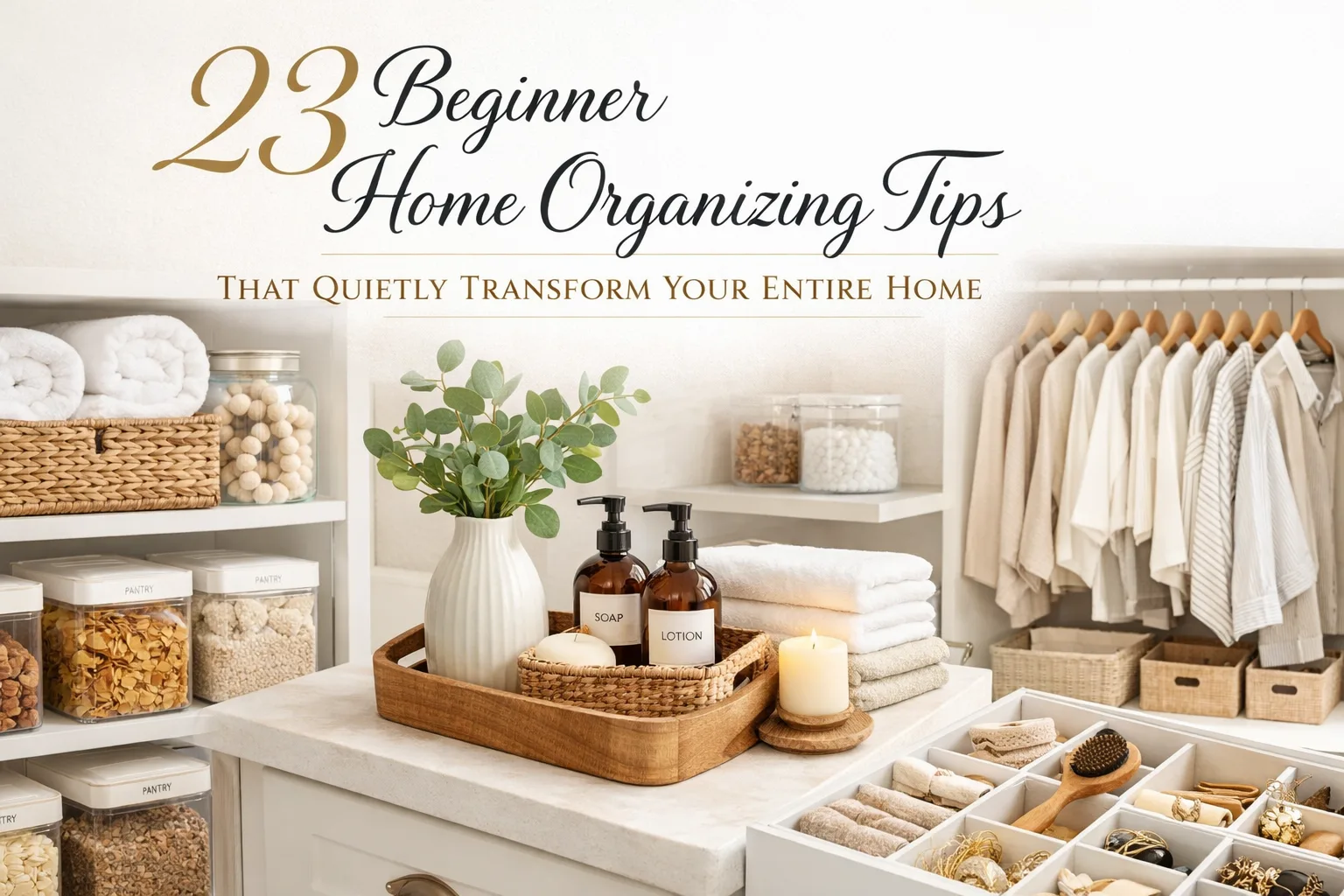
A practical, honest guide for real people in real homes
Here is a truth nobody mentions in those perfect Pinterest photos: the woman smiling next to her color-coded pantry spent three weekends undoing a previous organizing system that simply did not work. I know because I did exactly that. In 2022, I reorganized my kitchen using every trendy container I could find. Six months later, it looked worse than before. My junk drawer had swallowed two bins. My “organized” pantry held expired pasta from 2020.
That experience taught me the most important lesson in home organization: systems fail when they fight your natural behavior. The tips in this guide work because they work with how real people actually live. No Instagram aesthetics required. No expensive overhaul needed. Just 23 beginner organizing tips that create genuine, lasting calm in your home.
I have tested every single one of these in my own 1,100-square-foot apartment and in homes I helped friends and family reorganize over the past four years. Some took five minutes. Some took a full Saturday. All of them stuck.
Why Most Beginner Organizers Quit (And How to Avoid That Trap)
Before the tips, let us address the elephant in the room. Most people who try to organize their homes give up within three weeks. Not because they are lazy. Because they start in the wrong place with the wrong mindset.
The biggest mistake I see is what professional organizer Dana K. White calls “the hot spot” trap. You see your messy living room and you want to fix that first because it is what guests see. But the living room is messy because of deeper systems elsewhere. You clean it up and within two days it looks the same.
The fix is deceptively simple: start where things originate, not where they pile up. For most households, that means starting with your entryway, kitchen counters, or the chair in your bedroom that collects clothes. Fix those origination points and the rest of the house becomes dramatically easier to maintain.
Tips 1 to 5: The Foundation Layer (Start Here This Weekend)
Tip 1: Create a “Landing Zone” at Your Front Door
Every organized home I have ever walked into has one thing in common: a designated drop zone at the entrance. This does not need to be fancy. A $15 hook rail from IKEA, a small basket for mail, and a mat for shoes. That is it. The landing zone gives your brain permission to let things go the moment you walk in, rather than carrying them deeper into the house.
My friend Priya implemented this in her Karachi apartment last year. She bought a three-hook rail, one basket, and one small tray. Within two weeks, her living room stopped collecting keys, bags, and school papers. Cost: under Rs. 2,000. Time investment: 30 minutes. Result: a living room that stayed clean for the first time in three years.
Tip 2: Use the “One In, One Out” Rule from Day One
This is the organizing principle I wish someone had given me at age 25. Every time something new enters your home, something old leaves. New shirt arrives? One old shirt goes to the donation bag. New kitchen gadget? One old one goes. This rule alone prevents the slow creep of clutter that defeats every other system you build.
The first month is the hardest. After that, it becomes automatic. I have not had a clutter problem in my wardrobe since 2021 because of this single habit. It requires zero containers, zero labels, and zero money.
Tip 3: Give Everything a “Home Address”
Clutter is not really a stuff problem. It is a decision problem. Things pile up when you do not know where they belong. The solution is assigning a specific home address to every category of item in your house. Scissors live in the top kitchen drawer. Batteries live in the third shelf of the utility cupboard. When everything has a home, putting things away takes seconds instead of minutes.
A practical way to do this: spend 20 minutes walking through one room and asking, “Where does this actually make sense to live?” Then commit to that address. Tell other household members. The communication part is non-negotiable in shared homes.
Tip 4: The 12-Box Declutter Method
This technique changed how I approach decluttering permanently. Set out four boxes or bags and label them: Keep, Donate, Trash, and Relocate. Work through one small area at a time, maybe a single drawer or one shelf. The Relocate box is the secret weapon. Instead of abandoning your session to put a misplaced item in another room, it goes in Relocate and gets dealt with at the end.
The psychological benefit is huge. You stay focused. You finish sessions. You see progress. Most people using this method report clearing entire rooms in two to three hours that would have taken them a full day using their old approach.
Tip 5: Tackle Flat Surfaces First
Flat surfaces are the number one clutter magnet in every home. Kitchen counters, dining tables, coffee tables, bedroom dressers. Clear them completely, then only return what genuinely earns the right to live there. A good rule: if something sits on a flat surface and you pass it without thinking, it has gone invisible. Invisible items become permanent clutter.
Tips 6 to 10: Room-by-Room Strategies That Actually Hold
Tip 6: The Kitchen Counter Rule of Three
Allow only three things to live permanently on your kitchen counter: your most-used appliance (usually a kettle or coffee maker), a knife block or cutting board, and one decorative or practical item like a fruit bowl. Everything else goes in a cabinet. This single rule transformed my kitchen from a chaotic workspace into a calm one. Cooking became faster because I could actually see my surfaces.
Tip 7: Vertical Space Is Free Real Estate
Most beginners organize horizontally and then run out of space. Vertical space is dramatically underused in the average home. Wall-mounted shelves, over-door organizers, stackable bins, and pegboards all exploit height rather than floor area. In a small bathroom, an over-toilet shelving unit from any home goods store can triple your storage in an afternoon. These units typically cost between Rs. 3,000 and Rs. 8,000 and take under an hour to assemble.
Tip 8: Organize Your Wardrobe by Outfit, Not Category
The traditional approach groups all shirts together, all pants together, and so on. This sounds logical but it forces you to make multiple decisions every morning when you are half awake and usually running late. Try hanging clothes in complete outfit combinations instead. Shirt, pants, and the jacket that goes with them, together in one section. Getting dressed drops from a five-minute decision to a 30-second grab.
I resisted this for years because it looked less tidy on Instagram. Then I tried it. I have not gone back. My morning routine dropped from 25 minutes to under 15. That is nearly two hours a week returned to my life.
Tip 9: The Junk Drawer Is Actually Necessary
Here is a controversial take that professional organizers rarely admit publicly: every functional home needs one junk drawer. Trying to eliminate it entirely creates a system so rigid it collapses within weeks. The goal is not to eliminate the junk drawer but to manage it. Give it a monthly five-minute reset. Use small containers inside it to create loose categories. Batteries in one section. Rubber bands and clips in another. Random screws in a small jar.
Tip 10: Bathroom Organization Starts Under the Sink
The cabinet under your bathroom sink is typically one of the most chaotic spaces in any home. Expired medications, duplicate products, and mystery bottles live there for years. Clear it completely. Throw away anything expired. Group similar items in small bins: hair care products together, skincare together, first aid together. Use a small tension rod across the middle to hang spray bottles and instantly double your usable space.
Tips 11 to 15: The Mindset Shifts That Make Systems Last
Tip 11: Organize for the Person You Are, Not Who You Want to Be
This might be the most important tip in this entire guide. I cannot count how many organizing systems I built for an imaginary future version of myself who was perfectly consistent, never tired, and always had 20 extra minutes. That person does not exist. Build systems for the real you: the person who drops things by the door, who leaves dishes overnight when exhausted, who forgets about the basket of laundry for four days.
If you always drop your keys on the kitchen counter, stop fighting it. Put a key hook on the kitchen wall. Meet yourself where you are. The organizing industry sells aspirational systems. You need functional ones.
Tip 12: Reset Windows Beat Daily Maintenance
Forget trying to maintain a perfectly organized home every single day. That is a full-time job and an unrealistic standard. Instead, schedule two or three weekly reset windows: dedicated 15-minute periods where you walk through your home returning things to their home addresses. Sunday evening works well for many families. Wednesday morning before the week peaks. These small resets prevent the slow accumulation that turns into an overwhelming weekend project.
Tip 13: Sentimental Items Deserve Their Own Rules
Standard decluttering advice often fails with sentimental items because it applies the same logic to a childhood photo as to a broken blender. Sentimental clutter needs a separate, compassionate approach. Create one dedicated box or bin for sentimental items. Give it a size limit. When it fills up, spend time with those items and decide what truly matters most. The box boundary makes decisions feel manageable instead of emotionally overwhelming.
Tip 14: Involve Everyone Who Lives With You
An organizing system you build alone in a shared home will fail. Not immediately, but eventually. The people you live with will not maintain systems they did not help create. Spend one conversation explaining the logic behind your organizing decisions. Ask for input. Give children age-appropriate ownership of their spaces. Partners who understand why the mail goes in one specific spot are far more likely to use it.
Tip 15: Photographs Beat Spreadsheets for Inventory
If you store things in your garage, storage room, or under-bed boxes, photograph the contents of each container before closing it. Label the outside with a number. Keep a simple photo album on your phone sorted by number. Finding that specific extension cord or seasonal decoration drops from a 30-minute hunt to a 30-second search. Low-tech, free, and remarkably effective.
Tips 16 to 20: Tools and Products Worth Buying (And What to Skip)
Tip 16: The Products Actually Worth Spending On
After years of buying and testing organizing products, here is my honest shortlist. Clear stackable bins from brands like Sterilite or basic local home goods stores are genuinely worth it because you see contents at a glance. A label maker, even a basic one like the Brother P-Touch, pays for itself in time saved. Over-door organizers for pantries and bathrooms deliver outsized value in small spaces. Drawer dividers for kitchen utensils and bathroom supplies are inexpensive and transform chaotic drawers overnight.
Tip 17: Stop Buying Containers Before You Declutter
This is the number one money-wasting mistake in home organization. People buy bins, baskets, and boxes before they know what they actually have and how much space they genuinely need. The result is a garage full of organizing products that do not fit the spaces they were bought for. Always declutter first. Then measure. Then buy containers. Always in that order.
Tip 18: Free Organizing Tools You Already Own
Shoeboxes lined with wrapping paper become beautiful drawer organizers. Old mason jars store craft supplies, stationery, and bathroom items. Magazine holders from any dollar store organize pan lids vertically in cabinets. Tension rods divide deep drawers or create spray bottle storage under sinks. Egg cartons organize small items in junk drawers. You likely have most of what you need already.
Tip 19: Digital Organization Supports Physical Organization
An underappreciated source of home chaos is the physical accumulation of digital life: printed emails, instruction manuals, warranties, paper bills, and school notices. Going paperless on bills and statements alone removes a constant stream of paper from most homes. Scan important documents with a free app like Microsoft Lens and store them in a labeled folder on your phone or cloud storage. Shred the originals.
Tip 20: Create a Maintenance Basket
Keep a small basket in your main living area specifically for items that belong elsewhere in your home. Throughout the day, drop misplaced items in it rather than interrupting your flow to return them immediately. Once or twice a day, spend three minutes putting everything in the basket back where it belongs. This one habit alone prevents the gradual drift that makes organized homes fall apart.
Tips 21 to 23: Advanced Beginner Moves That Change Everything
Tip 21: The Paper Flow System
Paper is the most persistent organizing enemy in most homes. Build a simple three-folder paper system near wherever mail arrives. Label the folders: Action Required, To File, and Read Later. Every piece of paper gets sorted into one of these three places the moment it enters the house. Nothing sits in a pile waiting to be dealt with. The Action Required folder gets reviewed every two to three days. The To File folder gets filed weekly. The Read Later folder gets emptied monthly.
My brother-in-law implemented this system in January 2024 after years of losing important bills and documents. By March, he had found two uncashed checks and an insurance document he had spent six months looking for. Sometimes simple systems have dramatic results.
Tip 22: Seasonal Rotation Prevents Permanent Clutter
One of the quietest reasons homes become cluttered is seasonal item creep. Summer clothes stay accessible in winter. Holiday decorations take up kitchen cabinet space in July. Build a seasonal rotation habit: twice a year, swap what is accessible for what is stored. Use vacuum storage bags for bulky items like comforters and winter coats. This practice alone can recover surprising amounts of usable space in wardrobes and storage areas.
Tip 23: Celebrate Small Wins and Build Slowly
The organizing industry profits from making you feel like you need to overhaul everything at once. You do not. One organized drawer is better than zero organized drawers. One clear counter is better than none. Progress compounds. Every system you build successfully makes the next one easier because you understand more about how your household actually flows.
Start with one area this week. Not one room. One area. A single drawer, one shelf, your entryway. Get that right. Then move to the next. This approach creates momentum instead of burnout.
Frequently Asked Questions About Beginner Home Organization
How long does it really take to organize an entire home?
For a typical two-to-three bedroom home, expect four to eight focused weekends if you work room by room. This assumes you are also decluttering as you go, not just rearranging. Rushing it typically produces systems that do not hold. Slower, deliberate work produces lasting results. Many people find that working on one room per month, spread across a full year, creates more sustainable change than a single intensive overhaul.
What is the best room to organize first as a beginner?
Start with the space that costs you the most daily stress. For most people, that is the kitchen or the entryway. These are high-traffic spaces where small improvements have immediate, daily impact. Avoid starting with sentimental spaces like childhood bedrooms or old photo collections. Those require emotional energy that can derail the entire project before momentum builds.
Is professional organizing worth the cost for beginners?
For most beginners, no. A professional organizer is most valuable for people who have already tried and failed multiple times, who have significant emotional blocks around letting things go, or who are dealing with a very large home or estate situation. For a typical beginner, books like Dana K. White’s “Decluttering at the Speed of Life” and YouTube channels focused on real-life organizing provide more than enough guidance to get started.
How do I organize when I have very little storage space?
Small spaces demand honest decluttering more than clever storage solutions. The most common mistake in small-space organizing is trying to store more than the space can reasonably hold. Ruthlessly reduce first. Then use every vertical inch with wall shelves and over-door organizers. Under-bed storage in flat rolling containers is one of the most underused solutions in small homes and apartments.
What do I do when other family members will not cooperate?
Focus on your own spaces first and make them noticeably better. Change is often more persuasive than conversation. Start with areas that are primarily yours: your wardrobe, your side of the bedroom, your desk. Let the results speak. When family members see genuine improvement in quality of life, cooperation tends to follow naturally. Forcing systems on resistant family members almost always backfires.
The Real Goal: A Home That Works For You
Let me bring this back to where we started. The woman smiling in the perfect Pinterest pantry photo almost certainly has a junk drawer somewhere. She definitely has bad days when dishes pile up and shoes end up exactly where they should not be. The goal of organizing is not a permanently perfect home. It is a home that recovers quickly, that supports your daily life instead of fighting it, and that removes enough friction that you can think clearly and breathe easily inside your own walls.
These 23 beginner organizing tips are not a prescription. They are a starting point. Use the ones that fit your life. Ignore the ones that do not. Adapt everything to the real rhythms of your real household. The best organizing system is always the one you will actually maintain.
Start this weekend with one drawer. Just one. Then tell me in the comments: which tip surprised you most, and which one are you trying first?
Written from four years of personal organizing experiments, three major home moves, and more than a few humbling failures with expensive storage bins.