Your Complete Guide to Making Light, Crispy, and Delicious Rice Paper Rolls at Home
Last summer, I spent four hours making fried spring rolls for a dinner party. The oil splattered, the kitchen smelled for two days, and three of the rolls burst open in the fryer. Two guests could not even eat them because of dietary restrictions. It was a disaster I have not repeated. The very next week I discovered fresh tofu spring rolls wrapped in rice paper, and my entire relationship with this food changed.
Fresh tofu spring rolls require no hot oil, no thermometer, no anxiety about burning yourself. They take about 20 minutes once you have practiced the wrapping technique twice. They stay fresh in the refrigerator for up to 24 hours. And they taste cleaner, lighter, and frankly more interesting than their fried counterparts when you nail the filling combinations.
This guide covers 25 specific filling and flavor combinations, the exact technique for wrapping rice paper rolls without tearing, every common mistake and how to prevent it, the dipping sauces that transform each roll from good to memorable, and answers to every question I have ever been asked about making fresh spring rolls at home. Let’s get into it.
Why Fresh Tofu Spring Rolls Beat Fried Every Time
I know that is a bold claim. Fried spring rolls have a devoted following and I respect that. But fresh rice paper rolls have genuine advantages that fried versions simply cannot offer, and most recipe sites are too cautious to say it plainly.
Fresh spring rolls contain significantly fewer calories. A single fresh roll averages 80 to 120 calories depending on the filling. A fried spring roll of comparable size runs 200 to 300 calories due to oil absorption. Over a meal of three rolls, that difference is substantial without sacrificing satisfaction.
The texture contrast in a fresh roll is also more sophisticated. You have the slight chew of hydrated rice paper, the crunch of raw vegetables, the creaminess of properly pressed tofu, the yielding softness of vermicelli noodles, and the fragrance of fresh herbs all in one bite. Frying homogenizes that. It makes everything the same temperature and texture. Fresh rolls preserve each ingredient’s individual character.
Here is the contrarian point most food bloggers miss: fresh spring rolls are actually harder to make well than fried ones. The technique requires more precision. But that precision is learnable in a single afternoon of practice. Once you have it, you have it permanently.
Choosing and Preparing Your Tofu Correctly
Which Tofu to Buy
The tofu choice matters more than most recipes acknowledge. Extra-firm tofu is the only type suitable for fresh spring rolls. Firm tofu contains too much residual moisture and will turn your rice paper soggy within minutes. Silken tofu is inappropriate for this application entirely.
Brands worth buying consistently include Nasoya Extra Firm, House Foods Premium Extra Firm, and Wildwood Organics SprouTofu. Trader Joe’s organic extra-firm tofu is excellent value at roughly two dollars per 14-ounce block as of early 2025. Avoid store-brand tofu at discount supermarkets, which often has inconsistent water content.
The Pressing Method That Actually Works
Every spring roll that tears or goes soggy within minutes traces back to improperly pressed tofu. Here is the method I use after years of testing.
- Remove the tofu block from its package and drain it completely.
- Wrap it in three layers of clean kitchen towel or paper towels.
- Place it on a flat surface and set a cast iron skillet or heavy pot on top.
- Add additional weight: canned goods, a full kettle, or heavy books.
- Press for a minimum of 30 minutes. One hour produces noticeably better results.
- Unwrap and slice or crumble as needed for your recipe.
The TofuXpress pressing tool (around 25 dollars on Amazon) automates this and produces consistently excellent results if you make tofu regularly. The Tofu Bud press is a cheaper alternative at around 12 dollars, though slightly less durable. Both outperform the plate-and-weight method for convenience if not for quality.
Marinating for Maximum Flavor
Plain pressed tofu is bland. That is not a criticism; it is a feature. Tofu absorbs whatever you put into it with remarkable efficiency after pressing. A basic marinade of two tablespoons of low-sodium tamari, one tablespoon of rice vinegar, one teaspoon of sesame oil, one minced garlic clove, and half a teaspoon of grated fresh ginger transforms a block of tofu in 15 minutes. For deeper flavor, marinate overnight.
You can use the marinated tofu raw in fresh spring rolls or bake it first. Baked marinated tofu at 400 degrees Fahrenheit for 25 minutes develops a slightly chewy exterior that holds up beautifully in rolls and adds a savory depth raw tofu cannot offer. I recommend baking for the majority of these 25 combinations.
The Rice Paper Technique: How to Stop Tearing Your Wrappers
Torn rice paper wrappers are the single most common complaint from home cooks attempting fresh spring rolls. I tore at least a dozen wrappers before I understood what was actually happening. The problem is almost never strength or technique. It is timing.
The Water Temperature Problem
Most recipes tell you to soak rice paper in warm water. That instruction causes more torn wrappers than any other factor. Here is the truth: you want cool to room-temperature water, not warm. Warm water over-softens the wrapper before you even begin assembling. By the time you add your fillings and attempt to roll, the paper has absorbed too much moisture and tears under any tension.
Fill a wide, shallow dish or a large skillet with cool water. Dip the rice paper wrapper for exactly five to eight seconds. It should feel slightly stiff when you remove it, not fully pliable. Lay it on a damp clean kitchen towel (not a dry surface, which causes sticking) and it will continue softening as you add fillings. By the time you finish rolling, it will be perfectly pliable and will seal without tearing.
The Filling Volume Problem
Overfilling causes the majority of tears that bad water temperature does not. A common beginner error is packing the roll as full as possible because more filling seems better. It is not. A good fresh spring roll has a filling bundle about the width of two fingers placed in the lower third of the wrapper. That is genuinely not much. The discipline of restraint here makes an enormous difference.
The Rolling Technique Step by Step
- Place your hydrated wrapper on a damp towel, smooth side down.
- Add vermicelli noodles as a base layer in the lower third of the wrapper.
- Layer tofu, vegetables, and proteins on top of the noodles.
- Add fresh herbs last so they are visible through the wrapper when finished.
- Fold the bottom edge of the wrapper up and over the filling tightly.
- Fold both side edges in, like an envelope.
- Roll firmly and continuously upward until the roll is sealed.
- Place seam side down on a serving plate lined with damp paper towel.
25 Tofu Spring Roll Combinations Worth Making
Classic and Traditional Combinations (1 to 7)
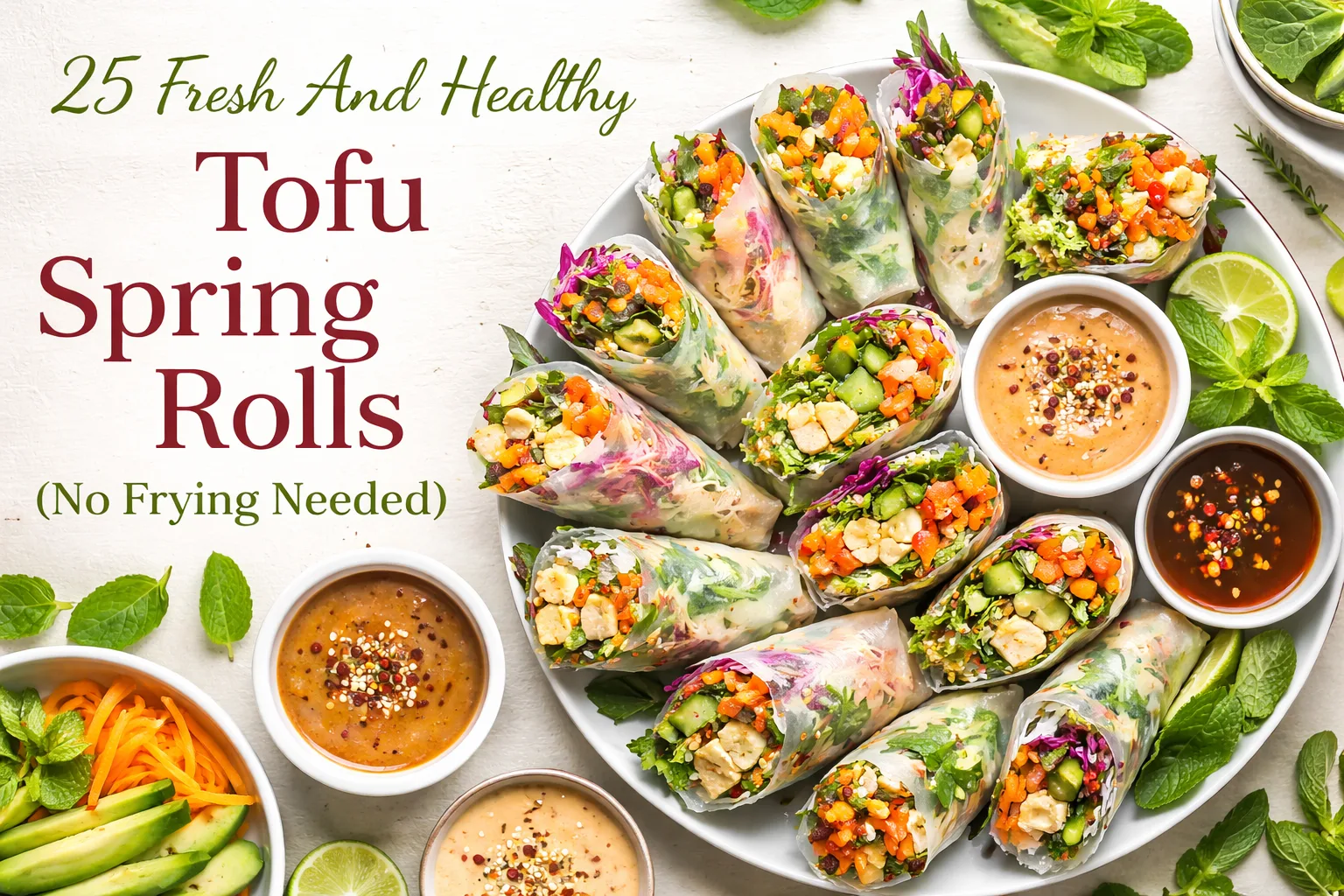
Roll 1: Classic Vietnamese Style. Baked tamari tofu, rice vermicelli, shredded romaine, cucumber strips, carrot matchsticks, fresh mint, Thai basil, and cilantro. Serve with peanut dipping sauce. This is the benchmark. Everything else is a variation on this theme.
Roll 2: Sesame Ginger Tofu. Sesame-crusted baked tofu, purple cabbage, avocado slices, cucumber, edamame, and green onion. The sesame crust adds crunch that makes this roll feel more substantial.
Roll 3: Lemongrass Tofu. Tofu marinated and baked with lemongrass, galangal, and lime. Serve with shredded green papaya, bean sprouts, mint, and Thai chili dipping sauce. This is a more advanced flavor profile that rewards the extra marinating effort.
Roll 4: Mango Tofu Fusion. Crispy baked tofu with ripe mango slices, avocado, red bell pepper, cucumber, and fresh cilantro. The sweet mango against savory tofu is genuinely spectacular. Use a lime-chili dipping sauce to balance the sweetness.
Roll 5: Peanut Butter Tofu. Tofu marinated in natural peanut butter, soy sauce, and garlic. Pair with shredded cabbage, carrot, cucumber, and green onion. This one is a crowd favorite for kids and adults who are new to spring rolls.
Roll 6: Teriyaki Tofu. Use a homemade or store-bought teriyaki glaze (Kikkoman Teriyaki Marinade works well) to bake the tofu. Fill with pickled daikon, carrot, cucumber, and a small amount of sushi rice instead of vermicelli for a Japanese-inspired variation.
Roll 7: Spicy Sriracha Tofu. Tofu marinated in Sriracha, lime juice, and maple syrup, then baked. Pair with cooling elements: avocado, cucumber, romaine, and a yogurt-lime dipping sauce to balance the heat. This combination consistently draws requests for seconds.
Mediterranean and Global Variations (8 to 14)
Roll 8: Greek Tofu. Pressed tofu marinated in lemon, oregano, garlic, and olive oil. Fill with cucumber, cherry tomatoes, Kalamata olives, and fresh mint. Serve with a tahini dipping sauce. This sounds unusual but works beautifully.
Roll 9: Caprese Style. Sliced fresh tofu with basil pesto-marinated extra firm tofu, thinly sliced cherry tomatoes, fresh basil leaves, and a drizzle of aged balsamic inside the roll. Serve with a balsamic reduction for dipping.
Roll 10: Middle Eastern Tofu. Tofu marinated in cumin, coriander, and harissa paste. Fill with roasted red pepper strips, cucumber, fresh parsley, and pomegranate seeds for bursts of sweetness. Hummus works as an unconventional but excellent dipping sauce.
Roll 11: Mexican Street Roll. Tofu seasoned with smoked paprika, cumin, and lime. Fill with black beans, corn, shredded cabbage, avocado, pickled red onion, and fresh cilantro. Serve with a creamy chipotle dipping sauce made from cashews or Greek yogurt.
Roll 12: Korean Bibimbap Roll. Gochujang-marinated baked tofu, spinach wilted with sesame oil, julienned carrot and zucchini, and a drizzle of sesame oil inside the wrapper. Serve with a gochujang-honey dipping sauce. This is a genuinely creative interpretation that works.
Roll 13: Indian Spiced Tofu. Turmeric and garam masala baked tofu with julienned cucumber, shredded red cabbage, fresh cilantro, and mint. The dipping sauce is mango chutney thinned with a little lime juice. This combination surprises everyone who tries it.
Roll 14: Thai Peanut Mango. A bolder version of roll 4 with green mango (unripe), crispy shallots, toasted peanuts crushed and added inside the roll, Thai basil, and a tamarind-based dipping sauce. This is a more advanced roll requiring sourcing slightly less common ingredients.
Protein-Boosted and Nutritionally Dense Variations (15 to 20)
Roll 15: Quinoa Tofu Power Roll. Replace vermicelli entirely with cooked and cooled quinoa as the base. Layer baked tofu, edamame, shredded kale, avocado, and sunflower seeds. This roll has significantly more protein than a standard version and stays filling for hours.
Roll 16: Black Rice Tofu. Use cooked and cooled black (forbidden) rice instead of vermicelli. The deep purple color shows through the rice paper wrapper and creates a visually stunning roll. Pair with avocado, cucumber, and a miso-ginger dipping sauce.
Roll 17: Hemp Seed Tofu. Coat pressed tofu in hemp seeds before baking for a protein boost and nutty flavor. Fill with spinach, shredded beet, carrot, and apple matchsticks. The apple adds unexpected freshness. Serve with a tahini-apple cider vinegar dipping sauce.
Roll 18: Chickpea and Tofu Fusion. Combine crumbled extra-firm tofu with roasted chickpeas seasoned with smoked paprika. Fill with roasted red pepper, arugula, and sun-dried tomatoes. A higher-protein roll with a Mediterranean character.
Roll 19: Natto Tofu for the Adventurous. Combine small amounts of natto (fermented soybeans) with firm tofu for a fermented, probiotic-rich filling. Add avocado and green onion to balance the intense flavor. This is not for everyone, but those who enjoy fermented foods find it addictive.
Roll 20: Walnut Meat Tofu. Pulse walnuts, mushrooms, and tofu in a food processor with tamari and smoked paprika to create a ground-meat texture. Use this as the protein base with classic Vietnamese fillings. This is the roll that converts meat eaters most consistently.
Sweet, Dessert, and Breakfast Variations (21 to 25)
Roll 21: Strawberry Ricotta Tofu. Use silken tofu blended with a small amount of ricotta-style cashew cheese. Fill with sliced strawberries, banana, granola, and a drizzle of honey. Serve with a berry coulis for dipping. This makes an extraordinary brunch centerpiece.
Roll 22: Tropical Tofu Breakfast Roll. Vanilla-infused silken tofu, sliced mango, kiwi, pineapple, and toasted coconut flakes. The rice paper wrapper works with sweet fillings just as well as savory ones. A coconut-lime dipping yogurt completes this.
Roll 23: Peanut Butter Banana Dessert Roll. A simple but beloved combination. Smooth natural peanut butter spread on the rice paper before adding banana slices, granola, and a small amount of dark chocolate shavings. Honey for dipping. This takes five minutes and impresses universally.
Roll 24: Matcha Tofu Sweet Roll. Silken tofu mixed with matcha powder and a small amount of maple syrup. Add sliced strawberries, fresh mint, and crushed pistachios. The green color against the translucent wrapper is visually striking. Serve with a white chocolate dipping sauce for occasions.
Roll 25: Autumn Spice Tofu Roll. Baked tofu with cinnamon and a touch of maple syrup. Fill with thinly sliced apple, candied pecans, shredded cabbage for crunch, and a small amount of cream cheese. A seasonal variation that works well for fall gatherings.
Dipping Sauces That Make or Break the Roll
The roll is the vehicle. The dipping sauce is the destination. I have eaten many technically well-made spring rolls that were forgettable because the sauce was an afterthought. Here are the five essential sauces and exactly how to make them.
| Sauce Name | Key Ingredients | Best Paired With | Prep Time |
| Classic Peanut | Peanut butter, tamari, rice vinegar, garlic, ginger, sesame oil, lime | Rolls 1, 5, 11, 20 | 5 minutes |
| Nuoc Cham | Fish sauce (or coconut aminos), lime, sugar, garlic, chili | Rolls 1, 2, 3, 7 | 3 minutes |
| Spicy Miso Ginger | White miso, rice vinegar, sesame oil, ginger, sriracha, maple | Rolls 6, 16, 19 | 5 minutes |
| Tahini Lemon | Tahini, lemon juice, garlic, water, cumin, salt | Rolls 8, 10, 17, 18 | 5 minutes |
| Sweet Chili Lime | Sweet chili sauce, lime juice, fish sauce, fresh cilantro | Rolls 4, 13, 14 | 2 minutes |
| Coconut Lime Yogurt | Greek yogurt, coconut milk, lime zest, honey, mint | Rolls 21, 22, 25 | 4 minutes |
Common Mistakes and How to Fix Them
The Wrapper Tears on the First Roll
This is almost always a water temperature issue. If your tap water is warm, add a few ice cubes to the soaking dish. Also check that you are not soaking too long. Five to eight seconds maximum. The wrapper should feel stiff-ish when you remove it, not soft. It finishes softening on the damp towel.
The Roll Falls Apart When You Pick It Up
Two possible causes. First, overfilling: reduce your filling volume by at least one third and try again. Second, the wrapper did not seal. Make sure you are rolling tightly and finishing with the seam side down. If the wrapper is too dry to seal, lightly wet your fingertip and run it along the final edge before completing the roll.
The Tofu Is Too Wet and Makes the Roll Soggy
Insufficient pressing. Thirty minutes minimum, one hour is better. After pressing, pat the tofu dry with paper towels before marinating. If you are using a marinade, do not let marinated tofu sit in liquid for more than two hours or it will re-absorb moisture and compromise your roll.
The Rolls Stick Together on the Plate
Line your serving plate with a damp but not wet paper towel or a piece of lettuce. Place rolls so they are not touching each other. For storage, wrap each roll individually in plastic wrap or place parchment paper between them in a sealed container. Do not store in an airtight container without individual wrapping, as condensation causes sticking.
The Vermicelli Clumps Together
After cooking rice vermicelli according to package directions (usually 3 to 4 minutes in boiling water), rinse immediately under cold running water and toss with a small amount of sesame oil to prevent clumping. Do not skip the cold water rinse. The residual starch on warm noodles is what causes clumping.
Storage, Meal Prep, and Make-Ahead Strategies
Fresh spring rolls do not store as well as cooked foods, but they are more forgiving than most people expect when handled correctly.
Same-Day Storage
Wrap each finished roll individually in plastic wrap and refrigerate. They keep well for up to six hours without significant quality loss. After eight hours, the rice paper begins to tighten as it dehydrates slightly and the texture changes. Not unpleasant, but noticeably different from freshly made.
Make-Ahead Component Strategy
The smartest approach for meal prep or parties is to prepare all components separately and assemble as needed. Pressed and marinated tofu keeps in the refrigerator for three to four days. Cooked vermicelli keeps for two days tossed with sesame oil. Washed and cut vegetables keep for three days in sealed containers. Pre-made dipping sauces keep for five to seven days. With all components ready, assembly takes under three minutes per roll.
Freezing
Fresh spring rolls do not freeze successfully. The rice paper becomes brittle and the vegetables lose their texture on thawing. Do not attempt to freeze finished rolls. Baked marinated tofu, however, freezes very well for up to three months and can be thawed overnight in the refrigerator for roll assembly.
Equipment That Genuinely Helps (And What You Can Skip)
You do not need specialty equipment to make excellent fresh spring rolls. A wide shallow bowl or skillet for hydrating wrappers, a sharp knife, and a cutting board cover the basics. That said, a few tools make the process noticeably more efficient.
- TofuXpress Tofu Press (approximately 25 dollars): Worth every cent if you cook tofu weekly. Removes more moisture than the weight method and does it hands-free.
- Mandoline Slicer (OXO Good Grips at approximately 30 dollars or the Benriner Japanese Mandoline at approximately 40 dollars): Produces consistent, thin vegetable slices that make rolls look professional and roll more evenly.
- Rice Paper Spring Roll Wrappers: Three Rings and Star Anise Foods both produce reliable 22-centimeter wrappers. Avoid extra-large wrappers until you have mastered the standard size.
- Bamboo Sushi Mat: Useful for beginners learning to roll tightly. Not necessary once you have the technique.
- Herb Stripper Tool (approximately 8 dollars): If you use large quantities of fresh herbs, this speeds up leaf removal from stems dramatically.
Nutritional Profile of a Standard Tofu Spring Roll
| Nutrient | Per Roll (approx) | Notes |
| Calories | 90 to 120 kcal | Varies with filling density |
| Protein | 5 to 8 grams | Higher with quinoa or chickpea filling |
| Total Fat | 3 to 5 grams | Primarily unsaturated from tofu/avocado |
| Carbohydrates | 14 to 18 grams | Mostly from rice paper and vermicelli |
| Dietary Fiber | 2 to 4 grams | Higher with vegetable-dense fillings |
| Sodium | 150 to 300 mg | Depends heavily on dipping sauce |
| Vitamin C | 15 to 25% DV | From bell pepper, cabbage, fresh herbs |
Frequently Asked Questions
Can I make tofu spring rolls gluten-free?
Yes, and this is one of the great strengths of the fresh rice paper format. Rice paper wrappers are naturally gluten-free. Replace soy sauce in marinades with tamari (certified gluten-free) or coconut aminos. Ensure your vermicelli noodles are labeled rice vermicelli rather than wheat noodles. Most of the 25 combinations in this guide are naturally gluten-free with these simple substitutions.
What is the best tofu for spring rolls?
Extra-firm tofu that has been pressed for at least 30 minutes is the only tofu that works reliably in fresh spring rolls. Firm tofu retains too much moisture. Silken tofu is too fragile for savory applications, though it works in the sweet dessert rolls when mixed with other ingredients. Always press extra-firm tofu regardless of what the package says.
How do I stop rice paper wrappers from sticking to each other?
Do not stack assembled rolls directly on top of each other. Place them seam side down on a plate lined with a damp paper towel, with space between each roll. For storage, wrap each roll individually in plastic wrap. The sticking happens because rice paper continues to release residual starch after assembly, which acts as a glue when rolls touch.
Can I use frozen vegetables in fresh spring rolls?
In most cases, no. Frozen vegetables contain significantly more water than fresh, and that water releases into your filling during the assembly process, soaking your rice paper and making the roll soggy and difficult to handle. The exception is frozen edamame, which can be thawed, patted dry, and used without issue. For everything else, fresh vegetables produce dramatically better results.
Why do restaurant spring rolls taste different from homemade ones?
Restaurants typically use a higher herb-to-everything-else ratio than home cooks attempt. A genuinely great fresh spring roll has a generous quantity of fresh mint, Thai basil, and cilantro. Home cooks tend to add these as a garnish rather than a primary ingredient. Also, restaurant cooks use cooler water for hydrating wrappers and roll with a tightness developed through hundreds of repetitions. Both things are learnable.
How long does it take to make fresh spring rolls?
Initial preparation including pressing tofu, cooking vermicelli, and cutting vegetables takes 30 to 45 minutes. Assembly of each individual roll takes two to three minutes once you are practiced. For a batch of ten rolls, expect one hour total for a first-time cook, and about 50 minutes for someone who has made them a few times. The pressing time is passive, so you can prepare other components while the tofu presses.
Are fresh spring rolls actually healthy?
Fresh tofu spring rolls are genuinely nutritious. They are low in calories, provide meaningful protein from tofu, deliver fiber from vegetables, and contain beneficial fats from avocado and sesame. The primary nutritional variable is the dipping sauce. A peanut sauce made with full-fat peanut butter can add 80 to 150 calories per serving. That is still a light meal overall, but it is worth being aware of if you are tracking calories carefully.
What is the difference between spring rolls and summer rolls?
The terms are often used interchangeably but technically refer to different preparations. Spring rolls traditionally imply a cooked version, often fried, from various Asian culinary traditions. Summer rolls, or Vietnamese goi cuon, specifically refer to the fresh rice paper version. In everyday usage in North America and Europe, fresh tofu spring rolls and fresh tofu summer rolls mean the same thing. The term used in this guide refers to the fresh, no-fry rice paper version throughout.
The One Technique Change That Elevated My Spring Rolls
After making hundreds of these rolls over the past several years, the single technique that improved my results most dramatically was not the pressing, the filling balance, or the rolling method. It was adding a full layer of lettuce as the outermost visible layer.
After hydrating the wrapper and before adding any filling, place one or two leaves of butter lettuce or Boston lettuce across the lower third of the wrapper. Then layer your other fillings on top of the lettuce. When you roll, the lettuce creates a clean visual border through the translucent rice paper. More importantly, it adds structural integrity. The lettuce acts as a sleeve around the filling, preventing the filling from pressing directly against the rice paper and causing moisture transfer.
This is the technique used in many high-end Vietnamese restaurants and almost never mentioned in Western recipes. It looks more professional, holds together more reliably, and extends the lifespan of the assembled roll by at least two hours.
Start With One Roll, Not Twenty-Five
Here is my honest advice after walking you through 25 combinations and a full technique guide: do not try to make all twenty-five variations before you have mastered the classic Vietnamese-style roll. Make Roll 1 ten times. Get the water temperature right. Get the filling volume right. Get the rolling tension right. After ten rolls, the technique becomes muscle memory and you stop thinking about it.
Once you are not thinking about technique, the creativity becomes the fun part. That is when you start experimenting with the mango variations, the Korean bibimbap interpretation, the dessert rolls for brunch. The skill scales exponentially once the foundation is solid.
My prediction for fresh spring rolls: they will continue growing as a home cooking category as more people move toward lighter, vegetable-forward eating. The fresh rice paper format is genuinely versatile enough to handle almost any flavor tradition in the world. I have not found a cuisine whose flavor profile cannot be translated into a fresh spring roll.
Make the classic first. Eat it over a dipping sauce you made yourself. Then tell me honestly that you miss the fried version.
What combination would you try first, and what ingredient are you most nervous about working with? I am genuinely curious which of the 25 variations speaks to you.
Note: Nutritional estimates are approximate and vary based on specific ingredients, brands, and portion sizes used. Individuals with soy allergies or tofu sensitivities should consult their healthcare provider before incorporating tofu-based dishes.