

| In January 2020 I published my first blog post. It took me nine hours to write 800 words. I hit publish at 11 pm, refreshed Google Analytics every ten minutes until midnight, and went to bed with exactly zero visitors. If you are sitting where I sat then, this guide is written directly for you. |
The internet has over 600 million blogs today. The vast majority never reach 100 readers. Not because the writers are bad, but because nobody told them the things that actually move the needle. So I am going to tell you all of them, in order, without holding anything back.
| 600M+
Active blogs online today |
77%
Internet users read blogs regularly |
$5k–$50k
Monthly income, established bloggers |
PART ONE — TIPS 1 THROUGH 7
Laying the Right Foundation
 Most beginner bloggers spend three weeks arguing with themselves about blog names and color palettes. I know because I did it too. The truth is that foundations take a day to build if you know what you are choosing and why you are choosing it
1.Choose a niche you can talk about for five years without burning out
Do not pick a niche purely because it makes money. Pick the overlap between what you genuinely know, what people actively search for, and what advertisers or brands actually pay for. Personal finance, health, food, travel, and technology consistently outperform entertainment niches in long-term income. Your authentic enthusiasm is impossible to fake at scale.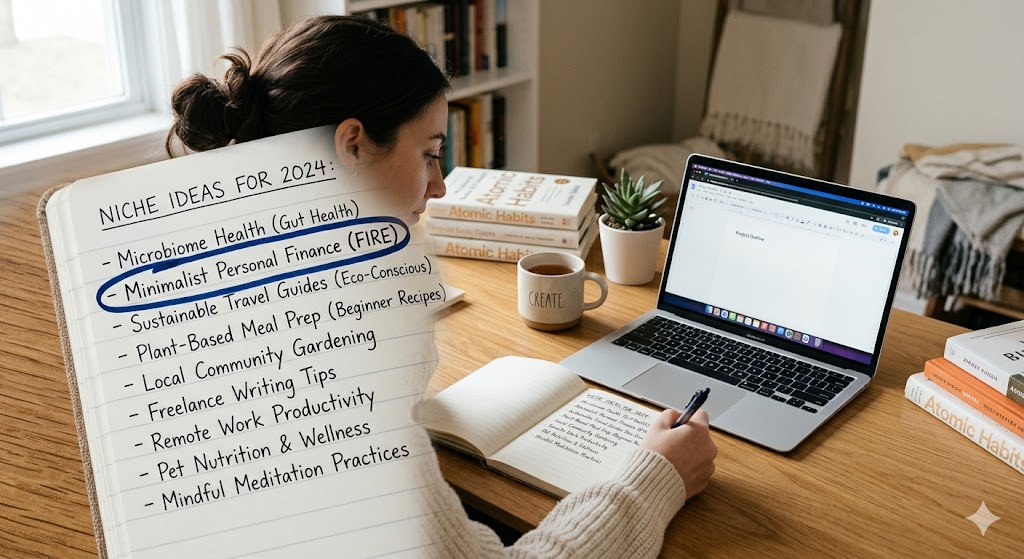
- Start with WordPress.org, not a free blogging platform
I started on Blogger. I migrated to WordPress eighteen months later and lost 40 percent of my SEO rankings in the transition. Free platforms own your content and restrict your monetization. WordPress.org with a host like SiteGround (around $3.99 per month in 2026) gives you full control from day one. Do not skip this step to save twelve dollars a month.
- Validate your niche before you write your first post
Search your main topic in Google. If there are established sites ranking, competing ads, and an active Reddit community, that is confirmation that real humans spend real money in this niche. No competition is not a good sign. It usually means no audience and no money. I validate using Ahrefs or the free version of Semrush, plus a quick scan of Amazon affiliate bestseller lists.
- Install an SEO plugin before your first post goes live
Rank Math and Yoast SEO are the two tools beginners should evaluate. I personally use Rank Math because it gives beginner-friendly green signals without requiring an upgrade to its paid tier for core functionality. Install it, fill in your meta titles and descriptions, connect Google Search Console, and you have a foundation most beginners set up six months too late.
- Set up Google Analytics 4 and Search Console on day one
You cannot improve what you do not measure. GA4 is free, and Search Console is the single most valuable tool for a beginning blogger because it shows you exactly which search queries are already sending impressions to your posts. Six months of historical data in Search Console is gold. Start collecting it immediately.
- Pick a fast, minimal theme and stop tinkering with design
GeneratePress and Kadence are the two themes I recommend to every beginner. Both are lightweight, fast, and extensively documented. Design perfectionism is a trap. A blogger who publishes 40 posts on a plain theme will always beat someone who spent four months customizing a visual builder on their first three posts.
- Create a simple editorial calendar and actually stick to it
Consistency matters more than frequency. One post per week published without fail outperforms three posts published in the first two weeks followed by silence. I use a Notion board for my editorial calendar. Airtable works just as well. What matters is that your publishing schedule becomes a non-negotiable appointment on your calendar.
| REAL CASE STUDY
A personal finance blog I consulted for in late 2023 was getting fewer than 200 monthly visitors after eight months of publishing. They had chosen WordPress.com (not .org), had no SEO plugin, and had never connected Search Console. After migrating, installing Rank Math, and submitting a sitemap, they hit 4,200 monthly visitors within five months without publishing a single new post. The content was always there. The discoverability was not. |
PART TWO — TIPS 8 THROUGH 15
Writing Content That Actually Ranks and Gets Read
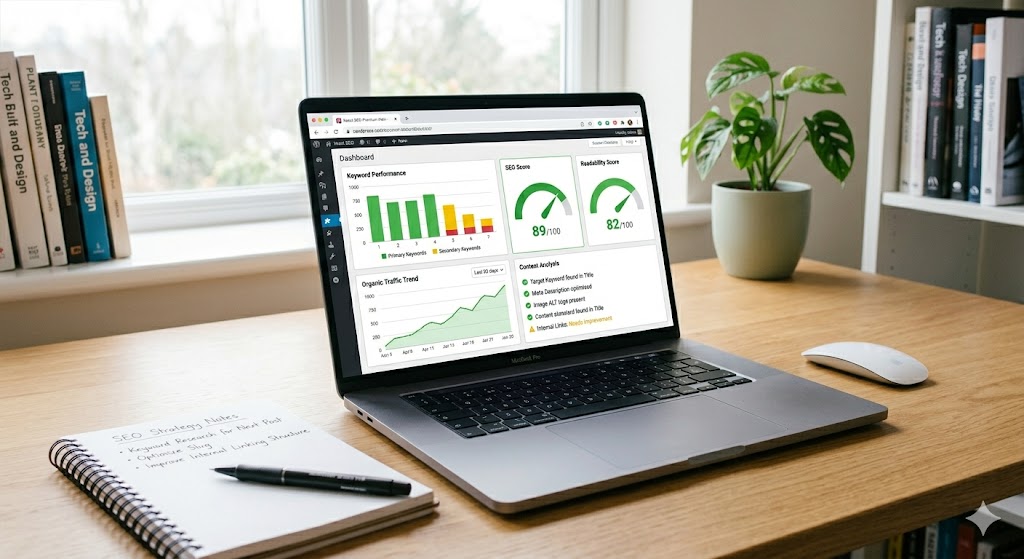 Here is something the blogging gurus rarely say out loud: most blog posts fail not because they are poorly written, but because they are written about the wrong things in the wrong way. Content strategy and writing craft are two separate skills. You need both.
- Do keyword research before writing every single post
Writing without keyword research is like opening a restaurant without checking if anyone lives in the neighborhood. Free tools like Google Keyword Planner, Ubersuggest, and AnswerThePublic will identify what your audience types into search engines. Target keywords with 300 to 3,000 monthly searches and low to medium competition when you are starting out. High-volume keywords are dominated by established sites with years of authority you simply do not have yet.
- Write for one specific person, not a vague audience
When I write, I have a real person in mind. Currently that person is a woman named Priya who is 31, works in marketing, wants to start a lifestyle blog around sustainable living, and is afraid of looking stupid. Writing for Priya makes my content specific. Specific content ranks better, converts better, and builds loyal readers instead of passive visitors.
- Nail the post title before you write the first sentence
CoSchedule’s Headline Analyzer and the free Sharethrough Headline Analyzer both score your headline. A great title does three things: it includes the primary keyword, it signals a clear benefit, and it creates enough curiosity to earn the click. Listicles, how-to posts, and ultimate guide posts still have the highest click-through rates in most niches as of 2026.
- Write an introduction that grabs within two sentences
Open with a problem, a story, a surprising statistic, or a direct challenge to a common belief. Do not open with ‘In today’s fast-paced world.’ Your first 50 words either earn the next 50 or lose the reader to the back button. Treat them accordingly.
- Use subheadings every 300 words to create visual breathing room
Most readers scan before they read. A wall of text looks like homework. Subheadings act as navigation signs that help readers find the specific thing they came for. Google also uses H2 and H3 subheadings to understand the structure and depth of your content, which directly affects how your post is categorized in search results.
- Aim for posts that are at least 1,500 words for competitive topics
Length without substance is worthless. But for competitive search terms, short posts rarely rank because Google interprets depth as an indicator of quality. The top-ranking posts for most informational queries average between 1,500 and 2,500 words. Before setting a target length, look at what is currently ranking for your keyword and match or exceed their depth.
- Link internally to your own posts from every new article
Internal linking does two things. It keeps readers on your site longer, which improves your time-on-page metrics. And it passes link authority between your posts, which helps newer pages rank faster. Set a rule: every post you publish must contain at least three internal links to related content. Within a year this creates a web of connected content that Google rewards consistently.
- Update old posts before writing new ones when growth stalls
This tip alone saved my blog in 2022. After a Google update knocked my traffic down 35 percent, I spent six weeks refreshing my 20 highest-traffic posts with updated statistics, improved headings, new images, and clearer answers to the target query. Traffic recovered by 70 percent in three months without a single new post. Existing content is your most underused asset.
REFERENCE
Essential Blogging Tools, Honestly Assessed
| Tool | What It Does | Best For | Cost (2026) |
|---|---|---|---|
| Rank Math | On-page SEO optimization | All beginners | Free / $6.99/mo |
| Ahrefs | Keyword & competitor research | Growth stage | $29/mo (Starter) |
| ConvertKit | Email list management | Building audience | Free to 1,000 subs |
| Canva Pro | Blog graphics, featured images | Non-designers | $14.99/mo |
| WP Rocket | Site speed optimization | Core Web Vitals | $59/year |
| Grammarly | Writing quality, readability | All bloggers | Free / $12/mo |
PART THREE — TIPS 16 THROUGH 21
Growing Your Audience Beyond Google
 Search engine traffic is the best kind because it is passive and compounding. But relying on it exclusively is like owning a store that can only be found by one road. Build multiple traffic channels and your blog becomes resilient to algorithm changes.
- Build your email list from the very first post
An email subscriber is worth 25 times a social media follower in terms of traffic reliability. Social platforms change their algorithms constantly. Your email list belongs to you. ConvertKit and Mailerlite both offer free plans that are genuinely useful for beginners. Offer a simple lead magnet, a checklist, a template, or a short email course, and convert readers into subscribers before you have enough traffic to care about.
- Pick one social platform and go deep rather than spreading thin
Pinterest is the single best social platform for most lifestyle, food, travel, and home niches because its content has a multi-year shelf life unlike every other platform. For B2B and professional topics, LinkedIn. Choose one and master it before expanding. Trying to maintain five platforms while publishing two blog posts a month is a formula for mediocrity everywhere.
- Guest post on larger blogs in your niche during your first year
A single guest post on a well-established blog in your niche can bring your site 200 to 500 targeted visitors in a week, plus a backlink that strengthens your domain authority. Identify the top 20 sites in your niche, find their guest post guidelines, and pitch ideas that fill obvious gaps in their existing content. Treat guest posting as a discipline, not a one-time experiment.
- Respond to every comment and email for at least the first two years
 Community is what separates a blog from a content factory. The bloggers who built loyal audiences in the 2010s and retained them through every algorithm change did so by treating readers like humans rather than metrics. Reply to comments. Answer emails personally. Thank people for sharing your posts. In the early years it is the highest-ROI activity you can do outside of writing.
- Collaborate with other bloggers at your level, not just above it
Bloggers at the same stage as you are your greatest untapped resource. Roundup posts, link exchanges, podcast cross-promotions, and newsletter swaps between peer-level bloggers all provide organic traffic and authority that costs nothing but relationship effort. I co-hosted a blogging challenge with three other writers at my level in 2021 and added 600 email subscribers in two weeks.
- Repurpose your best posts into other formats every quarter
A blog post can become a YouTube script, a Pinterest carousel, a Twitter thread, a newsletter issue, and a LinkedIn article. You already did the research and writing. Repurposing multiplies the reach of content you have already invested time in. I dedicate one Friday per month to repurposing my three best-performing posts from the previous quarter into at least two other formats each.
| Your blog does not need to be perfect to be profitable. It needs to be useful, consistent, and trusted. Build those three things and the income follows. |
PART FOUR — TIPS 22 THROUGH 25
Monetizing Without Betraying Your Readers
Money is the uncomfortable topic most blogging guides bury in the final chapter. I am putting it here because how you think about monetization shapes every decision you make about content, publishing frequency, and partnerships. The blogs that earn serious income treat reader trust as a currency more valuable than short-term revenue.
- Start with affiliate marketing before display ads for most niches
Google AdSense pays $1 to $3 per 1,000 page views in most niches. At 5,000 monthly visitors you earn roughly $10 to $25 per month. A single affiliate post recommending a $200 product at a 5 percent commission can earn the same amount from one sale. Amazon Associates starts at 1 to 3 percent, but ShareASale and Impact host thousands of affiliate programs paying 5 to 30 percent on higher-value products.
- Disclose affiliate relationships on every relevant post, always
This is not just an FTC legal requirement in the United States. It is a reader trust decision. Blogs that disclose transparently consistently outperform those that hide affiliations in the long run because readers who discover hidden sponsorships do not return. Put your disclosure above the fold in every post that contains affiliate links. Your reputation compounds over years, not posts.
- Create a digital product within your first year if the niche supports it
E-books, templates, courses, and printables can all be created and sold through platforms like Gumroad, Payhip, or your own WordPress store using WooCommerce. A $27 e-book sold to 100 readers a month generates $2,700 in revenue with no recurring cost. Digital products are the highest-margin monetization method available to independent bloggers. Start small, start simple, start sooner than feels comfortable.
- Treat your blog like a media business, not a hobby, from month one
This is the mindset shift that changes everything. A hobby blogger publishes when inspired, monetizes halfheartedly, and measures success by page views. A media business blogger defines revenue targets, tracks key performance indicators weekly, audits content quarterly, and thinks about reader lifetime value. The decision-making framework is what separates the bloggers still writing in year four from the ones who quit in month seven.
FREQUENTLY ASKED
Questions Beginners Ask Most
Q1. How long does it take to make money blogging?
Most bloggers who publish consistently and follow SEO best practices see their first meaningful income between months 12 and 18. A realistic first-year target in a competitive niche is $200 to $500 per month. Bloggers who build an email list and sell digital products often reach income faster than those relying purely on traffic-based models.
Q2. Do I need to show my face to run a successful blog?
No. Many of the most profitable blogs are run by writers who never appear in photos or videos. What builds trust is consistent, accurate, useful content over time. An author bio with a real name and genuine credentials contributes to E-E-A-T signals that Google values, but a face is not required.
Q3. How many posts do I need before my blog starts ranking?
There is no magic number. Quality and authority matter more than quantity. Ten genuinely comprehensive, well-researched posts targeting achievable keywords will outperform 100 thin posts every time. Focus on dominating a narrow set of related keywords before expanding your topical coverage.
Q4. Is blogging dead in 2026?
Written content remains the primary format consumed on the internet. AI has increased the quantity of low-quality content dramatically, which actually makes thoughtful, experience-based, human writing more valuable, not less. Blogs that demonstrate genuine expertise and first-hand knowledge are being rewarded by Google’s Helpful Content criteria more than ever.
Q5. Should I use AI to write my blog posts?
AI tools like Claude and ChatGPT are genuinely useful for research, outlines, editing, and generating variations of headlines. Using them to fully generate and publish posts without substantial human editing is a shortcut that consistently produces content that ranks poorly and fails to convert. Use AI as a writing assistant, not a ghostwriter.
Q6. What is the biggest mistake beginner bloggers make?
Writing posts nobody is searching for. The second biggest mistake is writing about topics that are too competitive for a new domain. The third is quitting between months three and six when traffic is still low despite real effort. All three are avoidable with keyword research, realistic expectations, and a commitment to a 12-month minimum timeline.
| The Honest Truth About Blogging Success
In January 2020 I published a post nobody read. In January 2024 that same blog funded a family trip to Portugal and paid off a credit card. The gap between those two moments was not talent. It was stubbornness, consistency, and eventually understanding the 25 things I have shared with you here. Start with your platform, get your SEO fundamentals right, publish consistently, build your email list earlier than feels necessary, and choose one monetization method to master before adding complexity. Do those five things and you will be in the top 20 percent of bloggers who actually see results. The single question worth sitting with: What niche could you publish one post a week about for the next three years and still be excited to write on year four? That is your blog. Go build it. |