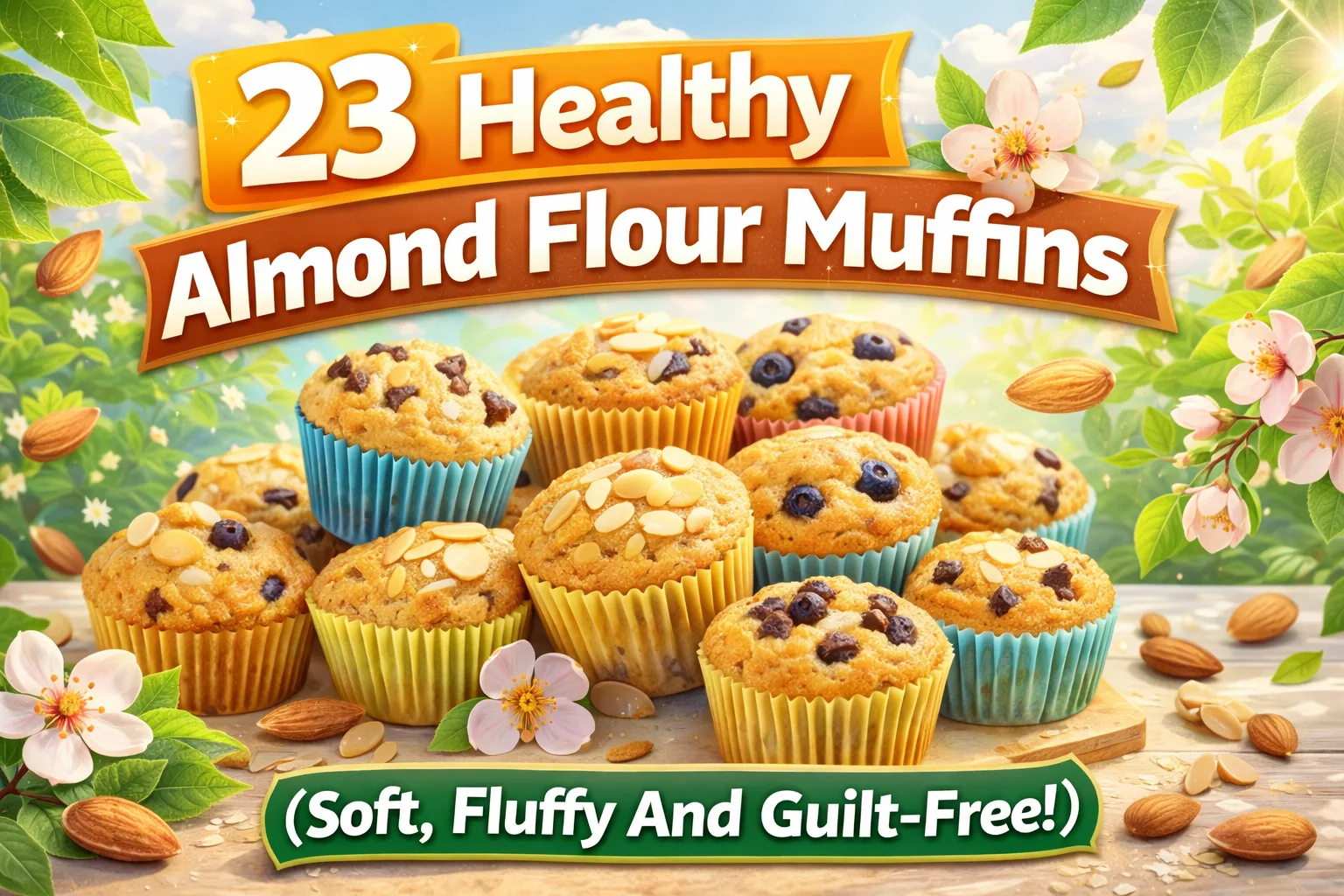
The complete guide to baking muffins that are moist, tender, and actually good for you
My first batch of almond flour muffins came out of the oven looking beautiful. Golden tops, perfectly domed, exactly what I had imagined. Then I bit into one and it crumbled apart in my hand like dry sand. The inside was gummy and dense. The flavor was fine but the texture was somewhere between a hockey puck and a failed science experiment.
That was three years ago. Since then I have tested over 60 variations of almond flour muffins, made every possible mistake, and discovered exactly what separates a muffin that is light, soft, and genuinely satisfying from one that makes you question every decision you made in the kitchen. The 23 recipes in this guide are the ones that survived every test I threw at them.
Here is the truth most baking blogs will not tell you. Almond flour does not behave like wheat flour. Not even close. You cannot substitute it one for one and expect good results. Once you understand why almond flour works the way it does, every recipe becomes more predictable and your results improve dramatically. That understanding starts here.
What I wish someone had told me on day one: almond flour baking is not harder than regular baking. It is just different. Learn the rules of this specific ingredient and everything clicks.
Why Almond Flour Makes Superior Muffins (When You Use It Correctly)
Almond flour is ground blanched almonds. That is the entire ingredient list. No additives, no fillers, no chemical modifications. Because almonds are roughly 50 percent fat, almond flour brings natural moisture and richness to baked goods that wheat flour simply cannot replicate without added butter or oil.
The fat content also explains the texture difference. Almond flour muffins stay moist for longer than their wheat-based counterparts because the fat in the almonds continues to provide moisture even after cooling. A properly made almond flour muffin on day three tastes nearly as good as day one. A wheat flour muffin on day three is typically dry and sad.
From a nutritional standpoint, the comparison is compelling. A standard wheat flour blueberry muffin from a coffee shop chain contains roughly 60-70 grams of carbohydrates. An almond flour blueberry muffin made with the right recipe contains 8-12 grams of net carbohydrates, along with 6-8 grams of protein and 16-18 grams of healthy fat. This macronutrient profile is why almond flour muffins have become the default choice for people following gluten-free, paleo, keto, or low-carb eating patterns.
Superfine vs. Regular Almond Flour: Why the Distinction Matters
Here is where most beginner recipes go wrong. They call for almond flour without specifying which type, and the type matters enormously. Superfine blanched almond flour, like the Anthony’s Goods Premium Blanched Almond Flour or Bob’s Red Mill Super-Fine Almond Flour, produces a texture that is genuinely comparable to wheat flour baked goods. The particles are small enough that they hydrate evenly and create a cohesive crumb.
Almond meal, which is made from almonds with the skin still on and ground more coarsely, produces a denser, grainier result. It works in some recipes but it is not interchangeable with superfine almond flour for most muffin applications. If your muffins have been coming out gritty or dense, this is frequently the cause.
As of early 2025, Anthony’s Goods Almond Flour costs approximately $14-16 per 2-pound bag on Amazon. Bob’s Red Mill Super-Fine runs about $10-12 per pound at most grocery retailers. Both are excellent. I prefer Anthony’s for its consistency across batches.
The Binder Problem and How to Solve It
Wheat flour contains gluten, the protein network that gives baked goods structure and allows them to hold together. Almond flour has no gluten whatsoever. Without a proper binder, almond flour muffins fall apart the moment you try to remove them from the pan. This is the second most common failure point I see in home bakers attempting almond flour recipes.
Eggs are the primary binder in most almond flour muffin recipes, and they do the job well. Most standard recipes call for 2-3 eggs for a 12-muffin batch. Flax eggs work as a vegan substitute but they produce a slightly denser result. One tablespoon of ground flaxseed mixed with 3 tablespoons of water, rested for 5 minutes, equals one egg in binding power. The texture difference is noticeable but not disqualifying if you need the vegan option.
The 23 Almond Flour Muffin Recipes Worth Making
Every recipe in this list has been tested at least three times. I have noted the net carbs per muffin, prep time, and any important variations or substitutions worth knowing about.
Classic and Everyday Muffins (Recipes 1-8)
These are the workhorses. The muffins you make on a Sunday and eat throughout the week. They are forgiving, crowd-pleasing, and reliable enough to make without consulting the recipe after the second or third attempt.
- Classic Blueberry Almond Flour Muffins: The foundation recipe every almond flour baker should master first. Two cups almond flour, three eggs, one-third cup maple syrup or honey, one-quarter cup melted coconut oil, one teaspoon vanilla, one teaspoon baking powder, one cup fresh or frozen blueberries. Bake at 350 degrees for 22-25 minutes. 8 net carbs. The lemon zest variation (add zest of one lemon) elevates these significantly.
- Banana Almond Flour Muffins: Two ripe bananas provide natural sweetness and exceptional moisture. Two cups almond flour, two bananas mashed, two eggs, two tablespoons maple syrup, one teaspoon cinnamon, one teaspoon baking soda. 11 net carbs. The riper the banana, the better the flavor.
- Chocolate Chip Almond Flour Muffins: Use Lily’s stevia-sweetened chocolate chips to keep carbs down or enjoy the natural sweetness of these muffins without any added chocolate at all. Two cups almond flour, three eggs, one-quarter cup coconut sugar, one-quarter cup melted butter, one teaspoon vanilla, half cup chocolate chips. 9 net carbs.
- Lemon Poppy Seed Almond Flour Muffins: Zest of two lemons plus two tablespoons fresh lemon juice transforms a basic muffin into something that tastes genuinely special. Two cups almond flour, three eggs, one-third cup honey, two tablespoons poppy seeds, one-quarter cup avocado oil. 7 net carbs.
- Cinnamon Streusel Almond Flour Muffins: The streusel topping is made from almond flour, coconut sugar, cinnamon, and cold butter, pressed into the top before baking. This creates a crumbly, caramelized cap that elevates the visual presentation and flavor dramatically. 10 net carbs.
- Pumpkin Spice Almond Flour Muffins: One cup pumpkin puree, not pumpkin pie filling, provides moisture and earthy sweetness. Two cups almond flour, two eggs, one-third cup maple syrup, one teaspoon each of cinnamon, ginger, and nutmeg, half teaspoon cloves. 9 net carbs. Peak autumn baking.
- Apple Cinnamon Almond Flour Muffins: One large apple, peeled and finely diced, folded into the batter. The apple pieces soften during baking and create pockets of moisture. Two cups almond flour, two eggs, one-quarter cup maple syrup, one teaspoon cinnamon, two tablespoons coconut oil. 11 net carbs.
- Double Chocolate Almond Flour Muffins: Two tablespoons of cocoa powder plus chocolate chips creates an intense chocolate experience that genuinely satisfies cravings. The cocoa adds depth that vanilla-based muffins cannot replicate. 10 net carbs.
Protein-Boosted and Fitness-Focused Muffins (Recipes 9-14)
These recipes add protein powder, Greek yogurt, or cottage cheese to create muffins with a more substantial macronutrient profile. They are particularly useful for post-workout snacks or meal replacement situations.
- Vanilla Protein Almond Flour Muffins: One scoop of vanilla whey protein powder combined with almond flour creates a muffin with 14-16 grams of protein each. The key is not overbaking, as protein powder can make baked goods dry very quickly. Pull these out when the tops just spring back to the touch. 6 net carbs.
- Chocolate Peanut Butter Protein Muffins: Natural peanut butter, chocolate protein powder, and almond flour. This combination covers the post-workout craving for something rich and satisfying without the processed ingredients of most protein bars. 8 net carbs.
- Greek Yogurt Blueberry Muffins: Half cup of full-fat Greek yogurt adds protein and creates a particularly tender crumb. The acidity in the yogurt reacts with baking soda to produce additional lift. 9 net carbs.
- Cottage Cheese and Herb Savory Muffins: Half cup of full-fat cottage cheese, two cups almond flour, fresh chives, dill, and cheddar cheese creates a savory muffin that works beautifully alongside soup or salad. 4 net carbs. Surprisingly popular.
- Almond Butter Banana Protein Muffins: Two tablespoons of almond butter plus one scoop of vanilla protein powder and one ripe banana. These have a dense, satisfying texture that keeps hunger away for hours. 10 net carbs.
- Matcha Green Tea Muffins with White Chocolate: One tablespoon of culinary-grade matcha powder gives these an earthy, slightly bitter base that pairs brilliantly with the sweetness of white chocolate chips. 9 net carbs. Unusual enough to be memorable.
Seasonal and Special Occasion Muffins (Recipes 15-20)
These recipes are designed for specific moments. The holiday season, a weekend brunch, or any occasion when you want to serve something that looks and tastes genuinely impressive.
- Cranberry Orange Almond Flour Muffins: Fresh or dried cranberries with orange zest create a tartness that cuts through the richness of the almond flour beautifully. Perfect for November and December baking. 9 net carbs.
- Peach Cardamom Muffins: Diced fresh peaches with half a teaspoon of cardamom is a combination that most people have never tried in muffin form. The cardamom provides a floral warmth that makes these genuinely distinctive. 10 net carbs.
- Coconut Lime Muffins: Shredded unsweetened coconut, lime zest, and lime juice. Optionally topped with a simple lime glaze made from powdered erythritol and lime juice. 8 net carbs. These taste like vacation.
- Gingerbread Almond Flour Muffins: One tablespoon of ground ginger, one teaspoon each of cinnamon and cloves, two tablespoons of blackstrap molasses (which adds trace minerals and deep flavor without dramatically spiking carbs). 12 net carbs. A December staple.
- Raspberry Chocolate Swirl Muffins: Fresh raspberries folded into a chocolate muffin batter create both visual drama and flavor contrast. The sourness of the berries cuts through the richness of the chocolate. 10 net carbs.
- Carrot Cake Muffins with Cream Cheese Filling: Shredded carrot, warm spices, and a small cube of cream cheese pressed into the center of each muffin before baking. The cream cheese melts into a hidden center. 11 net carbs. The most impressive muffin in this entire list.
Keto-Specific Ultra-Low Carb Muffins (Recipes 21-23)
These three recipes are engineered for strict ketogenic dieters. They use erythritol or monk fruit sweetener exclusively, no honey or maple syrup, and stay under 5 net carbs per muffin.
- Keto Cream Cheese Muffins: Four ounces softened cream cheese, two eggs, half cup almond flour, two tablespoons erythritol, one teaspoon vanilla. These are small but incredibly rich and satisfying. 2 net carbs. My top recommendation for strict keto followers.
- Keto Savory Bacon Cheddar Muffins: Three strips cooked bacon crumbled, half cup shredded sharp cheddar, two cups almond flour, three eggs, two tablespoons sour cream. Zero sweetener. Serve warm. 3 net carbs.
- Keto Lemon Cheesecake Muffins: Almond flour base with a cream cheese lemon filling. The filling is cream cheese, egg, erythritol, lemon juice, and lemon zest, swirled into the batter. 4 net carbs. Tastes like dessert but fits into a strict keto day.
Almond Flour vs. Other Alternative Flours: An Honest Comparison
The alternative flour market has expanded significantly in the last five years. Coconut flour, oat flour, cassava flour, tigernut flour, and others all compete for space in the health-food baking aisle. Here is how they compare for muffin baking specifically.
| Flour Type | Net Carbs/oz | Protein/oz | Texture in Muffins | Best For |
| Almond Flour | 3g | 6g | Moist, tender, rich | Everyday baking, low-carb |
| Coconut Flour | 7g | 4g | Dense, absorbent | Very low quantities only |
| Oat Flour | 19g | 4g | Light, slightly chewy | Traditional texture seekers |
| Cassava Flour | 25g | 0g | Closest to wheat | Grain-free, not low-carb |
| Tigernut Flour | 10g | 1g | Slightly gritty | AIP diet baking |
| Sunflower Seed Flour | 3g | 6g | Similar to almond | Nut-free alternative |
My honest take: almond flour wins for most applications because the texture-to-carb ratio is unmatched. Coconut flour absorbs dramatically more liquid than any other flour and requires completely different recipe ratios. You cannot substitute coconut flour for almond flour in any of these recipes without rebuilding the entire formula.
The Six Mistakes That Ruin Almond Flour Muffins
I have made every one of these mistakes. More than once. The good news is that each failure taught me something specific, and knowing what to avoid puts you miles ahead of where I started.
Mistake One: Overmixing the Batter
Almond flour batter does not need vigorous mixing. Because there is no gluten to develop, you are not doing anything useful by mixing aggressively. Overmixing actually causes problems by incorporating too much air, which leads to muffins that rise dramatically and then collapse in the center as they cool. Mix until the ingredients are just combined. Lumps are fine.
Mistake Two: Skipping the Room Temperature Eggs
Cold eggs straight from the refrigerator do not incorporate properly with coconut oil or melted butter, both of which are common fat sources in almond flour muffins. Cold eggs cause the fat to solidify into small lumps rather than emulsifying smoothly. This creates an uneven texture. Take your eggs out 30 minutes before you begin, or place them in a bowl of warm water for 10 minutes.
Mistake Three: Incorrect Oven Temperature
Almond flour muffins benefit from a slightly lower temperature than traditional muffin recipes. Most wheat flour muffin recipes bake at 375-400 degrees. Almond flour muffins are better at 325-350 degrees. The higher fat content means they brown faster on the outside while potentially remaining undercooked in the center at higher temperatures. If your tops are browning too quickly, tent them with foil for the last 5 minutes of baking.
Mistake Four: Not Using Muffin Liners or Enough Grease
Almond flour muffins stick to ungreased pans with a vengeance. The fat in the almond flour interacts with the metal during baking and creates a bond that tears the muffin apart during removal. Either use silicone muffin liners, which release perfectly every time, or grease your pan thoroughly with avocado oil spray or coconut oil. Paper liners alone are not sufficient without additional greasing.
Mistake Five: Opening the Oven Door Too Early
This applies to all muffin baking but is particularly damaging with almond flour. Because almond flour muffins have a more delicate structure than wheat flour muffins, a sudden rush of cold air during the first 15 minutes can cause them to sink dramatically. Resist the urge to check until you are at least two-thirds through the stated baking time.
Mistake Six: Using the Wrong Sweetener
Liquid sweeteners like honey and maple syrup add moisture to the batter, which almond flour actually needs. Granulated sweeteners like erythritol or monk fruit do not add moisture, which means recipes formulated with liquid sweeteners can turn out dry if you swap in granular options without compensating with additional liquid. If substituting, add one to two tablespoons of additional coconut oil or a tablespoon of nut milk to restore the moisture balance.
Tools and Equipment That Made a Real Difference
I tested these muffins across several kitchen setups before settling on what consistently produced the best results.
- OXO Good Grips 12-Cup Non-Stick Muffin Pan: The non-stick coating on this pan is genuinely effective with almond flour. Cost approximately $22-25. Worth every dollar compared to struggling with cheaper pans.
- Silpat Silicone Muffin Cups: Reusable, release perfectly every time, and dishwasher safe. A 12-pack costs about $15 and lasts for years. This is my preferred method for any almond flour baking.
- KitchenAid Stand Mixer vs. Hand Mixing: Almond flour muffin batter requires so little mixing that a stand mixer is honestly overkill. A bowl and a whisk or a hand mixer on its lowest setting produces better results because you are less likely to overmix.
- Norpro Stainless Muffin/Scoop: A 3-tablespoon cookie scoop portions muffin batter consistently and creates perfectly domed tops without the unevenness that comes from spooning batter manually.
- Oven Thermometer: My oven runs 25 degrees hotter than the dial indicates. I discovered this using a simple $10 oven thermometer from Amazon and it explained every batch of overbaked muffins I had ever made. If you have not used one, buy one this week.
- Anthony’s Goods Almond Flour: Already mentioned above but worth reiterating. Consistent particle size, minimal processing, fresh flavor. This is my standard recommendation for all almond flour baking.
- Bob’s Red Mill Super-Fine Almond Flour: The runner-up. Widely available at grocery stores including Whole Foods, Target, and Walmart. A reliable choice when Anthony’s is not accessible.
Frequently Asked Questions About Almond Flour Muffins
Can I substitute almond flour for all-purpose flour in any muffin recipe?
No, and this is the source of most almond flour baking disappointments. Almond flour cannot replace all-purpose flour cup for cup because the two flours behave completely differently. Almond flour is denser, wetter, and has no gluten structure. A direct substitution typically produces a flat, greasy, or gummy result. Use recipes specifically developed for almond flour rather than adapting wheat-based recipes.
Why did my almond flour muffins sink in the middle?
Sinking centers have three primary causes. First, the muffins were underbaked and the center did not set before you removed them from the oven. Second, too much leavening was used, causing excessive rise followed by collapse. Third, the oven door was opened too early, causing thermal shock. Test doneness with a toothpick inserted into the center. If it comes out clean with a few moist crumbs, they are done.
How long do almond flour muffins stay fresh?
At room temperature in an airtight container, almond flour muffins stay fresh for 2-3 days. In the refrigerator, they keep well for up to one week. For longer storage, freeze individual muffins wrapped in plastic wrap inside a zip-lock bag. Frozen almond flour muffins reheat beautifully in a toaster oven at 300 degrees for 8-10 minutes or in a microwave for 45-60 seconds.
Can I make almond flour muffins without eggs?
Yes, but the texture changes noticeably. Flax eggs work reasonably well as a binder. One tablespoon of ground flaxseed plus three tablespoons of water per egg, rested for five minutes until gel forms. Chia eggs use the same ratio. The resulting muffin is slightly denser and has a more pronounced nuttiness from the flax. For vegan recipes, also use coconut oil rather than butter and a plant-based sweetener.
Are almond flour muffins actually good for blood sugar?
Research published in the European Journal of Clinical Nutrition has shown that meals high in healthy fats and low in refined carbohydrates produce significantly lower post-meal blood glucose responses compared to high-carbohydrate options. Almond flour muffins, with their 6-12 grams of net carbs and high fat content, produce a much flatter blood sugar curve than traditional muffins. This is particularly relevant for people managing type 2 diabetes or insulin resistance, though individual responses vary.
What makes some almond flour muffins gummy inside?
Gummy texture almost always indicates one of two problems. Either the muffins were underbaked, or too much moisture was added to the batter. Almond flour holds moisture differently than wheat flour and can appear baked on the outside while remaining raw inside. Always test with a toothpick and err on the side of a few extra minutes in the oven. If the tops are browning too quickly, lower the oven temperature by 25 degrees and extend the baking time.
Can children eat almond flour muffins safely?
Yes, with the standard caveat about tree nut allergies. Almond flour is made entirely from almonds, so anyone with a tree nut allergy must avoid it entirely. For children without nut allergies, almond flour muffins are a genuinely nutritious option. The protein content, healthy fat profile, and lower sugar content make them a better snack choice than most commercially produced muffins. Sunflower seed flour is an excellent nut-free substitute that behaves similarly to almond flour.
The Final Word on Almond Flour Muffins
Three years ago I pulled a crumbly disaster out of my oven and nearly gave up on almond flour baking entirely. The gap between that first batch and what I am capable of producing today is not a result of natural talent. It is the result of understanding the ingredient.
Almond flour is not a compromise. It is not what you settle for when wheat flour is off the table. Used correctly, with superfine blanched almond flour, proper egg ratios, appropriate oven temperature, and the right binder strategy, almond flour produces muffins that are legitimately better than most wheat-based alternatives. Moister on day one. Still good on day three. Higher in protein and healthy fat, lower in carbohydrates, and genuinely satisfying in a way that prevents the blood sugar crash that comes after a traditional baked good.
Start with the classic blueberry muffin from this list. Make it twice before you experiment. Once you feel how the batter should look and how the finished muffin should feel when you press the top, every other recipe becomes intuitive. The rules are consistent. The results are reliable.
The best thing about mastering almond flour muffins is that you stop thinking of them as the healthy version of something else. They become simply the muffins you prefer to make.
Which of these 23 recipes are you planning to try first? Have you had a specific almond flour baking failure that still haunts you? Share it in the comments and I will tell you exactly what went wrong and how to fix it.
Disclaimer: Nutritional information provided is approximate and based on standard ingredient measurements. Consult a registered dietitian or healthcare provider for personalized dietary advice, particularly if managing a health condition.